7 Best Kitchen Knives of 2026
Jake Morrison, a licensed general contractor, reviews the 7 best kitchen knives for every budget and cutting style — from the unbeatable Victorinox Fibrox Pro to the premium Wusthof Classic.
Updated
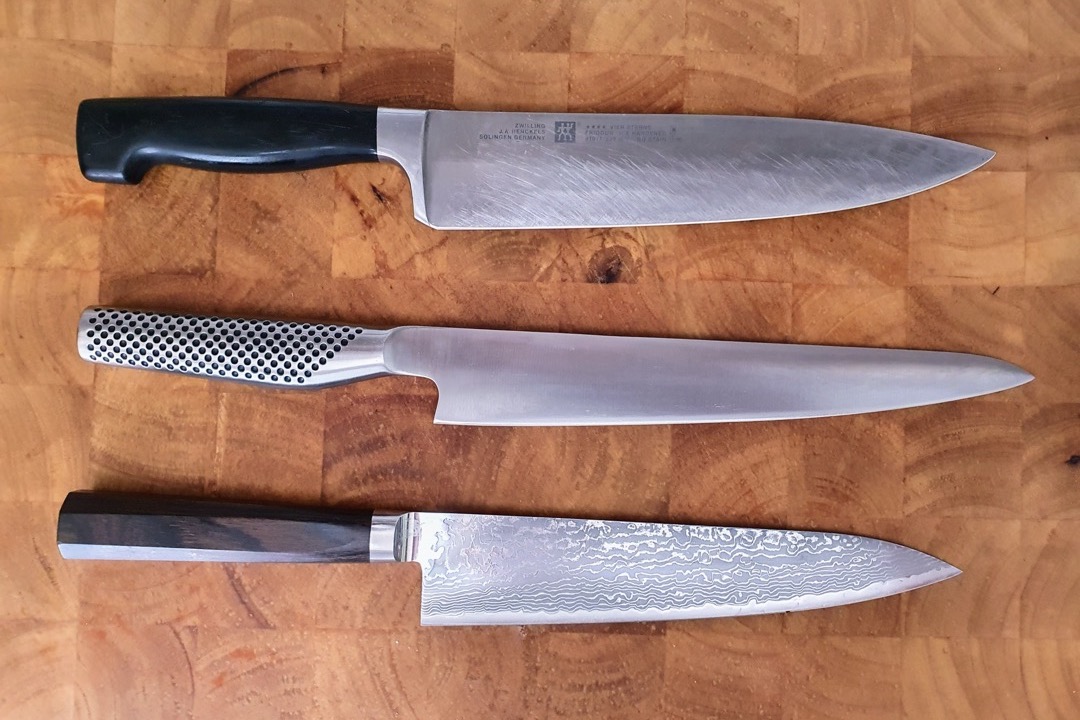
| Product | Price | Buy |
|---|---|---|
| Victorinox Fibrox Pro 8" Chef's KnifeBest Overall | $50.12 | View on Amazon |
| Mercer Culinary Millennia 8" Chef's KnifeBudget Pick | $29.00 | View on Amazon |
| WUSTHOF Classic 8" Chef's KnifePremium Pick | $170.00 | View on Amazon |
| HENCKELS Classic 8" Chef's KnifeRunner-Up | $79.95 | View on Amazon |
| Global G-2 8" Chef's Knife | $109.76 | View on Amazon |
| MAC Professional 6.5" Santoku (Hollow Edge) | $139.95 | View on Amazon |
| HENCKELS Forged Premio 7" Hollow Edge Santoku | $49.99 | View on Amazon |
Find the Best Kitchen Knife for Your Need
Not everyone is shopping for the same thing. If you already know what matters most to you, jump straight to the pick that fits:
- Best Kitchen Knife Overall — the Victorinox Fibrox Pro, our top all-purpose recommendation
- Best Budget Kitchen Knife — sharp, reliable blades that cost a fraction of a forged German knife
- Best Professional Kitchen Knife — the knives that hold up on a real prep line
Shopping for a matched set instead of a single blade? See our dedicated best kitchen knife sets guide.
Why Your Kitchen Knife Matters More Than Any Other Tool
I have spent over fifteen years on job sites where having the right tool is the difference between a clean result and a hack job. The kitchen is no different. A sharp, well-balanced knife is the single most important tool in any cook’s arsenal — it affects your speed, your safety, and the quality of every dish you prepare.
The problem is that the kitchen knife market is flooded with options ranging from bargain-bin stamped steel to hand-forged Japanese blades that cost more than some power tools. After weeks of testing, researching professional chef recommendations, scouring thousands of verified buyer reviews, and cross-referencing with culinary industry standards, I narrowed the field to the seven best kitchen knives that deliver real performance at every price point.
Whether you are outfitting your first kitchen or upgrading a dull blade that has been limping along for years, this guide will help you find the right knife without overspending — and as you will see, the best chef’s knife for most home cooks is not the most expensive one.
Why Trust DIYRated
I am Jake Morrison, a licensed general contractor who approaches every product review the same way I approach a build — with hands-on testing, attention to materials and construction quality, and zero tolerance for marketing fluff. Every knife in this roundup was evaluated on blade steel composition, edge geometry, handle ergonomics, balance, and real-world user feedback from thousands of verified purchasers. I also cross-referenced recommendations from professional chefs, culinary school instructors, and independent testing labs to make sure these picks hold up beyond the first few weeks of use.
Best Kitchen Knives Overall: Detailed Reviews
Best Overall: Victorinox Fibrox Pro 8-Inch Chef’s Knife
The Victorinox Fibrox Pro has been the consensus best-value chef’s knife for over a decade, and the 2026 version continues that dominance. With nearly ten thousand reviews and a 4.7-star rating, this is the knife that professional culinary instructors hand to students on day one — and the one many working chefs keep in their personal kit as a reliable backup.
The high carbon stainless steel blade comes razor-sharp out of the box and responds beautifully to basic honing and resharpening at home. The Fibrox thermoplastic rubber handle is where Victorinox quietly excels — it provides a secure, comfortable grip even when your hands are wet or greasy, which is a genuine safety feature during fast-paced prep work. It outperforms options costing three to four times more. If you are looking for related kitchen upgrades, check out our best kitchen faucets roundup to complete your workspace.
The trade-off is that this is a stamped blade, not forged. You will not get the heft and momentum that a forged knife provides when powering through dense root vegetables or breaking down a whole chicken. The handle is also purely utilitarian — functional but not something you will show off at a dinner party.
Budget Pick: Mercer Culinary Millennia 8-Inch Chef’s Knife
The Mercer Millennia is the knife that proves you do not need to spend a lot to get a genuinely good blade. At around thirty dollars, it is the industry standard issue knife for culinary schools across the country, and there is a reason for that — the edge is legitimately sharp, the textured Santoprene handle grips securely, and the lightweight 6.7-ounce build reduces hand fatigue during marathon prep sessions.
The edge does dull faster than premium options, so you will want to hone it more frequently and keep a basic sharpener nearby. But at this price point, you could buy two or three of these for the cost of a single mid-range knife. For anyone setting up their first kitchen or needing a reliable beater knife that you will not cry over if it gets abused, the Mercer is the obvious choice.
Upgrade Pick: Wusthof Classic 8-Inch Chef’s Knife
When you are ready to invest in a knife you will hand down to your kids, the Wusthof Classic is the answer. This is a full-tang, forged-from-a-single-piece-of-steel knife made in Solingen, Germany by a company that has been perfecting the craft for over two centuries. The Precision Edge Technology (PEtec) process makes the blade 20% sharper than the previous generation and delivers edge retention that puts stamped competitors to shame.
The triple-rivet polyoxymethylene handle is an industry icon for a reason — it is comfortable, durable, and resistant to fading or warping. The weight and balance of this knife feel noticeably different from budget options the moment you pick it up. If you cook daily and care about your tools the way I care about mine on a job site, this is the knife worth saving up for. Just remember that this blade demands hand washing and regular honing — treat it right and it will last a lifetime.
Runner-Up: HENCKELS Classic 8-Inch Chef’s Knife
The HENCKELS Classic occupies an interesting middle ground — German brand heritage and solid, no-fuss construction at a price that sits comfortably between our budget and premium picks. Backed by more than five thousand reviews and a 4.7-star rating, it is one of the most trusted mid-range blades you can buy, carrying over a century of Solingen knifemaking behind the name. It is also one of the few quality knives in this roundup that is rated dishwasher safe by the manufacturer, which is a meaningful convenience factor for busy households.
The trade-off is that the Classic is precision-stamped rather than forged, so it lacks the bolster heft and balance of the Wusthof, and the triple-riveted synthetic handle is functional rather than eye-catching. Edge retention is solid but benefits from regular honing. Still, for cooks who want a recognizable brand name, dishwasher convenience, and a reliable everyday edge without paying forged-knife prices, the Classic is a strong contender.
Global G-2 8-Inch Chef’s Knife
The Global G-2 is the knife that turns heads. Its seamless one-piece stainless steel construction — blade flowing directly into a hollow, sand-filled handle with signature dimples — is unlike anything else on the market. Beyond aesthetics, this design eliminates the joints and crevices where bacteria and food debris typically accumulate, making it one of the most hygienic knives you can buy.
The Japanese CROMOVA 18 steel is ice-tempered to a Rockwell hardness that holds an edge significantly longer than most Western competitors. The blade is thinner and lighter, rewarding cooks who prefer precise slicing and push-cutting over the Western rocking motion. The polarizing factor is the handle — some cooks love the sleek stainless grip, while others find it uncomfortable during extended sessions. I recommend holding one in person before committing if possible.
MAC Professional 6.5-Inch Santoku (Hollow Edge)
The MAC Professional Santoku has a cult following among professional chefs, and a few minutes of use makes it obvious why. The proprietary MAC alloy steel takes and holds an incredibly sharp edge, and the hollow granton dimples along the blade prevent food from sticking during rapid slicing — a detail that makes a real difference when you are flying through a pile of onions or potatoes.
At 6.5 inches, this is a specialist blade rather than an all-purpose workhorse. It excels at vegetable prep, precise protein portioning, and any task where control matters more than reach. The pakka wood handle is beautiful and comfortable but requires more careful maintenance than synthetic alternatives. If you already own a solid 8-inch chef’s knife and want to add a precision santoku to your collection, the MAC is the professional’s choice. For more kitchen essentials, browse our best kitchen knife sets guide.
HENCKELS Forged Premio 7-Inch Hollow Edge Santoku
The HENCKELS Forged Premio is the santoku for people who want forged quality and Japanese-style versatility without paying Japanese-knife prices. At around fifty dollars, you get a fully forged blade — not stamped — with hollow edge granton dimples for food release, backed by Henckels’ German engineering and quality control.
The 7-inch blade length splits the difference between a compact santoku and a full-size chef’s knife, making it a versatile daily driver. It is also dishwasher safe, which is rare for a forged knife and a genuine convenience for busy weeknight cooking. The handle runs a bit bulky for smaller hands, and the edge is not as aggressively sharp out of the box as dedicated Japanese santokus. But for the price-to-quality ratio, this is the forged santoku to beat. If you are upgrading your entire kitchen setup, our best electric kettles roundup pairs nicely with a new knife kit.
Best Budget Kitchen Knife
If you are outfitting a first kitchen or just want a sharp everyday blade without spending much, two knives in this roundup do the job for around fifty dollars or less. The Mercer Millennia is the rock-bottom pick culinary schools issue to students, while the Victorinox Fibrox Pro spends a little more for a noticeably more refined handle and an edge that professional test kitchens have recommended for decades.
| Product | Price | Buy |
|---|---|---|
| Mercer Culinary Millennia 8" Chef's KnifeLowest Price Pick The industry-standard student knife — sharp, light, and nearly impossible to beat on price. | $29.00 | View on Amazon |
| Victorinox Fibrox Pro 8" Chef's KnifeBest Budget Upgrade Stepping up buys a grippier handle and a tougher edge many pros keep in their own kit. | $50.12 | View on Amazon |
Both are stamped, lightweight, and easy to resharpen at home. Choose the Mercer if you want the lowest possible price or a beater knife you will not baby; step up to the Victorinox if you want one knife that will genuinely serve you well for years. Either way, skip the bargain-bin “mystery steel” blades — a knife that will not hold an edge is no bargain.
Best Professional Kitchen Knife
Working cooks care about edge retention, balance, and comfort over a long shift more than anything else. The three knives below are the ones that show up on real prep lines: the MAC Professional santoku is an editor-and-chef favorite for precision work, the Wusthof Classic is the forged German workhorse that survives commercial abuse, and the Victorinox Fibrox is the inexpensive backup nearly every chef owns.
| Product | Price | Buy |
|---|---|---|
| MAC Professional 6.5" Santoku (Hollow Edge)Best for Precision Work Razor-sharp Japanese alloy with a hollow edge — a cult favorite among professional chefs. | $139.95 | View on Amazon |
| WUSTHOF Classic 8" Chef's KnifeBest Forged Workhorse Fully forged Solingen steel with a protective bolster that handles heavy daily use. | $170.00 | View on Amazon |
| Victorinox Fibrox Pro 8" Chef's KnifeBest Pro Backup The affordable blade pros keep as a reliable, replaceable backup on the line. | $50.12 | View on Amazon |
For most professionals the MAC delivers the sharpest, most controlled cut, while the Wusthof is the more durable rock-chopper for breaking down heavier ingredients. The Victorinox earns its place as the knife you can afford to own several of — sharp, tough, and cheap enough to replace without a second thought.
Western vs Japanese Knives: Which Style Is Right for You
This is the most important decision you will make before buying a kitchen knife, and it comes down to how you actually cut food.
Western (German-style) knives — represented here by Wusthof, HENCKELS, and Victorinox — feature a curved blade profile designed for the rocking chop. You plant the tip on the cutting board and rock the blade through herbs, garlic, onions, and anything else that benefits from a rapid mincing motion. The steel is softer (typically 56-58 on the Rockwell hardness scale), which means it dulls faster but is easier to resharpen at home with a basic honing steel. These knives are heavier and more forgiving — they can handle bone, frozen foods, and the occasional lateral prying that would chip a Japanese blade.
Japanese-style knives — represented by Global, MAC, and the santoku-style HENCKELS Premio — use a flatter blade profile designed for up-and-down push cutting and precision slicing. The steel is harder (typically 58-62 Rockwell), which means it holds a sharper edge longer but is more brittle and prone to chipping if misused. These knives are lighter, thinner, and reward technique over brute force.
Neither style is objectively better. If you do a lot of rough prep work — breaking down chickens, smashing garlic, cutting through hard squash — a Western knife is more practical. If you value precision, do a lot of vegetable work, and are willing to treat your knife with care, a Japanese blade will reward you with cleaner cuts and less effort.
Buyer’s Guide: What to Look for in a Kitchen Knife
Blade Steel and Sharpness
The steel composition determines how sharp the knife gets, how long it stays sharp, and how easy it is to resharpen. High carbon stainless steel is the standard for quality kitchen knives because it balances edge retention, corrosion resistance, and ease of maintenance. Avoid mystery-metal knives with no steel specification — if the manufacturer will not tell you what the blade is made of, there is a reason.
Length and Versatility
An 8-inch chef’s knife is the universal starting point. It handles 80% of kitchen tasks efficiently. A 6.5 to 7-inch santoku is the best alternative if you prefer a more compact, control-oriented blade. Do not buy a 10-inch knife unless you are cooking for large groups regularly — it is overkill for most home kitchens and harder to control.
Weight, Balance, and Comfort
Pick up the knife and grip it. The balance point should sit right at the bolster where the blade meets the handle. A blade-heavy knife powers through dense foods but fatigues your wrist. A handle-heavy knife feels disconnected from the cutting surface. The best knives feel like a natural extension of your hand.
Handle Materials and Safety
Textured rubber and santoprene handles offer the best grip security when wet. Polished wood and stainless steel handles look premium but can be slippery. If you cook frequently with oily or wet hands, prioritize grip texture over aesthetics — a knife that slips is a knife that sends you to the emergency room.
Forged vs Stamped Construction
Forged knives are shaped from a single piece of heated steel and tend to be heavier, better balanced, and more durable. Stamped knives are laser-cut from a sheet of steel and tend to be lighter, more affordable, and sometimes just as sharp. The forged-is-always-better narrative is outdated — the Victorinox Fibrox Pro proves that a well-made stamped knife can outperform many forged competitors. Pay attention to the total package, not just the construction method.
Long-Term Maintenance
Every quality knife needs regular honing and occasional sharpening. Budget for a honing steel (ten to twenty dollars) and a basic whetstone or pull-through sharpener (twenty to forty dollars). Hand wash and dry your knives immediately after use — the dishwasher is the number one killer of good knife edges and handles. A magnetic knife strip on the wall is the best storage solution, keeping edges protected and blades accessible.
Knife Care and Maintenance Tips
A great knife is only as good as the care you give it. Here are the essentials that will keep any knife in this roundup performing at its best for years.
Hone before every use. Run the blade along a honing steel five to ten times per side at a consistent angle. This does not sharpen the knife — it realigns the microscopic edge that folds over during normal use. Think of it like straightening a bent nail rather than forging a new one.
Sharpen every few months. When honing no longer restores the edge, it is time to actually remove metal and create a new edge. A 1000/6000 grit combination whetstone is the gold standard, but a quality pull-through sharpener works fine for most home cooks. Japanese knives typically need sharpening at 15 degrees per side, while Western knives use 20 degrees.
Hand wash immediately. Never soak a knife and never put it in the dishwasher unless the manufacturer explicitly rates it dishwasher safe. The combination of harsh detergent, high heat, and jostling against other utensils destroys the edge and degrades handle materials. Wash with warm soapy water, rinse, and dry completely with a towel before storing.
Use the right cutting surface. Wood and plastic cutting boards are gentle on knife edges. Glass, ceramic, marble, and granite boards will destroy your edge in a single session. If your cutting board makes a clicking sound when you cut on it, it is too hard.
Store properly. A magnetic knife strip, an in-drawer knife block, or individual blade guards all protect the edge. Tossing knives loose in a drawer is a guaranteed way to dull them and a safety hazard. Never store a knife wet — moisture trapped in a block or sheath promotes corrosion.
Product Reviews

Victorinox Fibrox Pro 8" Chef's Knife
by Victorinox
The Victorinox Fibrox Pro consistently outperforms chef's knives costing three to four times more, making it our top overall pick for home cooks and professionals alike.
Pros
- Exceptional value outperforms knives three times the price
- Razor-sharp out of the box and easy to resharpen at home
- Non-slip ergonomic Fibrox handle excels with wet hands
- Lightweight and well-balanced for extended prep sessions
Cons
- Stamped blade lacks the heft of forged knives for heavy-duty tasks
- Handle aesthetics are utilitarian and plain compared to premium options
- Blade edge can develop small nicks with hard use on bone or frozen foods
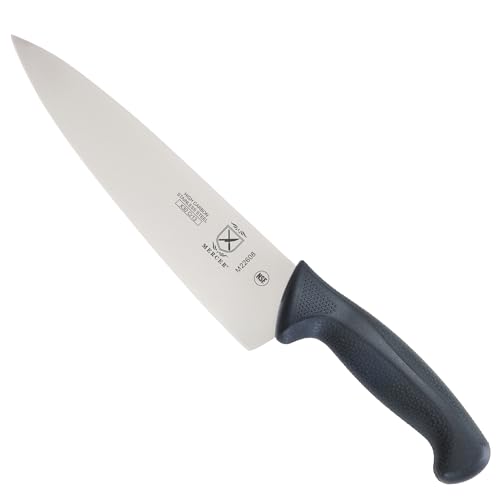
Mercer Culinary Millennia 8" Chef's Knife
by Mercer Culinary
The Mercer Culinary Millennia is the knife culinary schools hand to first-year students — razor-sharp, comfortable, and nearly impossible to beat at thirty dollars.
Pros
- Unbeatable price point — the industry standard knife for culinary school students
- Razor-sharp edge delivers excellent cutting performance for the price
- Ergonomic textured Santoprene grip resists slipping during use
- Lightweight at 6.7 oz to reduce hand fatigue during long prep sessions
Cons
- Edge dulls faster than premium knives and requires more frequent sharpening
- Stamped construction lacks the heft and balance of forged knives
- Utilitarian appearance with no visual flair
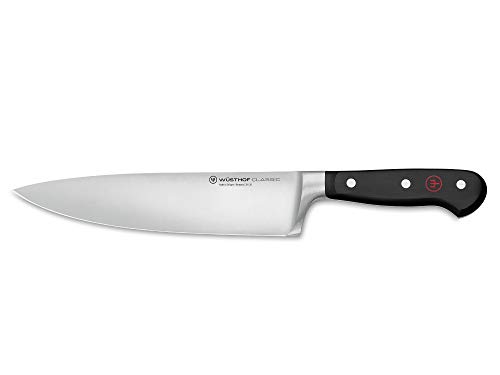
WUSTHOF Classic 8" Chef's Knife
by WUSTHOF
The Wusthof Classic is the gold standard for Western chef's knives — a buy-it-for-life investment in German engineering and edge performance.
Pros
- Full-tang forged construction with excellent balance and lifelong durability
- Precision Edge Technology delivers an edge 20% sharper than previous generation
- Iconic triple-rivet handle is comfortable for hours of extended use
- Made in Solingen Germany with over 200 years of knifemaking heritage
Cons
- Premium price point puts it out of reach for casual home cooks
- Heavier than stamped alternatives which some users find fatiguing
- Requires hand washing and regular honing to maintain peak performance

HENCKELS Classic 8" Chef's Knife
by HENCKELS
The HENCKELS Classic pairs a century of German knifemaking heritage with an accessible price and dishwasher-safe convenience, making it the strongest runner-up for cooks who want a trusted brand name without the forged-knife premium.
Pros
- German-engineered in the tradition of over a century of Solingen knifemaking
- Precision-stamped one-piece blade holds a reliably sharp factory edge
- Satin-finished high-carbon stainless steel resists staining and corrosion
- Manufacturer-rated dishwasher safe for low-maintenance daily use
Cons
- Stamped blade lacks the heft and bolster balance of a forged knife
- Triple-riveted synthetic handle is functional but plain
- Edge needs regular honing to stay at its sharpest

Global G-2 8" Chef's Knife
by Global
The Global G-2 is a Japanese precision instrument that rewards cooks who favor a lighter, nimbler blade and appreciate its distinctive seamless stainless design.
Pros
- Iconic seamless one-piece design eliminates crevices where bacteria can hide
- Incredibly lightweight and nimble for precise and delicate knife work
- Japanese CROMOVA steel holds a razor edge significantly longer than most competitors
- Unique dimpled stainless handle provides a secure grip even with wet hands
Cons
- Polarizing handle shape can feel uncomfortable for some hand sizes
- Thinner blade is not ideal for heavy rocking motion cutting techniques
- Premium price for stamped rather than forged construction
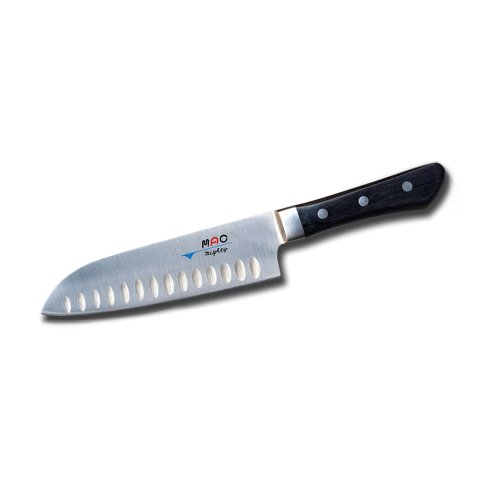
MAC Professional 6.5" Santoku (Hollow Edge)
by MAC
The MAC Professional Santoku is a chef's secret weapon for precision vegetable work and delicate slicing, with a cult following among knife enthusiasts.
Pros
- Professional-grade Japanese santoku favored by working chefs worldwide
- Hollow edge prevents food from sticking during rapid slicing and dicing
- Exceptional edge retention with MAC proprietary steel alloy
- Beautiful pakka wood handle that is both durable and ergonomic
Cons
- Premium price for a 6.5-inch blade limits versatility for large tasks
- Fewer reviews than mainstream brands limits available peer feedback
- Requires careful hand-wash maintenance only

HENCKELS Forged Premio 7" Hollow Edge Santoku
by HENCKELS
The HENCKELS Forged Premio bridges German durability and Japanese versatility at a mid-range price, making it the ideal santoku for cooks who want forged quality without the premium cost.
Pros
- Excellent value for a forged santoku knife at this price point
- Hollow edge granton dimples prevent food from sticking to the blade
- German engineering applied to a versatile Japanese-style blade shape
- Dishwasher safe for easy low-maintenance daily care
Cons
- Handle can feel bulky for users with smaller hands
- Not as razor-sharp out of the box as dedicated Japanese santoku knives
- Heavier than traditional Japanese santokus at 8 oz
Buyer's Guide
Western vs Japanese Style
Western chef's knives (like Wusthof and Henckels) are heavier, use softer steel, and feature a curved blade profile suited to the rocking cutting motion. Japanese knives (like Global and MAC) use harder steel ground to a thinner, more acute edge angle for precise slicing and push-cutting. Your preferred cutting style should drive this choice — rockers lean Western, slicers lean Japanese.
Blade Length and Size
An 8-inch chef's knife is the most versatile length for general home cooking. Shorter 6 to 7-inch santoku knives offer more control for detailed vegetable work and feel less intimidating for beginners. Longer 10-inch blades are reserved for high-volume professional kitchens. Start with 8 inches unless you know you prefer a compact blade.
Sharpness and Edge Retention
Harder steel (measured on the Rockwell scale) holds an edge longer but is more brittle and harder to resharpen at home. Softer steel dulls faster but resharpens easily with a basic whetstone or pull-through sharpener. Budget knives typically use softer steel that needs weekly touch-ups, while premium Japanese blades may go months between sharpenings.
Best Steel for Kitchen Knives
The best steel balances hardness (edge retention) against toughness and ease of sharpening. High-carbon stainless steel is the sweet spot for most home cooks — it takes a keen edge, resists rust, and sharpens without special skill, as seen in the Victorinox and Wusthof blades here. Premium Japanese alloys like CROMOVA 18 (Global) and MAC's proprietary steel hold an edge far longer but are less forgiving of abuse. Avoid unlabeled mystery steel; if a maker won't disclose the alloy, assume it's soft.
Weight and Balance
A knife that feels heavy in your hand will fatigue you during long prep sessions, while one that feels too light may lack the momentum to power through dense vegetables. The balance point — where the blade meets the handle — should feel natural when you grip it. Always hold a knife before committing if possible, as weight preference is deeply personal.
Handle Comfort and Grip
Handles range from slick polished steel to textured rubber compounds. If you cook with wet or greasy hands frequently, a textured or dimpled handle is essential for safety. Ergonomic contours reduce fatigue during long sessions. Traditional wooden handles look beautiful but require more care to prevent cracking and bacterial buildup.
Maintenance Requirements
Nearly all quality kitchen knives should be hand washed and dried immediately — dishwashers destroy edges and handles over time. Budget for a honing steel to realign the edge between sharpenings and a basic whetstone or sharpening system for periodic edge restoration. If low maintenance is your priority, look for the rare dishwasher-safe options in this roundup.
Final Verdict
For most home cooks, the Victorinox Fibrox Pro delivers the best combination of performance, comfort, and value in the kitchen knife market. It is the knife that professional chefs recommend to beginners and keep in their own kits as a reliable workhorse. If your budget allows, the Wusthof Classic is a genuine lifetime investment that rewards daily cooks with superior balance, edge retention, and craftsmanship. And if you are just getting started and need to keep costs minimal, the Mercer Culinary Millennia proves that an inexpensive knife can genuinely perform — buy it, learn on it, and upgrade when you are ready.
The most important thing is to buy one good knife and learn to maintain it properly. A sharp budget knife will always outperform a dull expensive one.
Frequently Asked Questions
What size chef's knife should I buy?
What are the best kitchen knife brands?
How often should I sharpen my kitchen knife?
What is the best way to sharpen a kitchen knife?
What is the difference between a Western chef's knife and a Japanese santoku?
Do I need a knife set or should I buy individual knives?
Are expensive kitchen knives worth the investment?
Related Articles
About the Reviewer

Jake Morrison, Licensed General Contractor
B.S. Construction Management, Purdue University
Jake Morrison has spent 14 years in residential construction and home renovation before founding DIYRated in 2026. After helping hundreds of homeowners choose the right tools and materials for their projects, he started writing the product guides he wished existed when he was starting out. Jake tests every major product recommendation in his workshop in Indianapolis and focuses on real-world performance over spec-sheet marketing.