How to Unclog Any Drain Without Chemicals: A Licensed GC's Method-by-Method Guide
A licensed General Contractor's field-tested approach to unclogging drains without Drano — pipe material safety, the right method for each drain type, when the P-trap is the answer, and the specific warning signs that mean stop and call a plumber.
Updated
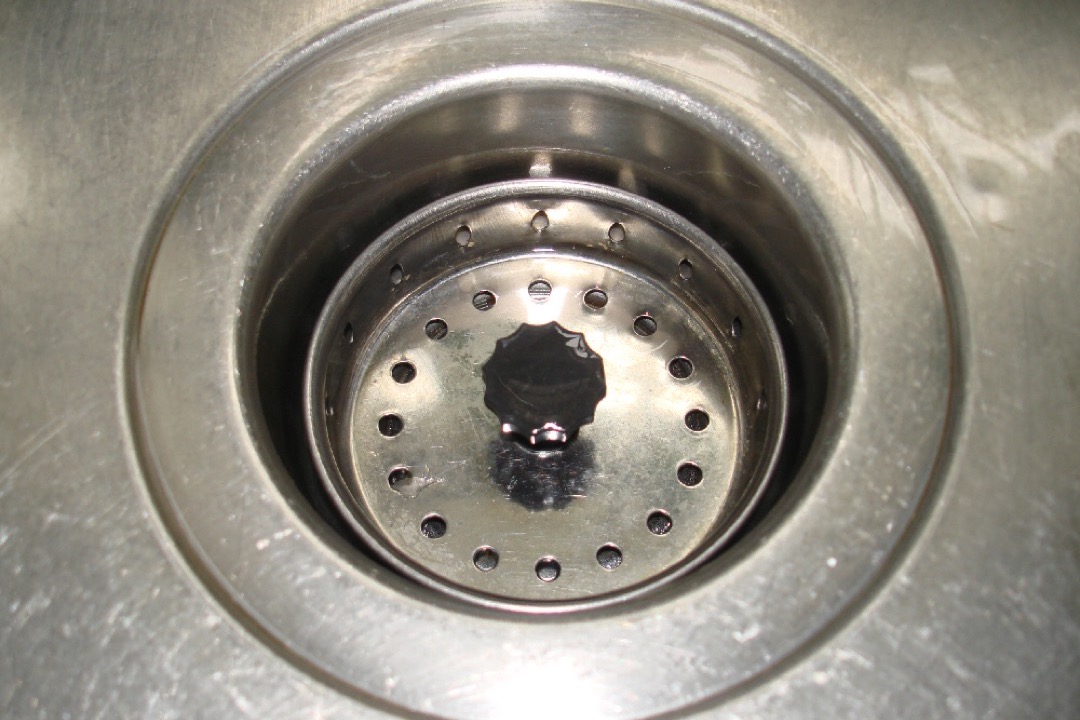
I have been called out to more clogged sinks at family-dinner-hour than I can count. Someone is hosting Thanksgiving, the kitchen sink stops draining at 4 PM with a turkey in the oven and ten people on the way, and the caller has already done the worst possible thing: poured an entire bottle of Drano down the drain twenty minutes ago, then a second bottle when the first one did not work, then boiling water on top of both because they read it online. Now we have a clogged drain full of caustic chemicals and warped PVC slip joints under the sink, and the actual fix — which was always going to be a two-minute P-trap removal — is now a forty-minute hazmat operation with a bucket and a respirator.
This is the guide I wish those clients had read four hours earlier. Most drain clogs do not require chemicals, do not require a plumber, and do not even require any tool more sophisticated than a plunger and a wrench. What they require is a quick read on what is clogged, what your pipes are made of, and which method matches the situation. The methods are not difficult. They are just not what the labels in the drain-cleaner aisle of the hardware store want you to believe.
What follows is the method-by-method approach I use on the job and hand to clients who want to handle their own drains. It covers what chemical cleaners are actually doing inside your pipes (which is worse than most homeowners realize), why pipe material matters before you do anything else, the right method for each drain type, the P-trap move that solves most bathroom clogs in two minutes, and the specific warning signs that mean stop and call a plumber instead of making it worse.
Why Avoiding Chemical Drain Cleaners Is a Plumbing Decision, Not Just an Eco Choice
Chemical drain cleaners are sold as a convenience product — pour it in, walk away, come back to a clear drain. What the bottle does not tell you is what is happening inside your pipes during those fifteen minutes you are away.
The active ingredient in most major drain cleaners is sodium hydroxide (lye) or sulfuric acid, sometimes paired with sodium hypochlorite. These compounds work by generating heat through an exothermic reaction with the organic matter in the clog — hair, grease, soap scum, biofilm — and chemically dissolving it. The temperature inside the pipe during the reaction commonly hits 200-250°F. That is the part that should stop you cold if your drain lines are PVC.
PVC pipe, which is what every drain installation done since roughly 1978 is made of, has a heat distortion temperature in the range of 60-80°C (140-176°F). The exothermic reaction inside a PVC drain line is hotter than the temperature at which the plastic begins to soften and deform. A single application probably does not catastrophically fail the pipe, but I have pulled out plenty of P-traps that telegraphed years of chemical-cleaner abuse — slip joints that are no longer round, joints that drip even when freshly tightened, plastic that has visibly yellowed or warped. The damage is cumulative and invisible until the trap fails.
The corrosion story on aging galvanized steel drain pipe is even worse. The aggressive chemistry accelerates interior corrosion, and the thermal shock of the exothermic reaction can crack already-brittle pipe. Cast iron handles the chemistry better but has the same thermal-shock vulnerability where existing cracks or rusted sections are present.
The other thing the bottle does not tell you: chemical drain cleaners do not physically remove the clog. They punch a hole through it. The bulk of the obstruction — the hair mat, the grease accumulation, the soap-scum collar around the pipe interior — is still there after the cleaner drains away. Water flows again for now because there is a channel through the middle. The clog re-forms in weeks. You repeat the application. Each round damages the pipe a little more. And the eventual fix, when the chemical approach finally fails outright, has to start with draining the pipe of caustic chemicals before any actual work can begin.
The mechanical methods in the rest of this guide do the opposite. They remove the clog instead of punching through it. They do not damage pipes. They do not create chemical hazards. And almost all of them are faster than waiting fifteen minutes for a chemical to do something it was never going to fully do.
Before You Start — Identify Your Pipe Material
Two minutes of inspection before you reach for any tool will tell you which methods are safe on your plumbing. Open the cabinet under the sink and look at the P-trap and the pipe going into the wall. Take a flashlight if the cabinet is dark — this is the first move I make on every drain call.
PVC (white or off-white plastic). This is the default in any drain installation done since the late 1970s. It is light, joined with slip-nut compression fittings at the trap and solvent-welded everywhere else, and it softens at 60-80°C (140-176°F). The hard rule: no boiling water. Hot tap water at 120-140°F is fine for routine flushing; water that has been boiled and then allowed to cool for two to three minutes off the heat is fine. A kettle straight off the burner is not. Repeated thermal abuse warps slip joints and eventually causes leaks.
Copper. Less common in residential drain lines (more common on supply lines), but it shows up in some older or higher-end installations. Tolerates heat without issue. Boiling water is mechanically fine on copper drain.
Galvanized steel (gray, threaded fittings, often heavy and slightly rough at the joints). Found in homes with original plumbing from before about 1970. Heat-tolerant in theory, but the interior is almost always corroded after fifty-plus years of service, and thermal shock from boiling water hitting brittle aged galvanized has been known to crack pipes at corrosion points. The safer call on old galvanized is hot tap water, not boiling.
Cast iron (black, very heavy, usually only in vertical stack sections of older homes). Heat-tolerant in fresh condition, but old cast iron develops hairline stress cracks at joints and where rust has thinned the wall. Same caution as galvanized — hot tap water is the safe default.
This thirty-second inspection determines the first method you try. White plastic equals no boiling water. Metal usually equals heat is fine but check the age of the home. Almost every drain-cleaning method in this guide gets safer or more dangerous based on the answer to this single question.
Identify the Drain Type — The Method Changes
The fixture matters as much as the pipe material. Each drain type has a dominant clog type, and the first move that works on one is wrong for another.
Kitchen sink. Dominated by grease, food particles, and soap scum. The grease cools and solidifies along the interior pipe wall, food particles snag on it, and over months the line narrows until water stops flowing. Responds well to hot water and dish soap if pipe material allows, to plunging, and to P-trap removal when the obstruction is local. Garbage disposal in the picture changes nothing about the methods below the disposal — anything past the disposal output is just a normal kitchen drain.
Bathroom sink. Almost always hair bound up with toothpaste residue, soap scum, and biofilm, usually tangled around the pop-up stopper assembly directly below the drain. The first move is not chemicals, not even a plunger — it is pulling the pop-up stopper and inspecting what is wrapped around it. On most bathroom-sink calls, the clog is sitting visible on the stopper rod within five seconds of opening the cabinet.
Shower or tub. Hair-dominant, but the hair mat sits below the strainer cover, usually within the first 6 to 12 inches of pipe. Remove the strainer (most lift out, some unscrew with a single small Phillips), shine a light, and pull the visible hair mat out with a hooked tool or a coat hanger bent into a hook. This solves probably half of all shower clogs without any other intervention.
Toilet. A fundamentally different fixture and a fundamentally different set of methods. The trapway is built into the porcelain bowl and is wider than a sink trap but more sharply curved. Two rules: use a flange plunger, not a cup plunger, and never use boiling water. Boiling water hitting cold porcelain can crack the bowl from thermal shock. A flange plunger or a closet auger (which has a rubber sleeve to protect the porcelain) is the only correct toolset.
Match the first move to the fixture and you skip the methods that were never going to work.
Method 1 — The Plunger (Clears Most Clogs)
The plunger is the first tool I reach for on any clog that is not obviously a hair mat under a strainer. It is fast, it is cheap, it is mechanical, and it solves a high percentage of routine clogs without any further escalation. Two important pieces nobody tells homeowners.
Cup plunger versus flange plunger. The two types look similar but are designed for different fixtures. A cup plunger is the classic dome-shaped rubber head on a wooden handle, designed for flat-surface drains — sinks, tubs, shower floors. A flange plunger has an extra cylindrical rubber flap that extends down from the bottom of the cup, designed to seal inside the curved opening of a toilet trapway. Using a cup plunger on a toilet rarely seals well enough to generate the suction needed to move a clog. Using a flange plunger on a sink works fine but the flange is unnecessary. Keep both in the house — they cost under twenty bucks together and together they cover every fixture.
Seal technique. A plunger works by generating alternating pressure and suction inside a sealed column of water. If the seal between the plunger rim and the drain surface is bad, the air pressure equalizes around the rim instead of acting on the clog and nothing happens. The pro move: smear a thin film of petroleum jelly around the outer rim of the plunger cup before you start. The petroleum jelly creates a much tighter seal between the rubber and the porcelain, ceramic, or stainless steel, and it dramatically improves the suction force. The other piece of seal technique most homeowners get wrong: fill the fixture with enough water to fully submerge the plunger cup. Plunging air at a dry drain accomplishes nothing — the compressible air absorbs the force. Plunging water at a clogged drain transfers the force directly to the obstruction.
Plunge with steady firm strokes — twenty to thirty cycles is more effective than a few violent ones. If the clog moves, you will feel it: the water level drops, the resistance changes, and the drain starts to flow. If twenty solid cycles produce no change, the clog is not in plunger range and you escalate to the next method.
Method 2 — Boiling Water and Dish Soap
When the clog is grease-dominant in a kitchen sink with metal drain lines, the hot water and dish soap method is the cheapest fix in this guide and often the only one needed.
The mechanism is straightforward. Dish soap is a surfactant — it reduces the surface tension of water and breaks the adhesion between greasy compounds and the pipe wall. Hot water melts solidified grease (animal fat solidifies around 95-110°F, vegetable fat solidifies in the low 60s°F, both melt well below the temperature of hot tap water). Together, the heat melts the grease and the surfactant carries it down the line in suspension.
The protocol on metal drain pipe (copper, galvanized in good condition, cast iron): boil a kettle of water. Squeeze about a tablespoon of liquid dish soap directly into the drain. Pour the boiling water slowly into the drain, in two or three pours separated by 30-60 seconds, so the surfactant has time to mix with the heat and act on the grease. Run hot tap water for two minutes afterward to flush the dissolved grease out of the drain line completely.
The protocol on PVC: do not use boiling water. Use very hot tap water (120-140°F) with the same dish soap technique. The dish soap is doing most of the work; the heat is auxiliary. The method is slightly less effective on PVC because the heat is lower, but it is safe and often still works on a fresh grease clog.
When this method does not work: hair clogs (the surfactant does nothing to hair), bathroom clogs in general (mostly hair), any clog that is mechanically wedged rather than chemically built up, and any clog that has already been treated with a chemical drain cleaner (the cleaner has solidified residues in the pipe that hot water and soap will not address). If twenty minutes after the hot-water-and-soap treatment the drain is still slow, escalate. Repeating the same method does not make it work better.
Method 3 — Baking Soda and Vinegar
This is the folk-remedy entry, and I am going to be honest about what it does and does not do, because half the internet treats this as magic and half treats it as worthless. The truth is in a narrow middle.
The fizz reaction between baking soda (sodium bicarbonate, NaHCO3) and vinegar (dilute acetic acid, roughly 5% CH3COOH) produces CO2 gas, water, and sodium acetate. The CO2 bubbles generate physical agitation inside the drain. There is no meaningful “chemical cleaning” happening — the reaction neutralizes itself within seconds and the resulting solution is essentially salt water with no solvent power. What the technique can do is mechanically agitate a fresh, loose, partial clog that has not yet hardened, particularly when followed by a hot-water flush that carries the loosened debris down the line.
The protocol when this is actually appropriate: pour about a half cup of dry baking soda into the drain. Follow immediately with about a cup of white vinegar. The reaction will foam aggressively for 30-60 seconds. Cover the drain with a plug or a wet cloth to direct the agitation downward into the pipe rather than letting it bubble up into the sink. Wait 10-15 minutes. Then flush with hot water for two minutes — and this is the step most homeowners skip. Without the hot-water flush, the loosened debris just sits in the pipe and re-settles. The flush is the part that actually clears the drain.
The limits of this method are real. It will not dissolve hair, it will not cut a mature grease clog, and it will not touch any clog that has already hardened or compacted. The cases where it is the right tool: a slow-draining-but-still-functional sink as a monthly prevention ritual, or a very fresh partial blockage where you suspect light buildup is starting to constrict flow. If your drain is actually backed up, this is the wrong tool. Reach for the plunger, the snake, or the P-trap instead.
The reason this folk remedy survives is that it occasionally works on the right kind of clog and the dramatic fizz looks like something serious is happening. Just be honest with yourself about whether your situation matches the narrow zone where it works.
Method 4 — The Right Drain Snake for the Job
When plunging fails and the clog is deeper in the line, the next escalation is a mechanical drain snake. There are three categories and using the wrong one wastes time at best and causes damage at worst.
Hand spinner or drum auger (15-25 feet, manual or drill-driven). This is the homeowner-grade snake for kitchen sinks and bathroom sinks. The cable feeds into the drain, you advance it until you feel resistance, then you spin the handle (or attach the drum to a corded drill) to bore the tip through the clog or hook it for extraction. 15 feet is enough for most local clogs; 25 feet handles deeper runs. A quality homeowner drum auger costs under fifty dollars and lasts decades. The cable end has a barbed or corkscrew tip that physically captures hair and debris on the way back out, which is the whole point — you are removing the clog, not just punching through it.
Toilet auger or closet auger (3-6 feet, rigid tube with rubber sleeve). Different tool, different fixture, no substitution. The rigid metal tube has a J-shaped curve at the end shaped to navigate the trapway of a toilet, and a rubber sleeve covers the contact point where the metal would otherwise scratch the porcelain. The rubber sleeve is the reason this tool exists as a separate item. A regular drain snake will scratch a toilet bowl glaze almost guaranteed, and those scratches become hairline stress fractures over years until the bowl cracks or starts seeping at the base. Use the right tool. Both a drum auger and a toilet auger together cost under eighty dollars for homeowner-grade versions — see the best hand tool sets roundup for the broader basic-tool kit that should include both.
Motorized drum auger or sectional cable machine. Rental territory for clogs deeper than 25 feet, runs into the main building drain, or clogs that a hand auger cannot break through. If you are reaching for this category, ask yourself first whether the clog is local or main-line — running a 50-foot motorized cable into a main-line clog without a sewer camera is how DIY damage happens.
Technique on the hand snake: feed the cable in slowly with the snake rotating. If you hit hard resistance, do not force it — that is often the trap or an elbow bend in the pipe, not the clog. Back the cable out a few inches and re-feed with the tip oriented slightly differently. When you reach the actual clog, you will feel a softer resistance and the cable will start to bind in the obstruction. Spin to bore through, then withdraw the cable slowly — the hair and debris on the barbed tip is the clog you came for. Have a bucket and a towel ready, because what you pull out is unpleasant.
Method 5 — P-Trap Removal (The GC Move Most Guides Skip)
This is the move that solves more bathroom sink clogs than every other method combined, and almost no online guide explains it because the writers are not plumbers. It is also the method I use on probably 30% of the residential drain calls I get hired for, and once a homeowner has done it once, they almost never call me for a sink clog again.
The P-trap is the curved section of pipe directly under the sink, shaped like a sideways P or J depending on which way you look at it. It exists to hold a small standing pool of water that prevents sewer gas from coming up into the living space. The geometry that makes the trap function as a gas barrier also makes it the place where every hair, every wad of toothpaste, every fragment of soap that goes down the drain has a chance to settle. The trap is the most common clog site on a bathroom sink by a wide margin.
Step by step. Place a bucket directly under the trap — even a small trap holds eight to sixteen ounces of standing water that will dump out the moment you loosen the connections, and any debris caught in the trap will come out with it. Have a roll of paper towels and a rag ready.
Loosen the two slip nuts that hold the trap in place. The first slip nut is at the bottom of the tailpiece (the vertical pipe coming down from the drain). The second is at the entry to the trap arm (the horizontal pipe going into the wall). On modern PVC traps, both slip nuts are plastic and almost always finger-tight; you can loosen them by hand if you have a good grip. If they are stuck or if you have older chrome-finished metal traps, use channel-lock pliers, and on chrome wrap the jaw faces with electrical tape or a rag to prevent marring the finish. The classic homeowner mistake is over-tightening these slip nuts when reassembling because they think tighter is better — the slip-joint seal comes from a compression washer inside the nut, not from torque, and over-tightening cracks the plastic or distorts the metal. Hand-tight plus a quarter turn with pliers is correct.
Once both slip nuts are loose, the trap drops free into your bucket. Inspect what comes out. On a bathroom sink, you will almost always see a wet mat of hair, soap scum, and biofilm sitting in the curve of the trap. On a kitchen sink, expect grease and food debris. Pull the debris out with a paper towel or your gloved fingers. Run hot water through the trap in the sink to rinse it out, and use a small bottle brush or the bent end of a coat hanger to physically scrape the interior of the trap clean.
Inspect for cracks. While the trap is out, look at the plastic for hairline cracks (more common on traps over a decade old, especially those that have endured chemical drain cleaner abuse) and at the slip-nut washers for compression damage or splitting. Replacement P-traps and washer sets are under ten dollars at any hardware store. If the trap or any washer looks compromised, replace it now — having the trap in your hand is the moment when replacement is trivial.
Reassemble. Slide the slip nuts and washers back onto the tailpiece and trap arm in the same orientation they came off. Seat the trap into position. Hand-tighten both slip nuts. Run water for a minute and inspect the joints for any drip. If you see a drip, snug the offending nut another quarter turn with pliers. If a joint refuses to seal even after careful tightening, the washer is bad — replace it. Plumber’s tape on slip-joint threads is sometimes useful but is not a substitute for a good washer.
The whole job takes ten minutes the first time, five minutes after that. It is the most reliably effective bathroom-sink fix in this guide, and the best hand tool sets roundup covers the channel-lock pliers and basic wrench set you need for this and a hundred other small repairs.
Method 6 — Wet/Dry Vac Suction
This is the method that surprises homeowners the most because it works on the opposite principle from plunging — and on the right kind of clog, particularly shower drain hair clogs sitting near the surface, it is the fastest method in this guide.
A wet/dry shop vac in liquid mode generates strong suction at the hose end. By creating a tight seal between the hose and the drain opening, you can pull the clog upward into the vac instead of trying to push it downward like a plunger does. On a shower drain with a hair mat sitting within the first 6-12 inches of pipe, this method extracts the entire mat in about thirty seconds without disassembling anything.
The protocol. Empty the shop vac and switch it to liquid mode (this usually means removing the dry filter and ensuring the liquid-collection canister is installed — check your vac’s manual). Remove the strainer or cover from the drain you are trying to clear. Place the hose directly over the drain opening, and improvise a seal between the hose and the drain — a wet rag wrapped around the hose, the rubber cup head from an old plunger sleeved over the hose, or a hose-to-drain adapter if you have one. The seal does not need to be airtight, just snug enough that the suction acts on the drain instead of the surrounding air.
Turn on the vac. The suction pulls upward through the drain. On a shower hair clog, you will usually see and hear the clog snap loose within ten to twenty seconds — there is often a distinct sound and a sudden change in the suction tone as the mat releases and travels up the hose. Run the vac for another fifteen seconds to clear anything trailing, then turn it off and inspect what came out into the canister.
This works particularly well on shower drains because the hair mat is usually shallow and unattached to the pipe wall — there is nothing holding the clog in place except its own bulk and friction, and suction overcomes both. It works less well on grease or biofilm clogs that are adhered to the pipe interior, and it does not work on clogs deeper than a foot or two because the suction force drops off rapidly with distance and any bend in the pipe absorbs most of it.
The best shop vacs roundup covers the wet/dry units I keep in the truck for site cleanup, and any of them are more than capable of this kind of drain work. A homeowner-grade 4-6 gallon wet/dry vac is also more than enough for routine drain suction at one or two fixtures.
Warning Signs That Mean “Stop DIYing and Call a Plumber”
Every method in this guide is appropriate for a local clog in a single fixture. The signs below indicate the clog is not local — it is in the main building drain or the building sewer between the house and the street — and continuing to DIY at that point makes the problem worse, not better.
Multiple drains slow at the same time. If the kitchen sink is slow and the bathroom sink is slow and the laundry standpipe is slow, the obstruction is downstream of all three fixtures, in the main drain or the sewer. Running a hand snake into the local trap of any of those fixtures will accomplish nothing because the clog is not in that trap.
Gurgling sounds from drains when nothing is being used. Gurgling is venting failure — air is being pulled through the trap water seal because the system cannot vent properly through the roof stack. This is almost always either a blocked vent stack (leaves, animal nests, ice) or a partially obstructed main drain creating backpressure. Either way, it is not a clog in any individual fixture’s local line.
Water backs up in a different fixture when you run another fixture. Classic main-line symptom: you run the washing machine and the basement floor drain backs up. You flush a toilet and the basement shower drain bubbles. This indicates the main drain cannot handle the flow and water is taking the lowest available exit.
Recurring clogs every 60-90 days. A drain that re-clogs at this rhythm despite being cleared is telling you something is wrong with the line itself — a belly in the pipe (sag where water and debris pool), a partial pipe collapse, root intrusion at a joint, or a slope problem that allows debris to accumulate. The recurring clog is the symptom, not the problem. A sewer camera inspection identifies the cause.
Sewage smell from a basement floor drain or clean-out. Sewer gas escape indicates either a dry trap (easy fix — pour a quart of water down the drain to refill the trap) or a venting/blockage problem in the main drain. If pouring water into the trap does not eliminate the smell within a day, the problem is bigger than a local clog.
No improvement after 25+ feet of snake. If you have run a hand snake or a drill-driven drum auger to its full length and the drain is still blocked, the obstruction is deeper than residential equipment can reach. Stop, do not escalate to a rented motorized machine without understanding what you are doing, and call a plumber.
The cost calculus is straightforward: a plumber’s service call is in the low hundreds of dollars. The cost of a sewage backup into a finished basement, or of damage caused by jamming a residential snake into a main-line obstruction and breaking the cable inside the pipe, is in the thousands. Knowing when to put the tools down is one of the most valuable judgment calls in DIY plumbing.
Prevention — What I Build Into Every Renovation
The cheapest and fastest clog fix is the clog that never forms. Every renovation I do, every house I service, has a small set of prevention measures that take almost no effort and prevent the bulk of drain calls.
Mesh strainers on every drain. Kitchen sinks need a finer mesh than the original strainer basket usually provides — a snap-in mesh insert that catches everything down to small food particles costs almost nothing and pays for itself the first time it stops a clog. Bathroom sinks need a stopper or strainer that catches hair before it reaches the trap. Shower drains need a hair-catcher insert sitting above the existing strainer cover. Every drain, every fixture, no exceptions.
Never pour grease down a kitchen drain. Wipe the pan with a paper towel first, throw the towel in the trash, then wash the pan. The grease that goes down the drain does not exit the building — it solidifies on the interior wall of the pipe and accumulates over months into the clog that backs up the sink at Thanksgiving. This habit alone prevents most kitchen-sink clogs.
Monthly hot-water-and-dish-soap flush. On every drain in the house, once a month, pour a kettle of very hot tap water (or boiling water if your pipes are metal) mixed with a tablespoon of dish soap. Wait five minutes, then run hot tap water for two minutes to flush. This breaks up early grease and biofilm accumulation before it has time to harden into a clog.
Hair catchers in every shower drain. This single item prevents probably 80% of the bathroom drain clogs I get called for. They cost under five dollars each. Empty them weekly during your normal shower cleaning. No more shower hair clogs, ever.
Annual P-trap inspection. Once a year, remove every P-trap in the house, inspect for cracks and slip-joint wear, clean the interior with a bottle brush, and reassemble with fresh washers if any look compromised. Ninety minutes for the whole house. Catches early problems before they fail at 2 AM.
Modern fixtures with thoughtful drain design. When you are renovating a kitchen, the faucet and sink basket combination is part of the equation — see the best kitchen faucets roundup for fixtures paired with sink baskets and strainer designs that minimize debris snagging. The same logic applies in bathrooms — see the best bathroom faucets roundup for pop-up stopper designs that disassemble easily for cleaning (which makes the difference between a five-minute monthly maintenance task and a frustrating fight with a frozen stopper rod). The fixtures themselves are not magic, but well-designed drain hardware makes prevention easier and clog clearing faster.
For the underlying toolkit that everything in this guide depends on — the channel-lock pliers, the screwdriver set, the bucket, the bottle brush, the work flashlight, the basic wrench — the essential tools every new homeowner needs roundup is the starter set I hand to first-time homeowners on the day they close. None of the methods in this guide require specialty plumbing tools. They require basic homeowner tools and a willingness to open the cabinet under the sink and look at what is actually going on. Do that, follow the prevention rituals, and the call you never have to make to a plumber will save you more money over a decade than any of the tools cost up front.
Frequently Asked Questions
Does baking soda and vinegar actually unclog drains, or is it mostly a myth?
Is it safe to pour boiling water down a drain?
How do I know if my clog is in the drain line or the main sewer?
What's the difference between a regular drain snake and a toilet auger — can I use one for the other?
How often should I clean my drains to prevent clogs?
Related Articles
About the Reviewer

Jake Morrison, Licensed General Contractor
B.S. Construction Management, Purdue University
Jake Morrison has spent 14 years in residential construction and home renovation before founding DIYRated in 2026. After helping hundreds of homeowners choose the right tools and materials for their projects, he started writing the product guides he wished existed when he was starting out. Jake tests every major product recommendation in his workshop in Indianapolis and focuses on real-world performance over spec-sheet marketing.