Front Load vs Top Load Washers: Which Is Right for Your Home?
Front load vs top load washers compared on cleaning, water use, installation, noise, and cost. Jake Morrison breaks down the real differences from a contractor's perspective.
Updated
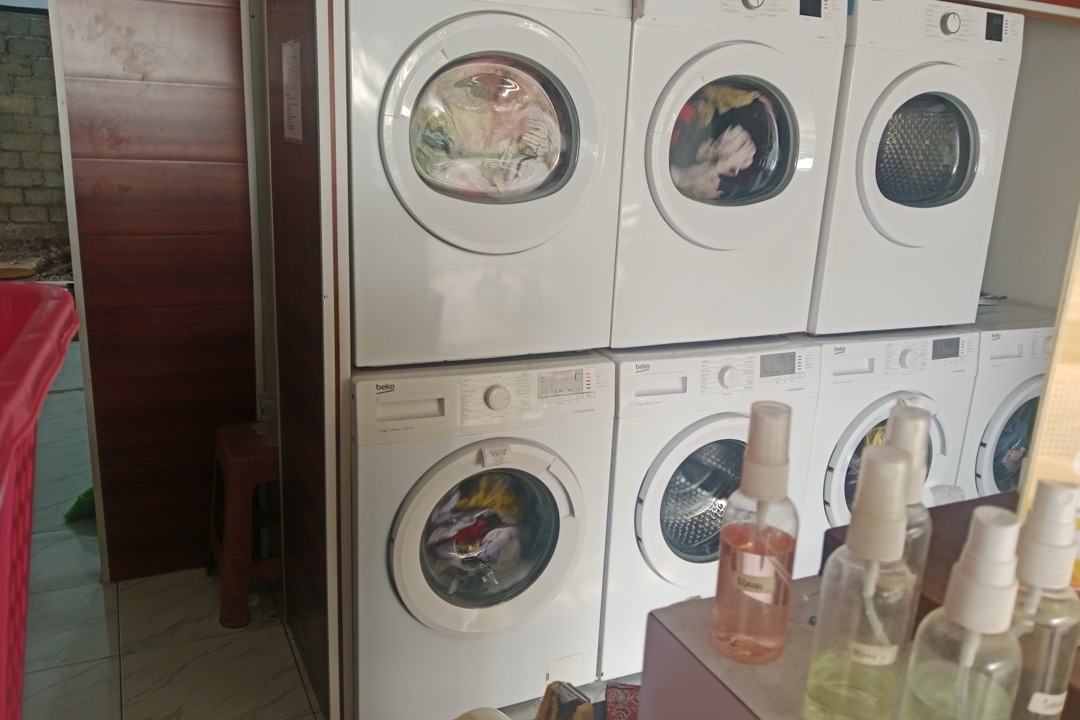
I have roughed in and framed more laundry rooms than I can accurately count over fifteen years of general contracting. I have spec’d front-loaders into master bath additions, squeezed stackable pairs into closet conversions, and been called back to fix vibration issues when homeowners installed front-loaders on second-floor wood-frame decks without anti-vibration mats. The washer decision looks simple from the outside — front-load or top-load — and it is actually simple, once you know what questions to ask about your specific situation.
This guide covers the full picture: how each type cleans, where each type wins, and the installation and maintenance realities that most comparison articles completely skip over. If you are ready to shop and just want product recommendations, our best front-load washers and best top-load washers roundups cover the top-performing models at every price point. If you want to make sure you are choosing the right type for your home first, keep reading.
Front Load vs Top Load Washers at a Glance
Here is how the two types compare on the factors that matter most for real-world use:
| Feature | Front-Load Washer | Top-Load Washer |
|---|---|---|
| Cleaning method | Tumble action (drum rotates) | Agitator or impeller |
| Water use per load | ~7 gallons | 13-19 gallons |
| Cycle time | 60-90 minutes | 35-50 minutes |
| Spin speed (RPM) | 1,000-1,400 RPM | 700-1,000 RPM |
| Clothes extracted moisture | Lower (less drying time) | Higher (more drying time) |
| Stackable with dryer | Yes | No |
| Second-floor vibration | Higher | Lower |
| Door gasket mold risk | Yes | No |
| Drip pan required | Often (check local code) | Rarely |
| Typical price range | Higher | Lower |
| Pedestal needed for comfort | Often | No |
| Market share (2024) | ~30% | ~70% |
| Lifespan | 10-15 years | 10-15 years |
No comparison table like this exists across the competitor articles I reviewed — they all describe the differences in prose without giving you a side-by-side you can scan. That table is the starting point. The rest of this guide is the context behind it.
How Each Type Cleans Clothes
Understanding the cleaning mechanism helps explain why front-loaders and top-loaders perform differently on different types of loads.
Tumble Action (Front-Loaders)
Front-load washers use a horizontal drum that rotates on a horizontal axis. The drum lifts clothes up and drops them repeatedly through a small amount of water and detergent — typically 7 gallons per load. This tumbling motion is gentle on fabrics because clothes are not being dragged through water by mechanical force. It also means the drum surface area contacts more of the fabric more repeatedly, which is how front-loaders achieve competitive cleaning performance with less water.
The low water level is both the efficiency advantage and the limitation. You cannot add items mid-cycle on most front-loaders once the door locks and the drum begins filling — a frustrating constraint if you find the forgotten sock after starting a load.
Agitator vs Impeller (Top-Loaders)
Traditional top-loaders use an agitator: a central post with fins that rotates back and forth, physically moving clothes through a full tub of water. Agitators are excellent at removing heavy soil — dirt, mud, grass stains — because the mechanical friction between clothes and the fins works the soil out of the fabric. The tradeoff is that agitators are harder on fabric. Delicate items, lightweight knits, and anything with embellishments or buttons are at greater risk of damage or abrasion in an agitator machine.
High-efficiency top-loaders replace the agitator with an impeller: a low-profile disc or cone at the bottom of the drum that rotates at high speed, creating water turbulence that moves clothes through the wash. Impellers are gentler on fabric than agitators and use less water than traditional agitator machines — typically 13-15 gallons per load versus 18-20 gallons for a traditional full-tub agitator. The cleaning tradeoff is that impellers are less effective on heavily soiled items than agitators, particularly for items with soil ground into thick fabric like denim work pants or athletic gear.
For most households with standard laundry — clothes, linens, towels — a HE top-loader with an impeller delivers excellent results with a gentler wash action. For households with consistently heavy-soil laundry, an agitator or a front-loader’s long-tumble cycle may produce better results.
Cleaning Performance Head-to-Head
On standard household laundry — cotton, synthetic blends, mixed-color loads — front-loaders and modern HE top-loaders deliver comparable cleaning results for most consumers. The measurable advantage front-loaders hold is on delicates and items requiring extended soak time: the tumble action does not stress fabric the way an agitator does, and many front-loader cycles include a true soak phase.
Top-loaders with agitators hold the advantage on heavy soil removal. If your regular laundry includes work clothing that has been exposed to grease, paint, landscaping soil, or other heavy contaminants, the mechanical scrubbing action of an agitator is more effective than tumble action at the same cycle length. This is why trade and agricultural contexts — where workwear gets genuinely soiled — still favor agitator-style machines.
The area where front-loaders have an unambiguous advantage is high-speed extraction. Front-loaders spin at 1,000-1,400 RPM versus 700-1,000 RPM for top-loaders. Higher spin speed means more water is extracted from clothes before they go into the dryer, which reduces drying time by 10-20 minutes per load. Over time, this reduces dryer wear and energy use in ways that the washer-only comparison does not capture.
Water and Energy Efficiency
Front-load washers use roughly 7 gallons per load. Top-load HE models use 13-15 gallons. Traditional full-agitator top-loaders can use 18-20 gallons per load. That is a meaningful difference in water volume — roughly two thirds less water per cycle for a front-loader versus a traditional top-loader.
However, the actual dollar savings from this difference are more modest than they appear. Independent analysis puts the annual utility savings of a front-loader over a standard HE top-loader at roughly $5-$15 per year for average household laundry frequency. The total energy and water cost difference over a 10-year ownership period rarely offsets the higher upfront purchase price of a front-loader.
The real efficiency argument for front-loaders is a combination of factors: less water heated per cycle (water heating is the main energy cost), faster drying time from higher spin extraction, and lower detergent cost from HE concentration. Those factors accumulate across thousands of loads over 10-15 years. But if you are making the decision purely on utility cost recovery, the math rarely favors the front-loader’s price premium.
If you want to maximize the efficiency case, pair the washer choice with a matching dryer. Our best washer and dryer sets roundup covers matched pairs that are engineered to work together, including models where the dryer adjusts cycle time based on the moisture level the washer’s spin cycle achieves.
Cycle Speed and Everyday Convenience
Front-loaders run standard cycles in 60-90 minutes. Top-loaders complete standard cycles in 35-50 minutes. That 30-40 minute difference is not relevant for every household — but for households doing multiple sequential loads, it adds up.
Consider a household running five loads in a single Saturday laundry session. At 90 minutes per cycle for a front-loader versus 45 minutes for a top-loader, the front-loader takes 7.5 hours versus 3.75 hours for the top-loader. That difference is the entire afternoon.
Front-loaders partially address this with specialty fast cycles (typically 30-40 minutes for small lightly-soiled loads) and delayed start features that let you run a cycle overnight. If you adapt your laundry habits to front-loader cycle times — which many households do without issue — the speed difference is largely invisible. If you have a high-volume laundry day every week, a top-loader’s cycle speed is a genuine practical advantage.
The mid-cycle add item limitation on front-loaders is a small but real friction point. Most front-loaders lock the door once the drum begins filling, preventing mid-cycle addition. Some models include a pause-and-add feature, but the waterproof door seal means you have to wait for the drum to drain slightly before the door releases. Top-loaders with no agitator can accept additions at almost any point in the cycle.
Capacity: Which Holds More?
Modern front-load and top-load washers compete in similar capacity ranges — typically 4.5 to 6.0 cubic feet for residential models. The published capacity number is less useful than it appears, however, because fill-to-capacity recommendations differ by type.
Front-loaders should not be overfilled beyond roughly 75-80% of drum capacity — overfilling reduces tumble action effectiveness and can cause drum bearing stress over time. Top-loaders with impellers are more tolerant of full loads because the impeller creates turbulence throughout the water column rather than requiring physical space for clothes to tumble.
For practical purposes, both types handle the same household laundry volume adequately in the 4.5-5.0 cubic foot range. If you are specifically sizing for large items — king comforters, sleeping bags, heavy winter coats — look for 5.0+ cubic feet regardless of type, and check the manufacturer’s maximum load recommendations for bulky items specifically.
Space and Stackability
This is where the two types diverge most sharply for renovation and remodel scenarios.
Front-loaders can be stacked with a matching dryer using a manufacturer-specific stacking kit — the dryer sits directly on top of the washer in a single 28-inch wide footprint. This configuration is the only option for closet laundry rooms, narrow alcoves, and spaces where the floor footprint needs to stay under 32 inches wide. If you are building out a laundry room in a renovation and space is constrained, front-load stacked pairs are often the only viable solution.
Top-loaders require side-by-side installation. They cannot be stacked because the lid requires clearance above the machine. Side-by-side installation needs 56-60 inches of width for two machines plus connections — which is standard in a dedicated laundry room but impossible in a closet conversion.
Before specifying a stacked pair in a renovation, verify: ceiling height (stacked pair reaches 76-80 inches), door width for delivery (machines typically need a 32-inch door clearance for maneuvering), and rough-in hookup location relative to the machine’s connection points. Our best stackable washer-dryers guide covers the top-performing stacked pairs with confirmed footprint dimensions.
Noise and Vibration: Especially for Second-Floor Laundry Rooms
This is the installation factor I see overlooked most often on renovation projects, and it is the one that generates the most callbacks.
Front-loaders spin at 1,000-1,400 RPM during the extract cycle. On a concrete slab floor, that vibration is absorbed without issue. On a wood-frame floor — which is virtually every second-floor installation and many first-floor over-basement installations — that vibration transmits through the floor joists and can be felt throughout the home. I have had clients call me back on front-loader installations where the spin cycle shook picture frames off walls in the adjacent bedroom.
The mitigation for wood-frame floor front-loader installations:
- Anti-vibration mat under the machine (reduces transmitted vibration significantly, costs under $50)
- Verify machine is perfectly level (even 1/8-inch unlevel increases vibration during high-speed spin)
- Verify floor joist sizing can handle the dynamic load of a full wet load at 1,400 RPM (for older construction, this sometimes requires a structural assessment)
Top-loaders with impellers spin at 700-1,000 RPM and generate meaningfully less vibration than front-loaders at equivalent load weights. For second-floor laundry rooms in wood-frame construction, this is a real differentiator.
Top-loaders with agitators produce a different vibration profile — lower frequency but with more mechanical noise from the agitator mechanism. In my experience, agitator noise is more objectionable to adjacent bedroom occupants than front-loader vibration because it is more rhythmic and harder to tune out. Impeller top-loaders are the quietest type overall on wood-frame second-floor installations.
Maintenance: Mold, Gaskets, and Drum Cleaning
This is the maintenance reality most front-loader marketing avoids addressing directly.
The front-loader door seal — a rubber gasket that runs around the drum opening — sits horizontally and retains water after each cycle. In a closed, humid environment, that retained moisture grows mold and mildew within weeks of installation if the door is closed between uses. First-generation front-loaders had particularly deep gasket folds that trapped water and were nearly impossible to dry completely — this is the source of the mold reputation that still affects front-loader market share.
Modern front-loaders have improved gasket design with shallower folds and better drainage channels, but the fundamental physics have not changed: water sits in a rubber seal after every wash. The required maintenance habits to prevent mold:
- Leave the door ajar between cycles (critical — a closed door traps moisture)
- Wipe the gasket dry after each cycle (5-10 minutes of prevention)
- Run a drum-cleaning cycle with washer cleaner monthly
- Clean the detergent dispenser drawer monthly (this also traps moisture and builds residue)
If you adopt these habits from day one, a modern front-loader will not develop mold problems. If you close the door, skip gasket wiping, and run drum cleaning cycles infrequently, you will have odor and mold issues within 6-12 months regardless of brand or model quality.
Top-loaders require drum cleaning cycles too — impeller residue and hard water deposits accumulate over time — but the open drum design dries between uses without special storage habits. For rental units, vacation homes, or any installation where consistent maintenance habits are uncertain, top-loaders are the lower-risk choice.
Installation Requirements
This section is what the contractor perspective adds that most appliance reviews completely skip.
Plumbing and Electrical
Both types require standard residential laundry hookups: hot and cold supply lines (standard 3/4-inch hose threads), a drain standpipe or utility sink drain, and a 120V 15A circuit for the washer. The washer electrical requirement is often confused with the dryer — electric dryers require 240V 30A circuits, but the washer itself runs on standard household current.
Verify your existing hookup locations before purchasing a new machine. Supply line positions, drain height, and floor drain location all affect whether you can install side-by-side or stacked, and whether hose extensions are needed. Most washers ship with 4-foot supply hoses — if your valves are more than 4 feet from the machine connection points, you need extension hoses.
Drip Pan Requirements
Front-loaders installed in above-grade locations — including first-floor installations over a basement — should have a drain pan underneath. Many local codes require it; some do not. My recommendation is to install one regardless of local code, because a front-loader seal failure or supply hose failure in an above-grade location can cause significant water damage to ceiling drywall below.
The drain pan needs to connect to a drain — either an existing floor drain, the washing machine drain standpipe, or a separate drain line. Installing a drain pan without a drain connection just delays the water damage rather than preventing it. Budget approximately $50-$150 for the pan plus the cost of drain connection work if a drain is not already in position.
Top-loaders are less often required to have drain pans because their failure modes are different — an agitator or impeller failure does not produce a slow steady water leak the way a front-loader door seal can. Supply hose failures (which can be catastrophic on either type) are addressed by installing braided stainless hoses and replacing them every 5-7 years regardless of machine type.
Second-Floor Structural Considerations
A fully loaded front-loader at peak spin cycle is not just a static weight — it is a dynamic load. A 5.0 cubic foot machine loaded with wet laundry can weigh 200+ pounds, and at 1,200 RPM spin, the dynamic load multiplier can be 3-4 times the static weight. On wood-frame construction, particularly in older homes with undersized floor joists or non-structural subflooring, this dynamic load can exceed what the floor was designed to carry.
I have seen two cases on renovation projects where second-floor front-loader installations required floor reinforcement before the machine could be safely operated. Neither homeowner anticipated this cost when they purchased their machine. If you are installing a front-loader on a second floor in a home built before 1980, have a framing inspection done before installation. It is a low-cost check against a potentially significant remediation.
Reliability and Repair Costs
Both types have similar lifespans — 10-15 years with regular maintenance and normal use. The repair profile differs between types.
Front-loaders have historically had higher repair rates due to door gasket issues, drum bearing failures from overloading, and control board failures in early electronic models. Modern front-loaders have improved on all three fronts. The drum bearing issue is directly tied to overloading — consistently filling a front-loader above its rated capacity accelerates bearing wear.
Top-loaders with agitators have fewer complex mechanisms and tend to have simpler repairs when something does fail. The agitator coupling is a consumable part on many older designs — a $10-$30 part that absorbs the shock of overloaded cycles rather than transmitting it to the gearbox. HE top-loaders with impellers have more electronic components than traditional agitator models and more in common with front-loader repair profiles than with traditional top-loader repair simplicity.
Average washing machine repair cost is approximately $180 per service call, regardless of type. Before authorizing a repair beyond that range, evaluate the machine’s age and overall condition — parts availability for models more than 10 years old declines, and repair costs above $250-$300 often approach the cost of replacement at the budget tier.
Price and Total Cost of Ownership
Top-load washers start significantly lower in price than front-loaders at every market tier. Reliable HE top-loaders are available at a substantial discount compared to entry-level front-loaders. Mid-range front-loaders command a meaningful premium over comparable top-loaders.
Beyond purchase price, calculate:
- Installation additions: drain pan for front-loaders ($50-$150 plus labor if drain connection is needed), pedestal risers for ergonomic front-loader loading ($150-$250 per unit)
- Detergent costs: both types require HE detergent, but front-loaders use less per load due to low-water efficiency — real but modest savings over time
- Drying time savings: front-loaders’ higher spin speed reduces average dryer run time, saving some energy cost over the ownership period
- Repair history: front-loaders have historically had more frequent repairs, though modern models have improved this profile
- Energy and water: annual savings of $5-$15 for front-loader versus HE top-loader, accumulating to $50-$150 over 10 years — not a meaningful offset to a front-loader price premium
For budget-conscious buyers who want matched washer-dryer performance without the front-loader premium, the best washer and dryer sets roundup covers top-performing matched pairs at competitive price points.
Which Should You Choose?
After installing and specifying laundry equipment across hundreds of projects, here is my honest framework:
Choose a front-load washer if:
- You need to stack the washer and dryer (closet, alcove, or space-constrained laundry room)
- Your laundry room is on a concrete slab floor where vibration is not a concern
- You will reliably maintain the door-ajar habit and monthly gasket cleaning routine
- You primarily wash delicates, mixed synthetics, and items where gentle tumble action protects fabric
- You are building a matched-pair laundry installation and want the highest-efficiency configuration available
Choose a top-load washer if:
- Your laundry room is on a second floor with wood-frame construction
- You run high-volume laundry sessions and need faster cycle times
- You wash heavily soiled workwear, sports gear, or items requiring aggressive cleaning action
- You are installing in a rental, vacation property, or any location where maintenance habits are uncertain
- You want the lowest purchase price and simplest repair profile over the ownership period
- You have back or mobility issues and find front-loader loading height uncomfortable even with a pedestal
For most households doing standard residential laundry in a first-floor or basement laundry room, either type works well. The decision comes down to your space constraints, maintenance commitment, and laundry volume more than any inherent superiority of one type over the other.
If stackability is required, front-load is your only path — and our best stackable washer-dryers guide covers the top performers in that configuration. If you are comparing specific models, our dedicated roundups for best front-load washers and best top-load washers cover the full product landscape with verified specs and real-world performance data.
Final Verdict
The front-load vs top-load decision is ultimately a match between machine capabilities and your specific installation and use context. Front-loaders deliver superior fabric care, genuine stackability, and the best extraction performance available — but they demand more from the installation environment and the homeowner’s maintenance habits. Top-loaders offer faster cycles, simpler maintenance, lower purchase price, and a better fit for second-floor wood-frame installations.
Neither type is objectively better. They are different tools for different situations. Know your floor type, know your space constraints, and know your laundry habits before you commit to either. The difference between a washer you love for 15 years and one you regret after 18 months is usually not the machine — it is whether the machine matched the realities of where and how it was installed.
Frequently Asked Questions
Are front load washers more reliable than top load washers?
Why have front load washers declined in popularity?
What are the main disadvantages of front load washers?
Do front load washers actually save money on utilities?
Which washer type is better for a second-floor laundry room?
Related Articles
About the Reviewer

Jake Morrison, Licensed General Contractor
B.S. Construction Management, Purdue University
Jake Morrison has spent 14 years in residential construction and home renovation before founding DIYRated in 2026. After helping hundreds of homeowners choose the right tools and materials for their projects, he started writing the product guides he wished existed when he was starting out. Jake tests every major product recommendation in his workshop in Indianapolis and focuses on real-world performance over spec-sheet marketing.