Under-Sink vs Whole-House Water Filters: Which One Does Your Home Actually Need?
Under-sink vs whole-house water filters compared on contaminants removed, installation reality, cost, and maintenance. Licensed GC Jake Morrison breaks down what every brand blog leaves out.
Updated
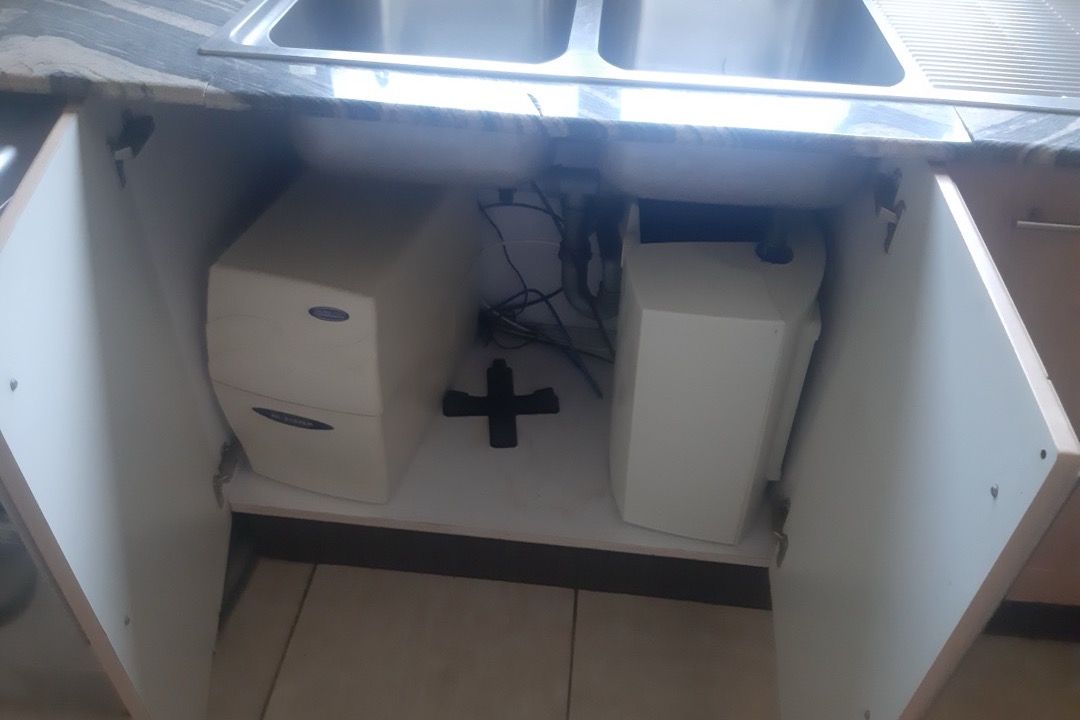
I have spent more time under kitchen sinks and inside utility rooms than I care to count. Fifteen years of general contracting work means I have installed point-of-use water filters in maybe 200 kitchens, helped homeowners size and place whole-house systems in dozens of basements and garages, and seen every failure mode both system types can produce. The under-sink vs whole-house water filter question comes up on almost every kitchen remodel and every well-water inspection I do.
Here is the honest version of that conversation, because the brand-owned articles dominating the search results have a fundamental conflict of interest — they sell whichever system has the higher margin that month. This guide compares both systems on what they actually do, what they cost to install and run, what the install actually involves, and how to decide which one (or both) makes sense for your home.
If you already know which type you want and just need product recommendations, our best kitchen faucets guide covers fixtures with built-in filtration and dedicated faucet hole compatibility for under-sink systems, and our essential tools every new homeowner needs post covers the basic plumbing tools you’ll want on hand for a DIY filter install.
Under-Sink vs Whole-House Water Filters at a Glance
Here is the head-to-head comparison on the spec lines that drive the decision:
| Feature | Under-Sink (Point-of-Use) | Whole-House (Point-of-Entry) |
|---|---|---|
| Where it installs | Under one sink (usually kitchen) | Main water line after the meter |
| Water it treats | One faucet only | Every faucet, shower, and appliance |
| Typical cost (system) | $100 - $500 | $300 - $1,500+ |
| Typical install cost | $0 - $200 (DIY-friendly) | $400 - $1,200 (usually professional) |
| Install time | 1 - 2 hours | 3 - 6 hours |
| Permit often required | No | Yes, in many jurisdictions |
| Filter replacement cost | $60 - $150/year | $80 - $300/year |
| Filter replacement cadence | 6 - 12 months (RO membrane: 2-3 years) | 3 - 12 months (tank media: 5-10 years) |
| Typical flow rate | 0.5 - 1 GPM (RO slower) | 3 - 15+ GPM |
| NSF certifications | 42, 53, 58, 401 commonly | 42, 53, 401 commonly |
| Best for | Drinking and cooking water quality | Whole-home protection, appliances, shower water |
| DIY-friendly | Yes | Marginal — depends on plumbing skills |
| Reversible if you move | Yes (especially renters) | No (permanent main-line modification) |
That table sets up the decision. The rest of this guide explains the context — because the right answer almost always depends on what’s in your water and what you’re trying to accomplish, not on which system has bigger numbers in the marketing copy.
What Each System Actually Does
The two system types treat water at completely different points in your plumbing, and that placement determines what they can and can’t do.
Whole-House (Point-of-Entry) Filters
A whole-house water filter installs on the main water supply line, typically just after the meter and main shutoff valve. Every drop of water entering your home passes through it before reaching any fixture, appliance, or hose bib. Whole-house systems come in two main configurations:
Cartridge-style systems use replaceable filter cartridges housed in 10-inch or 20-inch “Big Blue” sumps. They typically combine a sediment filter (5 to 50 micron) with a carbon block stage to handle particulates, chlorine, and basic chemical contaminants. Flow rates are typically 3 to 7 GPM, and cartridges need replacement every 3 to 12 months.
Tank-based backwashing systems use a larger pressure tank filled with media (catalytic carbon, KDF, activated carbon, or specialty blends) that periodically backwashes itself to flush accumulated contaminants. These deliver higher flow rates (8 to 15+ GPM), last 5 to 10 years before media replacement, and handle harder treatment jobs but cost significantly more upfront.
The whole-house position is ideal for sediment removal, chlorine taste and odor reduction throughout the house, scale prevention before water heaters, and general protection of plumbing and appliances. It is not ideal for high-purity drinking water — the contact time and filtration density required for serious lead, PFAS, or pharmaceutical reduction are difficult to achieve at whole-house flow rates.
Under-Sink (Point-of-Use) Filters
An under-sink water filter installs in the cabinet beneath one fixture — almost always the kitchen sink because that’s where you draw drinking and cooking water. The system taps into the cold-water supply line, runs through one or more filter stages, and delivers treated water through either a dedicated faucet (the standard setup) or an integrated faucet that switches between filtered and unfiltered. Three main configurations cover most of the market:
Multi-stage carbon block systems stack 2 to 4 cartridges in series — typically a sediment pre-filter, one or two carbon block stages, and sometimes a polishing post-filter. They deliver standard sink flow rates (1 to 2 GPM) and excel at chlorine, taste, odor, and certain heavy metals depending on the carbon spec.
Reverse osmosis (RO) systems push water through a semi-permeable membrane that rejects 90+ percent of dissolved solids, including lead, fluoride, arsenic, nitrates, PFAS, and most pharmaceuticals. They produce the cleanest drinking water available at the residential level but flow slowly (typically held in a 2-3 gallon storage tank) and waste 1 to 4 gallons of water per gallon filtered, depending on the membrane efficiency. Newer tankless RO units have reduced waste ratios significantly.
Combination filtration + RO systems integrate carbon pre-filtration with an RO membrane and post-carbon polishing for the most thorough drinking water treatment available without commercial equipment.
Because under-sink systems treat only one fixture, they can use much higher contact times, tighter filters, and more aggressive media without bottlenecking the rest of your plumbing.
What Each System Removes (and What It Doesn’t)
This is the section the brand blogs hand-wave through. Here’s what each system actually handles:
| Contaminant | Whole-House Filter | Under-Sink Carbon | Under-Sink RO |
|---|---|---|---|
| Sediment / rust / particulates | Excellent | Good | Excellent |
| Chlorine taste and odor | Excellent | Excellent | Excellent |
| Chloramines | Good (with catalytic carbon) | Good (with specialty carbon) | Excellent |
| Lead | Limited (specific media) | Good (NSF 53 certified) | Excellent |
| PFAS / forever chemicals | Limited (specialty media) | Good (NSF 53/401 certified) | Excellent |
| Fluoride | No | No (most carbon) | Excellent |
| Arsenic | Limited (specialty media) | No | Excellent |
| Nitrates | No | No | Excellent |
| Bacteria / cysts | No | Some (NSF 53 cyst-rated) | Excellent (with sub-micron) |
| VOCs / pesticides | Good | Excellent | Excellent |
| Hardness (calcium/magnesium) | No (need a softener) | No | Mostly removed |
| Iron | Good (specialty media) | Limited | Limited |
A few patterns to notice. Whole-house carbon filters are workhorses for chlorine and sediment but they’re not the right tool for serious lead, PFAS, fluoride, or microbiological concerns. Under-sink carbon block systems handle a wider range of health-effects contaminants because they can use tighter filters and higher contact time. Under-sink RO is the only residential system that removes dissolved solids comprehensively — fluoride, nitrates, arsenic, and the long tail of contaminants that nothing else touches.
For municipal-water homes worried about treatment chemicals and aging service lines, the combination of a whole-house pre-filter and an under-sink RO covers nearly every concern. For well-water homes, the priority is usually whole-house treatment first (sediment, iron, sometimes hardness) with a polishing under-sink stage for drinking.
Installation Reality: What the Install Actually Involves
This is where my licensed contractor experience differs sharply from brand articles that gloss over installation.
Under-Sink Install: A Real DIY Project
A standard under-sink filter install takes 1 to 2 hours with basic tools you probably already own. The sequence:
- Shut off the cold-water supply valve under the sink
- Disconnect the cold-water supply line from the faucet
- Install a tee fitting or quarter-turn shutoff adapter to tap the cold supply
- Mount the filter housing to the cabinet wall (or set it on the cabinet floor for tank-style RO units)
- Connect inlet and outlet tubing per the manufacturer’s diagram
- Drill a 1-1/4 inch hole through the sink deck for the dedicated faucet (or use an existing soap dispenser hole)
- Install the dedicated faucet, connect it to the filter outlet
- For RO systems, install a saddle drain clamp on the sink trap and connect the wastewater line
- Open the supply valve, flush the system per manufacturer instructions, and check for leaks
The hardest physical step is drilling through a stainless steel sink for the dedicated faucet — slow speed, lubricated step bit, steady pressure. If you’re nervous about it, find an unused soap dispenser hole or use a faucet model that mounts in the existing sprayer hole. Renters can install systems that don’t require drilling and are fully reversible.
For homeowners who don’t want to handle the install themselves, a handyman or plumber will do it in an hour for $100 to $200. Our best bathroom faucets and best kitchen faucets guides cover faucet sets that include or accommodate a dedicated filtered-water spout.
Whole-House Install: Plumbing Skills Required
A whole-house install is a bigger undertaking. You’re cutting into the main water line, which means:
- Locate the main water shutoff after the meter
- Plan a section of pipe with at least 18 to 24 inches of clearance for the filter assembly
- Install a bypass valve loop — three valves that let you isolate the filter for service without shutting off the whole house
- Cut the main line, install transition fittings appropriate to your pipe material (copper sweat, PEX crimp, or push-fit), and tie in the filter inlet and outlet
- Mount the filter housing securely (it’s heavy when full of water — typical 20-inch Big Blue sump weighs 30+ pounds full)
- Pressure-test the connections at full system pressure for at least an hour before walking away
- Flush the system to clear filter media dust before allowing water into the house
Permit requirements vary by jurisdiction — some require a plumbing permit and inspection for any modification to the main water service, others don’t. Check with your local building department before starting. Skipping a required permit can void your homeowner’s insurance if a leak causes damage.
The bypass valve assembly is the part most DIY installations skip and most homeowners regret. Without one, every filter change requires shutting off water to the entire house, draining the line, swapping the cartridge, and re-pressurizing — a 30-minute job becomes a 90-minute disruption. The bypass valve adds $40 to $80 in parts and 20 minutes to the install. Always include it.
For most homeowners, a professional whole-house install at $600 to $1,200 is money well spent. The installer handles the permit, the connections, the pressure test, and the warranty.
Cost Breakdown Over Five Years
Here is what each path actually costs, including realistic install and replacement costs:
| Cost Component | Under-Sink Carbon | Under-Sink RO | Whole-House Cartridge | Whole-House Tank |
|---|---|---|---|---|
| System purchase | $150 - $300 | $250 - $500 | $300 - $700 | $1,000 - $2,500 |
| Installation | $0 - $150 (DIY) | $0 - $200 (DIY) | $400 - $800 (pro) | $600 - $1,500 (pro) |
| Year 1 filter replacements | $60 - $120 | $80 - $200 | $80 - $150 | $0 - $50 |
| Years 2-5 filter replacements | $240 - $480 | $300 - $750 | $320 - $600 | $200 - $400 |
| Total 5-year cost | $450 - $1,050 | $630 - $1,650 | $1,100 - $2,250 | $1,800 - $4,450 |
The combined-stack approach (basic whole-house cartridge filter for sediment and chlorine plus an under-sink RO for drinking and cooking) typically costs $1,500 to $3,500 over five years and delivers performance that beats any single-system approach for municipal-water homes. It’s what I run in my own house and what I recommend for most clients with both appliance-protection and drinking-water concerns.
If your goal is purely drinking water quality, a $400 to $600 under-sink system is the highest-value choice. If your goal is purely appliance and plumbing protection (no drinking water concerns), a $1,200 to $1,500 whole-house cartridge install gets you there. If you have hard water, factor in a separate water softener — neither filter type addresses calcium and magnesium hardness, and untreated hard water destroys water heaters in 5 to 8 years instead of 15.
Maintenance Reality
Both systems need attention, but the cadence and complexity differ.
Under-Sink Maintenance
Replace carbon block cartridges every 6 to 12 months (manufacturer specs vary by capacity and water quality). Replace sediment pre-filters every 3 to 6 months in well-water situations. Replace RO membranes every 2 to 3 years — symptoms of an exhausted membrane include reduced flow, taste change, or noticeable TDS rise if you measure it. Sanitize RO storage tanks annually with a manufacturer-approved sanitizer. Total time per service: 15 to 30 minutes.
The most common maintenance failure I see is homeowners who install a system, never set replacement reminders, and run on dead carbon for two years. Carbon doesn’t fail visibly — it just stops adsorbing contaminants. Set calendar reminders the day you install the system, with replacement cartridges ordered 30 days in advance.
Whole-House Maintenance
Cartridge-style systems need cartridge replacement every 3 to 12 months depending on water quality, sediment load, and cartridge size. Larger 20-inch Big Blue cartridges last longer than 10-inch standard cartridges. Total time per cartridge change: 30 to 45 minutes including draining, swapping, and re-pressurizing (faster with a bypass valve installed).
Tank-based backwashing systems need very little routine attention — the system backwashes itself on a programmed schedule. Media replacement happens every 5 to 10 years and is typically a service call rather than a DIY job, costing $200 to $500 in service plus media. Salt-based softeners (a separate appliance) need salt refills every 4 to 8 weeks.
Skipping whole-house cartridge changes causes flow restriction and pressure drop throughout the house. If you notice your shower pressure dropping over time after installing a whole-house filter, a clogged cartridge is almost always the cause.
Which One Do You Actually Need? A Decision Framework
Here’s the framework I walk clients through:
Choose under-sink only if you’re on municipal water that’s generally clean, you only care about drinking and cooking water quality, you live in a rental or expect to move within a few years, your budget is under $1,000 for the whole project, or your main concerns are lead, PFAS, fluoride, or chlorine taste at the kitchen tap. An under-sink RO or premium carbon block system covers all of those use cases.
Choose whole-house only if you’re on well water with sediment or iron issues, you’re seeing scale buildup on fixtures or in your water heater, you want chlorine-free shower water for skin and hair concerns, you’re protecting expensive appliances (a high-end dishwasher or our best dishwasher brands recommendations) and want chlorine and sediment off the inlet water, or you have aging plumbing that benefits from sediment and corrosion-causing contaminant removal. A whole-house cartridge system handles 80% of these cases at a manageable cost.
Choose both (the layered stack) if you have municipal water with chlorine and want the highest-quality drinking water, you have an older home with potential lead service lines or solder, you’re investing in expensive appliances like a best washer dryer brands machine and want to extend its lifespan, or your budget supports a $2,000 to $4,000 total water treatment investment. The combined stack outperforms either single system and costs less than a high-end whole-house RO.
Add a water softener (separate from filtration) if your water tests above 7 grains per gallon hardness. No filter system removes hardness — softening requires ion exchange with salt or a salt-free conditioner. Hard water destroys water heaters and clogs faucet aerators regardless of whether you filter for chemical contaminants.
The Bottom Line
For most homeowners on municipal water with general drinking-water concerns, an under-sink filter is the right starting point. It’s affordable, DIY-installable, addresses the water you actually drink, and you can upgrade or layer additional systems later. Skip the whole-house system entirely until you have a specific reason to install one — appliance protection, well water issues, or chlorine sensitivity in showers.
For well-water homes or homes with visible sediment, scale, or chlorine throughout, a whole-house cartridge system is the right starting point. It protects everything downstream and prevents the slow appliance damage that hard or sediment-laden water causes. Add an under-sink RO for the highest-quality drinking water once the whole-house system is in place.
The combined stack — whole-house pre-filter plus under-sink RO — is the highest-performance setup for most homes and often the best long-term value. It’s what I recommend on every kitchen remodel where the homeowner is open to a layered approach, and it’s what I installed in my own house after dealing with both city-water chlorine and a separate concern about lead from older fixtures.
Whichever direction you go, get your water tested first, match the system to the actual contaminants you have, and don’t skip the bypass valve on a whole-house install. The wrong filter is the one that doesn’t address what’s actually in your water, and the right filter installed badly causes more problems than no filter at all.
Frequently Asked Questions
Do I need both an under-sink and a whole-house water filter?
Can I install an under-sink water filter myself?
How much does a whole-house water filter cost to install?
Is a whole-house water filter the same as a water softener?
How often do under-sink and whole-house filters need to be replaced?
Related Articles
9 Best Kitchen Faucets of 2026
kitchen-tools
7 Best Dishwasher Brands of 2026
laundry-appliances
Robot Vacuums vs Stick Vacuums: Which One Actually Keeps Your Home Cleaner?
vacuums-floor-care
7 Best Washer and Dryer Brands of 2026
laundry-appliances
Essential Tools Every New Homeowner Needs: A Contractor's Tiered Buying Guide
hand-tools
About the Reviewer

Jake Morrison, Licensed General Contractor
B.S. Construction Management, Purdue University
Jake Morrison has spent 14 years in residential construction and home renovation before founding DIYRated in 2026. After helping hundreds of homeowners choose the right tools and materials for their projects, he started writing the product guides he wished existed when he was starting out. Jake tests every major product recommendation in his workshop in Indianapolis and focuses on real-world performance over spec-sheet marketing.