Best Dehumidifiers of 2026: Jake's Picks After 20+ Years in Basements
Jake Morrison, a licensed general contractor, reviews the 7 best dehumidifiers for basements, crawl spaces, and whole-home use — from budget smart models to contractor-grade units.
Updated
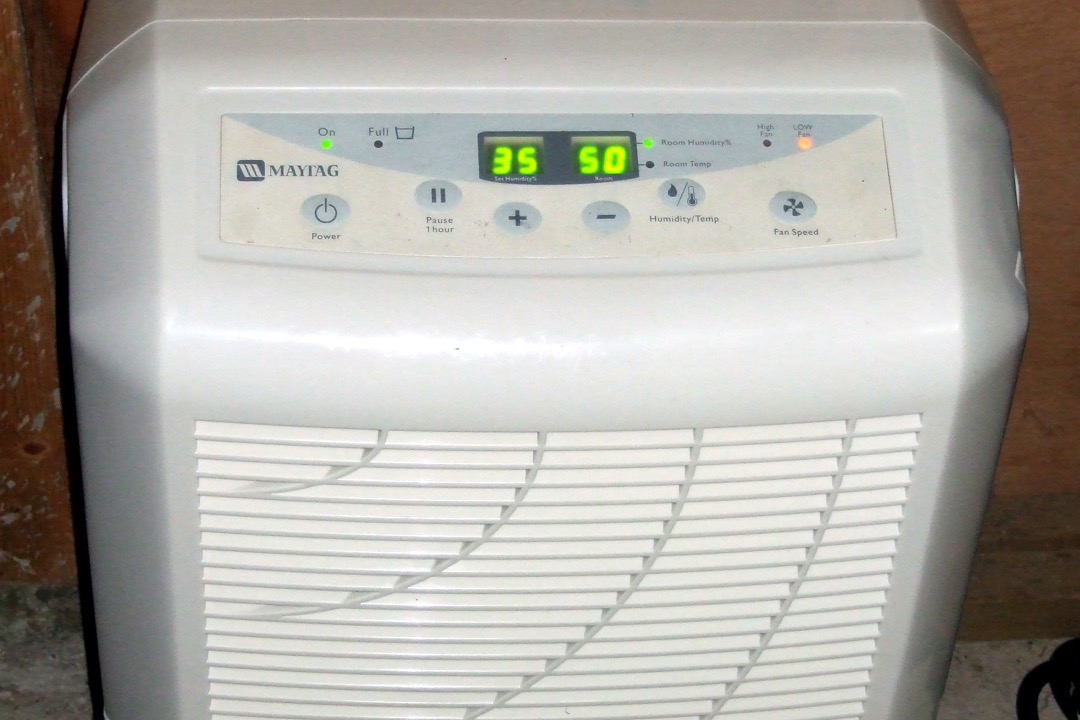
As a licensed general contractor with over 20 years of time spent in basements — diagnosing moisture problems, pulling out ruined drywall, remediating mold, and specifying dehumidification systems before sealing up a crawl space — I can tell you that most homeowners wait too long to buy a dehumidifier. They notice the musty smell in June, see efflorescence on the foundation wall, or find mold on a box of stored items in September. By then, they have already paid for the damage.
Sustained humidity above 60 percent relative humidity is all mold needs to colonize organic materials within 24 to 48 hours. Wood framing, drywall paper, stored boxes, and carpet backing are all susceptible. A dehumidifier running continuously to hold your basement at 45 to 50 percent RH costs you roughly $25 to $40 per month in electricity during summer months. A single professional mold remediation job costs $1,000 to $5,000 depending on the affected area. The math is not close.
For 2026, I researched and evaluated the current dehumidifier market specifically for the use cases that come up most in my contracting work: finished basements used as living spaces, wet unfinished basements with drainage challenges, encapsulated crawl spaces requiring commercial-grade units, and small-space spot applications. Here are the 7 best dehumidifiers you can buy right now, matched to the specific conditions each one handles best.
| Product | Price | Buy |
|---|---|---|
| hOmeLabs 50-Pint Wi-Fi DehumidifierBest Overall | $269.99 | View on Amazon |
| Midea 22-Pint Energy Star Smart DehumidifierBudget Pick | $194.99 | View on Amazon |
| Waykar 150-Pint Energy Star Commercial Dehumidifier with PumpPremium Pick | $360.95 | View on Amazon |
| AlorAir Sentinel HD55S Crawl Space DehumidifierRunner-Up | $551.36 | View on Amazon |
| GoveeLife Smart Dehumidifier 50-Pint | $249.99 | View on Amazon |
| Midea Cube 20-Pint Energy Star Dehumidifier | $179.99 | View on Amazon |
| Pro Breeze Electric Mini Dehumidifier | $43.99 | View on Amazon |
Quick Picks
Best Overall: The hOmeLabs 50-Pint Wi-Fi Dehumidifier earns the top spot on full-size review count, WiFi reliability, and the best combination of capacity and smart features for a typical finished or unfinished basement.
Budget Pick: The Midea 22-Pint is the quietest Energy Star small dehumidifier on Amazon and the smart choice for bedrooms, bathrooms, and smaller spaces where noise and power consumption matter.
Upgrade Pick: The Waykar 150-Pint with built-in pump is the contractor-grade solution for whole-house loads and post-flood scenarios — the pump alone justifies the upgrade when your basement lacks a floor drain.
Runner-Up: The AlorAir Sentinel HD55S is the only correct answer for encapsulated crawl spaces and unattended commercial applications.
Find the Right Dehumidifier for Your Space
Sizing a dehumidifier to the actual space is what separates a unit that runs quietly in the background from one that never keeps up. Jump to the pick that matches where your moisture problem is:
- Best dehumidifier for basements
- Best dehumidifier for mold and musty smell
- Best dehumidifier for whole house
- Best dehumidifier for bathrooms
- Best dehumidifier for crawl spaces
- Best dehumidifier for bedrooms
- Best dehumidifier for garages
- Best dehumidifier for closets, RVs, and gun safes
How I Evaluated These Dehumidifiers
I rated each unit on the criteria that determine real-world performance: AHAM 2019-rated extraction capacity, drainage options and pump capability, auto-defrost performance for cold basements, noise levels relative to install location, Energy Star certification and actual wattage, and tank size for non-drain setups. Every unit in this roundup has verified Amazon reviews that I cross-referenced against independent editorial ratings and my own field experience.
One framework detail matters here: I compare AHAM 2019 ratings only. Some products still reference older DOE saturation ratings or use marketing language like “150-pint” that refers to the maximum extraction under ideal conditions, not real-world basement temperatures. I translate everything to the 2019 AHAM standard in the buyer’s guide section below — read it before you decide.
hOmeLabs 50-Pint Wi-Fi Dehumidifier — Best Overall
The hOmeLabs 50-Pint is the most-reviewed full-size dehumidifier in this roundup for a reason. Over 25,000 verified buyers have taken the time to rate this unit, and the 4.4-star average reflects consistent real-world performance rather than a marketing advantage. When I am recommending a dehumidifier to a homeowner who is not a contractor, review volume is a meaningful proxy for reliability across a range of conditions, and no other compressor unit in this category comes close to the hOmeLabs validation floor. One buying note that trips people up constantly: hOmeLabs sells this unit as one size in a nine-size listing, so confirm the selector reads 7,000 sq ft with Wi-Fi before you check out. The 1,800 sq ft version shares the same product page and is a very different machine.
The WiFi integration is genuinely useful, not a gimmick. Being able to check humidity levels and receive tank-full alerts from your phone means you do not need to walk down to the basement every day to monitor conditions. For a device that is supposed to run continuously and unattended, remote monitoring closes the loop. Alexa and Google Home integration lets you build humidity monitoring into your existing smart home routines — you can ask your assistant for the current basement humidity without opening an app.
Turbo mode is the feature I recommend for the first 48 to 72 hours after a water intrusion event. A burst pipe, a sump pump failure, or a post-storm flood sends humidity above 80 or even 90 percent. Turbo pushes maximum airflow to pull moisture aggressively during that critical window before mold takes hold. Once the space drops below 60 percent, you throttle back to normal operation. If you want to pair this with air quality control upstairs while the basement dries out, a good air purifier running on the main floor helps keep particulates in check.
The main limitation is the lack of a built-in pump. For basements without a floor drain, you are either emptying the 1.6-gallon tank or purchasing an external condensate pump as an add-on. The gravity drain hose is also not included in the box — budget for that separately. For the typical basement with a floor drain, neither issue is a problem. For drain-challenged basements, look at the Waykar.

hOmeLabs 50-Pint Wi-Fi Dehumidifier
by hOmeLabs
Most-reviewed full-size dehumidifier in this roundup, with proven basement performance, reliable WiFi control, and Turbo mode for emergency moisture extraction.
Pros
- Most-reviewed full-size dehumidifier in this roundup with over 25,000 verified ratings — more real-world validation than any other compressor unit here
- Built-in WiFi with Alexa and Google Home integration lets you monitor humidity and check tank status from your phone without going down to the basement
- Turbo mode delivers maximum airflow for rapid post-flood or post-pipe-burst drying when you need to pull moisture aggressively in the first 24 hours
- Sleek low-profile design with clean lines that does not look like commercial equipment — appropriate for finished basements and living spaces
Cons
- No built-in pump — requires gravity drain to a floor drain or regular tank emptying; hose not included in the box
- Large spaces at the high end of the 7,000 sq ft rating may see slower humidity reduction without the pump upgrade
Midea 22-Pint Energy Star Smart Dehumidifier — Best Budget
The Midea 22-Pint is the dehumidifier I recommend to homeowners dealing with a damp bedroom, a small bathroom with persistent condensation, or a modest basement under 1,500 square feet. At 47 dBA, it is quiet enough to run in a finished space while the room is occupied — genuinely quieter than most refrigerators and inaudible across a bedroom.
WiFi with tank-full alerts is rare at this price point in the small-unit category. Most budget dehumidifiers at or below this price are dumb devices with a manual dial and no connectivity. The Midea’s app integration means you get notified when the tank needs emptying rather than discovering it overflowed. For a unit in a bedroom or home office where you want hands-off operation, that notification saves you from the mess of a full tank.
Energy Star certification with 31 percent efficiency improvement over non-certified models at equivalent capacity means real money saved over a season of continuous operation. The auto restart after a power interruption is a feature I specifically look for on basement units — if the power blinks during a storm, a unit without auto restart just stops and stays off until someone walks down and presses the button.
The 0.8-gallon tank is the honest limitation. In peak summer humidity, this tank fills fast. For continuous unattended operation, you need gravity drain set up properly. The 1,500 sq ft coverage also means this unit is exactly what it says — a small-space solution, not a whole-basement dehumidifier. Size it right and it performs well. Try to use it beyond its rated capacity and it falls short.

Midea 22-Pint Energy Star Smart Dehumidifier
by Midea
Quietest and most energy-efficient small dehumidifier in the roundup — ideal for bedrooms, bathrooms, and small basements where noise and power consumption matter.
Pros
- 47 dBA noise level is quiet enough for a bedroom or small office without being disruptive during sleep or focused work
- WiFi connectivity with tank-full alerts to your phone is a genuinely rare feature at this price point in the small-unit category
- Energy Star certified with 31 percent energy savings over non-certified models — real monthly bill reduction for continuous operation
- Auto defrost and auto restart protect the unit in borderline cold conditions and restore settings after a power outage automatically
Cons
- 0.8-gallon tank is the smallest in this roundup and will fill quickly in high-humidity conditions, requiring frequent emptying
- 1,500 sq ft coverage limits this unit to single rooms, bathrooms, and small basements — not a whole-house or large-basement solution
- Some buyers find 47 dB noticeable in very quiet living rooms even though it is well within acceptable range for bedrooms
Waykar 150-Pint Energy Star Dehumidifier with Pump — Upgrade Pick
The Waykar is the unit I specify on renovation jobs where we are sealing a basement after waterproofing and need a dehumidifier that can handle both the initial high-load drying phase and then settle into long-term continuous operation without a floor drain. The built-in pump is the feature that makes this work.
In my experience, the most common reason homeowners do not set up continuous drain on a dehumidifier is that the floor drain is not conveniently located near where the unit needs to be placed — closest to the moisture source, not the nearest drain. The Waykar’s built-in pump pushes water up to 9.84 feet (3 meters) of vertical lift through its dedicated pump hose. You can route it over a utility sink, out a casement window, or up a short run to a laundry drain. Drain placement stops being a constraint.
The 2025 Energy Star certification addresses the complaint I hear most about high-capacity units, which is what they cost to run, and at a 520-watt rated draw this one is reasonable for its class. Auto-defrost and self-drying cover the two service problems I see on basement installs: iced coils in a cool space and a musty unit after a long idle stretch. What it lacks is a temperature-based comfort mode, so set the humidity target yourself. Around 50 percent is right for most basements, and it will hold that setpoint rather than second-guessing it.
There is no WiFi on this unit. For homeowners who want app monitoring, that is a real miss compared to the hOmeLabs. But for a post-flood remediation scenario or a high-load crawl space situation where the pump is the critical feature, the tradeoff is straightforward. Pair it with a shop vac for the initial standing water removal before the dehumidifier takes over.

Waykar 150-Pint Energy Star Commercial Dehumidifier with Pump
by Waykar
Contractor-grade pick for whole-house or post-flood scenarios: the built-in pump removes drain location constraints and the 2025 Energy Star rating keeps operating costs manageable.
Pros
- Built-in condensate pump pushes water up to 9.84 feet (3 meters) through its own pump hose, so it can drain over a utility sink, out a basement window, or to any drain above floor level with no floor drain required
- Highest extraction capacity in this roundup at the equivalent of approximately 65 pints AHAM — handles post-flood basements and high-load commercial-adjacent scenarios
- 2025 Energy Star certified with a 520-watt rated draw, which is efficient for a unit rated at 150 pints under saturation conditions
- Auto-defrost, self-drying, auto-restart with memory, an automatic swing louver and casters suit a unit that runs unattended in a basement, garage, or crawl space access
Cons
- The 520-watt rated draw is still well above the compact units here, so continuous high-load operation adds noticeably to your electric bill
- No WiFi or app connectivity — all control is through the physical panel on the unit
- No temperature-based comfort mode, so it holds the humidity target you set rather than adjusting it with the season
AlorAir Sentinel HD55S — Runner-Up
The AlorAir is not a residential dehumidifier. It is a commercial crawl space unit that happens to be available on Amazon, and the distinction matters enormously. If you are encapsulating a crawl space — vapor barrier on the ground, drainage mat, sealed foundation vents, and a dehumidifier as the final moisture control element — this is the unit that belongs in that system.
The metal housing is the first thing I notice. Every residential dehumidifier in this roundup uses plastic. Plastic holds up fine in a finished basement where conditions are stable. In a crawl space, temperatures swing 40 degrees between seasons, humidity can hit 80-plus percent before the unit gets there, and the unit gets bumped by plumbers, HVAC techs, and pest control contractors. Metal survives that environment indefinitely. Plastic cracks, warps, and degrades. I have pulled out three-year-old residential units from crawl spaces that looked ten years old.
The 5-year warranty is the other critical spec. Standard residential warranties are 1 to 2 years. The AlorAir warranty covers parts and labor for 5 years for a unit running continuously in an unconditioned space — the kind of warranty you only offer when you build the product for that exact use case. cETL certification for continuous unattended operation is the regulatory confirmation of that design intent.
For finished basements or occupied living spaces, the AlorAir is overkill in terms of noise and cost. For an encapsulated crawl space where the unit runs forever in an inaccessible space, it is the right tool for the job. Budget accordingly — this is a contractor-grade purchase, not a consumer appliance.

AlorAir Sentinel HD55S Crawl Space Dehumidifier
by AlorAir
Gold standard for encapsulated crawl spaces — metal housing, 5-year warranty, and cETL certification for safe unattended continuous operation where residential units are not engineered to run.
Pros
- Commercial-grade metal housing is built for continuous unattended operation in crawl spaces, mechanical rooms, and unconditioned basements where plastic-housing consumer units fail prematurely
- 5-year warranty is the longest in this roundup by a wide margin — AlorAir backs this unit for conditions where standard consumer warranties explicitly void coverage
- Low-profile horizontal design at 22.5 inches wide fits in encapsulated crawl spaces where vertical-standing units cannot — designed specifically for the install environment
- cETL certified for unattended continuous operation — the safety certification that matters for a unit running 24/7 in an inaccessible space
Cons
- No water tank — requires a permanent gravity drain line or pump; there is no manual emptying option for this unit
- Commercial compressor runs louder than residential units and is not appropriate for conditioned living spaces or bedrooms
- Premium price reflects the commercial-grade build and 5-year warranty but is a significant step up from residential options
GoveeLife Smart Dehumidifier 50-Pint — Best Smart Home Integration
The GoveeLife earns its spot in this roundup for buyers who are deep in a smart home ecosystem and want their basement humidity to participate in it. Alexa, Google Home, IFTTT, and native Govee app control covers every platform most homeowners use. The IFTTT integration in particular allows automation rules that go beyond what the other WiFi-enabled units support — you can trigger humidity readings, set up conditional alerts, and integrate with other smart sensors and switches.
The 2.0-gallon tank is the largest among the full-size WiFi units here — 2.5 times the capacity of the Midea 22-pint and 25 percent larger than the hOmeLabs, with only the compact Midea Cube carrying a bigger one. In moderate summer humidity, that means fewer trips downstairs to empty it. The R32 refrigerant has a significantly lower global warming potential than the R410A used in most competing units — a real environmental differentiator for buyers who care about the lifecycle impact of their appliances.
Tom’s Guide’s “first class” editorial rating is meaningful here. The GoveeLife has also become genuinely aggressive on price lately — it currently undercuts the hOmeLabs while matching it on capacity and beating it on smart-home depth, which makes the IFTTT and Bluetooth integration close to a free upgrade rather than a premium. If your smart home routine already involves humidity-triggered automations or you want IFTTT integration, this is the unit.
The no-pump limitation applies here the same as the hOmeLabs — plan for gravity drain or tank emptying. WiFi setup requiring 2.4 GHz and location permissions is a one-time friction that users report in reviews, but once configured the app performance is consistently described as reliable.

GoveeLife Smart Dehumidifier 50-Pint
by GoveeLife
Best smart home integration in the category — full Alexa, Google, IFTTT, and Bluetooth connectivity with the largest tank among WiFi-enabled units in this roundup.
Pros
- Most comprehensive smart home integration in the category — Alexa, Google Home, IFTTT, and Bluetooth plus WiFi for backup connectivity when your router has issues
- 2.0-gallon tank is the largest among the full-size WiFi units here, reducing emptying frequency significantly during high-humidity summer months — only the compact Midea Cube carries a bigger one
- R32 refrigerant has a lower global warming potential than the older R410A used in competing units — better environmental profile for long-term operation
- DOE/CEC/FCC certified with Tom's Guide 'first class' editorial rating — independent validation beyond just review count
Cons
- No built-in pump — 2.0-gallon tank still requires emptying or a floor drain for continuous unattended operation in a sealed basement
- WiFi setup requires 2.4 GHz network and mobile location permissions, which some users find intrusive and causes initial setup frustration
Midea Cube 20-Pint Energy Star Dehumidifier — Best for Small Spaces with Smart Features
The Midea Cube solves a specific problem that anyone who has owned a small dehumidifier knows well: you set it up in a bedroom or small office, it works great, and then you have to empty the half-gallon tank every day or two. The Cube’s 3.2-gallon tank — roughly three to four times the capacity of competitors in the same pint class — means you fill it every few days instead of every day.
The fold-flat design is the other genuine innovation. Every other dehumidifier in this roundup is a fixed form factor that takes up the same storage footprint year-round. The Cube collapses to about half its operating height for off-season storage — meaningful in a finished basement or bedroom closet where space matters. No other unit in this category does this.
Wirecutter’s designation as the best small dehumidifier reflects exactly this logic: for the use case of a small, occupied space where WiFi monitoring and infrequent tank emptying matter more than raw extraction capacity, the Cube wins on design intelligence. You can monitor it alongside your ceiling fan settings in the same smart home app for a complete comfort control setup.
The trade-off is extraction capacity relative to price. The Midea 22-pint costs less and extracts more pints per day. The Cube costs more for less capacity. But if you are buying the Cube, you are buying it for the tank size and the fold-flat storage, not the extraction rate, and for that specific use case the premium is justified.

Midea Cube 20-Pint Energy Star Dehumidifier
by Midea
Most innovative small dehumidifier on Amazon — the massive 3.2-gallon tank and fold-flat Cube design solve the two biggest frustrations with small unit ownership.
Pros
- 3.2-gallon tank is three times the capacity of conventional small dehumidifiers — dramatically reduces how often you need to empty it compared to standard 0.8 to 1.0-gallon competitors
- Fold-flat Cube design collapses for off-season storage at roughly half the footprint — the only dehumidifier in this roundup specifically engineered for compact storage
- WiFi with Alexa and Google Home integration at the 20-pint size class — smart home connectivity that most small units reserve for larger capacity models
- Wirecutter's best small dehumidifier pick — sustained editorial recommendation from the most rigorous consumer testing outlet
Cons
- More expensive than the Midea 22-pint for less AHAM extraction capacity — you are paying for the tank and design, not raw dehumidification power
- Some buyers report intermittent app connectivity issues with the Midea app requiring router restarts or app reinstalls to resolve
Pro Breeze Electric Mini Dehumidifier — Best for Spot Applications
The Pro Breeze is not a dehumidifier for basements, crawl spaces, or any room-level moisture problem. It is a spot unit for enclosed small volumes: a gun safe, a closet, an RV cabinet, a boat storage area, or a bathroom vanity. In those applications, it is genuinely excellent. Over 42,000 Amazon reviews confirm that this unit performs reliably for the use cases it was actually designed for.
The Peltier thermoelectric design means no compressor, no noise, and 23 watts of power consumption. Running it continuously in a closet costs less than running a night light. Auto shutoff with an LED indicator prevents tank overflow in unmonitored spaces. For protecting stored items in a small enclosed space from seasonal humidity, this is the right tool at the right price.
The critical caveat: this unit extracts approximately 9 ounces of water per day under favorable conditions. A finished basement generates many times that moisture load every day in summer. If you buy this thinking it will dehumidify your basement, you will be disappointed — performance will not match expectations, and you will wonder why it “doesn’t work.” It works perfectly — just not in the application you specified it for. Read the product description carefully and match the tool to the problem.

Pro Breeze Electric Mini Dehumidifier
by Pro Breeze
Targeted supplemental solution for closets, RVs, gun safes, and bathroom vanities — sets realistic expectations as a spot unit, not a basement dehumidifier.
Pros
- Over 42,000 verified reviews make this the most socially validated spot dehumidifier on Amazon — unmatched purchase confidence for a supplemental unit
- Peltier thermoelectric design operates virtually silently with no compressor — genuinely inaudible in closets, gun safes, RVs, and boat cabins
- 23 watts power draw costs under $0.10 per day to run continuously — negligible electricity cost for perennial closet or cabinet protection
- Auto shutoff with LED indicator prevents overflow when the 16-oz tank fills — no monitoring required for low-demand spot applications
Cons
- Thermoelectric technology extracts only approximately 9 oz of water per day — completely inadequate for any basement, crawl space, or room-level dehumidification
- Performance stops below 41°F and drops off significantly below 59°F — useless in unheated garages, crawl spaces, or cold basements in winter
- 16-oz tank fills within 1-2 days in genuinely humid conditions, requiring more frequent attention than the convenience premise suggests
Best Dehumidifier for Basements
Basements are the default job for a dehumidifier, and the two things that matter most are AHAM-rated capacity sized to the square footage and a drainage plan so you are not emptying a tank twice a day. A finished basement under 1,500 sq ft can run a 50-pint unit off gravity drain; a large, damp, or unfinished basement wants either the highest capacity or a built-in pump if there is no floor drain below the unit. The hOmeLabs covers most basements with proven reliability, the Waykar’s pump handles the wettest cases where drainage is a problem, and the GoveeLife adds full smart-home automation for a set-and-forget basement.
| Product | Price | Buy |
|---|---|---|
| hOmeLabs 50-Pint Wi-Fi DehumidifierBest for Basements 50-pint capacity + WiFi covers most finished and unfinished basements; the most-reviewed full-size unit here. | $269.99 | View on Amazon |
| Waykar 150-Pint Energy Star Commercial Dehumidifier with PumpBest for Large/Wet Basements Built-in pump lifts water about 3m (9.84 ft) vertically, the fix when your basement has no floor drain below the unit. | $360.95 | View on Amazon |
| GoveeLife Smart Dehumidifier 50-PintBest Smart Basement Alexa/Google/IFTTT automation and a 2-gallon tank for a truly set-and-forget basement. | $249.99 | View on Amazon |
Best Dehumidifier for Mold and Musty Smell
Mold and that musty basement odor are both humidity problems — hold relative humidity under 50% and you remove the condition mold and mildew need to grow. That means running a correctly sized unit continuously, ideally on a hygrostat, not reacting after spores already appear. The hOmeLabs holds a whole basement under the mold threshold for everyday prevention, the Waykar’s contractor-grade extraction is what you want after a flood or on active black mold, and the AlorAir keeps an encapsulated crawl space — the most common hidden mold source in a house — permanently dry.
| Product | Price | Buy |
|---|---|---|
| hOmeLabs 50-Pint Wi-Fi DehumidifierBest Overall for Mold Holds a full basement under 50% RH continuously — the humidity ceiling that stops mold and musty odor. | $269.99 | View on Amazon |
| Waykar 150-Pint Energy Star Commercial Dehumidifier with PumpBest for Post-Flood & Black Mold Contractor-grade extraction + pump for drying out after a flood or attacking active black mold fast. | $360.95 | View on Amazon |
| AlorAir Sentinel HD55S Crawl Space DehumidifierBest for Crawl-Space Mold Metal-housing crawl-space unit that runs unattended to kill the hidden mold source under the house. | $551.36 | View on Amazon |
A dehumidifier removes the moisture, but airborne spores and lingering odor also want filtration — pair it with one of the best air purifiers for home for the fastest path to clean, odor-free air.
Best Dehumidifier for Whole House
Whole-house moisture control means sizing for the total conditioned area, not one room — an undersized unit simply runs 24/7 and never reaches target humidity. For 2,500+ sq ft you want maximum extraction, a pump so you can drain anywhere, and smart monitoring to watch humidity across zones. The Waykar’s 150-pint saturation rating and pump make it the whole-house workhorse, the GoveeLife covers large open floor plans with app-based humidity control, and the hOmeLabs anchors a big finished basement that feeds the rest of the house.
| Product | Price | Buy |
|---|---|---|
| Waykar 150-Pint Energy Star Commercial Dehumidifier with PumpBest for Whole House 150-pint saturation extraction + pump — the highest-capacity workhorse for 2,500+ sq ft homes. | $360.95 | View on Amazon |
| GoveeLife Smart Dehumidifier 50-PintBest Large-Area Smart 4,500 sq ft coverage with app humidity control for large open floor plans across multiple zones. | $249.99 | View on Amazon |
| hOmeLabs 50-Pint Wi-Fi DehumidifierBest Value Whole-House 7,000 sq ft rated coverage anchors a big basement that dries the whole house from below. | $269.99 | View on Amazon |
Best Dehumidifier for Bathrooms
Bathrooms are a small-space, high-humidity spike problem — you need a compact unit quiet enough to leave running and a tank big enough that you are not emptying it after every few showers. Full-size compressors are overkill; the sweet spot is a small Energy Star unit or a large-tank compact. The Midea 22-Pint is quiet and efficient for a full bathroom or connected laundry, the Midea Cube’s 3.2-gallon tank means far fewer emptyings in a room without a drain, and the Pro Breeze mini handles a half-bath or vanity where anything larger will not fit.
| Product | Price | Buy |
|---|---|---|
| Midea 22-Pint Energy Star Smart DehumidifierBest for Bathrooms 47 dBA and Energy Star — quiet enough to leave running in a full bath or connected laundry. | $194.99 | View on Amazon |
| Midea Cube 20-Pint Energy Star DehumidifierBest Big-Tank Compact 3.2-gallon tank is the largest among compacts, so a drain-less bathroom needs emptying far less often. | $179.99 | View on Amazon |
| Pro Breeze Electric Mini DehumidifierBest for Half-Baths & Vanities Silent Peltier unit sized for a half-bath, vanity cabinet, or under-sink damp spot. | $43.99 | View on Amazon |
Best Dehumidifier for Crawl Spaces
Crawl spaces are the one job a normal basement dehumidifier is not built for — they run in low temperatures, high saturation, and total neglect, which kills residential units fast. You want a low-temperature-rated, metal-housed unit with continuous gravity or pump drainage and no tank to overflow. The AlorAir Sentinel HD55S is purpose-built for encapsulated crawl spaces with a 5-year warranty and cETL certification for unattended running, the Waykar’s pump clears a large or wet crawl space with a long vertical drain lift, and the hOmeLabs is the budget option for a drier, sealed, temperature-stable crawl.
| Product | Price | Buy |
|---|---|---|
| AlorAir Sentinel HD55S Crawl Space DehumidifierBest for Crawl Spaces Purpose-built metal-housing crawl-space unit; cETL-certified for safe unattended continuous running. | $551.36 | View on Amazon |
| Waykar 150-Pint Energy Star Commercial Dehumidifier with PumpBest for Large/Wet Crawl Spaces Pump-equipped extraction with a 3m (9.84 ft) vertical lift for a large or persistently wet crawl space. | $360.95 | View on Amazon |
| hOmeLabs 50-Pint Wi-Fi DehumidifierBest Budget Crawl Space The budget choice for a dry, sealed, temperature-stable crawl that does not need commercial gear. | $269.99 | View on Amazon |
Best Dehumidifier for Bedrooms
A bedroom dehumidifier lives or dies on noise and refill frequency — anything loud gets unplugged, and a small tank that fills overnight defeats the purpose. Target a quiet Energy Star compact with the biggest tank you can get, or a smart unit you can schedule to run while you are out. The Midea 22-Pint at 47 dBA is the quietest full unit here, the Midea Cube pairs quiet operation with a 3.2-gallon tank so it runs for days between emptyings, and the GoveeLife lets you schedule and monitor humidity from your phone.
| Product | Price | Buy |
|---|---|---|
| Midea 22-Pint Energy Star Smart DehumidifierBest for Bedrooms 47 dBA is the quietest full-size unit in the roundup — background-quiet for light sleepers. | $194.99 | View on Amazon |
| Midea Cube 20-Pint Energy Star DehumidifierBest Low-Refill Bedroom 3.2-gallon tank runs for days between emptyings, so it never fills up in the middle of the night. | $179.99 | View on Amazon |
| GoveeLife Smart Dehumidifier 50-PintBest Smart Bedroom Schedule it to run while you are at work and check humidity from your phone before bed. | $249.99 | View on Amazon |
Best Dehumidifier for Garages
Garages combine a large, often unheated volume with big humidity swings from vehicles, tools, and outdoor air — you need high coverage and cold-tolerant operation, plus a pump or gravity drain since garages rarely have a convenient sink. The Waykar’s capacity and pump handle a full two- or three-car garage, the hOmeLabs covers a standard attached garage on the cheap, and the AlorAir’s metal housing and low-temperature rating suit an unheated detached garage or workshop that drops below what residential units tolerate.
| Product | Price | Buy |
|---|---|---|
| Waykar 150-Pint Energy Star Commercial Dehumidifier with PumpBest for Garages High capacity + pump dries a full two- or three-car garage and drains anywhere, no floor sink needed. | $360.95 | View on Amazon |
| hOmeLabs 50-Pint Wi-Fi DehumidifierBest Value Garage 7,000 sq ft rated coverage handles a standard attached garage at the lowest cost. | $269.99 | View on Amazon |
| AlorAir Sentinel HD55S Crawl Space DehumidifierBest for Cold/Unheated Garages Metal housing + low-temperature rating for an unheated detached garage or workshop that gets cold. | $551.36 | View on Amazon |
Best Dehumidifier for Closets, RVs, and Gun Safes
Small enclosed spaces — closets, RVs, campers, boats, gun safes, and cabinets — do not need extraction capacity; they need a quiet, compressor-free unit that will not overwhelm a tiny volume or run up power draw. A Peltier (thermo-electric) mini is the right tool: silent, light, and sized for cubic feet rather than square feet. For a walk-in closet or larger RV that runs warm, the big-tank Midea Cube steps up when a mini cannot keep pace.
| Product | Price | Buy |
|---|---|---|
| Pro Breeze Electric Mini DehumidifierBest for Closets & Gun Safes Silent Peltier mini sized for a closet, gun safe, RV cabinet, or boat locker — no compressor noise or vibration. | $43.99 | View on Amazon |
| Midea Cube 20-Pint Energy Star DehumidifierBest for Larger Closets & RVs When a mini cannot keep up in a walk-in closet or warm RV, the 3.2-gallon Cube runs for days between emptyings. | $179.99 | View on Amazon |
Understanding the AHAM 2019 Standard — The Number That Changes Everything
Before you shop, read this section. It will save you from buying the wrong size unit.
Prior to 2019, the DOE tested dehumidifiers at 80°F and 60% relative humidity — conditions warmer than most basements, which inflated rated extraction numbers. A unit tested at 80°F extracts significantly more water than the same unit at 65°F because warm air holds more moisture. In 2019, the standard changed to 65°F and 60% RH, which better reflects average US basement temperatures.
The result: every unit’s rated capacity dropped by roughly 30 percent. An old “70-pint” unit became a “50-pint” unit under the new standard — same compressor, same refrigerant, same real-world performance, different number on the box.
What this means when shopping: if you are comparing a new 2025 unit to an older dehumidifier you might be replacing, a new 50-pint unit performs approximately the same as your old 70-pint unit. Do not read the new number and think you are getting a less capable machine — you are getting the same machine with honest labeling. And do not buy based on a competitor’s older 70-pint rating thinking you are getting more capacity than a current 50-pint unit. Verify the testing standard before comparing numbers.
Gravity Drain Setup — How to Do It Right
The most common installation mistake I see is improper gravity drain setup that results in the unit turning itself off because the “tank full” sensor triggers even though the hose is attached. Here is how to avoid it.
Gravity drainage requires a true downhill slope from the drain port to the termination point. The drain connection on most units is on the back or side of the housing, typically 12 to 18 inches off the floor. Your floor drain, laundry tub, or condensate drain needs to be lower than that connection point for gravity to work.
Use a 5/8-inch garden hose or the included drain hose, routed without sharp bends or upward loops. Any upward loop in the hose creates a trap where water pools and blocks drainage — the unit senses back pressure, thinks the tank is full, and shuts off. Run the hose in a continuous downward slope to the drain point.
If your drain is not conveniently located, your two options are repositioning the unit closer to the drain or adding an external condensate pump. External add-on pumps are inexpensive and can push water over a utility sink or out a window when a floor drain is not accessible. The built-in pump on the Waykar eliminates this entire problem at the cost of a higher unit price.
How to Choose the Best Dehumidifier
The buyer’s guide factors in the frontmatter section above expand on each criterion. Here is the short version for quick decisions.
One sizing note before the picks: in humid climates, half of what feels like an undersized air conditioner is actually a humidity problem — an oversized AC short-cycles and never wrings the air dry. Size the AC honestly with my free BTU calculator and let a right-sized dehumidifier handle the moisture; the pair outperforms one oversized unit on both comfort and the electric bill.
Space under 1,500 sq ft, need quiet operation: Midea 22-pint if you want the smallest and quietest; Midea Cube if tank capacity is your priority.
Typical finished basement 1,500 to 3,000 sq ft with floor drain: hOmeLabs 50-pint. The review count, WiFi, and extraction capacity hit the sweet spot for this application.
Basement over 3,000 sq ft, post-flood, or no floor drain: Waykar 150-pint with built-in pump. The pump eliminates drain constraints that ground every other high-capacity unit in challenging basements.
Encapsulated crawl space or unattended continuous operation: AlorAir Sentinel HD55S. Metal housing, 5-year warranty, cETL certification — this is the only unit in this roundup designed and warranted for that specific install environment.
Deep smart home integration with IFTTT: GoveeLife Smart 50-pint.
Closet, RV, gun safe, or enclosed storage spot: Pro Breeze Mini. Do not put a compressor unit in a space this small.
Buyer's Guide
I have installed, diagnosed, and replaced dehumidifiers in hundreds of basements and crawl spaces across my contracting career. Here are the six factors I evaluate on every job before recommending a unit.
Capacity and the AHAM 2019 Standard
The single biggest source of consumer confusion in the dehumidifier category is the 2019 DOE testing standard change. Before 2019, manufacturers tested at 80°F and 60% relative humidity — warm, humid conditions that made extraction numbers look impressive. The 2019 standard moved testing to 65°F and 60% RH, which better reflects real basement temperatures but cut the rated pint numbers roughly in half. A unit labeled 50-pint today extracts the same water as an old 70-pint label. Always compare AHAM 2019 ratings, never mix old and new labels, and size up if your basement runs cooler than 65°F since units extract less at lower temperatures regardless of what the spec sheet claims.
Drainage: Gravity vs. Built-in Pump
Every dehumidifier needs somewhere to put the water it pulls from the air. If you have a floor drain within reach, gravity drainage is the simplest, most reliable option — the hose runs downhill and water drains continuously with zero maintenance. If your basement lacks a floor drain or your drain is at an inconvenient location, a unit with a built-in condensate pump is essential. Built-in pumps push water upward and over long horizontal runs — the Waykar's built-in pump lifts water up to 9.84 feet to drain over a utility sink or out a basement window. I have seen more dehumidifiers abandoned because of drainage headaches than any other reason. Get the drain situation right before you buy the unit.
Auto-Defrost for Cold Basements
Compressor-based dehumidifiers — which is every unit in this roundup except the Pro Breeze — stop working reliably once ambient temperature drops below 60°F. The refrigerant coils ice over, blocking airflow and halting moisture extraction. Auto-defrost temporarily reverses the refrigerant cycle to melt the ice and resume operation, but it is not magic — a unit in a 50°F basement will spend a significant portion of its runtime in defrost rather than dehumidifying. If your basement stays below 55°F year-round, a desiccant dehumidifier is the technically correct tool. If it dips below 60°F in winter but warms above 65°F in summer, a compressor unit with auto-defrost handles the seasonal variation. Verify auto-defrost is listed before buying for any space that sees sub-60°F temperatures.
Energy Star Certification and Running Costs
A dehumidifier runs continuously for months at a stretch during humid seasons — often 12 to 16 hours a day or more. Energy Star certification guarantees a minimum efficiency threshold that saves roughly 30 percent on operating costs versus non-certified units at equivalent capacity. Over a humid summer running five months, that 30 percent savings translates to a real dollar reduction on your electric bill every month. Beyond the certification label, look at the actual rated wattage. The difference between a 295-watt Midea and a 520-watt Waykar running the same number of hours adds up to well over a hundred dollars across a humid season. Factor in your specific climate — homes in the Southeast running a dehumidifier nearly year-round see dramatically higher operating cost differences than homes in the Pacific Northwest running theirs for three months.
Noise Level by Use Location
Where you install the dehumidifier determines how much noise matters. In an unfinished basement, mechanical room, or encapsulated crawl space, noise is irrelevant — you close the door and forget it exists. In a finished basement used as a living space, home office, or bedroom, noise matters enormously. Units with dBA ratings in the 40s are suitable for occupied spaces — the Midea 22-pint at 47 dBA is legitimately quiet. Units at 50-plus dBA become background drone that wears on people during extended periods. Commercial units like the AlorAir are loud by design and should only be specified for unconditioned spaces. If you are installing in a finished room, verify the rated noise level and look for user reviews that confirm it matches the spec — manufacturers occasionally claim lower numbers than reality.
Tank Size vs. Continuous Drain Setup
If you choose tank operation over continuous drain, tank size determines how often you are carrying water upstairs. Standard small-unit tanks hold 0.8 to 1.5 gallons and fill within a day in high-humidity conditions. The Midea Cube's 3.2-gallon tank is a genuine innovation — in moderate conditions it can go three or four days between empties. Large-capacity units like the hOmeLabs and Waykar hold 1.6 to 1.85 gallons, but at their extraction rates those tanks fill in hours, not days. For any high-capacity unit running in a seriously damp space, tank operation is not realistic — plan for continuous drain with a gravity setup or a built-in pump. Tank operation works well for small units in moderately humid bedrooms or offices where the extraction rate is lower.
Final Verdict
For the vast majority of homeowners dealing with a damp or humid basement, the hOmeLabs 50-Pint Wi-Fi Dehumidifier is the best overall purchase. The review volume confirms reliability at scale, the WiFi integration closes the monitoring loop, and the 50-pint AHAM 2019 capacity handles spaces up to 7,000 square feet with room to spare. If your basement has a floor drain and you want a unit you can set and forget with your phone, this is the one.
For budget buyers dealing with smaller spaces — a bedroom, a finished basement room, or a bathroom — the Midea 22-Pint delivers quiet, Energy Star-certified dehumidification with WiFi at a price that makes the upgrade from a no-name unit an easy call.
And if you are renovating a crawl space, dealing with a post-flood basement, or need a unit that runs continuously in an unconditioned space for years without service calls, invest in the right tool from the start. Either the Waykar for its built-in pump capability or the AlorAir for crawl space and commercial applications will cost more upfront and save you significantly more in avoided moisture damage and replacement costs over the life of the installation. The same principle applies whether you are buying a dehumidifier or a portable generator — the cost of underbuy is almost always higher than the cost of buying right the first time.
Frequently Asked Questions
How many pints do I need for my basement?
Why does my dehumidifier keep icing up?
Pump vs. gravity drain — which do I actually need?
How much does it cost to run a dehumidifier?
What humidity level should I set my dehumidifier to?
Related Articles
About the Reviewer

Jake Morrison, Licensed General Contractor
B.S. Construction Management, Purdue University
Jake Morrison has spent 14 years in residential construction and home renovation before founding DIYRated in 2026. After helping hundreds of homeowners choose the right tools and materials for their projects, he started writing the product guides he wished existed when he was starting out. Jake tests every major product recommendation in his workshop in Indianapolis and focuses on real-world performance over spec-sheet marketing.