9 Best Garage Storage Systems of 2026
Jake Morrison, Licensed General Contractor, ranks the 9 best garage storage systems for overhead, wall, shelving, and cabinets — with real install advice for drywall, studs, and concrete.
Updated
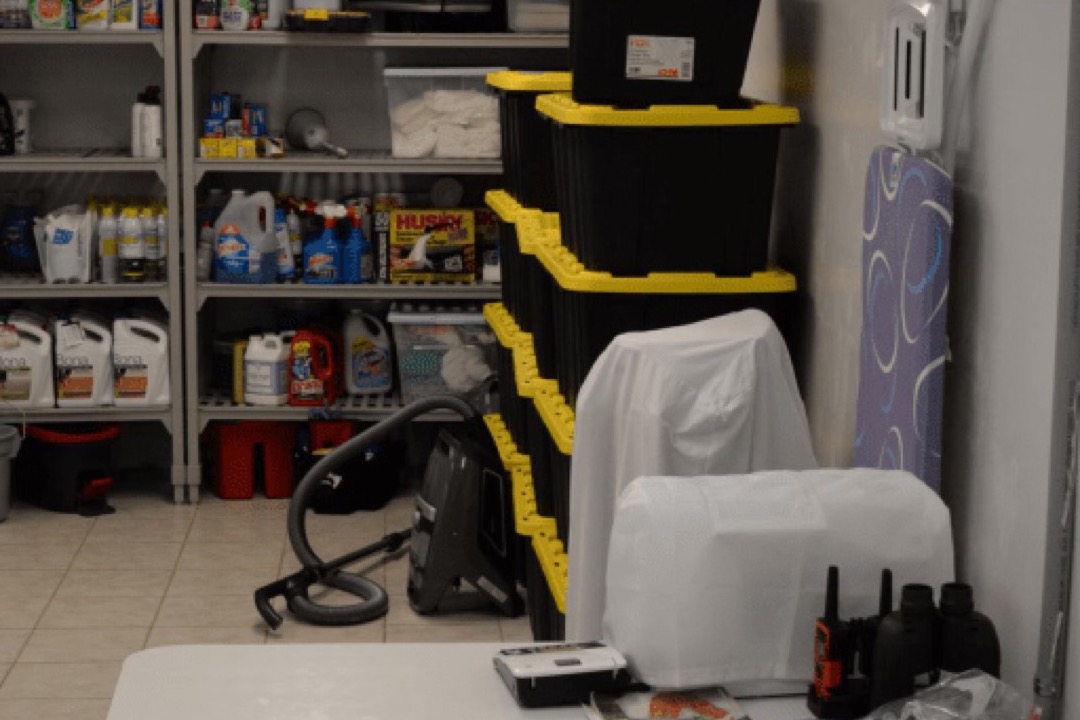
Spring is when garage organization becomes urgent. The snow blower comes off the wall to make room for the lawn mower, the holiday totes need to go back overhead, and somewhere in there a homeowner finally decides that the rake-leaning-against-the-water-heater situation has gone on long enough. After two decades as a licensed general contractor, I have installed and uninstalled hundreds of garage storage systems in client homes — overhead racks, rail tracks, pegboard panels, and steel shelving. Most of what I install has come from a small handful of brands that earn their reputation through real load ratings, sensible install hardware, and warranty coverage that survives five winters in an unheated detached garage.
This roundup focuses on what I actually specify for clients on Amazon — overhead racks, freestanding shelving, wall-mount track systems, metal pegboard, and floating wall shelves — because those categories cover roughly 95 percent of real garage storage needs. A note before we start: Husky, NewAge, Gladiator’s full slatwall panel kits, and Proslat are popular store-exclusive brands that some readers will be familiar with, and they make perfectly good products. They are sold primarily through Home Depot, Lowe’s, and direct rather than Amazon, so this Amazon-focused roundup picks the best available equivalents from brands that ship with Prime. If a NewAge cabinet system is your endgame, buy it at Home Depot. For everything else covered here — overhead, rail, shelving, pegboard — what follows is the right starting point.
I evaluated the systems below across real install conditions: drywall over wood studs, drywall over steel studs, exposed CMU walls, finished and unfinished ceiling joists, and a couple of weird old-house garages with plaster-and-lath. The nine picks below — overhead racks in two sizes, budget and heavy-duty shelving, a locking cabinet, two wall-track systems, floating wall shelves, and a metal pegboard — are what I trust to hold weight for ten-plus years without a callback. If you are building out the rest of your garage workshop alongside the storage, pair these systems with a quality cordless drill for install and good LED shop lights so you can actually see what you are doing under the rack at midnight in February.
Find the Right Garage Storage System for Your Space
Every system above is reviewed in full below. Jump to the storage type that fits your garage:
- Best garage storage cabinets
- Best garage shelving
- Best overhead garage storage
- Best wall-mounted garage storage
How We Chose These Garage Storage Systems
I evaluated each system against the same criteria I apply when specifying storage for a client’s garage: realistic load capacity at the mounting surface, fastener hardware quality, install difficulty for a two-person homeowner crew, warranty terms, and long-term durability in an unconditioned space. I gave significant weight to install hardware — the brackets, lag bolts, and templates that ship with the kit — because those are what determine whether a Saturday install finishes by dinner or drags into Sunday afternoon.
I also scored each system on garage-zone fit. Garage storage is not a one-system-solves-all problem — overhead, walls, and floor space each demand a different solution. The picks below cover all four zones of a typical two-car garage — floor shelving and cabinets, wall track and pegboard, and ceiling overhead in two sizes — so you can mix systems that work together rather than compete for the same space.
FLEXIMOUNTS 4x8 Overhead Garage Storage Rack — Best Overall
The FLEXIMOUNTS Classic 4x8 is the rack I install most often for clients, and it has been for years. The 600 lb rated capacity is real — the cold-rolled steel platform does not deflect visibly under typical loads of holiday totes, seasonal tires, and camping gear, and after several years of installs I have never had a callback for sag or bracket failure on a properly installed unit. That is the bar an overhead rack has to meet, because the failure mode is a 400-pound payload landing on a parked vehicle.
The adjustable drop range from 22 to 40 inches is the spec that matters most for fitting real garages. A 22-inch drop tucks the rack tight to a 9-foot ceiling for clearance over a sedan, while a 40-inch drop accommodates a tall truck or an SUV with a roof rack underneath. Measure the highest point of your tallest vehicle plus a 6-inch clearance buffer, then pick your drop accordingly. I usually install at 28 to 32 inches in standard 8-foot ceiling garages, which leaves comfortable clearance for a midsize SUV.
Install is a two-person job that takes roughly 90 minutes once the joists are mapped. The kit ships with a paper template that aligns the bracket holes to standard 16-inch or 24-inch joist spacing — find your joists with a quality stud finder rated for ceilings, mark the centerlines with painter’s tape across all four bracket positions, and pre-drill 1/4-inch pilot holes before driving the included 5/16-inch lag bolts to 2.5-inch minimum embedment. One person holds the bracket against the ceiling while the second drives the lag bolts with an impact driver and a 9/16-inch socket. Once both pairs of brackets are up, the platform lifts onto the cross-braces with two people and bolts in from below in about three minutes. Drywall ceilings without joist access require either strapping (perpendicular furring) or blocking between joists — adds a couple hours and changes the install difficulty meaningfully, so verify joist accessibility before ordering.

FLEXIMOUNTS 4x8 Overhead Garage Storage Rack, Classic Series
by FLEXIMOUNTS
The FLEXIMOUNTS Classic 4x8 is the overhead rack I install most often for clients — proven 600 lb capacity, adjustable drop to clear any vehicle, and hardware that makes a clean joist-mounted installation realistic for a two-person homeowner project.
Pros
- 600 lb load capacity across the full 4x8 platform handles seasonal totes, holiday decorations, and bulky bins without sag or deflection in long-term use
- Adjustable ceiling drop from 22 inches to 40 inches lets you tune clearance to match parked vehicle height — critical for SUVs and full-size trucks under the rack
- Heavy-gauge cold-rolled steel construction with powder coat finish resists rust in damp garage environments far better than the painted-tube competitors
- Includes lag bolts and a paper template that aligns the bracket holes with ceiling joists, which makes a two-person install achievable in about ninety minutes
Cons
- Mounts only into ceiling joists — drywall ceilings without joist access require strapping or blocking that adds significant install time and cost
- Weight capacity assumes evenly distributed load; concentrating heavy items at one end of the platform can exceed individual joist ratings if not planned carefully
FLEXIMOUNTS 3x8 Overhead Rack — Best Compact Overhead
Not every garage has room overhead for a full 4x8 platform. Single-car garages, tandem bays, and the narrow strip of ceiling above a garage-door track all call for a smaller footprint — and the FLEXIMOUNTS 3x8 is the same overhead system I recommend as the best pick, shrunk to a 36-by-96-inch platform that fits those spaces without giving up the engineering. It carries the same 600 lb rating, the same 22-to-40-inch adjustable drop, and the same waterproof powder-coat finish, so the only thing you trade is total volume.
Where I reach for the 3x8 most is the dead space directly above the opener rail in a one-car garage, or spanning the front third of a two-car ceiling above the door track where a 4-foot-deep rack would foul the door. At 3 feet deep it still swallows a stack of seasonal totes, a set of off-season tires, and camping gear, and the narrower profile means it clears the garage door’s travel path on ceilings where the bigger rack does not. The install is identical to the 4x8 — map your joists with a ceiling-rated stud finder, run the paper template, and drive the lag bolts to solid embedment across at least two joists.
The honest tradeoff is capacity by volume, not by weight: you get the same 600 lb rating but a smaller surface, so a two-car garage with open ceiling should still default to the 4x8. Buy the 3x8 when the space is the constraint — it is the compact-overhead answer, and it pairs naturally with the 4x8 if you want overhead storage in both a deep bay and a shallow one.

FLEXIMOUNTS 3x8 ft Overhead Garage Storage Rack, Adjustable Ceiling Rack
by FLEXIMOUNTS
The FLEXIMOUNTS 3x8 is the compact-overhead answer — the same 600 lb joist-mounted system as the 4x8 best pick, sized to fit a single-car garage or the dead space above the garage-door opener.
Pros
- Same proven FLEXIMOUNTS overhead system as the 4x8 best pick, in a 36 x 96 in footprint that fits a single-car garage or the strip above a garage-door track
- 600 lb rated capacity across the platform handles seasonal totes, tires, and camping gear without visible deflection
- Adjustable 22 to 40 in drop height tunes clearance to your tallest vehicle — tuck it tight to the ceiling or drop it for headroom
- Waterproof powder-coat finish shrugs off the humidity and temperature swings of an unconditioned garage over years of service
Cons
- Must land on solid ceiling joists — drywall-only ceilings need blocking or strapping, which adds time and hardware to the install
- The narrower 3 ft depth stores less total volume than the 4x8, so a two-car garage with room overhead is better served by the larger platform
Amazon Basics 4-Shelf Heavy Duty Steel Wire Rack — Best Budget
The Amazon Basics wire rack is the cheapest credible storage you can put in a garage, and it earns its place in this roundup because it solves the freestanding-shelving problem without compromising on what matters. This is the current black-finish SKU — the same rack as the long-running chrome version, now carrying north of 260,000 ratings — and the 350 lb per-shelf rating is honest. At four shelves, that is 1,400 lbs of total capacity, which covers paint cans, automotive fluids, full plastic bins, and a couple of toolboxes per shelf without flex. The black powder finish reads a little less “restaurant kitchen” than chrome, which is a small win in a garage you actually spend time in.
The wire-shelf design is correct for a garage environment. Solid shelves accumulate sawdust, oil drips, paint splatters, and water from snow tracked in on shoes — wire shelves let everything fall through to the floor where you can sweep it up rather than wiping each shelf individually. For storing screws, washers, and anything smaller than the wire grid, drop in a sheet of rubber drawer-liner or cut a piece of 1/4-inch plywood to lay across the wire. Most clients I install these for end up plywood-topping the bottom shelf for paint and fluid storage and leaving the upper three open.
Assembly takes one person about 15 minutes with no power tools — the snap-together split sleeves lock onto the corner posts at any height in 1-inch increments. The honest limitation is that wire shelving is freestanding only and does not anchor to the wall. Load it heaviest-on-bottom, keep it away from kid traffic, and never let a child climb on it. For garages where tip-over is a real concern, lag-bolt the top of the unit to a stud through the rear wire grid using a piece of plumber’s strapping — a 30-second add-on that converts a freestanding rack into an anchored one. Budget shoppers who want a heavier-duty alternative should look at the Seville Classics upgrade option covered below.
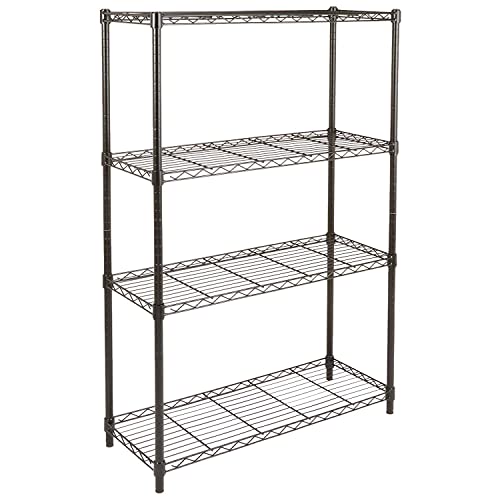
Amazon Basics 4-Shelf Adjustable Heavy Duty Steel Wire Rack Storage Shelving, 350 lbs Capacity Per Shelf, Black
by Amazon Basics
The Amazon Basics black 4-shelf wire rack is the drop-in replacement for the delisted chrome variant — identical specs and price, now the current in-stock black SKU carrying the same 263,000+ review base.
Pros
- 350 lbs per shelf (1,400 lbs total across 4 shelves) handles paint cans, automotive fluids, and full tool boxes with capacity margin
- Wire-shelf design lets dust, debris, and moisture fall through — the right answer for a working garage versus solid shelves
- No-tool snap-together assembly stands the unit in about 15 minutes — no power drill or hardware run
- Over 263,000 ratings documenting real-world performance across garage, basement, and workshop use
Cons
- Freestanding with no wall anchor — load heaviest items on the bottom shelf and keep clear of vehicle paths
- Open wire grid needs a liner or plywood top for storing screws, washers, or other small hardware
Seville Classics UltraDurable NSF 5-Tier Shelving — Upgrade Pick
The Seville Classics 5-tier NSF shelving is what I install in client garages where the budget supports doing it right the first time. The 800 lb per-shelf rating is roughly triple the Amazon Basics budget option — at 4,000 lbs of total unit capacity, this shelving handles automotive parts, transmission fluids, full Husky-grade toolboxes, and bulk lumber without any concern about flex or the sleeves slipping under sustained load.
NSF certification is the spec that separates this from generic-brand wire shelving. The same standard that governs commercial restaurant prep tables, the steel and finish here are tested against fluid resistance, sanitation, and long-term durability in conditions far harsher than a residential garage. In practical terms, that means the chrome finish does not develop rust spots when stored next to leaking automotive coolant, and the steel does not bend or fatigue under sustained heavy loads.
The locking polyurethane casters are the feature that earns the upgrade-tier price. Roll the unit out from the wall to access stored items behind it, roll it across the garage to pull tools closer to a project, then lock the casters down rigid for storage. For automotive work, this is genuinely useful — wheel a fully loaded shelf of fluids and tools out next to the lift, then roll it back when done. The included resin shelf liners eliminate the need for plywood tops or rubber matting; they are the right answer for storing small parts, screws, and finishing supplies on what is otherwise a wire-grid shelf. Lifetime warranty makes this the last shelving unit you need to buy for that bay of the garage.

Seville Classics UltraDurable Heavy Duty NSF 5-Tier Shelving 48 in x 18 in
by Seville Classics
The Seville Classics 5-tier NSF shelving is the upgrade choice for serious garages and home workshops — 800 lbs per shelf, included resin liners, locking casters, and a lifetime warranty that makes it the last shelving unit you will buy for that bay.
Pros
- 4,000 lb total capacity (800 lbs per shelf) is roughly triple the wire-rack budget option and handles automotive parts, full toolboxes, and bulk storage without flex
- NSF certification means the steel and finish meet commercial sanitation standards — the same shelving used in restaurants and warehouses for fluid resistance
- Heavy-duty resin shelf liners are included, eliminating the need to buy separate liners or cut plywood tops to make wire shelves usable for small parts
- Locking polyurethane caster wheels turn this into a rolling work surface, then lock down rigid for storage — useful for moving heavy automotive components
Cons
- Significantly heavier and more cumbersome than budget wire racks — assembly is a one-person job but moving a fully loaded unit benefits from two people
- Premium price reflects commercial-grade build that occasional household users will not fully utilize — if you only store seasonal totes, the budget rack is sufficient
Yizosh 72-Inch Lockable Metal Storage Cabinet — Best Locking Cabinet
Open shelving is the right answer most of the time, but not every garage. If yours opens onto a busy street, is shared with young kids, or stores anything you would rather nobody sees or reaches — power tools, automotive chemicals, a spare set of keys, the good cordless kit — a locking steel cabinet does a job that no wire rack can. The Yizosh 72-inch cabinet is the closed-storage pick I point clients to when they want the clutter hidden and the contents secured behind a door that actually latches, and it is the one locking cabinet in this category with a genuinely deep review record on Amazon.
The keyed two-door lock is the feature that earns the cabinet its place. Inside are five adjustable shelves rated 180 lbs each — 900 lbs of capacity across the cabinet — which is enough for toolboxes, batteries, jugs of fluid, and the bins of small hardware that look like chaos on an open shelf. Shelf positions move in the frame, so a tall shop vac or a stack of paint cans both fit without wasting a bay. Because the doors are solid powder-coated steel rather than glass or mesh, the cabinet reads as finished storage: close it and the wall of clutter simply disappears, which is the single biggest visual upgrade you can make to a working garage.
Two honest caveats. First, it is heavier and pricier than open shelving — you are paying for the steel doors and the lock, so if hiding and securing the contents does not matter to you, one of the open shelving picks above does the storage job for less. Second, this is a value-brand cabinet rather than a commercial one: the steel is thinner than a jobsite box, assembly runs to a couple of hours, and it is stationary rather than rolling. Decide where it lives before you load it, and if there are kids in the garage, run an anti-tip anchor into a stud — the same rule that applies to any 72-inch cabinet.

Yizosh 72 in Lockable Metal Garage Storage Cabinet
by Yizosh
The Yizosh 72-inch locking cabinet is the pick when open shelving will not do — two keyed steel doors and five adjustable shelves keep tools and chemicals out of sight and out of reach for well under the price of a commercial cabinet.
Pros
- Two locking steel doors with keys secure tools, power equipment, and chemicals — the right call in a garage shared with kids or on a busy street
- Five adjustable shelves rated 180 lbs each hold toolboxes, batteries, and fluids while keeping the clutter hidden behind closed doors
- Solid powder-coated cold-rolled steel doors hide the mess entirely — a closed cabinet reads as finished storage in a way open shelving never will
- Over 5,000 ratings behind it, which is by far the deepest real-world feedback pool of any locking garage cabinet still buyable on Amazon
Cons
- Freestanding and stationary — there are no casters, so plan its position before you load it and anchor it to a stud if children are around
- A value-brand cabinet rather than a commercial one, so expect thinner gauge steel and a longer assembly than a jobsite-grade box
Rubbermaid FastTrack 25-Piece Garage Storage System Kit — Runner-Up
The Rubbermaid FastTrack is the wall-mounted rail track system that earned its reputation on real jobsite use, and the 25-piece kit is the most efficient way to get a complete back-wall zone installed in a single Saturday. The 1,750 lb rated rail capacity is the highest in the rail-track category, and that rating assumes the rail is anchored properly into wall studs at 16-inch on-center spacing — the standard residential framing pattern.
The hooks and brackets slide and lock anywhere along the rail without tools, which is the feature that determines whether a wall storage system stays useful five years after install. Tool collections evolve — bikes get added or sold, the kid grows into bigger sports equipment, the lawn mower gets replaced by a ride-on. A system with fixed hook positions becomes obsolete; the FastTrack reconfigures in 30 seconds without removing the rail. What separates the 25-piece kit from a plain hook kit is that it ships three 48-inch rails, three uprights with nine brackets, and three wire shelves rated 350 lbs each alongside the hooks — two vertical bike hooks, two wide dual hooks, plus utility, multi-purpose, and dual-handle hooks. That means the same wall carries flat shelf storage for bins and totes and hanging storage for shovels, rakes, ladders, and bikes, which is what a real back wall actually needs.
Install is straightforward with two people. Find the studs along the wall section where the rails will mount, mark the centerlines, position the first rail at roughly 60 inches from the floor (the right height for most adult users to reach the top of stored tools without straining), level it with a 4-foot bubble level, and drive the included lag screws through the rail into each stud at full embedment. The honest caveat is that drywall-only installs without stud anchoring drop capacity by roughly 75 percent — toggle bolts and Molly anchors hold lightweight items like garden gloves and small hand tools, but not loaded ladders or bikes. If your wall does not have studs where the rail needs to mount, the right answer is to add a furring strip horizontally across the studs first, then mount the rail to the strip.
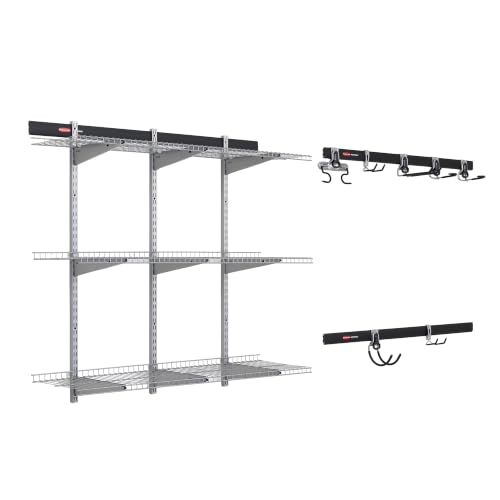
Rubbermaid FastTrack 25-Piece Garage Storage System Kit
by Rubbermaid
The Rubbermaid FastTrack 25-piece kit is the runner-up because it solves the most common garage problem — long-handle tools and bikes leaning against walls — with stud-anchored rails that carry both a tool-free hook system and three heavy wire shelves.
Pros
- FastTrack rail is rated to 1,750 lbs when properly anchored to studs — the highest wall-mount capacity in the rail-track category
- 25-piece kit pairs three 48-inch rails with three wire shelves and a hook assortment, so shelving and hanging storage go up on the same wall in one purchase
- Hooks and brackets slide and lock anywhere along the rail without tools, which lets you reconfigure the wall as your tool collection changes
- Backed by the Rubbermaid lifetime warranty and decades of jobsite reputation — you can find replacement hooks at any major hardware store nationwide
Cons
- Rail must be anchored into wall studs to hit rated capacity — drywall-anchor-only installs reduce capacity by roughly 75 percent and are not recommended for heavy tools
- Costs meaningfully more than a rail-and-hooks starter kit, because you are also paying for three shelves and the brackets that carry them
Wall Control Metal Pegboard Standard Tool Storage Kit — Best for Workbench Hand Tools
The Wall Control galvanized steel pegboard is the right answer for the zone above a garage workbench where you store hand tools and small power tools that you reach for daily. Hardboard pegboard works for ten years until it does not — the moment a half-inch socket extension or a wrench drawer hangs off-center for a few months, the holes elongate, the peg falls out, and the tool drops on the bench. Galvanized steel does not develop slop, does not warp in temperature swings, and does not splinter or chip when a peg gets driven hard.
The slotted-plus-round-hole pattern is the build detail that makes this pegboard transition-friendly for anyone with an existing peg collection. Standard 1/4-inch pegboard hooks fit the round holes; Wall Control’s locking slot hooks fit the slots. You can use both on the same panel — and the locking slot hooks add a meaningful safety advantage because they cannot be accidentally bumped off the wall when you grab a tool quickly. For storing heavier items like socket sets, drills, and handheld grinders, the slot hooks are the right choice; for traditional small hand tools, standard pegs work fine.
The mounting design — furring strips that stand the panel 3/4 inch off the wall — is the install detail that solves a common pegboard problem. Hooks need clearance behind the panel to seat fully, and screwdrivers and pliers need to hang flush against the panel without their handles bumping the wall. The included furring strips create that clearance automatically. Install is a two-person job for a 32x16-inch panel — one person holds it level against the wall while the second marks the mounting hole locations on the studs, then both pre-drill and drive the included anchors. A 35-piece hook assortment ships with the kit, which covers a complete starter setup before you start adding specialty hooks for specific tools. Pair this with a reliable shop vac hung on adjacent rail track storage to keep the bench clean.

Wall Control 4 ft Metal Pegboard Standard Tool Storage Kit, Black/Red
by Wall Control
The Wall Control metal pegboard is the right answer for organizing hand tools and small power tools above a workbench — galvanized steel beats hardboard on every meaningful metric, and the kit includes everything needed for a complete install.
Pros
- Galvanized steel panels are dramatically stronger than hardboard pegboard — they hold heavier tools and never sag, warp, or pull pegs out under load
- Slotted plus round-hole pattern accepts both standard 1/4-inch pegboard hooks and Wall Control's locking slot hooks, so existing accessories transfer over
- Mounts on furring strips that stand the panel 3/4 inch off the wall, which gives clearance for hooks to seat fully and for screwdrivers and pliers to hang flush
- Kit ships with the panel, mounting hardware, and a 35-piece hook assortment so a usable tool wall installs in a single afternoon without separate accessory orders
Cons
- Higher price than hardboard pegboard reflects the steel construction — for storing only lightweight items, traditional hardboard at a fraction of the cost is adequate
- Panels are heavier than hardboard and benefit from a second person to hold them flat against the wall while the first person drives anchors
Gladiator GearTrack Channels 2-Pack — Best Value Track System
The Gladiator GearTrack channels are the budget-friendly alternative to Rubbermaid FastTrack, and at a fraction of the price of the 25-piece kit they are the right starting point for homeowners who want a real rail system without the premium-brand markup. The pack ships two 48-inch powder-coated channels — 8 linear feet of track — enough to span the back wall of a single-car garage or one full wall of a two-car bay. Gladiator is a Whirlpool-owned brand, which is why its ecosystem is stocked at Home Depot and Ace rather than living only online.
The rated 75 lbs per linear foot is genuinely strong for a value track, and the 10-year warranty on the channel backs it. Hooks reposition tool-free with a positive lock that holds under load and does not creep down the rail — the safety detail that separates a real track system from a strip of pegboard hooks. The honest trade-off at this price is that you are buying track, not a kit: the channels ship without hooks, so add a GearTrack hook set in the same order and budget accordingly. Even with hooks added it lands well under the premium kits, and it lets you buy exactly the hook types your tools need instead of paying for an assortment you will not hang.
The second caveat with GearTrack is the platform commitment that applies to any rail system: Rubbermaid FastTrack and other brand hooks do not fit the Gladiator channel, so once you commit, plan to buy additional rails and accessories within the GearTrack line. The upside is that Gladiator’s 20-year-old accessory ecosystem — bike hooks, wire baskets, tool caddies — is deep and available for local pickup, so buildout over time is easy. For the lowest credible entry price onto a real rail platform, GearTrack is the value winner; for a complete wall in a single box, the Rubbermaid FastTrack above is the longer-term play.

Gladiator 4 ft GearTrack Channels 2-Pack, GAWC042P (8 ft Wall Rail)
by Gladiator
The Gladiator GearTrack channels are the cheapest credible way onto a real wall-rail platform — same form factor as the discontinued CRAFTSMAN VersaTrack, a 10-year channel warranty, and a 20-year hook ecosystem you can buy piece by piece at local hardware stores.
Pros
- 75 lbs per linear foot behind a 10-year channel warranty — real load rating at the lowest entry price of any name-brand rail system here
- Two 48-inch channels give you 8 linear feet of track for well under half the price of a rail-and-hook starter kit
- Tool-free hook repositioning with a positive lock that holds under load without creeping down the rail
- Gladiator ecosystem add-ons (bike hooks, baskets, caddies) stock at Home Depot and Ace for local pickup
Cons
- Channels only — hooks are sold separately, so budget for a hook set on top of the rail price
- Hooks are platform-locked: Rubbermaid FastTrack and other brand hooks do not fit the GearTrack channel
FLEXIMOUNTS 2-Pack Wall Shelving with 8 Hooks — Best for Vertical Wall Reclaim
The FLEXIMOUNTS 2-pack 2x6 ft wall shelves are the right answer for the back-wall zone of a two-car garage, particularly above the workbench and in spaces where freestanding shelving would consume too much floor area. Two 6-foot shelves give you 12 linear feet of stud-anchored storage in a single purchase, and at 600 lbs per shelf rated capacity — 1,200 lbs across the pair — they handle power tools, paint, automotive fluids, and full toolboxes without any concern about deflection or fastener pullout.
The included steel hooks are the design detail that makes this a multi-zone storage solution rather than just a shelf. Eight hooks ship in the box, providing hang points for extension cords, garden hoses, paint buckets, light tools, and gear that does not deserve dedicated floor or rail space. The combination of horizontal shelf surface plus hook hang points roughly doubles the effective storage per linear foot of wall compared to a plain shelf or a plain hook rail.
Install is a two-person job because of the 6-foot shelf length — keeping a long shelf level while marking stud locations is impractical solo. Find the studs along the wall section, mark the centerlines, set the shelf at the install height (typically 60 to 72 inches from the floor depending on what you are storing), level it with a 4-foot bubble level, and drive the included lag bolts through the back rail into each stud at full embedment. The shelves ship with hardware sized for standard 16-inch on-center stud spacing — 24-inch on-center walls (more common in newer construction) require longer reach but still work with the included bolts. For a two-car garage, install one shelf above the workbench at 60 inches and the second above the second bay at the same height — visually consistent and practically useful for organizing a complete garage zone. Combine these wall shelves with the brand’s overhead rack and you have a complete vertical storage strategy from ceiling to bench height. The same install workflow applies if you are also adding a proper miter saw station along an adjacent wall.

FLEXIMOUNTS 2-Pack 2x6 ft Garage Wall Shelving with 8 Hooks
by FLEXIMOUNTS
The FLEXIMOUNTS 2-pack wall shelves cover the back-wall zone of a two-car garage with 12 linear feet of stud-anchored shelving plus integrated hooks — the practical complement to the brand's overhead rack for a complete vertical storage strategy.
Pros
- Wall-mounted floating shelves reclaim vertical wall space without consuming floor area — critical in single-car and tandem garages where floor space is precious
- 600 lb rated capacity per shelf, 1,200 lbs across the pair, handles power tools, paint, automotive fluids, and toolboxes with significant safety margin
- Eight steel hooks ship in the box for cords, hoses, paint buckets, and lightweight tools — turns a shelf into a multi-zone storage solution
- Two-pack lets you span 12 linear feet of wall storage with a single purchase, ideal for the back wall of a two-car garage above the workbench zone
Cons
- Mounts must hit wall studs at 16-inch or 24-inch on-center spacing — walls with non-standard framing or steel studs require additional planning and hardware
- Two-person install strongly recommended — holding a 6-foot shelf level while marking and drilling stud locations is impractical solo without a French cleat jig
Best Garage Storage Cabinets
When you want the clutter hidden and the contents locked, a closed cabinet beats open shelving every time. A locking steel cabinet keeps power tools and chemicals out of reach of kids and out of sight from the street, and it makes a working garage read as finished the moment you shut the doors. If security and a clean look are not priorities, open wire shelving does the storage job for a fraction of the cost.
| Product | Price | Buy |
|---|---|---|
| Yizosh 72 in Lockable Metal Garage Storage CabinetBest Locking Cabinet Two keyed steel doors and five 180 lb shelves keep tools and chemicals secured and out of sight. | $174.99 | View on Amazon |
| Amazon Basics 4-Shelf Adjustable Heavy Duty Steel Wire Rack Storage Shelving, 350 lbs Capacity Per Shelf, BlackBudget Open-Shelf Alternative Open wire shelving at a fraction of the cabinet price if locking is not required. | $74.98 | View on Amazon |
| Seville Classics UltraDurable Heavy Duty NSF 5-Tier Shelving 48 in x 18 inHeavy-Duty Open Shelving Five NSF tiers for the heaviest open-storage loads. | $189.99 | View on Amazon |
Best Garage Shelving
Shelving is the workhorse of any garage — it is where the paint, fluids, bins, and toolboxes live. For most homeowners the budget steel wire rack is all the shelving they need; step up to NSF-rated commercial shelving only if you are storing genuinely heavy automotive or shop loads, and reclaim wall height with floating shelves where floor space is tight.
| Product | Price | Buy |
|---|---|---|
| Amazon Basics 4-Shelf Adjustable Heavy Duty Steel Wire Rack Storage Shelving, 350 lbs Capacity Per Shelf, BlackBest Budget Shelving 350 lbs/shelf at a budget price, the value bulk-storage default. | $74.98 | View on Amazon |
| Seville Classics UltraDurable Heavy Duty NSF 5-Tier Shelving 48 in x 18 inHeavy-Duty Upgrade NSF-rated 5-tier steel for shop and heavy loads. | $189.99 | View on Amazon |
| FLEXIMOUNTS 2-Pack 2x6 ft Garage Wall Shelving with 8 HooksBest Wall-Mounted Shelf Floats storage off the floor to reclaim wall height. | $129.99 | View on Amazon |
Best Overhead Garage Storage
Overhead is the highest-value storage in any garage because it uses ceiling space that would otherwise be wasted. Match the platform to your bay: a full 4x8 rack for a two-car garage with open ceiling, or the compact 3x8 for a single-car garage or the shallow strip above the garage-door track.
| Product | Price | Buy |
|---|---|---|
| FLEXIMOUNTS 4x8 Overhead Garage Storage Rack, Classic SeriesBest for Two-Car Garages 4x8 ft, 600 lb — maximum ceiling reclaim above a two-car bay. | $145.99 | View on Amazon |
| FLEXIMOUNTS 3x8 ft Overhead Garage Storage Rack, Adjustable Ceiling RackBest for One-Car / Compact 3x8 ft fits a single-car garage or above the garage-door track. | $128.99 | View on Amazon |
Best Wall-Mounted Garage Storage
Wall systems get the long-handle tools, ladders, bikes, and hoses off the floor and onto a stud-anchored rail or shelf. Pick a rail track for hanging tools and bikes, choose the value track when budget matters, or add floating shelves with hooks to combine a flat surface with hang points on the same wall.
| Product | Price | Buy |
|---|---|---|
| Rubbermaid FastTrack 25-Piece Garage Storage System KitBest Track System Three FastTrack rails, three 350 lb shelves and a hook assortment for a complete wall in one kit. | $210.00 | View on Amazon |
| Gladiator 4 ft GearTrack Channels 2-Pack, GAWC042P (8 ft Wall Rail)Best Value Track Gladiator GearTrack — 8 ft of rail at the lowest entry price; hooks sold separately. | $25.49 | View on Amazon |
| FLEXIMOUNTS 2-Pack 2x6 ft Garage Wall Shelving with 8 HooksBest Wall Shelf Two 2x6 ft shelves with eight hooks for boxes plus hanging tools. | $129.99 | View on Amazon |
Buyer's Guide
I have installed garage storage systems in client homes ranging from compact one-car garages to four-bay detached workshops. Here are the six factors I evaluate before specifying a system, in the order they matter.
Mounting Surface and Wall Construction
Before you shop, identify what you are anchoring into. Most attached garages have wood-framed 2x4 or 2x6 stud walls covered in drywall — these accept lag screws into studs at 16 or 24 inch spacing. Many detached garages and basement-level garages have concrete masonry unit (CMU) or poured concrete walls that require Tapcon screws or sleeve anchors instead. Older garages may have plaster over wood lath or steel studs, both of which complicate fastener selection. Use a quality stud finder to map stud locations before committing to a wall-mounted system, and verify joist orientation overhead before ordering a ceiling rack. Wood-framed walls are the easiest case; masonry adds time but works well; steel-stud or plaster walls need a structural-engineer eye on heavy loads. Match the system to your wall, not the other way around.
Load Capacity and Weight Math
Manufacturer load ratings are real but assume even distribution across the rated span. For an overhead rack rated 600 lbs, that is 600 lbs spread evenly across the 4x8 platform — concentrating 400 lbs in one corner can exceed individual joist ratings or fastener shear capacity. For wall track, the rated capacity assumes anchors hit studs at full embedment depth. Calculate your real load: total the weight of every item you plan to store, add 30 percent margin for future additions, then verify the system rating exceeds that number. A typical homeowner overhead load is 200 to 400 lbs of holiday decorations, seasonal tires, and camping gear — well within a 600 lb rated rack. A typical wall rail load is 100 to 250 lbs of long-handle tools, hoses, and a bike — well within a 1,750 lb rail. Heavy automotive parts, full toolboxes, and bulk lumber require the upgrade-tier shelving.
Garage Zone Planning
A two-car garage has four distinct storage zones. The back wall is best for cabinets, workbench, and floating wall shelves — items you access while standing at the bench. The two side walls are best for rail-track systems holding long-handle tools, ladders, and hoses — vertical items that hang flat against the wall without protruding into vehicle clearance. The ceiling above the parked vehicles is best for overhead racks holding bulky, lightweight, infrequently-accessed items like seasonal totes and luggage. The fourth zone — the corners and any leftover floor space — is best for freestanding shelving units that hold paint, automotive fluids, and bulk storage. Sketch your garage on graph paper, mark vehicle parking footprints, and plan each zone before buying. The single biggest mistake homeowners make is buying systems that compete for the same zone instead of complementing each other.
Modularity and Expansion
Garage storage needs evolve as your tool collection and household change. A system that locks you into a fixed configuration becomes obsolete; a modular system grows with you. Rail-track and pegboard systems are inherently modular — add more rails and hooks as needed. Overhead racks and wall shelves are typically fixed-size, but installing in a brand that offers larger and additional units lets you expand the same product line later. Freestanding wire shelving is the most modular form factor because adjustable shelves reconfigure in 1-inch increments without tools. Before committing, check whether the brand sells additional rails, hooks, shelves, and accessories — and whether those accessories are stocked at major hardware stores or only online. Brands with retail-store availability win on long-term parts access.
Installation Difficulty and Tools Required
Installation difficulty ranges from no tools (freestanding wire shelving) to a full Saturday with a helper (overhead rack on joists). Before buying, audit your tool kit. A quality cordless drill and impact driver are required for nearly every wall- or ceiling-mounted system — the right cordless drill drives lag bolts into joists without stalling. A stud finder rated for both walls and ceilings is essential. A laser level or 4-foot bubble level keeps rails and shelves true. A 9/16-inch socket on the impact driver runs lag bolts efficiently. For masonry installs, add a hammer drill and a set of Tapcon bits. For drywall-only lightweight installs, a quality toggle-bolt set covers the gaps. If your tool kit is incomplete, factor the cost into your project budget — buying a cheap drill that bogs down on lag bolts is a false economy.
Warranty and Long-Term Durability
Garage storage systems are exposed to temperature swings, humidity, occasional flooding from snow on cars, and physical contact from tools and vehicles. Powder-coated steel resists rust significantly better than painted steel, and galvanized steel beats both. Resin and plastic components can become brittle in cold detached garages over five-plus winters. Lifetime warranties from reputable brands like Rubbermaid, CRAFTSMAN, Wall Control, and Seville Classics back the products through these stressors and tell you the manufacturer expects long service life. FLEXIMOUNTS offers a 10-year warranty that has proven reliable in field use across thousands of installs. Avoid no-name overhead racks with vague warranty terms — the failure mode is catastrophic if a rack lets go with 400 lbs of holiday decorations on it. Pay for the warranty; the rack is suspended over your car for years.
How to Choose the Best Garage Storage System
The right system for your garage depends on which zone you are solving and what you are anchoring into. Here is how I think through the decision for clients.
If you are just looking for garage storage ideas to organize a cluttered space, the simplest framework is to think in three zones and match a system to each. The floor and corners are for shelving and cabinets — open wire racks for bulk paint and fluids, a locking cabinet for anything that needs to be hidden or secured. The walls are for track systems and pegboard — a rail track for long-handle tools, ladders, and bikes, and a metal pegboard above the workbench for the hand tools you reach for daily. The ceiling is for overhead racks — the bulky, lightweight, seasonal items that eat shelf space but only come down twice a year. Sort every item you are storing into one of those three buckets first, and the product decisions below fall into place naturally.
Start with zone planning, not products. Sketch your garage on graph paper — mark vehicle parking footprints, the workbench location, and the wall sections free of doors and windows. Each zone (back wall, side walls, ceiling, corners) gets a different system type. Buy in zone-specific order: ceiling rack first (because joist access drives clearance for everything else), then long-handle rail on side walls, then floating shelves on the back wall, then pegboard above the bench, and finally freestanding shelving in any leftover floor space.
Verify your mounting surface before ordering. Wood-framed walls with drywall accept lag screws into studs at 16 or 24-inch spacing — the easiest and most common case. Concrete or CMU walls need Tapcon screws and a hammer drill. Steel-stud walls and plaster-over-lath need careful structural review for any heavy load. Ceiling joist orientation matters for overhead racks: brackets must span perpendicular across at least two joists, so confirm joist direction and spacing before committing to a 4x8 platform.
Match capacity to real loads with margin. Total the weight of every item you plan to store, add 30 percent margin for future additions, and verify your system rating exceeds that number. Most homeowners overestimate ceiling rack loads and underestimate long-tool wall loads — overhead bins and tires rarely exceed 300 lbs, while a wall of bikes, ladders, and full hose reels can easily exceed 200 lbs.
Pick one rail-track ecosystem and stay in it. Rubbermaid FastTrack and CRAFTSMAN VersaTrack hooks do not interchange. Decide which platform to commit to based on hook variety, local availability of replacement parts, and price — then buy all your additional rails, hooks, and accessories within that platform.
Budget for the install hardware you do not own. A quality cordless drill, impact driver, stud finder rated for both walls and ceilings, 4-foot level, and 9/16-inch socket are non-negotiable for any wall- or ceiling-mounted system. If your tool kit is incomplete, factor the cost into the project. For homeowners just starting out, the essential tools list covers what you need.
Final Verdict
For most garages, the right starting point is the FLEXIMOUNTS 4x8 Overhead Garage Storage Rack. It solves the highest-value storage problem — bulky seasonal items that consume floor and shelf space — by relocating them to ceiling space that is otherwise wasted. The 600 lb capacity, adjustable drop, and proven install hardware make it the rack I install most often for clients, and at this price it is the obvious starting point for any garage organization project.
If your priority is the lowest credible cost per shelf, the Amazon Basics 4-Shelf Heavy Duty Steel Wire Rack is the budget pick that does not compromise on what matters: 350 lbs per shelf, no-tool assembly, and a wire design that actually fits the dirty reality of a working garage. For homeowners ready to step up to commercial-grade shelving with rolling casters and lifetime warranty, the Seville Classics UltraDurable NSF 5-Tier is the upgrade that lasts a lifetime in the garage. And for the long-handle tools, ladders, and bikes that lean against every garage wall by default, the Rubbermaid FastTrack 25-Piece Kit is the runner-up that gets them off the floor and onto stud-anchored rails in a single Saturday.
Build your garage storage one zone at a time, anchor every wall and ceiling system into solid framing, and the right systems will hold weight for the next decade. Pair the install with a quality cordless drill and good shop lighting and you will spend far less time wrestling with hardware on a stepladder than you would with cheaper alternatives.
Frequently Asked Questions
What is the best garage storage system for a small one-car garage?
Can I install an overhead garage storage rack by myself, or do I need two people?
What is the difference between mounting garage storage to drywall versus directly to studs?
Should I choose a slatwall, pegboard, or rail track system for my garage walls?
Can I mix different garage storage brands and systems together, or do I need to commit to one ecosystem?
What are the cheapest garage shelves?
Is it cheaper to build or buy garage shelving?
Related Articles
About the Reviewer

Jake Morrison, Licensed General Contractor
B.S. Construction Management, Purdue University
Jake Morrison has spent 14 years in residential construction and home renovation before founding DIYRated in 2026. After helping hundreds of homeowners choose the right tools and materials for their projects, he started writing the product guides he wished existed when he was starting out. Jake tests every major product recommendation in his workshop in Indianapolis and focuses on real-world performance over spec-sheet marketing.