7 Best Handheld Cordless Vacuums of 2026
Jake Morrison, a licensed general contractor, reviews the 7 best handheld cordless vacuums for workshops, garages, and quick cleanups — from DEWALT's jobsite-ready 20V to budget picks around $30.
Updated
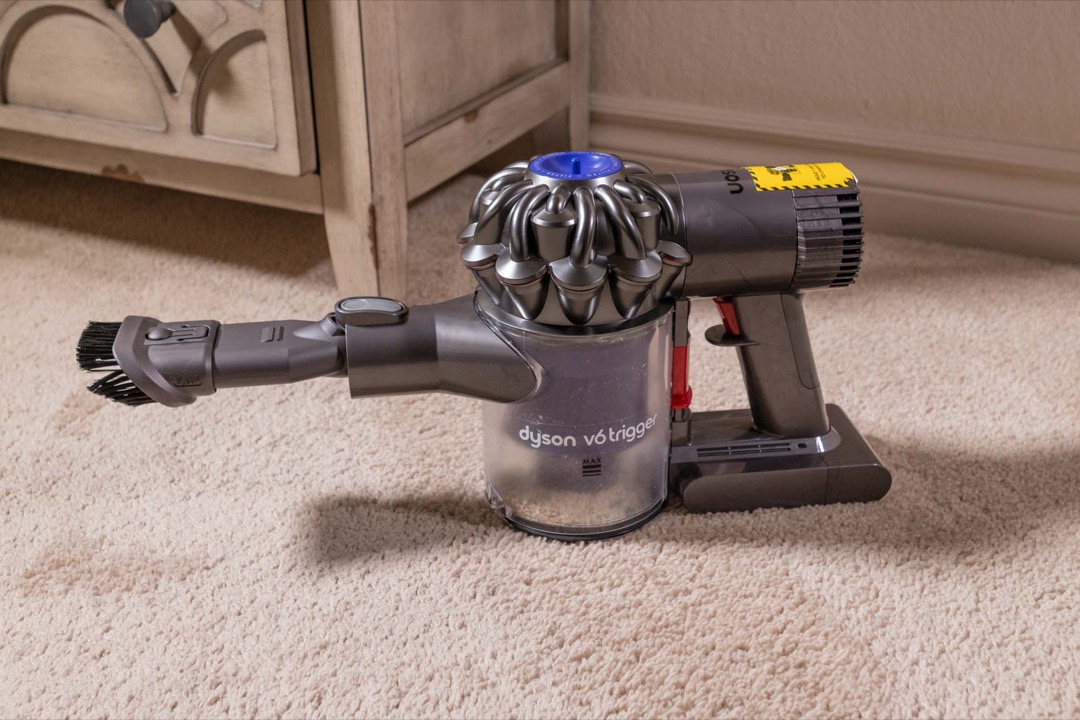
If you have been around a jobsite or a busy home garage long enough, you know that the big shop vac is not always the right tool. Sometimes you just need to grab something off the wall, clear the sawdust off your miter saw station, vacuum out the truck cab, or clean up a quick spill before it sets. That is exactly where a handheld cordless vacuum earns its keep.
I have tested handheld vacuums in my workshop for years — running them through sawdust, drywall dust, wood shavings, and the everyday grime that accumulates in any working garage. The difference between a good handheld and a bad one comes down to suction, filtration, battery life, and whether it fits into the tool ecosystem you already own. A contractor who runs DEWALT 20V MAX tools should not be buying a vacuum with a proprietary battery. A homeowner who just wants to clean car seats does not need HEPA filtration rated for construction dust.
This roundup covers seven handheld cordless vacuums across every budget and use case, from a dedicated jobsite tool to a thirty-dollar impulse buy that still gets the job done. Every pick below has a live, Amazon-direct buy box verified for this July 2026 update — and if you already run a cordless tool platform, the cheapest path to a great handheld is almost always a bare-tool unit on batteries you own.
| Product | Price | Buy |
|---|---|---|
| DEWALT 20V MAX Wet/Dry Handheld Vacuum DCV517BBest Overall | $118.45 | View on Amazon |
| Shark UltraCyclone Pet Pro Plus CH951 | $99.99 | View on Amazon |
| BLACK+DECKER dustbuster CHV1410L | $59.99 | View on Amazon |
| BLACK+DECKER Cordless Lithium Hand Vacuum HNV220BBudget Pick | $36.99 | View on Amazon |
| RYOBI 18V PCL702 Wet/Dry Hand Vacuum Kit | $111.95 | View on Amazon |
| BLACK+DECKER dustbuster furbuster HHVK515JP07 | $85.59 | View on Amazon |
| Makita XLC02ZB 18V LXT Compact VacuumRunner-Up | $127.99 | View on Amazon |
Find the Best Handheld Vacuum for Your Job
Jump straight to the pick that matches what you actually need to clean:
- Best handheld cordless vacuums overall — every pick reviewed in full
- Best handheld vacuum for cars
- Best handheld vacuum for pet hair
- Best handheld vacuum for stairs
- More picks by use case
If you’re after whole-floor cleaning rather than spot work, start with our full-size cordless vacuum roundup instead.
How We Chose These Handheld Vacuums
Every vacuum in this list went through the same evaluation framework I use for any tool review. I looked at suction power measured in CFM or air watts, runtime on a full charge, filtration quality (especially for fine dust), dustbin capacity, build quality, and real-world buyer feedback across thousands of verified reviews.
I also weighted battery ecosystem compatibility heavily. If you already own cordless power tools from DEWALT or Makita, a handheld vacuum on the same battery platform is effectively a free addition to your toolkit — you already have the batteries and chargers. That practical cost savings matters more than raw spec sheets.
For workshop-specific performance, I prioritized HEPA filtration and suction strong enough to handle sawdust and drywall dust. For general-purpose and vehicle use, I focused on runtime, weight, and nozzle versatility. If you need something heavier-duty for sustained floor cleaning, check out our full-size cordless vacuum roundup instead. For dedicated shop cleanup on a larger scale, our best shop vacs guide covers those workhorses.
Best Handheld Cordless Vacuums Overall
These are the seven handhelds that earned a place in this guide, each reviewed in full below. The DEWALT DCV517B is the best overall for workshop and garage duty; the Makita XLC02ZB is the runner-up for quiet shops; the Shark UltraCyclone Pet Pro Plus is the step up for pet hair and car interiors; and the BLACK+DECKER HNV220B is the budget pick. The use-case sections after the reviews then match specific jobs — car interiors, pet hair, and stairs — to the right unit from this same lineup.
DEWALT 20V MAX Wet/Dry Handheld Vacuum DCV517B — Best Overall
The DCV517B is the handheld I now recommend first for any workshop or garage, and it holds the top spot for a practical reason: it is the one vacuum here that handles everything a working space throws at it. Sawdust from crosscuts, drywall powder, spilled coolant, tracked-in rainwater — one tool, wet or dry, with a Gore HEPA filter keeping fine construction dust contained instead of airborne.
A transparency note on this update: our previous top pick, DEWALT’s dry-only DCV501HB, has rotated off Amazon-direct selling — only third-party sellers carry it now at inflated prices, so I’ve pulled it from this guide until DEWALT restocks it. The DCV517B was already the runner-up, it shares the same 20V MAX platform, and its 0.5-gallon tank is the largest of any handheld here by a wide margin, so most buyers end up better served anyway.
If you already run DEWALT cordless drills, impact drivers, or circular saws, you have batteries sitting on your charger right now that drop straight into this vacuum — which effectively cuts sixty to eighty dollars off the real cost versus buying a handheld with its own proprietary battery. The trade-offs: dry suction takes an extra pass on the finest dust compared to a dedicated dry-only unit, and the hose connection wants an occasional reseat. Neither has ever made me reach for a different tool. If you are curious how DEWALT stacks up against other tool brands, our DEWALT vs Milwaukee comparison covers the broader ecosystem question.

DEWALT 20V MAX Wet/Dry Handheld Vacuum DCV517B
by DEWALT
The best handheld cordless vacuum for DIYers and contractors — DEWALT's wet/dry capability, HEPA filtration, 0.5-gallon tank, and 20V MAX battery compatibility make it the workshop workhorse to buy.
Pros
- Handles both wet spills and dry debris — the capability that matters most in a working garage where coolant drips and sawdust share the same floor
- Gore HEPA wet/dry filter captures 99.97% of particles down to 0.3 microns, and the washable primary filter reduces long-term replacement costs
- Large 0.5-gallon tank holds significantly more debris than any other handheld tested, minimizing dump stops during big cleanups
- Runs on the same DEWALT 20V MAX batteries as your drill, impact driver, and circular saw — no extra chargers needed
Cons
- Battery and charger sold separately, which adds substantial cost for buyers not already invested in the DEWALT 20V MAX ecosystem
- Dry suction trails dedicated dry-only handhelds on fine dust — the wet/dry compromise means more passes on drywall powder
- Flexible hose connection can work loose during aggressive use, requiring periodic reseating to maintain suction
Shark UltraCyclone Pet Pro Plus CH951
The Shark is the pick when the mess you are fighting is pet hair or a car interior rather than shop debris. Its two cyclonic air streams are the reason: instead of pulling everything straight onto the filter, the twin cyclones spin debris out of the airflow first. In practice that means suction on the last pass feels like suction on the first, which is exactly where cheap handhelds fall apart once the cup is half full and the filter is matted with fur.
A note on why this pick changed. Until this update the premium slot here went to the Dyson Car+Boat, and on raw suction it deserved it. Dyson has since lost the Amazon buy box on that model — the listing sells through resellers only, at prices well above retail, with no direct add-to-cart. I do not recommend machines you cannot actually buy at a sane price, so the Shark takes over the job. It is the most reviewed premium handheld still sold normally, with more than 21,000 ratings behind it.
The tradeoff is runtime. Ten minutes covers one car interior, a staircase, or a couch — not a whole house — and the four-hour recharge means you get one job per session. At 80 dB it is also loud. If you want a handheld that runs on batteries you already own and handles wet spills too, the DEWALT DCV517B above is the more versatile tool; the Shark is the one that cleans fabric better.

Shark UltraCyclone Pet Pro Plus CH951
by Shark
The pick when pet hair and car interiors are the actual job — Shark's dual cyclonic separation keeps suction from fading mid-pass, and the bundled tool set handles upholstery and crevices with no extra spend.
Pros
- Two cyclonic air streams spin debris away from the filter, so suction holds steady through a full pass instead of fading as the cup loads up
- More than 21,000 ratings at 4.1 stars make it the most field-proven premium handheld still sold with a genuine Amazon buy box
- Ships with three cleaning tools covering upholstery, crevices, and pet hair — a car interior gets cleaned without buying a single accessory
- Washable filter rinses clean under a tap rather than needing replacement cartridges, which keeps running costs at essentially zero
Cons
- Ten-minute runtime is the shortest among the mid-priced picks here and covers one car interior rather than a whole house
- Four-hour recharge makes it strictly a one-job-per-session tool — there is no fast charge and no swappable battery
- At 80 dB it is loud in a small room and will clear skittish pets out of it entirely
BLACK+DECKER dustbuster CHV1410L
With over 110,000 reviews and a 4.4-star rating, the BLACK+DECKER dustbuster is the most battle-tested handheld vacuum ever made. It has been on the market for years, and the sheer volume of buyer feedback tells you everything about its reliability — this vacuum works, it keeps working, and it does exactly what it promises without any fuss.
The rotating slim nozzle is a smart design that lets you reach into narrow gaps without swapping attachments. The 605 mL dust bowl is larger than most handhelds in this price range, and the included charging base means the vacuum stays topped off and ready to grab at a moment’s notice. For a household that wants a reliable handheld vacuum always charged and waiting on the counter, the dustbuster is a proven solution.
The limitation is runtime. At roughly 10 minutes per charge with a 4-hour recharge time, this is strictly a one-task-per-charge tool. It is fine for grabbing crumbs off a kitchen counter, vacuuming a car seat, or cleaning up a small spill. It is not suited for sustained workshop cleanup or any job that takes longer than a few minutes. The standard filtration also struggles with fine construction dust — this is a household tool, not a jobsite tool.

BLACK+DECKER dustbuster CHV1410L
by BLACK+DECKER
The most proven handheld vacuum on the market with 110K+ reviews — a reliable grab-and-go option for quick household cleanups, though limited runtime keeps it off the jobsite.
Pros
- Over 110,000 reviews make this the most field-tested handheld vacuum available — proven reliability across a decade of real-world use
- Rotating slim nozzle pivots to reach into narrow gaps, between couch cushions, and along baseboards without removing attachments
- Large 605 mL dust bowl holds more debris per session than most competing handhelds, reducing how often you stop to empty
- Charging base included in the box keeps the unit topped off and ready to grab — no fumbling with cables when you need a quick cleanup
Cons
- Approximately 10 minutes of runtime limits you to one small job per charge — not enough for a full workshop sweep
- Four-hour recharge time means the unit is unavailable for most of the workday after a single use
- Struggles with fine construction dust like drywall powder and sanding residue that passes through the standard filter
BLACK+DECKER Cordless Lithium Hand Vacuum HNV220B
At its entry-level price, the BLACK+DECKER HNV220B removes nearly every financial barrier to owning a handheld vacuum. I recommend this as a dedicated single-purpose tool — mount it on the wall next to your workbench, above your dryer, or inside your garage, and use it exclusively for quick spot cleanup in that one location.
The wall-mount base is also the charger, which means the vacuum stays charged and accessible without burning bench space or shelf real estate. At 1.4 pounds it is the lightest unit in this roundup by a clear margin, light enough that reaching overhead or working down a staircase one-handed never becomes a chore. Nearly 17,000 ratings confirm it handles light-duty pickup — crumbs, dust bunnies, small spills of dry material — reliably over time.
The tradeoffs at this price point are exactly what you would expect. The 10.8V motor does not generate the suction needed for workshop debris. The 12.5-ounce dirt bowl is small enough that a single car footwell fills it. But as a grab-and-go tool for quick messes, it is hard to argue with the value proposition. Buy two — one for the workshop wall, one for the kitchen — and you have spent less than a single mid-range vacuum costs.

BLACK+DECKER Cordless Lithium Hand Vacuum HNV220B
by BLACK+DECKER
The best handheld vacuum on a tight budget: an entry-level price buys a 1.4-pound grab-and-go spot cleaner that lives on its own wall-mounted charging base.
Pros
- Costs about what a tank of gas does, which makes a dedicated wall-mounted vacuum for the workbench or laundry room an easy call
- Nearly 17,000 ratings at 4.3 stars confirm it does light-duty pickup reliably instead of dying after one season
- At 1.4 pounds it is the lightest unit in this roundup by a wide margin — genuinely effortless one-handed use overhead or on stairs
- Wall-mount base doubles as the charger, so it stays topped off and within reach rather than buried in a cabinet
Cons
- The 10.8V motor handles crumbs and dust but will not lift wood chips, screws, or packed sawdust off a shop floor
- A 12.5-ounce dirt bowl is small enough that one car footwell can fill it
- Cloth filtration and modest suction make it a spot cleaner, not a stand-in for a shop vac or a full-size vacuum
RYOBI 18V PCL702 Wet/Dry Hand Vacuum Kit
The RYOBI PCL702 kit answers the question I get from readers who don’t own any cordless tool platform: “which handheld can I just buy and use?” This is it. Battery and charger come in the box, the vacuum handles both wet spills and dry debris, and the included squeegee attachment genuinely works on liquids — a capability only the DEWALT DCV517B matches in this roundup, and that one ships tool-only.
At 70 dB it runs noticeably quieter than the DEWALT competition, and the crevice tool and dust brush cover the usual tight-space and delicate-surface jobs. There’s a sleeper benefit too: the included 18V battery is a standard RYOBI ONE+ pack, so if you later pick up a RYOBI drill or string trimmer, you’ve already started the platform.
The honest caveats: this listing ships bulk-packaged with a short 30-day warranty, the 4.1-star average across 77 ratings is the thinnest review base of any pick here, and the single power level means embedded debris takes extra passes. For established DEWALT or Makita tool owners, a bare-tool unit on your existing batteries is the better value. For everyone else, this is the simplest one-box path to a legitimate wet/dry handheld. For larger liquid spills, a full-size shop vac is still the right call.

RYOBI 18V PCL702 Wet/Dry Hand Vacuum Kit
by RYOBI
The complete-kit choice — RYOBI's wet/dry hand vacuum ships with its own 18V battery and charger, making it the easiest one-box buy for anyone not already on a tool-battery platform.
Pros
- Battery and charger included in the box — the only wet/dry handheld here that works out of the box with zero platform buy-in
- Wet/dry capability with a dedicated squeegee attachment picks up liquid spills cleanly, plus crevice tool and dust brush for dry work
- Quiet 70 dB operation is comfortable for indoor use — noticeably quieter than the DEWALT competition
- Joins the RYOBI 18V ONE+ platform, so the included battery also powers 300+ other RYOBI tools if you expand later
Cons
- Ships bulk-packaged without retail packaging, and the kit carries a short 30-day limited warranty through this listing
- Thinner review base at roughly 80 ratings and a 4.1-star average — buyers report the dust cup latch feels less rugged than DEWALT's
- Single power level with no boost mode, so heavy embedded debris takes extra passes
BLACK+DECKER dustbuster furbuster HHVK515JP07
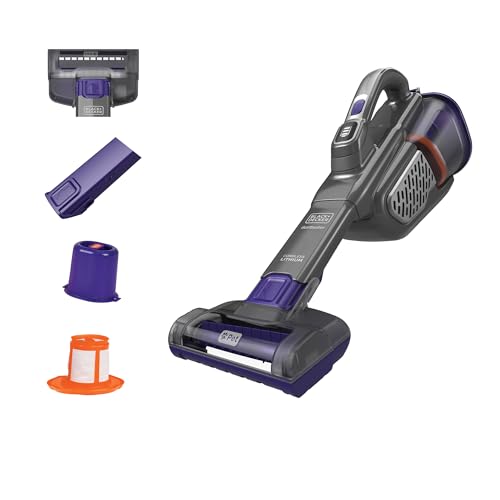
The furbuster does one thing, and it does it the way pet hair actually needs to be handled: mechanically. The motorized brush spins rubber bristles against the fabric and drags hair up out of the weave instead of relying on airflow to pull it, which is why a plain suction nozzle can pass over a dog-covered seat three times and leave it looking untouched. If you have dogs or cats and a vehicle they ride in, this is the handheld that removes the hair rather than rearranging it.
The 20-minute runtime on the 20V MAX pack is the longest of any pet-focused handheld here, which is the difference between finishing a vehicle interior and stopping halfway through the back seat to charge. The 680 mL bin empties with a one-touch release so you are not reaching into matted fur, and both filters wash rather than needing replacement.
A note on why this pick changed. The slot here belonged to the Bissell Pet Hair Eraser 2390A, and on the merits it earned it. Bissell has since stopped supplying that listing new — the only buy box left on it is a used one, and the handheld replacement Bissell has announced has not shipped yet. I do not recommend machines you can only buy secondhand, so the furbuster takes the job as the one motorized-brush handheld still sold new at a normal price.
The pet-focused design is both the strength and the limitation. The brush head excels on fabric and upholstery but is less effective on typical workshop debris, it is louder than the Makita or the RYOBI at 78 dB, and its 4.1-star average is the lowest here — buyers who vacuum long human hair report the brush still binds despite the anti-tangle claim. If you need a handheld for sawdust and construction cleanup, look at the DEWALT models. For a deeper look at pet hair cleanup tools, our best cordless vacuums for pet hair guide covers full-size options as well.
BLACK+DECKER dustbuster furbuster HHVK515JP07
by BLACK+DECKER
The pet-hair specialist — the furbuster's motorized rubber brush grips hair out of fabric mechanically, and it is the only handheld here with that mechanism still sold new at a normal price.
Pros
- Anti-tangle motorized brush uses rubber bristles to lift pet hair mechanically out of upholstery and car seats that smooth plastic nozzles slide right over
- More than 13,000 verified ratings make it the most-reviewed motorized pet handheld still sold new on Amazon with a normal buy box
- 20-minute runtime on the 20V MAX pack is the longest of any pet-focused handheld here — enough for a full vehicle interior in one go
- One-touch bin release empties a 680 mL dustbin without putting your hand near matted hair, and both filters are washable rather than consumable
Cons
- At 78 dB it is louder than the Makita and the RYOBI, and the motorized brush adds a whine on top of the motor
- The 4.1-star average is the lowest in this roundup — the recurring complaint is the brush head clogging on long human hair despite the anti-tangle design
- Pet-focused brush head is less effective on typical workshop debris like sawdust, wood shavings, and drywall dust
Makita XLC02ZB 18V LXT Compact Vacuum — Runner-Up
The Makita XLC02ZB is the runner-up and the quietest vacuum in this roundup at just 64 dB — quieter than a normal conversation. In a shared workshop or a home garage adjacent to living space, that noise level matters more than you might expect. You can run this vacuum during early morning or late evening cleanup without disturbing anyone, which is a genuine quality-of-life advantage that raw suction specs do not capture.
The 33-minute runtime on a 5Ah battery provides sustained cleanup time that most handhelds cannot match, and the handheld-to-stick conversion means one tool covers both workbench detail work and floor-level cleanup. At 46 CFM, its dry suction is the strongest of any dedicated dry handheld left in this roundup, though the smaller 500 mL dustbin means more frequent emptying during heavy debris sessions.
For Makita 18V LXT tool owners, this is the same value proposition as the DEWALT models for DEWALT users — your existing batteries work, your existing charger works, and the tool-only price reflects that. The lower review count at 1,600 versus tens of thousands for the BLACK+DECKER models is the main uncertainty, but Makita’s build quality reputation in the professional tool market provides confidence that the reviews have not had time to match yet.

Makita XLC02ZB 18V LXT Compact Vacuum
by Makita
The quietest handheld vacuum tested and a strong choice for Makita tool owners — 64 dB operation and handheld-to-stick conversion make it uniquely versatile for shop and home use.
Pros
- Quietest operation in the roundup at just 64 dB — you can vacuum a workshop while someone is on a phone call in the next room
- 33-minute runtime on a 5Ah battery provides enough sustained cleaning time for a thorough garage or shop floor sweep
- Converts between handheld and stick configuration so one tool covers both workbench detail work and floor cleanup
- Compatible with Makita's massive 18V LXT battery ecosystem — if you run Makita power tools, this is a no-cost addition
Cons
- Tool-only purchase with no battery or charger included, making it expensive for buyers outside the Makita ecosystem
- Lower review count at 1,600 compared to competitors with tens of thousands, meaning less field-tested reliability data
- Power button must be held continuously during use with no lock-on option, causing hand fatigue on longer cleanup sessions
Best Handheld Vacuum for Cars
Car interiors are the single most common job a handheld gets bought for, and the priorities are specific: enough suction to pull ground-in dirt out of carpeted floor mats, attachments that reach between seats and into cup holders, and runtime that survives a full interior. The DEWALT takes the top spot here because wet/dry capability covers the spilled coffee and muddy mats that a dry-only vacuum just smears; the furbuster’s motorized rubber brush is the one that beats pet hair on seats; and the Shark brings the strongest sustained suction for ground-in grit, as long as you can finish inside its ten-minute charge. For full-size and corded options built around vehicles, see our sister site’s best car vacuums guide.
| Product | Price | Buy |
|---|---|---|
| DEWALT 20V MAX Wet/Dry Handheld Vacuum DCV517BBest overall for cars Wet/dry capability handles spilled coffee and muddy floor mats in the same vehicle — runs on the 20V batteries already in your truck box | $118.45 | View on Amazon |
| BLACK+DECKER dustbuster furbuster HHVK515JP07Best for pet hair in cars The motorized rubber brush strips dog and cat hair off seats and mats that plastic nozzles slide over | $85.59 | View on Amazon |
| Shark UltraCyclone Pet Pro Plus CH951Best suction for ground-in grit Dual cyclonic separation keeps suction from fading as the cup fills, and the bundled crevice tool reaches seat rails and cup holders | $99.99 | View on Amazon |
Best Handheld Vacuum for Pet Hair
Pet hair defeats ordinary handheld nozzles — it clings to fabric and it mats the filter, which is why suction on cheap handhelds dies halfway through the couch. The two units here that actually solve it are the furbuster, whose motorized rubber brush grips hair mechanically, and the Shark, whose twin cyclones spin fur out of the airflow before it can blind the filter. For whole-floor shedding problems, our dedicated best cordless vacuums for pet hair guide covers full-size sticks.
| Product | Price | Buy |
|---|---|---|
| BLACK+DECKER dustbuster furbuster HHVK515JP07Best pet hair handheld overall A motorized rubber brush purpose-built for fur on upholstery, backed by more than 13,000 ratings — and a 20-minute runtime, the longest of any pet handheld here | $85.59 | View on Amazon |
| Shark UltraCyclone Pet Pro Plus CH951Best pick for sustained suction Twin cyclones keep fur off the filter so the last pass pulls as hard as the first, and the filter rinses clean under a tap — though at 80 dB it is the louder of the two | $99.99 | View on Amazon |
Best Handheld Vacuum for Stairs
Stairs punish heavy vacuums and reward light, one-handed units with decent bin capacity — you’re holding the vacuum’s full weight on every step. The dustbuster’s pivoting nozzle reaches stair corners without attachment swaps, the compact B+D is the lightest unit here for quick passes, and the furbuster’s motorized brush is the answer for carpeted stairs coated in pet hair.
| Product | Price | Buy |
|---|---|---|
| BLACK+DECKER dustbuster CHV1410LBest for stairs overall Three pounds, a pivoting nozzle for stair corners, and a 605 mL bowl that finishes a full staircase without emptying | $59.99 | View on Amazon |
| BLACK+DECKER Cordless Lithium Hand Vacuum HNV220BLightest for quick stair passes At 1.4 pounds it's the easiest unit here to carry up a flight one-handed — fine for dust and crumbs between deeper cleans | $36.99 | View on Amazon |
| BLACK+DECKER dustbuster furbuster HHVK515JP07Best for carpeted stairs & pet hair The motorized rubber brush agitates carpet pile on treads — the pick when stairs collect pet hair | $85.59 | View on Amazon |
More Handheld Vacuum Picks by Use Case
Beyond the big three jobs, these are the picks I give for specific asks — wet messes, raw suction, furniture, and rock-bottom budgets.
| Product | Price | Buy |
|---|---|---|
| DEWALT 20V MAX Wet/Dry Handheld Vacuum DCV517BBest wet dry handheld vacuum The only pick that vacuums standing liquid — 0.5-gallon tank and a washable HEPA wet/dry filter | $118.45 | View on Amazon |
| Shark UltraCyclone Pet Pro Plus CH951Best handheld vacuum suction Two cyclonic air streams hold suction steady from the first pass to the last instead of choking as the cup fills | $99.99 | View on Amazon |
| BLACK+DECKER dustbuster furbuster HHVK515JP07Best handheld vacuum for furniture The motorized rubber upholstery brush lifts hair and crumbs out of couch cushions without scattering them | $85.59 | View on Amazon |
| BLACK+DECKER Cordless Lithium Hand Vacuum HNV220BBest budget handheld vacuum Entry-level price, 1.4 pounds, wall-mount charging base included — the lowest-risk spot cleaner | $36.99 | View on Amazon |
| BLACK+DECKER dustbuster CHV1410LBest handheld vacuum for dusting The rotating slim nozzle and 110,000-review track record make it the default for shelves, sills, and baseboards | $59.99 | View on Amazon |
Buyer's Guide
After testing dozens of handheld vacuums across real workshop conditions — sawdust from miter saw cuts, drywall dust from renovation projects, and everyday garage debris — these are the six factors that actually determine whether a handheld vacuum earns a permanent spot on your tool wall or collects dust in a drawer.
Suction Power
Suction is measured in CFM (cubic feet per minute) or AW (air watts), and the difference between budget and premium units is dramatic. A 46 CFM handheld like the Makita XLC02ZB pulls sawdust and wood shavings off a workbench in one pass. An 8V budget unit struggles with anything heavier than crumbs. For workshop use, target at least 40 CFM or 60 AW. For light household duty, lower suction is acceptable.
Battery Ecosystem Compatibility
This is the hidden cost multiplier in handheld vacuums. If you already own DEWALT 20V MAX or Makita 18V LXT cordless tools, buying a vacuum on the same platform saves you the cost of a separate battery and charger — often sixty to eighty dollars. Tool-only handhelds from DEWALT and Makita are effectively half-price for existing tool owners. If you do not own cordless power tools, a vacuum with an included battery like the BLACK+DECKER or Shark models is the simpler choice.
Filtration Quality
Standard mesh filters handle household dust and crumbs but fail on fine construction particles. HEPA filtration, which captures 99.97% of particles down to 0.3 microns, is essential if you vacuum drywall dust, sanding residue, or concrete powder. Without HEPA, fine particles pass through the filter and become airborne again — a real respiratory hazard in enclosed workshops. The DEWALT DCV517B in this roundup includes a Gore HEPA wet/dry filter.
Weight and Ergonomics
A handheld vacuum that weighs over four pounds becomes noticeably tiring during extended use, especially when cleaning overhead surfaces, vehicle headliners, or reaching into deep toolboxes. The best units stay under 3.5 pounds and balance the weight toward the grip rather than the nozzle. Also check whether the power button locks on or requires continuous holding — holding a trigger for 15-plus minutes causes genuine hand fatigue.
Dustbin Capacity
Workshop debris fills a dustbin fast. A 340 mL bin fills after cleaning a single miter saw station, while a 680 mL or larger bin can handle a full workbench sweep. The DEWALT DCV517B leads with a 1.9L tank that rarely needs mid-job emptying. For home use, 500 mL is adequate. For shop use, prioritize 600 mL or more to avoid constant interruptions.
Wet and Dry Capability
Most handheld vacuums are dry-only, which means a spilled coffee, leaked coolant, or standing water in a truck bed requires a separate tool. The DEWALT DCV517B is the only handheld in this roundup that handles both wet and dry pickup, making it uniquely valuable in workshops and garages where liquid spills are routine. If your cleanup needs are exclusively dry, this feature adds unnecessary weight and cost.
The Bottom Line
The right handheld cordless vacuum depends on what you already own and what you need to clean. If you run DEWALT 20V MAX tools, the DCV517B is the obvious pick — wet/dry capability, HEPA filtration, the biggest tank here, and zero additional battery cost. If suction that survives a full car interior is your priority and budget is flexible, the Shark UltraCyclone Pet Pro Plus is the strongest handheld still sold with a real Amazon buy box.
For budget-conscious buyers, the BLACK+DECKER HNV220B delivers legitimate utility for less than the cost of a decent lunch. For buyers with no tool platform at all, the RYOBI PCL702 kit arrives complete with battery and charger. And for Makita tool owners who value quiet operation, the XLC02ZB slots into your existing ecosystem without friction.
Whatever you choose, remember that a handheld vacuum is a complement to your larger cleaning tools — not a replacement. Pair it with a full-size cordless vacuum for floors and a shop vac for heavy-duty jobs, and you will have every cleanup scenario covered.
Frequently Asked Questions
What is the best handheld vacuum?
Can a handheld cordless vacuum handle fine workshop dust like drywall and sanding residue?
Should I buy a handheld vacuum that uses the same batteries as my cordless power tools?
When should I use a handheld vacuum instead of a shop vac?
How do I maintain a handheld cordless vacuum to keep suction strong?
Are handheld cordless vacuums powerful enough for car detailing?
Related Articles
About the Reviewer

Jake Morrison, Licensed General Contractor
B.S. Construction Management, Purdue University
Jake Morrison has spent 14 years in residential construction and home renovation before founding DIYRated in 2026. After helping hundreds of homeowners choose the right tools and materials for their projects, he started writing the product guides he wished existed when he was starting out. Jake tests every major product recommendation in his workshop in Indianapolis and focuses on real-world performance over spec-sheet marketing.