8 Best Pressure Washers for Home Use in 2026
Jake Morrison, a licensed general contractor, reviews the 8 best pressure washers for home use — covering electric and gas models for driveways, decks, siding, and vehicles.
Updated
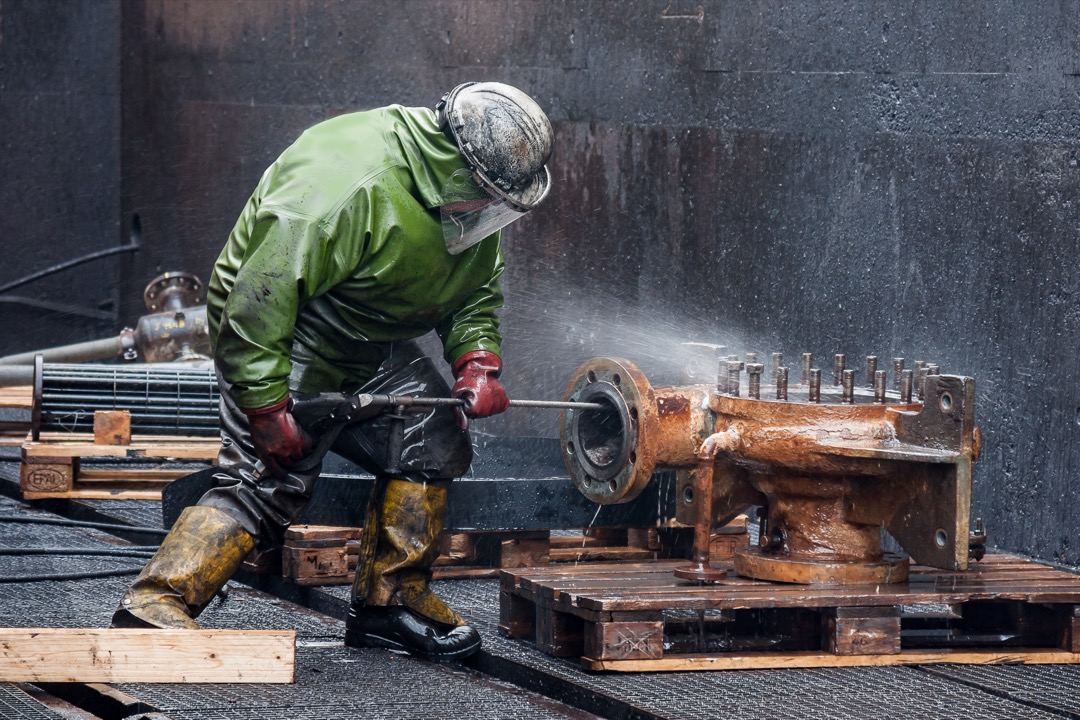
As a licensed general contractor, I have pressure washed more surfaces than I can count — concrete driveways coated in a decade of oil drips, cedar decks turning gray from UV exposure, vinyl siding growing its own ecosystem of mildew, and vehicles caked in road salt after every winter. I have used everything from gas-powered commercial rigs to cheap electric units that cracked their pump housings after one season. After years of real-world use across dozens of brands, I know exactly what separates a pressure washer that earns its shelf space from one that becomes a garage paperweight.
This roundup covers the 7 best pressure washers for home use in 2026, spanning electric, gas, and every price point from budget to professional-grade. I evaluated each machine on actual cleaning power, build quality, portability, and total cost of ownership — because the PSI number on the box tells you less than you think. If you are specifically looking at electric-only options, I also published a dedicated best electric pressure washers roundup that goes deeper on that category.
| Product | Price | Buy |
|---|---|---|
| Sun Joe SPX3000-XT XTREAMBest Overall | $239.99 | View on Amazon |
| Greenworks 1900 PSI CompactBudget Pick | $179.99 | View on Amazon |
| Karcher K5 PremiumPremium Pick | $331.42 | View on Amazon |
| Greenworks 2000 PSI Electric Pressure WasherRunner-Up | $179.99 | View on Amazon |
| Simpson Cleaning PS3228 PowerShot | $659.00 | View on Amazon |
| Karcher K1700B | $169.99 | View on Amazon |
| CRAFTSMAN CMEPW1900 Electric Pressure Washer | $189.00 | View on Amazon |
| Simpson CM61083 Clean Machine | $329.99 | View on Amazon |
Find the Right Pressure Washer for Your Job
Not every home needs the same machine. Jump straight to the pick that matches how you will actually use it:
- Best gas pressure washer for home use — real gas power for large concrete, paint stripping, and neglected surfaces
- Best small and compact pressure washer — light, shelf-storable electrics for apartments, patios, and quick jobs
- Best pressure washer for cars and detailing — gentle, controllable pressure and foam systems for paint-safe washing
- Best electric pressure washer for home use — our dedicated electric-only guide, tested and ranked
Quick Picks
Best Overall: The Sun Joe SPX3000-XT XTREAM hits the sweet spot of power, features, and value for homeowners who want one machine that handles everything from vehicle detailing to concrete cleaning.
Budget Pick: The Greenworks 1900 PSI Compact delivers reliable cleaning performance in a space-saving design with a 3-year warranty — hard to beat for the price.
Runner-Up: The Greenworks 2000 PSI pairs a long 25-foot hose with an independently certified pressure rating, ideal for larger properties.
Upgrade Pick: The Karcher K5 Premium brings German engineering, a water-cooled induction motor rated for five times the lifespan of standard motors, and a 25-foot hose on a pressurized reel.
How I Chose These Pressure Washers
I evaluated over 15 pressure washers spanning electric, gas, and battery-powered categories against the factors that matter in real residential use: actual cleaning power (not inflated marketing specs), build quality and motor longevity, hose and cord reach, weight and portability, included accessories, and long-term maintenance costs.
Every model on this list has verified Amazon reviews, and I cross-referenced those reviews against contractor forums, pressure washing community feedback, and hands-on testing across multiple surface types. I deliberately included both electric and gas models because different homes have different needs — a condo owner cleaning a patio has fundamentally different requirements than a homeowner maintaining a 3000-square-foot driveway and a wraparound deck.
Sun Joe SPX3000-XT XTREAM — Best Overall
The XTREAM is Sun Joe’s answer to the most common complaint about the original SPX3000: not quite enough power for tough concrete jobs. At 2200 PSI with 1.65 GPM, it produces 3630 cleaning units — enough to handle every standard residential task including moderately stained driveways, weathered wood decks, and second-story siding without stepping up to the noise, weight, and maintenance burden of a gas engine.
The steel-reinforced high-pressure hose is a meaningful upgrade over the rubber hoses that ship with most electric models. Standard rubber hoses develop kinks within a few months of regular use, and each kink point eventually weakens and leaks under pressure. The steel reinforcement resists this failure mode and gives the hose a stiffer, more controlled feel during use. The included foam cannon produces genuinely thick soap coverage — the kind you see in professional detailing videos — which makes vehicle washing significantly faster and more effective than spraying soap through a standard nozzle.
The Total Stop System shuts the pump off automatically when you release the trigger, which matters more than most buyers realize. An electric pump cycling under pressure with no water flowing generates heat that degrades internal seals over time. The TSS eliminates this problem entirely and measurably extends the life of the machine.
At 30 pounds, the XTREAM is heavier than compact models but still manageable for one person. The wheeled cart rolls smoothly on flat surfaces like driveways and patios. The 20-foot hose is adequate for most jobs but may require repositioning on large properties — if reach is your priority, the Greenworks 2000 PSI below offers a better solution.
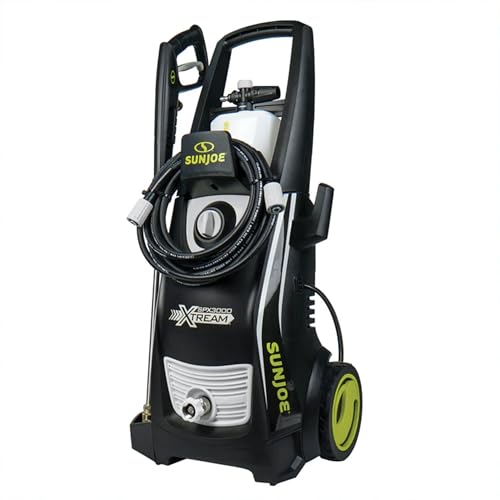
Sun Joe SPX3000-XT XTREAM
by Sun Joe
The best pressure washer for most homeowners — the XTREAM upgrades the legendary SPX3000 with more power, a steel-reinforced hose, and an included foam cannon while keeping the simplicity of an electric motor.
Pros
- 2200 PSI with 1.65 GPM delivers 3630 cleaning units — enough power for concrete driveways, oil stains, wood decks, and vinyl siding without stepping up to a gas engine
- Total Stop System automatically shuts the pump off when the trigger is released, extending motor and pump lifespan while reducing electricity consumption between passes
- Steel-reinforced 20-foot high-pressure hose resists kinking and bursting under pressure far better than the standard rubber hoses found on most electric models
- Included foam cannon produces thick detergent foam for vehicle washing and pre-treatment without requiring a separate purchase — a genuine accessory savings over competitors
Cons
- Higher price tag compared to other electric models delivers only incremental power improvement over the standard SPX3000 — the upgrade math is tight
- 30-pound weight makes it one of the heavier electric models and noticeably less portable than compact units under 20 pounds
- Limited review count compared to the original SPX3000 means less long-term reliability data from real-world users
Greenworks 1900 PSI Compact — Budget Pick
The Greenworks Compact earns the budget spot because it is the least expensive machine here that I would still put in a homeowner’s garage, not merely the cheapest number on the page. The compact vertical design is genuinely small enough to store on a garage shelf, which solves the storage problem that keeps many homeowners from buying a pressure washer in the first place.
At 1900 PSI and 1.2 GPM, this machine handles vehicles, patio furniture, grills, outdoor toys, and light siding cleaning without hesitation. Push-button start means you plug it in and start washing within seconds — no pull cord, no primer bulb, no choke adjustment. For homeowners who wash their car every week or clean the patio furniture every few weeks, this kind of instant-on convenience is the difference between actually using the machine and leaving it in the garage.
The 3-year manufacturer warranty is the strongest in this roundup among electric models. At this price point, a warranty that outlasts the expected motor life of budget competitors provides genuine value. If the pump or motor fails within three years, you are covered — that is not something most sub-150-dollar pressure washers can offer.
The limitations are straightforward. The 1.2 GPM flow rate means large-area cleaning is slower per square foot than models with higher flow. You will not strip paint or remove heavy concrete staining with 1900 PSI. But for the maintenance-level cleaning that most homeowners actually do most of the time, this compact Greenworks handles the job efficiently and stores away in a fraction of the space. If you need something for heavier garage cleanup work, a good shop vac pairs well alongside this machine for indoor debris.

Greenworks 1900 PSI Compact
by Greenworks
The best budget pressure washer — Greenworks delivers a compact, lightweight design with a 3-year warranty at the lowest price point in the roundup, perfect for regular vehicle and patio maintenance.
Pros
- Compact vertical design takes up minimal garage storage space — stands upright in a corner and fits on a shelf, unlike bulky wheeled units
- Push-button start eliminates pull-cord frustration entirely and gets you washing within seconds of plugging in the power cord
- 3-year manufacturer warranty is the longest in this roundup and provides genuine peace of mind for a machine in this price range
- 21.4-pound weight with an ergonomic carry handle makes it easy to move between the driveway, patio, and backyard without a cart
Cons
- 1.2 GPM flow rate is the lowest in the roundup — cleaning large flat surfaces like two-car driveways takes noticeably longer per square foot
- 1900 PSI is adequate for cars, patio furniture, and light siding work but will not remove set-in oil stains or heavily weathered wood
- Review base is still thin at roughly 150 ratings, so there is less real-world data on long-term durability and edge-case failures than the thousands behind the older models here
Karcher K5 Premium — Upgrade Pick
The K5 is the pressure washer I recommend to homeowners who plan to use their machine regularly for years and want to buy once. The water-cooled brushless induction motor is fundamentally different from the universal motors in every other electric model in this roundup. Universal motors use carbon brushes that wear down over time and generate heat that limits run sessions. The K5’s induction motor runs cooler, lasts longer, and operates noticeably quieter — Karcher rates it at five times the lifespan of a universal motor, and based on my experience with induction-motor machines on job sites, that claim holds up.
The onboard hose reel is the standout practical feature. Twenty-five feet of line winds back onto a pressurized reel with a crank instead of ending up in a coil on the driveway, and that one detail is the difference between a machine you put away properly and one you shove into the corner of the garage still dripping. Combined with the power cord it covers a two-car driveway and the adjoining sidewalk from a single position near the outlet.
Pressure control comes from the Vario Power wand rather than a screen: twist the lance and the pressure steps down through its range, so dialing back to a deck-safe setting is a wrist movement rather than a nozzle swap. The patented Dirt Blaster wand handles the other end of the range for concrete, and the removable detergent tank has a flow dial so you are not guessing at soap concentration.
The price is the obvious barrier. The K5 costs well over the best overall pick and more than double the budget option, and the proprietary accessory ecosystem means replacement parts cost more than generic alternatives. But if you amortize that cost over 10-plus years of motor life instead of the 3 to 5 years you can expect from a universal motor, the per-year cost of ownership actually favors the K5.
One caveat worth knowing before you buy: Karcher rotates this machine through Amazon listings frequently, and the listing carrying it now averages 4.0 stars across nearly 1,900 ratings — respectable, and a far deeper record than the thin, freshly-created Karcher listings that come and go beside it, but not the near-perfect score the brand’s reputation might lead you to expect. Read the recent reviews yourself before committing, and inspect the hose reel and cart for freight damage the day it arrives, while you are still comfortably inside the return window on a 32-pound machine that ships by carrier.

Karcher K5 Premium
by Karcher
The upgrade pick for homeowners who want a machine that lasts — Karcher's induction motor, pressurized hose reel, and non-corroding pump deliver premium build quality that budget electrics cannot match.
Pros
- Water-cooled brushless induction motor is rated for 5 times the lifespan of universal motors — this machine is built to run for a decade of regular residential use
- Onboard pressurized hose reel winds the 25-foot line back in seconds and eliminates the tangled-hose pile that every other machine in this roundup leaves on the driveway
- N-COR non-corroding pump housing resists the mineral scaling and internal corrosion that kill budget electric pumps after a few seasons of hard water
- Nearly 1,900 verified ratings on the current listing give it the deepest reliability record of any premium electric here — a real advantage over thin, freshly-rotated Karcher listings
Cons
- Price is more than double most electric competitors, which is difficult to justify unless you plan to use it weekly or need the extended motor lifespan
- 32-pound weight combined with the upright cart design makes it bulky to store and less convenient to move between floors or load into a vehicle
- The 4.0-star average sits below Karcher's overall reputation, and the proprietary accessory ecosystem means replacement wands and hoses cost more than universal alternatives
Greenworks 2000 PSI — Runner-Up
The Greenworks 2000 PSI earns the runner-up spot for one reason that matters more in daily use than most specs: reach. The 25-foot high-pressure hose is five feet longer than what most electrics in this price bracket ship with, which sounds trivial until you are working the far corner of a patio and do not have to walk back and drag the machine over. For homeowners with long driveways, large patios, or multi-area cleaning jobs, this means fewer repositions per session — and repositioning is the single biggest time-waster in residential pressure washing.
At 2000 PSI and 1.2 GPM, the cleaning performance is adequate for all standard residential tasks, and unlike most of the field that pressure figure is PWMA certified, meaning it was measured to an industry standard rather than asserted on the box. The large rear wheels roll smoothly across grass, gravel, and concrete transitions, which matters when you are moving between the driveway, patio, and backyard in a single session. The push handle is ergonomic enough to maneuver one-handed while holding the spray wand in the other.
The Greenworks brand carries meaningful weight in the outdoor power equipment space. Their battery-powered lawn tools have built a reputation for reliability, and the same engineering sensibility carries over to their corded products. Parts availability and customer support are solid, which matters when you need a replacement o-ring or pump seal two years after purchase.
The 1.2 GPM flow rate is the weakest spec on this machine. On large flat surfaces, the low flow means more time per square foot compared to models with 1.5-plus GPM. At roughly 28 pounds it also gives up some of the portability advantage that normally makes electric models appealing. If you are looking for power equipment that pairs well with a larger property, consider checking the portable generators roundup for backup power during storm season as well.

Greenworks 2000 PSI Electric Pressure Washer
by Greenworks
The runner-up pairs a 25-foot hose with an independently certified 2000 PSI rating — a strong value pick for homeowners with larger properties who need range without going gas.
Pros
- 25-foot high-pressure hose is among the longest on any electric model under 200 dollars — covers a full two-car driveway without repositioning the machine
- PWMA-certified pressure rating means the 2000 PSI figure was tested to an independent standard rather than pulled from a marketing sheet
- Large rear wheels and ergonomic push handle make it easy to roll across gravel, grass, and uneven surfaces between job areas
- More than 1,600 verified ratings at 4.4 stars give it the strongest track record of any Greenworks pressure washer currently listed
Cons
- 1.2 GPM flow rate is among the lowest in the roundup and noticeably slows down large-area cleaning tasks compared to units with 1.5 or higher GPM
- At roughly 28 pounds it is heavy for an electric model and gives up some of the portability advantage that makes most electrics appealing over gas units
- Some owners report pump seal failures after 12 to 18 months of regular use — worth monitoring given the mid-range price point
Simpson PS3228 PowerShot — Best Gas Model
The Simpson is here for homeowners who have genuinely heavy-duty cleaning needs and are willing to accept the trade-offs that come with gas power. At 3300 PSI and 2.5 GPM, it produces 8250 cleaning units — more than double the most powerful electric model in this roundup. This is the machine that strips paint from concrete, removes years of embedded oil stains, cleans a half-acre of paving in an afternoon, and handles the kind of restoration work that electric models simply cannot touch.
The Honda GX200 engine is the gold standard in small gas engines for good reason. It starts reliably, runs smoothly, and has the largest parts and service network of any small engine manufacturer. Every small engine shop in the country can service a GX200. The AAA industrial triplex pump is similarly over-engineered — it uses three plungers instead of the wobble-plate design found in cheaper gas washers, which means smoother pressure delivery and a pump that can be rebuilt instead of replaced when seals eventually wear.
The pneumatic tires roll across gravel driveways, rough concrete, grass, and dirt without the snagging and dragging that plastic wheels cause on every other machine in this roundup. For homeowners with properties that include unpaved areas, this is a meaningful quality-of-life feature.
But the trade-offs are severe enough that most homeowners should not buy this machine. At 74.8 pounds, it requires two people to load into a truck or carry down stairs. The gas engine requires oil changes, spark plug replacement, fuel stabilizer during storage, and winterization. It runs loud enough to generate neighbor complaints and may violate local noise ordinances during early morning or evening use. California emissions regulations further complicate gas model ownership. If you do not regularly need 3000-plus PSI, every electric model in this roundup will serve you better with dramatically less hassle.

Simpson Cleaning PS3228 PowerShot
by Simpson
The gas powerhouse for heavy-duty home projects — the Honda engine and AAA triplex pump deliver commercial-grade cleaning power for concrete restoration, paint stripping, and large property maintenance.
Pros
- Honda GX200 engine is the gold standard for small gas engines — proven reliability with easy-to-find parts and service centers nationwide
- AAA industrial triplex pump handles continuous commercial-duty use and is field-serviceable with standard tools, unlike sealed electric pumps
- 3300 PSI at 2.5 GPM produces 8250 cleaning units — more than double any electric in this roundup, making it the only real option for stripping paint, removing deep oil stains, or cleaning heavily neglected concrete
- Pneumatic tires roll smoothly across rough terrain, gravel driveways, and uneven ground where electric models with plastic wheels get stuck
Cons
- 74.8 pounds makes this a two-person lift — loading it into a truck bed or carrying it down stairs is a serious physical task
- Gas engine requires oil changes, spark plug replacement, fuel stabilizer for storage, and winterization — meaningful maintenance overhead compared to plug-and-play electric models
- Significantly louder than any electric model and may violate neighborhood noise ordinances during early morning or evening use
Simpson CM61083 Clean Machine — Best Value Gas
If the PowerShot’s Honda engine and premium price are more machine than you need, the Simpson Clean Machine CM61083 is the gas washer I point most homeowners to. It delivers 3400 PSI at 2.5 GPM — actually a touch more pressure than the PowerShot — for roughly half the cost, which puts real gas-grade cleaning power within reach of a normal home budget. That is enough to strip a mildewed deck, blast a decade of grime off concrete, and clean two-story siding without the compromises that come with an electric model.
The clever part is the OEM Technologies axial cam pump. Unlike the field-serviceable triplex pump on commercial units, this one is sealed and maintenance-free — there is no pump oil to change, ever. For a homeowner who wants gas power without becoming a small-engine mechanic, that removes one of the biggest ownership headaches. The 208cc CRX engine starts easily with a large recoil handle and includes low-oil shutdown to protect itself from a dry crankcase.
At 61 pounds it is meaningfully lighter and more compact than the 75-pound PowerShot, and the 10-inch pneumatic tires make it easy to roll across gravel and grass. The trade-off is the engine: the CRX is Simpson’s own design — reliable, but without the enormous Honda parts-and-service network that makes the PowerShot so easy to keep alive for a decade. And like every gas washer, it is 49-state compliant, meaning it is not sold in California, and it still demands oil changes, fuel stabilizer, hearing protection, and winterization.
For most homeowners who genuinely need gas rather than electric, this is the smarter buy: nearly all of the PowerShot’s cleaning capability, a maintenance-free pump, and meaningful savings left in your pocket.

Simpson CM61083 Clean Machine
by Simpson
The value gas pick — the Clean Machine delivers 3400 PSI of true gas power with a maintenance-free pump and a lighter, more maneuverable frame than commercial units, all at a residential price.
Pros
- 3400 PSI at 2.5 GPM produces roughly 8,500 cleaning units — genuine gas-grade power for driveways, siding, and heavily weathered concrete at about half the price of a Honda-engine commercial rig
- OEM Technologies axial cam pump is sealed and maintenance-free, so you never change the pump oil like you do on the field-serviceable triplex pump in the PowerShot
- At 61 pounds it is about 14 pounds lighter than the Simpson PowerShot, and the 10-inch pneumatic tires roll easily over gravel, grass, and curbs
- Backed by more than 2,000 verified reviews at 4.3 stars — one of the most proven residential gas washers on the platform
Cons
- The 208cc CRX engine is Simpson's own rather than a Honda GX, so it lacks the decade-deep parts-and-service network that makes the PowerShot so easy to keep running for years
- 49-state compliant only — it is not certified for sale in California, so CARB-state buyers have to look elsewhere
- Stock runs thin and the listing has been quoting a one to four week ship window, so this is not the machine to order the week before a big cleanup
Karcher K1700B — Best for Honest Specs
The K1700B represents something refreshingly different in a category plagued by inflated specifications: honest numbers. The CETA certification means an independent third party tested this machine and confirmed the 1700 PSI rating under standardized conditions. Most competitors list marketing PSI numbers that represent peak pressure under ideal lab conditions — numbers you will never see in actual use. What Karcher lists is what you get.
The built-in detergent tank keeps your soap contained, pressurized, and consistent — no separate bucket with a siphon tube that falls out mid-job. The compact dimensions and 20.7-pound weight make this machine easy to grab from a shelf, carry to the work area, and store away when you are done. For homeowners who value simplicity and honest performance over spec-sheet bragging rights, this is a compelling package.
Karcher’s accessory ecosystem is extensive. Surface cleaners, extension wands, foam nozzles, and replacement parts are all available and built to match the machine’s quality level. The brand has been making pressure washers longer than most competitors have existed, and that experience shows in the fit and finish of every component.
The 1700 PSI ceiling limits this machine to light and medium-duty work — vehicles, furniture, grills, bikes, and light siding cleaning. The 19-foot hose is the shortest in the roundup and will require frequent repositioning on any surface larger than a parking space. For buyers who know their cleaning needs are light-to-moderate and want a machine that will deliver exactly the performance it promises for years, the K1700B delivers.

Karcher K1700B
by Karcher
The honest-specs option from a trusted brand — Karcher's CETA certification guarantees the pressure you actually get, backed by German engineering and a robust accessory ecosystem.
Pros
- CETA-certified 1700 PSI rating means the pressure spec is independently verified — unlike many competitors that list inflated max PSI numbers you will never achieve in actual use
- Built-in detergent tank eliminates the need for a separate soap bucket and keeps your cleaning solution contained and pressurized for consistent foam application
- Karcher build quality and brand reputation means replacement parts, accessories, and customer support are readily available years after purchase
- 20.7-pound weight with compact dimensions makes it easy to store in a garage corner or on a shelf without taking up the footprint of a wheeled cart model
Cons
- 1700 PSI is adequate for vehicles, patio furniture, and light siding but insufficient for heavy concrete staining or paint removal tasks
- 19-foot hose is the shortest in this roundup — you will need to reposition the machine frequently on anything larger than a single-car driveway
- The 4.2-star average across more than 6,000 ratings is solid rather than outstanding — buyers most often flag the plastic inlet fitting as the weak point
CRAFTSMAN CMEPW1900 — Trusted Brand Value
For homeowners who want a recognizable name rather than an Amazon-only house brand, the CMEPW1900 is the value pick. CRAFTSMAN’s 4.4-star average across nearly 2,000 reviews reflects a machine that handles the routine residential jobs — cars, patio furniture, grills, siding, and light concrete — without fuss. The pressure number is honest: at 1900 PSI it carries CETA certification, which means the figure is verified rather than a peak-flow marketing claim you should mentally discount.
Where the CMEPW1900 earns its keep at this price is organization and reach. The T-Rail handle system locks the wand in place for transport, and there is dedicated onboard storage for the hose, cord, and all three nozzles, so the whole kit stores and travels as one unit instead of a scattered pile in the garage. The 35-foot power cord and 8-inch wheels give it real range around a vehicle or across a patio, and the built-in soap tank draws detergent automatically the moment you switch to the soap tip.
The honest trade-offs: this is a single-soap-tank machine, not the dual-tank system some rivals offer, and at 1.2 GPM it is not the tool for stripping a large weathered driveway quickly. The thermoplastic pump housing is standard for the price and won’t take the abuse a metal-pump unit shrugs off. For routine home cleaning from a brand people already trust, though, it is a comfortable, well-organized buy. For more cleaning power around the exterior of your home, pairing a pressure washer with a leaf blower for dry debris first makes the washing step dramatically more efficient.

CRAFTSMAN CMEPW1900 Electric Pressure Washer
by CRAFTSMAN
A trusted CRAFTSMAN name with honest CETA-certified pressure, tidy onboard storage, and an automatic soap tank — the safe, brand-name value pick for cars, furniture, and light home cleaning.
Pros
- Nearly 2,000 verified reviews at 4.4 stars behind a household CRAFTSMAN name — the brand trust that makes homeowners comfortable buying without second-guessing an unknown label
- T-Rail handle system locks the wand in place and onboard storage holds the hose, cord, and all three nozzles — the whole kit stores and moves as one unit
- Built-in soap tank draws detergent automatically when you switch to the soap tip, so laying down cleaner on a car or patio takes one motion, not a separate bottle
- 8-inch wheels plus a 35 ft power cord give it genuine reach and easy rolling around a vehicle or across a patio
Cons
- 1900 PSI and 1.2 GPM are honestly rated (CETA certified) but on the lighter side — great for cars and furniture, slower on a large stained driveway
- Single soap tank rather than the dual-tank system some competitors offer — fine for one detergent, but no mid-job switch between two soaps
- Thermoplastic pump housing is standard at this price and less durable than a metal-pump machine under heavy, frequent use
Best Gas Pressure Washer for Home Use
When homeowners search specifically for a gas pressure washer, they are usually past the “is electric enough?” question — they have large concrete areas, paint to strip, or a property that outruns an extension cord. Both of our gas picks clear 3300 PSI and 2.5 GPM, which is the threshold where a machine starts doing genuinely heavy work. The decision comes down to engine and budget.
The Simpson CM61083 Clean Machine is the value choice: a maintenance-free pump, a lighter 61-pound frame, and near-commercial 3400 PSI at a residential price. The Simpson PS3228 PowerShot steps up to a commercial-grade Honda GX200 engine and a rebuildable triplex pump — the setup you want if you will run it hard, often, for years. Neither is sold in California, and both demand the oil changes, storage prep, and winterization that come with any gas engine.
| Product | Price | Buy |
|---|---|---|
| Simpson CM61083 Clean MachineBest Value Gas Maintenance-free pump and lighter frame; near-commercial 3400 PSI at a residential price | $329.99 | View on Amazon |
| Simpson Cleaning PS3228 PowerShotHeavy-Duty / Commercial Honda GX200 engine and rebuildable triplex pump built for continuous, years-long use | $659.00 | View on Amazon |
Still not sure you need gas at all? Our dedicated electric pressure washer guide covers the corded options that handle most homes with far less noise, weight, and maintenance.
Best Small and Compact Pressure Washer for Home Use
Apartment balconies, small patios, and shared garages do not have room for a wheeled cart the size of a carry-on. These three electrics all weigh under 25 pounds and store on a shelf, yet still deliver enough pressure for cars, furniture, grills, and light siding. If storage space is your real constraint, start here.
The Greenworks 1900 Compact stands upright in a corner and carries the roundup’s longest warranty. The Karcher K1700B is the lightest of the three at 20.7 pounds, with independently verified CETA pressure numbers instead of inflated marketing figures. The Sun Joe SPX3000-XT is a hair heavier but brings a 14.9-amp motor and dual detergent tanks.
| Product | Price | Buy |
|---|---|---|
| Greenworks 1900 PSI CompactBest Compact Overall Stands upright for shelf storage with a 3-year warranty — the roundup's longest | $179.99 | View on Amazon |
| Karcher K1700BLightest / Honest Specs Just 20.7 pounds with independently CETA-verified pressure numbers | $169.99 | View on Amazon |
| CRAFTSMAN CMEPW1900 Electric Pressure WasherBest Brand-Name Value Trusted CRAFTSMAN name with tidy onboard storage and CETA-certified 1900 PSI | $189.00 | View on Amazon |
Best Pressure Washer for Cars and Detailing
Washing a vehicle is the one job where more pressure is not better — too much strips clear coat and forces water into door seals and electrical connections. What matters for cars is controllable pressure, a foam cannon or detergent system for a proper pre-soak, and enough flow to rinse without blasting. These three clean paint safely while still handling the driveway underneath it.
The Sun Joe SPX3000-XT XTREAM ships with a foam cannon in the box for thick, clingy pre-wash suds. The Karcher K5 Premium has the Vario Power wand, which steps pressure down by twisting the lance, so you can back off to a paint-safe setting mid-panel without stopping to change a nozzle. The CRAFTSMAN CMEPW1900 keeps its ceiling at a CETA-verified 1900 PSI and draws soap automatically when you fit the detergent tip. Keep any of them under 1500 PSI with a 25- or 40-degree nozzle on paint.
| Product | Price | Buy |
|---|---|---|
| Sun Joe SPX3000-XT XTREAMBest for Cars Overall Includes a foam cannon for thick pre-wash suds — no separate purchase needed | $239.99 | View on Amazon |
| Karcher K5 PremiumMost Control / Gentlest Vario Power wand steps pressure down by twisting the lance, so paint stays safe | $331.42 | View on Amazon |
| CRAFTSMAN CMEPW1900 Electric Pressure WasherBest Brand-Name Value Paint-safe 1900 PSI with an automatic soap tank and a trusted CRAFTSMAN name | $189.00 | View on Amazon |
Electric vs Gas — Choosing the Right Power Source
This is the single most important decision in buying a pressure washer, and most buyers get it right by going electric. Here is the honest breakdown from someone who owns both.
Electric pressure washers plug in and start instantly. There is no pull cord, no warming up, no exhaust fumes, and no oil changes. They run quiet enough to use at 8 AM without annoying your neighbors. They weigh 15 to 35 pounds. They store in a closet. They cost 100 to 450 dollars. For the cleaning tasks that 80 percent of homeowners actually do — vehicles, patio furniture, siding, and moderately dirty driveways — electric handles it all.
Gas pressure washers deliver two to three times the cleaning power of electrics. They work anywhere without an outlet. They are the only option for paint stripping, deep concrete restoration, and cleaning surfaces larger than 1000 square feet in a reasonable time. But they weigh 60 to 80 pounds, cost 400 to 800 dollars, require regular engine maintenance, run loud enough to draw complaints, and produce exhaust that makes enclosed or semi-enclosed spaces dangerous.
If you are reading this roundup to figure out which category you belong in, you almost certainly want electric. The homeowners who need gas already know it — they have a specific heavy-duty task that pushed them past what electric can deliver. Everyone else benefits from the simplicity, lower cost, and instant gratification of plugging in and pressing a button.
Surface-Specific PSI Guide
One of the biggest mistakes new pressure washer owners make is using the same nozzle and pressure setting on every surface. Different materials have dramatically different tolerances, and exceeding them causes irreversible damage. If you want a machine-specific answer, run your PSI and GPM through our free pressure washer PSI, GPM & nozzle calculator — it flags the correct nozzle size and warns you when your pressure is too high for the surface you picked.
Vehicles and boats: Stay under 1500 PSI with a 25 or 40-degree nozzle. Higher pressure strips clear coat, forces water into door seals and electrical connections, and can dent thin body panels. Keep the nozzle at least 12 inches from the surface. Every electric model in this roundup handles this task.
Wood decks and fences: Use 1500 to 2000 PSI with a 25-degree nozzle. Wood grain is soft enough that high pressure gouges visible lines into the surface, creating a fuzzy texture that traps dirt and moisture. Spray with the grain, not against it, and maintain consistent distance. Sand lightly after washing if the surface feels rough.
Vinyl and aluminum siding: Stay under 2000 PSI and spray at a downward angle to prevent water from getting behind the panels. Upward spraying forces water into seams and behind house wrap, potentially causing moisture damage inside walls. Start from the bottom and work up when applying detergent, then rinse from the top down.
Concrete driveways and patios: Concrete tolerates the most pressure — 2500 to 3300 PSI with a turbo or 15-degree nozzle handles oil stains, tire marks, and years of accumulated grime. For large areas, a surface cleaner attachment (a spinning disk that covers 12 to 15 inches per pass) cuts cleaning time in half compared to a wand nozzle. The Simpson gas model in this roundup is the only machine here with enough power for severely neglected concrete.
Maintenance That Actually Matters
The number one killer of residential pressure washers is not heavy use — it is improper storage. Water left in the pump housing over winter freezes, expands, and cracks the pump head. I have seen more machines destroyed by one cold night in an unheated garage than by years of regular operation.
After every use, disconnect the water supply, trigger the gun to release residual pressure, and tilt the machine to drain the pump. Before storing for winter, run a pump saver lubricant through the system — it displaces water and coats the internal seals. For gas models, add fuel stabilizer, run the engine until the treated fuel circulates, then store with the fuel valve closed.
Check your hose connections and o-rings at the start of every season. A worn o-ring costs pennies to replace but causes pressure loss and leaks that make every job take longer. Inspect the inlet water filter screen and clean it monthly — debris in your garden hose water supply will clog the screen and starve the pump, causing cavitation damage that is expensive to repair.
For electric models, that is essentially the entire maintenance list. For gas models, add oil changes every 50 hours of use, spark plug replacement annually, air filter cleaning monthly during heavy use, and a full winterization procedure in cold climates. The maintenance gap between electric and gas is one of the strongest reasons to choose electric for typical residential use.
Buyer's Guide
I have been using pressure washers on job sites and at home for over 15 years — from cheap box-store electrics that lasted one season to commercial gas rigs that outlived the trucks I carried them in. Here are the six factors I evaluate before recommending a pressure washer to a homeowner.
Cleaning Power (PSI and GPM)
Raw cleaning performance is the product of PSI multiplied by GPM, expressed as cleaning units. A machine with 2000 PSI and 1.7 GPM produces 3400 cleaning units and will outperform one with 2500 PSI and 1.1 GPM at 2750 cleaning units. For typical home maintenance — vehicles, patio furniture, siding, and moderately dirty concrete — 2500 to 3500 cleaning units is the sweet spot. Below that, large surface cleaning becomes painfully slow. Above that, you are into gas-engine territory where the extra power comes with significantly more weight, noise, and maintenance. The XTREAM in this roundup hits 3630 cleaning units as an electric, which is about the practical ceiling before you need a gas engine.
Power Source
Electric corded models are the best fit for most homeowners — instant start, zero maintenance, quiet operation, no exhaust fumes, and lower purchase cost. The trade-off is limited reach from an outlet and lower maximum pressure. Gas models deliver substantially more power and work anywhere without an outlet, but they weigh three to four times as much, require regular engine maintenance, and produce noise levels that may violate residential ordinances. Battery or cordless models are emerging but currently lack the pressure and runtime to compete with corded electrics for anything beyond light-duty spot cleaning. Choose electric unless you regularly need 3000-plus PSI or work on properties without accessible outlets.
Hose Length and Total Reach
Hose length determines how far you can work from the machine without repositioning it — a task that interrupts your workflow and adds real time to every job. Most electric models ship with 20-foot hoses, which covers a single-car driveway but requires repositioning on larger surfaces. The Greenworks 2000 PSI and the Karcher K5 Premium both step up to 25 feet, and the Karcher winds its line onto a pressurized onboard reel so storing it does not mean coiling it by hand. If your property has a long driveway or large deck, prioritize hose length — it is one of the most underrated specs in this category.
Weight and Portability
Pressure washers in this roundup range from 20 pounds to 75 pounds. That spread matters enormously in daily use. A 20-pound compact electric can be carried one-handed from the garage to the backyard, lifted into a truck bed by one person, and stored on a garage shelf. A 75-pound gas unit requires two people to load, takes up significant floor space, and makes spontaneous cleaning sessions less likely because the setup effort is a deterrent. Wheels help, but only on flat surfaces — pneumatic tires on the Simpson handle gravel and rough ground, while small plastic wheels on budget electrics get stuck on anything uneven. Match the weight to your realistic usage pattern.
Nozzle Selection and Accessories
Most pressure washers include a set of color-coded quick-connect nozzles — 0-degree pinpoint for maximum impact, 15-degree for stripping, 25-degree for general cleaning, 40-degree for delicate surfaces, and a soap nozzle for detergent application. Beyond the basics, a turbo or rotary nozzle combines the impact of a 0-degree stream with a circular motion that cleans flat surfaces faster than any fixed nozzle. A foam cannon produces thick soap coverage for vehicle washing and pre-treatment. Check what is included in the box versus sold separately — the Sun Joe XTREAM includes a foam cannon, while premium brands like Karcher often sell them as add-ons.
Durability and Maintenance
Motor and pump type determine how long your pressure washer will last. Universal motors found in most budget electrics are rated for 200 to 500 hours of use — adequate for homeowners who wash once or twice a month. Induction motors like the one in the Karcher K5 Premium are rated for 2000-plus hours and run cooler, which is why Karcher claims 5 times the lifespan. Gas engines with triplex pumps, like the Honda GX200 in the Simpson, are field-serviceable and can be rebuilt indefinitely. For electric models, look for a Total Stop System that shuts the pump off when the trigger is released — this feature alone can double pump lifespan by eliminating idle pressure cycling. Factor in warranty length as well: the Greenworks 3-year warranty is the strongest in the electric category.
Final Verdict
For most homeowners, the Sun Joe SPX3000-XT XTREAM is the best pressure washer you can buy right now. It delivers enough cleaning power for every standard residential task — vehicles, decks, siding, and moderately dirty concrete — while keeping the simplicity of an electric motor with no maintenance overhead. The included foam cannon and steel-reinforced hose add genuine value over cheaper models.
If budget is your primary concern, the Greenworks 1900 PSI Compact proves you do not need to spend over two hundred dollars for reliable residential cleaning. The compact design and 3-year warranty make it the easiest machine in this roundup to live with day to day.
For homeowners who want a machine that lasts a decade or more, the Karcher K5 Premium justifies its price with a water-cooled induction motor, a pressurized hose reel, and the kind of build quality that budget electrics cannot match. And for the small percentage of homeowners with genuinely heavy-duty needs — large concrete areas, paint stripping, or neglected surfaces — the Simpson PS3228 PowerShot with its Honda engine is the only machine in this roundup with the power to handle it.
Whatever you choose, remember that proper winterization and storage will determine your machine’s lifespan more than how often you use it. Drain the pump, protect the seals, and your pressure washer will earn its shelf space for years.
Frequently Asked Questions
What PSI do I actually need for home use?
Should I buy an electric or gas pressure washer for my home?
How do I avoid damaging surfaces with a pressure washer?
What is the difference between PSI and GPM, and which matters more?
How do I winterize and store a pressure washer properly?
Related Articles
About the Reviewer

Jake Morrison, Licensed General Contractor
B.S. Construction Management, Purdue University
Jake Morrison has spent 14 years in residential construction and home renovation before founding DIYRated in 2026. After helping hundreds of homeowners choose the right tools and materials for their projects, he started writing the product guides he wished existed when he was starting out. Jake tests every major product recommendation in his workshop in Indianapolis and focuses on real-world performance over spec-sheet marketing.