8 Best Smart Thermostats of 2026: A Contractor's Honest Picks
Licensed GC Jake Morrison reviews the 8 best smart thermostats for 2026 — ecobee, Nest, Sensi, Amazon, and Mysa picks with real C-wire, heat pump, and electric baseboard install guidance.
Updated
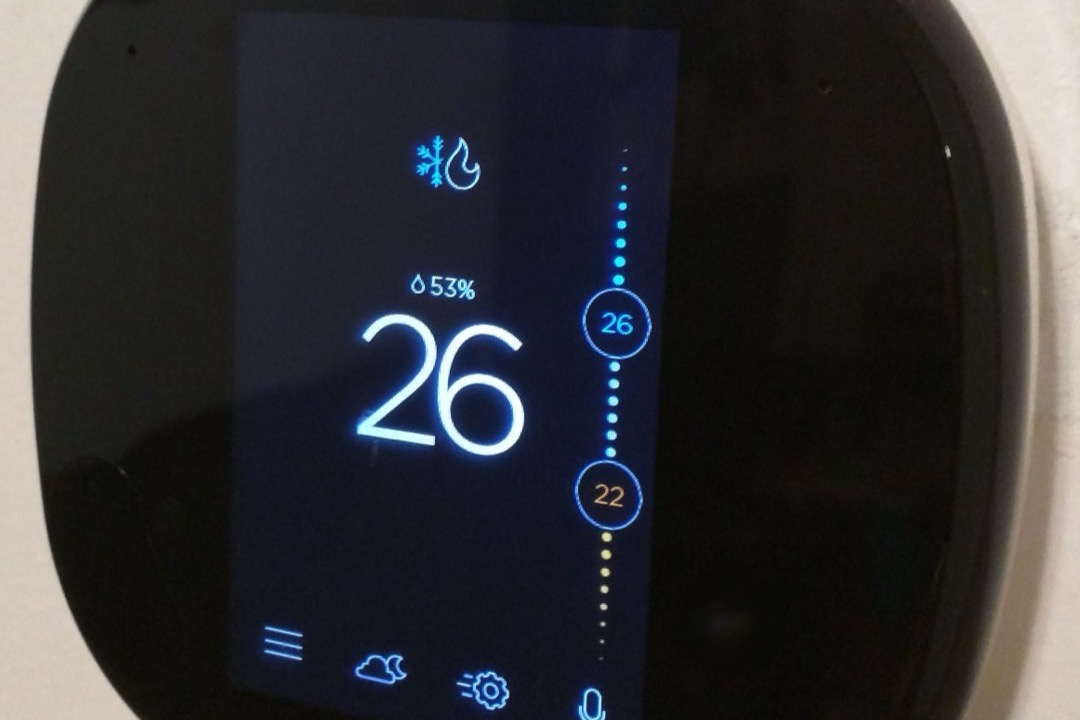
A smart thermostat is one of the most consequential small purchases you can make for your house. Done right, it pays for itself in 12 to 18 months on the utility bill, makes your home noticeably more comfortable in shoulder seasons, and gives you the ability to fix temperature problems from your phone instead of waking up cold at 3 AM. Done wrong, it sits on the wall not connected to WiFi, the heat pump aux strips run all night because the install missed an O/B polarity flip, and you wonder why everyone bothers with smart-home anything. After 20-plus years installing and troubleshooting HVAC controls in residential remodels, I can tell you the difference between those two outcomes is almost entirely about picking the right unit for your specific wiring, your specific HVAC system, and your specific household.
Before we get to the picks, the single most important thing you need to do is pull your current thermostat off the wall and look at the terminals. If you see a wire connected to a screw labeled C (the common wire), every thermostat on this list installs cleanly. If C is empty — which is the case in most homes built before 2010 — your shortlist immediately narrows to two products: the ecobee Enhanced or the battery-powered Sensi ST55. Take a phone photo of your existing wiring before you order anything. That photo answers 90 percent of compatibility questions before they become problems.
I evaluated 18 smart thermostats this spring against six factors that actually matter on real installs: C-wire compatibility, HVAC system support (especially heat pumps), remote room sensor capability, voice assistant ecosystem coverage, geofencing and energy-saving AI, and install difficulty for a confident DIYer. The eight that made this list cover every realistic scenario from an Alexa-only entry point to a design-statement Nest, plus the only two mainstream picks that actually work on electric baseboard heat. Pair the right thermostat with sealing your air leaks before winter and you have the two highest-ROI projects a homeowner can do in a single weekend.
| Product | Price | Buy |
|---|---|---|
| ecobee Smart Thermostat EnhancedBest Overall | $164.99 | View on Amazon |
| ecobee Smart Thermostat Premium with SmartSensorPremium Pick | $209.99 | View on Amazon |
| Google Nest Learning Thermostat (4th Gen) with Temperature SensorRunner-Up | $249.00 | View on Amazon |
| Sensi Smart Thermostat ST55 (Emerson)Budget Pick | $103.49 | View on Amazon |
| Google Nest Thermostat (2020)Runner-Up | $117.49 | View on Amazon |
| Amazon Smart ThermostatRunner-Up | $56.99 | View on Amazon |
| Mysa Smart Thermostat LITE for Electric BaseboardRunner-Up | $99.00 | View on Amazon |
| Mysa Smart Thermostat for Baseboard V2 (240V)Runner-Up | $159.00 | View on Amazon |
Find the Right Smart Thermostat for Your System
Jump straight to the comparison that matches your situation:
- Best smart thermostats overall — every pick reviewed in full
- Best for homes without a C-wire
- Best for a heat pump
- Best for electric baseboard heat
Quick Picks
Best Overall: The ecobee Smart Thermostat Enhanced wins because it solves more real-world install problems than anything else in the category — PEK adapter in the box for no-C-wire homes, full ecosystem voice support, and 90 percent HVAC compatibility including heat pumps with aux heat.
Budget Pick: The Sensi Smart Thermostat ST55 runs on two AA batteries with no C-wire, has 23,000 verified reviews behind it, and is built by Emerson — an actual 130-year-old HVAC manufacturer.
Upgrade Pick: The ecobee Smart Thermostat Premium adds a built-in Alexa speaker, an included room SmartSensor, and an air quality monitor in glass-and-aluminum housing that genuinely belongs on a finished wall.
Best for Apple Households: The Google Nest Learning Thermostat 4th Gen finally ships with native HomeKit and Matter support, an included temperature sensor, and the most beautiful display on any thermostat made.
Best for Electric Baseboard Heat: The Mysa LITE is the only mainstream pick that works on line-voltage 120V/240V electric baseboard — no other thermostat on this list will function on that system at all.
How We Chose These Smart Thermostats
I evaluated every thermostat against the criteria I actually use when speccing controls for a remodel: HVAC system compatibility verified against installer manuals (not marketing pages), C-wire requirements with included or required adapters noted, voice ecosystem coverage tested on real Alexa, Google, and Apple HomeKit hubs, and review sentiment cross-referenced across Amazon (15,000-plus reviews per category), Wirecutter, This Old House, and Bob Vila editorial picks. I weighted heat pump support heavily because heat pumps now make up over a third of new HVAC installs and the wrong thermostat will burn aux heat strips for no reason. I weighted C-wire workarounds heavily because most existing American homes were built without one, and a thermostat that requires a service call to install is not actually accessible. I deliberately included the Mysa LITE despite its specialty positioning because electric baseboard is one of the most underserved categories in smart-home automation, and homeowners with baseboard heat deserve a real recommendation instead of being told “smart thermostats do not work for you.”
Best Smart Thermostats Overall
One lineup covers essentially every house I walk into. The ecobee Enhanced is the do-everything pick for a conventional furnace-and-AC or heat-pump home; the ecobee Premium steps up for multi-stage heat pumps and room-by-room sensing; the Sensi ST55 is the battery-powered answer for an older home with no C-wire; the base Nest and Amazon cover the cheap-and-simple end; the Nest Learning 4th gen is the design piece; and the two Mysa units are the only real answers for line-voltage electric baseboard. Below I review all eight in full, and after the reviews I’ve built system-by-system comparison sections — no-C-wire homes, heat pumps, and electric baseboard — that match the exact picks from this same lineup to the wiring and equipment you actually have, so you can jump straight to the decision you’re trying to make.
ecobee Smart Thermostat Enhanced — Best Overall
The Enhanced is the thermostat I reach for first on a remodel. Not because it has the prettiest screen, and not because it has the most features — both arguments belong to the Premium and the Nest 4th gen respectively. It wins because it solves the install problem cleaner than anything else, supports more HVAC configurations than anything else, and works with every smart-home ecosystem worth caring about.
The PEK Power Extender Kit included in the box is the single most important feature in this entire roundup for older homes. It uses three of the four wires in a typical R-W-Y-G setup to deliver constant 24V power to the thermostat without a dedicated C-wire. I have installed this on dozens of pre-2010 houses where the alternative was either fishing a new wire down a finished wall (a half-day job minimum) or buying a no-C-wire thermostat with compromises. The PEK takes 10 extra minutes at the air handler. That is the entire trade.
The HVAC compatibility is the other thing that makes this the contractor’s default. Up to 3 stages of heat (including auxiliary), 2 stages of cool, single-speed and variable-speed blowers, conventional gas furnaces, heat pumps, dual-fuel systems with a furnace as backup, hydronic systems with the right boiler — the Enhanced handles essentially every residential HVAC configuration except line-voltage electric baseboard (which needs the Mysa). I have not found a heating system in a residential service call where the Enhanced was the wrong answer for technical reasons.
Voice support is genuinely universal — Alexa, Google Assistant, Apple HomeKit, Samsung SmartThings, and Matter all work natively from the Enhanced. The eco+ feature is the AI layer that does real work on the bill: it pulls weather forecasts, learns your occupancy patterns, and (if your utility uses time-of-use rates) shifts run time to off-peak hours. The savings are not huge — call it 3-8 percent on top of basic smart thermostat behavior — but the feature requires zero configuration on your part beyond entering your zip code.
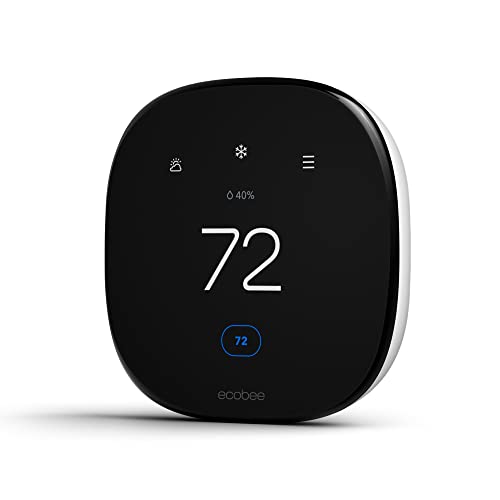
ecobee Smart Thermostat Enhanced
by ecobee
The ecobee Enhanced is the contractor's default recommendation in 2026 — broadest HVAC compatibility, included C-wire workaround, every voice ecosystem, and genuine bill-cutting AI without paying Premium-tier money.
Pros
- Includes the PEK Power Extender Kit in the box, which lets you install on systems without a C-wire by repurposing the G (fan) wire — solves the single biggest blocker for older homes
- Compatible with roughly 90 percent of residential HVAC systems including 3-stage heat / 2-stage cool and heat pumps with auxiliary heat — covers virtually every furnace, AC, or heat pump a homeowner is likely to have
- Supports Alexa, Google Assistant, Apple HomeKit, Samsung SmartThings, AND Matter — only thermostat in the lineup that genuinely speaks every major ecosystem out of the box
- eco+ AI uses on-peak utility rate forecasting, weather data, and your run history to pre-cool or pre-heat at cheaper kWh rates — measurable bill impact in time-of-use markets
Cons
- Touchscreen is responsive but the bezel feels plasticky compared to the Nest 4th gen and the ecobee Premium — the price reflects it
- Remote room SmartSensors are sold separately at meaningful additional cost, which is annoying given they are the feature that justifies ecobee's whole multi-room story
- Setup wizard occasionally misidentifies heat pump O/B reversing valve polarity on first run — verify orientation in installer settings before walking away from the wall
ecobee Smart Thermostat Premium with SmartSensor — Upgrade Pick
The Premium is what you buy when you want the room-by-room story handled out of the box. The included SmartSensor is the difference — placed in a problem room (the bedroom that runs cold, the office over the garage that runs hot), it lets the thermostat average temperatures across multiple sensors or prioritize the room currently occupied. Every other premium thermostat sells remote sensors as a paid add-on, usually in two-packs. The Premium is the only one that ships with one included.
The built-in Alexa speaker is genuinely useful in a hallway or open kitchen. Far-field voice pickup from the wall means you can adjust temperature, ask weather questions, set timers, and run smart-home routines without having an Echo nearby. Apple Siri voice support also works directly through the unit for HomeKit households — the only thermostat I know of that handles both Alexa and Siri voice natively from the same hardware. The speaker quality is fine for voice replies and weather; do not expect Echo Studio sound for music.
The air quality monitor reports VOC and CO2 estimates over time. The data is directional rather than precision-grade — call it useful for trend analysis rather than absolute IAQ measurement — but it tells you whether your house ventilates well enough during cooking or whether off-gassing from new furniture is dragging your air quality down. If the trends look bad, that is the signal to pair the system with a whole-home air filter upgrade at the return plenum, or run a portable air purifier in the most-used rooms.
The premium glass-and-aluminum housing is the only detail that justifies a high-end remodel spec for me. On a kitchen wall in a new build with the rest of the appliances chosen carefully, a plastic-bezeled thermostat looks cheap. The Premium does not. The step up from the Enhanced buys you the included sensor, the speaker, the air quality monitor, and the housing. If you do not need any of those, save the money and buy the Enhanced.

ecobee Smart Thermostat Premium with SmartSensor
by ecobee
ecobee's flagship — included room sensor, built-in Alexa speaker, air quality monitoring, and the broadest HVAC compatibility in the category. The right pick for high-end remodels and anyone who wants the room-by-room story handled out of the box.
Pros
- One occupancy/temperature SmartSensor is included in the box — every other premium thermostat makes you buy room sensors as an add-on at meaningful cost
- Built-in Alexa speaker plus Apple Siri voice support directly through the thermostat — actual far-field voice pickup from the wall, not phone-app voice
- Built-in air quality monitor reports VOC and CO2 estimates — useful trend data for diagnosing whether you need a [whole-home air filter upgrade](/best-air-filters-home/) or better ventilation
- Premium glass-and-aluminum housing genuinely looks like a piece of furniture rather than a wall appliance — the only thermostat I would spec for a high-end remodel
Cons
- step up from the Enhanced is hard to justify if you do not actually need a wall-mounted Alexa speaker or the included room sensor
- Built-in speaker quality is fine for voice replies but mediocre for music — do not buy this expecting an Echo replacement in the hallway
Google Nest Learning Thermostat (4th Gen) — Best for Apple/Google Households
The 4th gen Learning Thermostat is what Nest finally got right after a decade of Apple users asking. Native HomeKit, Matter support, an included temperature sensor in the box, and the best display on any thermostat made. The 60 percent larger borderless screen with metal trim ring is genuinely the most beautiful object you can mount on a wall at this price, and the Obsidian variant in particular looks like a piece of consumer electronics rather than HVAC hardware.
The Adaptive Eco AI is the feature Nest does better than anyone else. Rather than asking you to program a schedule, it watches your occupancy patterns through phone geofencing and on-device motion detection, learns when you are typically home and away, and adjusts setbacks automatically. For households where one or both adults work hybrid schedules and routines vary day-to-day, this is meaningfully better than a 7-day fixed program. For households with strict 9-to-5 routines, the difference is smaller — a programmed schedule on any thermostat performs almost as well.
Heat pump support is where the Nest 4th gen has its honest limit: 2H/1C maximum, which covers most residential heat pumps including aux heat strips, but stops short of multi-stage geothermal or large dual-fuel systems. If you have a geothermal loop or a very large heat pump installed in the last few years, verify your stage requirements against the Nest installer guide before ordering — for those systems, the ecobee Enhanced or Premium handles more stages.
The contractor’s honest concern with anything Google-branded is product longevity. A wall-mounted thermostat is something you reasonably expect to operate for 10-15 years. Honeywell has supported residential thermostat platforms for decades — there are 14-year-old Honeywell digital thermostats still receiving firmware updates today. Google’s track record with consumer hardware is shorter and more product-graveyard-prone. That is not a reason to avoid the Nest; it is a reason to factor warranty length and your own risk tolerance into the decision. The 2-year warranty is genuinely the shortest in this roundup. If long-term hardware support matters more than industrial design, the ecobee Enhanced is the more conservative pick.

Google Nest Learning Thermostat (4th Gen) with Temperature Sensor
by Google
The most beautiful thermostat money can buy and the right pick for design-conscious Apple/Google households — Matter-native, HomeKit at launch, and a sensor in the box. Just verify your C-wire situation before ordering.
Pros
- Matter-native and HomeKit-compatible at launch — the 4th gen finally gives Apple households the Nest hardware they have wanted for a decade
- 60 percent larger borderless display with metal trim ring — the only thermostat that genuinely earns the 'looks like jewelry on the wall' marketing claim
- Adaptive Eco AI learns your schedule from occupancy and phone-based geofencing rather than requiring you to program time blocks — set it and forget it for most users
- Includes one Nest Temperature Sensor in the box (Obsidian variant) — saves the typical add-on cost and lets you balance a problem room from day one
Cons
- C-wire is recommended and Nest does not ship a power-extender adapter in the box — older 2-wire systems need either a C-wire pulled or an aftermarket adapter that voids the cleanest install
- Heat pump support tops out at 2H/1C — fine for most residential heat pumps, but multi-stage geo or large dual-fuel systems need to step up to ecobee Premium or a Honeywell
- Google's product longevity track record is the contractor's honest concern — a wall-mounted device you expect to run for 15 years is a different bet than a phone you replace in three
Sensi Smart Thermostat ST55 (Emerson) — Budget Pick
The Sensi ST55 is the thermostat I have personally swapped onto more punch lists than any other product in this category. The reason is simple: it runs on two AA batteries, requires no C-wire, no power-extender adapter, and no rewiring at the air handler, and the swap takes 15 minutes start to finish. For an older home, a rental property, or any situation where you want smart features without committing to electrical work, this is the answer.
Emerson is the company behind the Sensi line, and that detail matters more than most buyers realize. Emerson has been making HVAC controls since the 19th century. They own White-Rodgers (the residential thermostat brand that probably ran your grandparents’ furnace), Copeland (the largest residential compressor manufacturer in North America), and a portfolio of HVAC support businesses that mean the warranty on this product is backed by people who actually know how furnaces work. When something goes wrong, you call HVAC professionals, not a tech-startup support line.
The 23,000-plus verified reviews at 4.4 stars put it among the three most-reviewed smart thermostats on Amazon, and it carries the highest star average of that group. That review base captures every conceivable installation scenario, every HVAC quirk, and every WiFi compatibility issue you might encounter. The product has been refined against real customer feedback for years, and the 3-year warranty reflects Emerson’s confidence in long-term reliability.
The honest limits: no Apple HomeKit support (Alexa, Google, and SmartThings only), no remote room sensor capability, and no occupancy-based AI like Nest’s Adaptive Eco. This is a 7-day programmable thermostat with WiFi, geofencing, and voice control — it is not the cutting edge of smart-home automation. For a household that wants the basics done well at a fair price with no install drama, that is exactly enough.

Sensi Smart Thermostat ST55 (Emerson)
by Emerson Sensi
The installer's workhorse — battery powered, no C-wire, 22,000-review track record, and an actual HVAC manufacturer behind it. The right pick when you want smart features without rewiring an older home.
Pros
- Truly battery-powered option — runs on two AA batteries with no C-wire required, no power-extender kit, no rewiring at the air handler — easiest swap in the entire category
- Over 22,000 verified reviews at 4.4 stars — by far the most socially validated smart thermostat on Amazon and the one I have personally swapped onto more jobsite punch lists than any other
- ENERGY STAR certified with a documented 23 percent average HVAC energy savings claim — backed by Emerson, a 130-year-old HVAC manufacturer, not a tech startup
- 3-year manufacturer warranty handled by Emerson's actual HVAC support channels — same people who back Copeland compressors and White-Rodgers controls
Cons
- No Apple HomeKit support — Alexa, Google, and SmartThings only. Deal-breaker if your household runs on Apple Home
- No remote room sensor support at all — single-thermostat operation only, so a problem room stays a problem room
- Plastic housing is honestly utilitarian — fine for a hallway but visibly cheaper than a Nest or ecobee Premium in a finished living space
Google Nest Thermostat (2020) — Best Cheap Nest
The base Nest Thermostat is the entry-level Google product and the most-reviewed smart thermostat in the entire category at more than 29,000 verified Amazon reviews. The mirror-finish front face is the visual differentiator — when off, it disappears into a hallway better than any other thermostat; when approached, it lights up to show temperature and status. For households that want a smart thermostat that does not announce itself as technology on the wall, this is the cleanest aesthetic available at the price.
Matter compatibility is the underrated win here. With the Matter software update, the base Nest works with Apple Home, SmartThings, and any Matter-aware controller — meaning Apple households can run this thermostat as a HomeKit-compatible device through Matter without paying for the Learning model. That is a meaningful price difference for households that just want basic Apple Home compatibility rather than the Learning Thermostat’s full feature set.
The Google Home app does the install walk-through better than anyone else in the category. Phone-camera assistance shows you photos of your specific terminal layout, identifies the wires you have, and tells you which terminals on the new base plate they connect to. The included Trim Kit covers cosmetic damage from older, larger thermostats — a small detail that saves a paint touch-up for a lot of installs.
The honest limits: no remote sensor support at all (this is reserved for the Learning model), a fiddly capacitive touch strip instead of a real touchscreen or rotating dial, and a C-wire requirement for most installations. The 1-year warranty is the shortest on this list. For an Alexa or Google household that wants Nest aesthetics on a budget and does not need multi-room sensor balancing, this is the right pick. For Apple households, the Learning 4th gen is the cleaner answer.
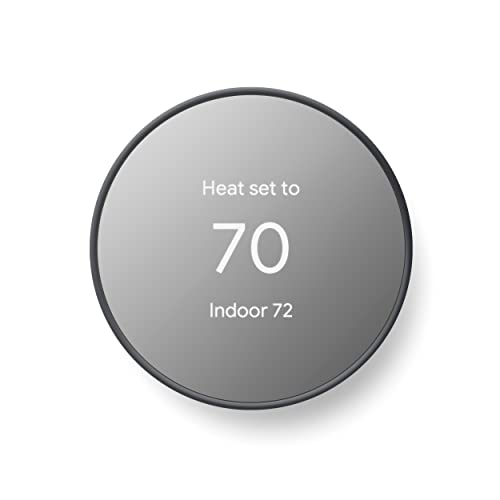
Google Nest Thermostat (2020)
by Google
The most affordable way into the Google Nest ecosystem — Matter-compatible, mirror-finish design, and 29,000 reviews of social proof. Skip it only if you need remote room sensors or are committed to ecobee.
Pros
- Amazon's Choice in smart thermostats with more than 29,000 verified reviews — the most socially validated Google thermostat on the platform by a wide margin
- Matter-compatible with a software update — works with Apple Home, SmartThings, and any Matter-aware controller without needing the Learning Thermostat's price tag
- Mirror-finish front face hides when off and lights up only when approached — visually disappears into a hallway better than any other thermostat
- Genuinely DIY-friendly — Google Home app walks you through wiring step-by-step with photos of your terminals, and includes the trim plate for ugly old wall holes
Cons
- No remote temperature sensor support whatsoever — this is the entry-level Nest and Google reserves multi-room balancing for the Learning model
- Soft-touch capacitive strip on the side is fiddly compared to a real touchscreen or rotating dial — fine for occasional adjustments, annoying for setup
- C-wire required for most installations — the included Trim Kit covers cosmetic damage but does not solve the wiring requirement
Amazon Smart Thermostat — Best Alexa-Only Budget
The Amazon Smart Thermostat is a Wirecutter Frugal Find pick for one reason: Resideo (the company that owns Honeywell’s residential thermostat IP) builds it for Amazon. So while it ships in an Amazon box at Amazon pricing, the engineering inside is genuine Honeywell residential thermostat heritage. That is a meaningful difference from the no-name budget thermostats that flood Amazon search results — this one has a real HVAC manufacturer behind the hardware.
The Hunches feature is the standout: if you have Echo devices around the house, the thermostat uses Echo presence detection to set back temperature when nobody appears to be home, and recover when someone returns. That gives you occupancy-based automation without buying separate sensors — assuming you already have Echos placed where you actually live. The Energy Dashboard in the Alexa app shows estimated cost per heating or cooling cycle and monthly trend data, which is unusual visibility at this price.
The honest limits are loud. Alexa and Ring only — no Google Assistant, no Apple HomeKit, no SmartThings, no Matter. If your household runs anything other than Alexa, this thermostat is the wrong answer regardless of price. C-wire is required and the adapter is sold separately, so factor that extra part into the budget for older homes. The display is small and the touch buttons are utilitarian — fine if you set it and forget it, frustrating if you actually walk to the wall to adjust temperature.
For a committed Alexa household with a C-wire (or willingness to buy the adapter), this is the cheapest entry into a real-engineering smart thermostat available. For everyone else, the Sensi ST55 at a small price premium is the better fit.

Amazon Smart Thermostat
by Amazon
The Wirecutter Frugal Find — Honeywell engineering inside, Amazon pricing outside. The right pick for a committed Alexa household that wants smart-thermostat basics on the cheapest possible budget.
Pros
- Cheapest brand-name smart thermostat on the market — built by Resideo (the company that owns Honeywell's residential thermostat IP) for genuine HVAC engineering at a startup price
- Wirecutter Frugal Find pick and Amazon Choice — independent editorial validation that this is the legitimate budget answer, not a no-name knockoff
- Hunches feature uses your Echo presence detection to set back the temperature when you leave the house — actual occupancy-based automation without buying separate sensors
- Energy Dashboard in the Alexa app shows estimated cost per cycle and monthly trend — the cheapest thermostat here that gives you real bill visibility
Cons
- C-wire required and no power-extender adapter included — Amazon sells one separately, but factor that cost in for older homes
- Alexa and Ring only — no Google Assistant, no Apple HomeKit, no SmartThings. If you are not an Alexa household, skip this entirely
- Display is utilitarian and the touch buttons are small — fine for set-and-forget, frustrating if you actually walk to the wall to adjust temperature
Mysa Smart Thermostat LITE — Best for Electric Baseboard Heat
The Mysa LITE is on this list because nothing else in the category will function on electric baseboard heat. The ecobee, Nest, Sensi, and Amazon thermostats are all low-voltage units (24V) designed to send a switching signal to a furnace or air handler. Electric baseboard, fan-forced wall heaters, and convection heaters operate on line voltage (120V or 240V) and require a thermostat that can directly switch that high-voltage circuit. The Mysa LITE is one of the very few mainstream products built for that use case.
For older homes, additions over garages, finished basements with electric baseboard supplemental heat, and Northeast cottages or cabins on baseboard, the Mysa is the only realistic smart-thermostat answer. The 5-year warranty is the longest in this entire roundup — Mysa stands behind the harder install scenario, which is reassuring given that line-voltage HVAC controls are a smaller, more specialized market with less hardware competition.
Full voice ecosystem support is the other reason Mysa belongs in this lineup despite its specialty positioning: Alexa, Google Assistant, Apple HomeKit, and Siri all work natively. App-based geofencing and 7-day schedules cut electric baseboard runtime measurably — and given that electric resistance baseboard is typically the most expensive heat source per BTU in any home (no efficiency multiplier, just direct kWh-to-heat conversion), even a modest runtime reduction shows up clearly on the electric bill.
The install requires real respect for line voltage. 120V or 240V live wiring is genuinely more dangerous than the 24V wiring on a low-voltage thermostat — the breaker absolutely must be off, you must verify dead with a non-contact tester, and you need basic comfort with how baseboard heaters are wired (which varies by era and manufacturer). If you have any hesitation about working with line voltage, an electrician’s service call to install one is money well spent and prevents a real safety risk. While you have the breaker off and an electrician onsite, this is also a great moment to handle other essential homeowner electrical work at the same time.
The product is heating-only — no cooling, no air handler control, no heat pump support. That is not a flaw; that is the design constraint of electric baseboard heat. If you have central HVAC alongside baseboard, you need both a Mysa for the baseboard zones and a separate central thermostat (probably the ecobee Enhanced) for the central system.
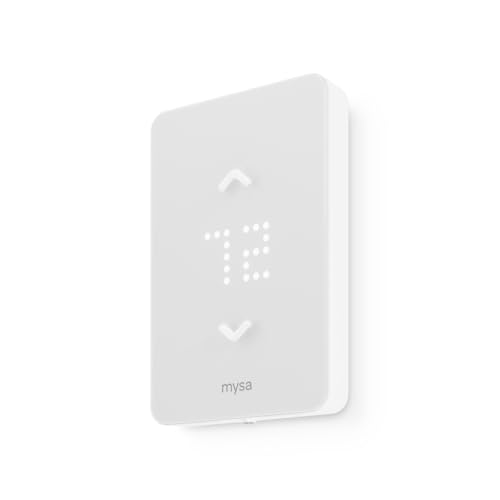
Mysa Smart Thermostat LITE for Electric Baseboard
by Mysa
The only smart thermostat that works with electric baseboard heat — full voice ecosystem, longest warranty in the category, and the right answer for older homes, additions, and finished basements that run on line-voltage electric heat.
Pros
- The only mainstream smart thermostat designed for line-voltage 120V/240V electric baseboard, fan-forced, and convection heaters — every other thermostat on this list will literally not work on baseboard heat
- Works with Alexa, Google Assistant, Apple HomeKit and Siri — full ecosystem support that Sensi and Amazon do not match
- 5-year manufacturer warranty is the longest in the category — Mysa stands behind a tougher install scenario (line voltage) than any other brand on this list
- App-based geofencing and 7-day schedules cut electric baseboard runtime measurably — meaningful given baseboard is typically the most expensive heat source per BTU in any home
Cons
- Heating only — no cooling control, no air handler control, no heat pump support. This is a single-purpose product for a specific install
- Line-voltage installation is genuinely more dangerous than low-voltage thermostat work — 120V or 240V live wiring requires the breaker off and basic comfort with electrical work or a licensed electrician
- Limited review base (under 200 verified reviews) compared to mass-market picks — fewer long-term reliability data points to draw on
Mysa Smart Thermostat for Baseboard V2 — Best Premium Baseboard Pick
The Mysa for Baseboard V2 is what you buy when you have electric baseboard and want more than basic scheduling. It does everything the LITE does — line-voltage 120V/240V switching up to 3800W, full Alexa, Google Assistant, and Apple HomeKit support, geofencing, and 7-day schedules — and adds the two things the LITE leaves out: real per-room energy monitoring and a built-in humidity sensor.
The energy data is the reason to spend the extra money. On electric resistance baseboard — the most expensive heat per BTU in any house, because it converts kWh straight to heat with no efficiency multiplier — knowing which rooms are actually burning power is genuinely actionable. The Mysa app graphs setpoint, ambient temperature, humidity, and energy use per thermostat, and the Zones feature lets you gang two heaters on one wall to a single schedule. For a whole-house baseboard retrofit where you’re installing four, six, or more units, that room-by-room visibility drives the behavior changes that actually lower the bill.
The install cautions are the same as the LITE, only they matter more the more units you do: this is 240V line-voltage work. Kill the correct breaker, verify the box is dead with a non-contact tester, and confirm you have a proper 4-wire line-voltage setup before you order — Mysa will not function on a 2-wire or low-voltage system. If you’re outfitting a single room and just want app control, the LITE saves you money. If you’re going whole-house on baseboard and want to see the numbers per room, the V2 is the upgrade worth making.

Mysa Smart Thermostat for Baseboard V2 (240V)
by Mysa
The premium line-voltage pick — everything the Mysa LITE does for electric baseboard, plus real per-room energy and humidity monitoring. The right upgrade when you're wiring smart thermostats into several baseboard zones and want to see exactly what each room costs to heat.
Pros
- Line-voltage 120V/240V native at up to 3800W — like the LITE it directly switches electric baseboard, fan-forced, and convection heat that no low-voltage ecobee or Nest can physically control
- Adds per-room energy monitoring and a built-in humidity sensor the LITE leaves out — the app graphs kWh, ambient temperature, and humidity so you can see exactly which baseboard zone is driving your electric bill
- Full Alexa, Google Assistant, and Apple HomeKit support plus a Zones feature that gangs two heaters to one schedule — the same broad ecosystem story as the LITE with more granular multi-room control
- Adaptive display wakes on approach and dims for sleep, and the compact V2 footprint cleanly covers the hole left by an old rotary baseboard dial — 4.5 stars across 1,300 reviews of mostly older-home baseboard installs
Cons
- The step up from the LITE buys the energy insights and humidity sensor — if you only want app scheduling on baseboard, the LITE does that for less
- Heating only and line-voltage only — no cooling, no low-voltage central HVAC. Do not buy this for a furnace or heat pump
- 2.4GHz WiFi only, and the 240V install is genuinely dangerous — breaker off, verify dead with a non-contact tester, and hire an electrician if line voltage is outside your comfort zone
Best Smart Thermostat for Homes Without a C-Wire
Most American homes built before 2010 have no C-wire at the thermostat, and it’s the single most common reason a smart-thermostat install stalls. Three of these picks solve it three different ways — an included power-extender adapter, battery power, or power-stealing. Pull your old thermostat and check the C terminal first, then match it to the route below.
| Product | Price | Buy |
|---|---|---|
| ecobee Smart Thermostat EnhancedBest overall — PEK in box Ships with the Power Extender Kit, which borrows the fan wire at the air handler to power the thermostat — a clean permanent fix with no batteries | $164.99 | View on Amazon |
| Sensi Smart Thermostat ST55 (Emerson)Easiest — battery powered Runs on two AA cells with no C-wire and no adapter at all — the 15-minute swap for an older home or a rental | $103.49 | View on Amazon |
| Google Nest Thermostat (2020)Budget Nest, power-stealing Trickles power off the existing heat/cool wires on many systems, but power-stealing is the least reliable route and can cause WiFi dropouts on marginal setups | $117.49 | View on Amazon |
Best Smart Thermostat for a Heat Pump
Heat pumps need a thermostat that understands aux-heat lockout — the setting that keeps the expensive electric backup strips off until it’s genuinely cold enough to need them. The ecobee models do this natively without an outdoor sensor, which is why they lead here; the base Amazon unit covers a simple single-stage heat pump on the cheap. Whatever you pick, keep winter setbacks to 2–3 degrees so the compressor doesn’t short-cycle and run the aux strips for hours.
| Product | Price | Buy |
|---|---|---|
| ecobee Smart Thermostat Premium with SmartSensorBest heat-pump control Up to 4H/2C with native aux-heat lockout and an included room sensor to even out the long, low cycles a heat pump runs | $209.99 | View on Amazon |
| ecobee Smart Thermostat EnhancedBest value heat pump Handles 3H/2C heat pumps with aux heat using the same lockout logic as the Premium, without the sensor and speaker | $164.99 | View on Amazon |
| Amazon Smart ThermostatCheapest single-stage Enough for a simple single-stage heat pump on an Alexa household — no multi-stage or dual-fuel support, so verify your system first | $56.99 | View on Amazon |
Best Smart Thermostat for Electric Baseboard Heat
Electric baseboard, fan-forced, and convection heaters run on line voltage (120V or 240V), and standard low-voltage thermostats like ecobee and Nest physically cannot switch that circuit. Both Mysa units are purpose-built for it — the LITE for value, the V2 for per-room energy visibility. Both are heating-only and both demand respect for live line-voltage wiring.
| Product | Price | Buy |
|---|---|---|
| Mysa Smart Thermostat LITE for Electric BaseboardBest value baseboard Line-voltage app scheduling and geofencing at the lowest price — the everyday pick for adding smart control to a baseboard room | $99.00 | View on Amazon |
| Mysa Smart Thermostat for Baseboard V2 (240V)Best premium baseboard Adds per-room energy monitoring and a humidity sensor — worth the step up when you're wiring several baseboard zones and want to see what each costs | $159.00 | View on Amazon |
How to Choose the Best Smart Thermostat
The right smart thermostat for your house depends almost entirely on three things: your wiring (specifically whether you have a C-wire), your HVAC system type (conventional, heat pump, or electric baseboard), and your household’s smart-home ecosystem (Alexa, Google, Apple, or mixed). Here is how I work through each decision.
Start by checking for a C-wire. Pull your existing thermostat off the wall and look for a wire connected to the C terminal. If a wire is landed there, your shortlist is wide open — anything on this list installs cleanly. If C is empty, your shortlist immediately narrows: ecobee Enhanced or Premium (PEK included), or Sensi ST55 (battery-powered). The Nest, Amazon, and base Nest all need either a C-wire or a separately purchased adapter, which adds cost and install complexity. Do not believe a YouTube video that tells you to jumper R to C — that hack has destroyed transformers and HVAC control boards in real installs, and the repair cost exceeds the price of buying the right thermostat in the first place.
Identify your HVAC system type before you order. Conventional gas furnace with conventional AC: anything works. Heat pump (look for a single outdoor unit that runs in both heating and cooling modes): you need a thermostat with proper O/B reversing valve support and aux heat staging — ecobee Enhanced or Premium are the safest answers. Heat pump with electric resistance backup or dual-fuel with gas furnace backup: definitely ecobee Enhanced or Premium for the multi-stage support. Electric baseboard heat: Mysa LITE is the only answer on this list. Hydronic boiler with cast-iron radiators: most low-voltage smart thermostats work, but verify your boiler is not a millivolt or proprietary-control system before ordering.
When NOT to install a smart thermostat. Skip the smart upgrade if you have a 2-wire millivolt floor furnace from the 1970s (no 24V power, no compatibility), if you have a multi-zone system with proprietary controls (you need the manufacturer’s compatible thermostat), if you have a window AC or PTAC unit (smart plugs are the better automation answer), or if you have a basic single-stage gas furnace and you genuinely never adjust the temperature (the savings will not justify the upgrade). Aggressive temperature setbacks on heat pumps in cold weather are also a trap — the compressor short-cycles trying to recover, the aux heat strips run for hours making up the difference, and your electric bill goes up rather than down. Set heat pump setbacks at 2-3 degrees maximum in winter, or use the thermostat’s smart recovery mode and let it manage the math.
Match the voice ecosystem to your household. All-Alexa households: Amazon Smart Thermostat is the cheapest fit, Sensi ST55 is the next step up, ecobee Enhanced is the do-everything pick. All-Google households: base Nest or Nest Learning 4th gen are the obvious answers. All-Apple/HomeKit households: Nest Learning 4th gen is the design winner, ecobee Enhanced is the contractor’s choice, Mysa for baseboard. Mixed households with iPhones and Android phones: ecobee Enhanced is the only thermostat that speaks every protocol natively. Matter-only households (forward-looking): both Nest models, both ecobees.
Be realistic about energy savings. Manufacturer claims of 23-26 percent savings are the optimistic version against an unprogrammed manual baseline. The Energy Star floor — what the EPA actually requires for certification — is 8 percent on heating and cooling combined. Real savings depend on your building envelope, your willingness to set back temperature, and whether your utility uses time-of-use pricing. Before you bank on the thermostat alone, check what’s actually in your attic and walls against the recommended level for your climate with our free R-value insulation chart — a thermostat scheduling heat into an under-insulated envelope is capturing a fraction of what’s possible. If you’re planning to add insulation, the R-value calculator totals up a multi-layer wall or attic assembly (cavity batt plus continuous foam) so you can see exactly what the upgraded envelope will hit. The Energy Star program transitions from EPA to DOE administration in March 2026, which may shift specific certification requirements and rebate eligibility — verify current program status for your specific model if you are chasing utility incentives. Pair the smart thermostat with air sealing and weatherization and a proper return-air filter setup for the meaningful combined ROI.
Consider whether you actually need remote room sensors. Sensors are the single biggest comfort upgrade a smart thermostat can deliver — but only if you have a problem room. If your house heats and cools evenly, the sensor capability does nothing for you. If you have a bedroom that runs cold, a west-facing room that bakes in summer, or an addition over a garage, sensor capability is non-negotiable, and your shortlist narrows to ecobee Enhanced or Premium, or Nest Learning 4th gen.
Buyer's Guide
I have swapped or installed smart thermostats in dozens of houses over the past decade — single-family remodels, finished basements, additions, rentals, and a couple of full-on smart-home builds. Here is the framework I use when a client asks which thermostat to buy.
C-Wire Requirement
The C-wire (common wire) provides constant 24V power for the thermostat's WiFi radio and display. Pull your current thermostat off the wall and check the terminal labeled C. If a wire is landed there, any thermostat on this list installs cleanly. If C is empty, you have three workable answers: choose an ecobee Enhanced or Premium (PEK adapter included in box), choose the battery-powered Sensi ST55, or pull a new C-wire from the air handler. Avoid YouTube R-to-C jumper hacks — they can short-cycle your transformer or damage the control board, and the repair bill dwarfs the cost of doing it right. For older homes built before 2010 without a C-wire, ecobee or Sensi is genuinely the easiest path.
HVAC System Compatibility
Not every smart thermostat handles every system. Single-stage gas furnace with single-stage AC is universal — anything works. Heat pumps with auxiliary heat strips need a thermostat that understands O/B reversing valve polarity and aux staging — ecobee Enhanced and Premium are the safest picks (up to 3H/2C). Multi-zone systems need either zone-specific thermostats or a smart panel like the ecobee Smart Sensor system. Two-wire millivolt systems on older floor furnaces, oil boilers without a transformer, and 24V hydronic systems with proprietary controls all need verification before you buy. Line-voltage electric baseboard at 120V or 240V is its own category — only the Mysa LITE fits. When in doubt, pull a photo of your existing thermostat wiring and the equipment label off your air handler before you order.
Remote Room Sensors
The single biggest comfort upgrade a smart thermostat can deliver is room-by-room temperature awareness. A thermostat in a hallway has no idea your bedroom is five degrees colder than the rest of the house. Remote sensors fix that — placed in problem rooms, they let the system average temperatures or prioritize the room you actually occupy. The ecobee Premium ships with one SmartSensor included; the Nest Learning 4th gen ships with one Nest Temperature Sensor; ecobee Enhanced supports SmartSensors but you buy them separately. Sensi, base Nest, Amazon, and Mysa do NOT support remote sensors at all. If you have a problem room — a sun-baked west bedroom in summer, a north-facing office in winter, an addition over a garage — a sensor-capable thermostat is non-negotiable.
Voice Assistant Ecosystem (Alexa / Google / HomeKit / Matter)
The thermostat is one of the few smart-home devices you actually want to control by voice — getting up to walk to the wall when you are settled on the couch is the entire reason this category exists. Match the thermostat to the ecosystem your household already runs. Alexa-only: any thermostat on this list works (Amazon is the cheapest path). Apple HomeKit/Siri: ecobee Enhanced, ecobee Premium, both Nest models (4th gen via HomeKit native, base via Matter), or Mysa. Google Assistant: any except Amazon. Multi-platform households with both iPhones and Android devices: ecobee Enhanced is the safest pick because it speaks every protocol natively. Matter compatibility (the new universal smart-home standard) is a forward-compatibility hedge — both Nest models and both ecobees support it; Sensi and Amazon do not.
Geofencing & Energy-Saving AI
Programmable schedules are the 1990s answer to energy savings. The 2026 answer is geofencing (the thermostat knows when your phone leaves the house and sets back automatically) plus AI that learns your patterns and optimizes for utility rates. ecobee's eco+ uses utility rate forecasting in time-of-use markets — it pre-cools at off-peak rates and lets the house coast during peak pricing. Nest's Adaptive Eco AI watches your occupancy patterns and adjusts setbacks based on actual behavior rather than a programmed schedule. Amazon's Hunches uses Echo presence detection as an occupancy proxy. Sensi has basic geofencing without the AI layer. The savings differential between a basic schedule and full AI optimization is real but modest — typically 3-5 percent on top of the base smart-thermostat savings. Worth the upgrade if your utility uses time-of-use pricing; nice-to-have if you are on a flat rate.
Install Difficulty (Jake's 1-5 Contractor Rating)
1 of 5 (easiest): Sensi ST55 — battery-powered, two AA cells, no C-wire to worry about, 15-minute swap. 2 of 5: ecobee Enhanced or Premium — PEK adapter takes an extra 10 minutes at the air handler but is genuinely DIY-friendly with the included instructions. 3 of 5: Nest Learning 4th gen and base Nest — straightforward IF you have a C-wire; if you do not, you need to either pull one or buy a third-party adapter, which adds complexity. 3 of 5: Amazon Smart Thermostat — simple wiring but adapter sold separately for no-C-wire setups. 4 of 5: Mysa LITE — line-voltage install on electric baseboard requires confidence working with 120V or 240V live circuits, breaker discipline, and an understanding of how baseboard wiring is actually terminated. If you have any hesitation about line voltage, hire an electrician for the Mysa. None of these are 5 of 5 — that rating is reserved for full HVAC system replacements where you are touching the air handler control board, and it is a job for licensed pros only.
Final Verdict
For most households in 2026, the ecobee Smart Thermostat Enhanced is the right answer. It solves the no-C-wire problem in the box, supports virtually every residential HVAC system including heat pumps with auxiliary heat, speaks every voice ecosystem worth caring about, and includes genuinely useful eco+ AI for utility-rate optimization. The price sits in a reasonable mid-range tier, the warranty is 3 years, and the contractor risk profile is the lowest in the category. It is the thermostat I would put on my own wall and the one I recommend most often when a client asks what to buy.
If your budget is tight, the Sensi Smart Thermostat ST55 does the basics well, requires no C-wire, runs on AA batteries, and is backed by Emerson’s HVAC manufacturing heritage. It is not as feature-rich as the ecobee, but for an older home, a rental property, or a household that just wants WiFi schedules and voice control without install drama, it is genuinely the best value in the entire category. For an Alexa-only household specifically, the Amazon Smart Thermostat is a cheaper fit if you have or can add a C-wire.
For high-end remodels or design-conscious Apple households, step up to the ecobee Premium for the included room sensor, built-in Alexa speaker, and air quality monitoring, or the Nest Learning 4th Gen for the most beautiful display on any thermostat made. And for the only truly underserved category in smart-home automation — line-voltage electric baseboard heat — the Mysa LITE is the only mainstream pick that actually works.
Whatever you choose, take the C-wire photo before you order, verify your HVAC system compatibility against the manufacturer’s installer guide, and pair the new thermostat with basic weatherization and air sealing for the combined ROI. The thermostat alone will save you money. The thermostat plus a tight building envelope is what actually pays for itself before next winter.
Frequently Asked Questions
Do I need a C-wire to install a smart thermostat?
Will a smart thermostat work with my heat pump?
Can I install a smart thermostat myself or do I need an electrician?
How much can I realistically save on energy bills?
What about electric baseboard or radiant floor heat — is there a smart option?
Related Articles
7 Best Air Filters for Home in 2026: A Contractor's Picks for Every HVAC System
home-air-filtration
Best Dehumidifiers of 2026: Jake's Picks After 20+ Years in Basements
home-air-filtration
Best Space Heaters of 2026: Jake's Picks After 20+ Years of Cold Job Sites
home-air-filtration
Essential Tools Every New Homeowner Needs: A Contractor's Tiered Buying Guide
hand-tools
How to Winterize Your Home: A Contractor's Complete Checklist
outdoor-garden
About the Reviewer

Jake Morrison, Licensed General Contractor
B.S. Construction Management, Purdue University
Jake Morrison has spent 14 years in residential construction and home renovation before founding DIYRated in 2026. After helping hundreds of homeowners choose the right tools and materials for their projects, he started writing the product guides he wished existed when he was starting out. Jake tests every major product recommendation in his workshop in Indianapolis and focuses on real-world performance over spec-sheet marketing.