7 Best Water Filters of 2026
Jake Morrison, a licensed general contractor, reviews the 7 best water filters for every home — from $30 pitchers to whole-house systems and tankless reverse osmosis.
Updated
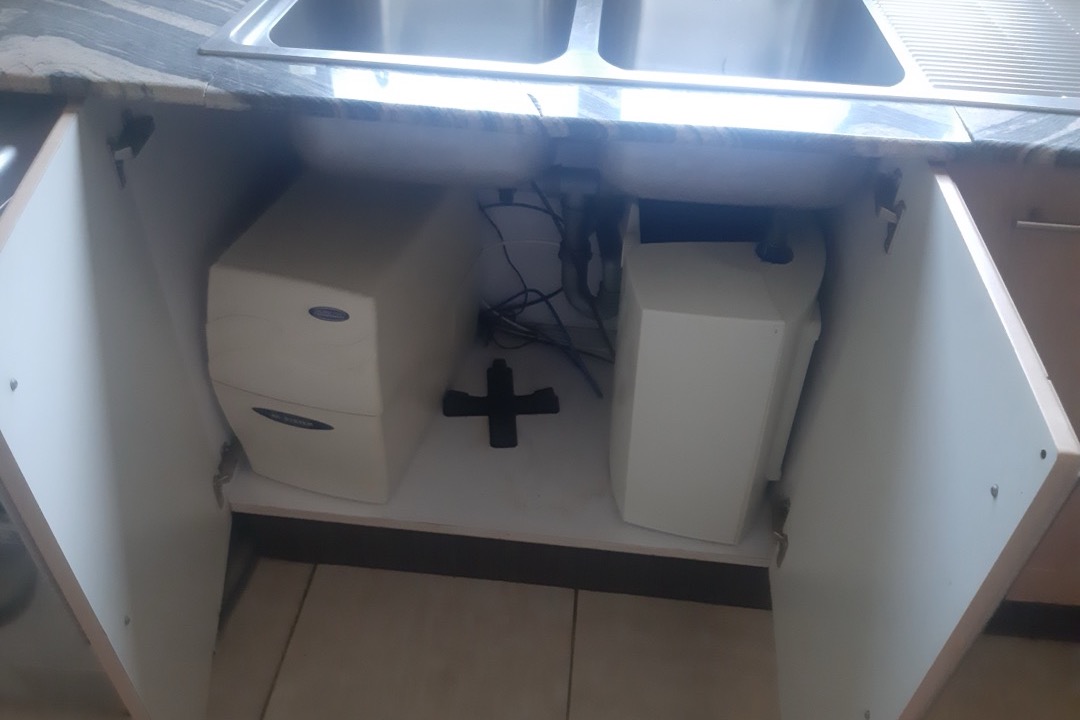
As a licensed general contractor, I’ve put hands on more water filters than I can count — pitchers swapped onto a kitchen counter in five minutes, under-sink carbon blocks installed during a renovation, tankless RO systems wired to dedicated outlets I had to add to the cabinet, and whole-house Big-Blue tanks plumbed into the basement supply line on a 1965 ranch with galvanized steel that needed half-replaced before the bypass valve would even thread on. There’s no single “best” water filter in 2026, and any roundup that pretends otherwise is selling you the wrong system.
The right filter starts with diagnosing the problem. Do you taste chlorine at the kitchen tap? You need a pitcher or under-sink carbon block — both will fix that for under a hundred bucks. Are you on a private well with orange-stained tubs and rust spots in the toilet bowl? You need a whole-house system with a catalytic carbon stage. Is the EPA flagging PFAS in your municipal water supply? You need an under-sink RO, full stop. Spending money on a $500 whole-house system to solve a drinking-water taste complaint is the most common mistake I see — same goes the other way, where someone buys a Brita and wonders why their dishwasher still has scale.
I evaluated dozens of systems against the criteria I use when speccing for a client: NSF/ANSI certification quality, real-world install difficulty (the contractor’s wrench scale of 1 to 5), filter life and annual cost of ownership, water source compatibility, and verified buyer reviews from owners who’ve lived with the system for a year or more. The seven filters in this roundup cover every common scenario — from a $30 pitcher for a renter to a tankless RO for a finished kitchen to a whole-house system for a well-water cabin. If you’re already planning a kitchen reno, this is the right time to spec the filter alongside the kitchen faucet selection — both share the same supply line and many under-sink filters install during the same labor window.
Jump to the Right Filter for Your Setup
- Best Water Filter Overall — RO drinking water for city supply
- Best Under-Sink Water Filter — treat the kitchen tap where your drinking water actually comes from
- Best Whole-House Water Filter — protect every fixture, appliance, and shower
- Best Water Filter for Well Water — iron, manganese, and sediment on a private well
- Renting or want zero install? Jump to the no-install pitcher in the comparison table below.
The 60-Second Decision Tree
Before reading the individual reviews, three questions narrow the field:
1. City water or well water? City water with chlorine taste and concerns about lead or PFAS — pick from the under-sink and pitcher options. Well water with iron, manganese, or sediment — go straight to the iSpring WGB32BM whole-house. If you don’t know what’s in your well, get it tested first; you’ll waste money guessing.
2. Are you a homeowner or a renter? Renters and short-term occupants should default to the Brita pitcher (no install) or a faucet-mount filter (5-minute install, removes nothing). Homeowners with at least a few hours of plumbing tolerance should consider an under-sink carbon block or RO — both deliver dramatically better filtration and last a decade.
3. Drinking water only, or every fixture in the house? Under-sink systems treat one tap (the kitchen) and that’s where 95 percent of your drinking and cooking water actually comes from. Whole-house systems treat every fixture, which protects appliances and showers from chlorine and sediment but costs 3 to 5x more. The right answer for most homes is an under-sink for drinking water plus an optional cheap whole-house pre-filter for sediment if you’re on well water — the under-sink vs whole-house comparison goes deeper into this layered approach.
How We Chose These Water Filters
I evaluated every filter against the same criteria I use when speccing systems for clients: NSF/ANSI certification depth (full-system vs component-only), real-world contaminant reduction percentages from third-party test data, install difficulty on the contractor’s wrench scale, filter life and 5-year total cost of ownership, water source compatibility (city vs well), and verified Amazon reviews from owners who’ve lived with the system at least a year. I gave particular weight to systems with full third-party certification — too many filters carry component certifications without ever submitting the full system to NSF testing, which is the difference between certified parts and a certified product.
I also factored in repair and replacement reality. A filter you can’t get cartridges for in five years is a filter you’ll throw out and replace. Systems using standard 10-inch or Big-Blue 20-inch housings (like the iSpring whole-house systems) accept universal cartridges from any vendor — that long-term flexibility matters more than fancy proprietary stages.
iSpring RCC7AK 6-Stage RO with Alkaline Remineralization — Best Overall
The RCC7AK is the under-sink filter I recommend more than any other for one reason: reverse osmosis covers nearly every contaminant a homeowner could realistically be worried about. TDS, fluoride, lead, arsenic, PFAS, chromium-6, chlorine — they all come out at 95 to 99 percent reduction. Other systems handle two or three of those well; RO handles all of them. The 21,000-plus verified Amazon reviews at 4.6 stars aren’t an accident — they’re the result of a decade-plus of iSpring delivering the same proven 6-stage architecture at a price point that undercuts most competitors.
The alkaline remineralization stage is what tips this from a good filter to my Best Overall pick. Standard RO water tastes flat because the membrane strips out all the dissolved minerals — not just the bad ones, but the calcium and magnesium that give water structure. The sixth stage in the RCC7AK adds those minerals back with food-grade media, and the resulting water tastes like spring water rather than the slightly metallic flat profile of straight RO. Most RO systems below $300 skip this stage; the RCC7AK is the rare exception where it’s included at the standard price.
Install is solidly a 4 on the contractor’s wrench scale. You’ll need an adjustable wrench, a 1-3/8 inch hole saw for the dedicated faucet (most kitchen sinks have a soap dispenser hole you can use instead, which makes the job a 3), Teflon tape for every threaded fitting, and a drain saddle clamp on the sink trap for the RO reject line. Push-to-connect fittings throughout — fingertip-tight, no torch, no crimp tool — make this one of the most DIY-friendly RO systems in the category. Plan two to three hours start to finish. Pair the install with a kitchen faucet upgrade and you can knock out both during the same plumbing window.

iSpring RCC7AK 6-Stage Reverse Osmosis Drinking Water Filter System with Alkaline Remineralization
by iSpring
The iSpring RCC7AK is the clearest Best Overall pick in the category — RO covers everything your municipal water might throw at you, the alkaline stage fixes the flat-RO taste complaint, and 21,000-plus verified reviews at 4.6 stars make this the most-trusted under-sink RO system on Amazon.
Pros
- NSF/ANSI 58 full-system certification plus WQA gold seal — the strongest third-party certification stack at any price under $250
- Six-stage filtration including a final alkaline remineralization stage that adds calcium, magnesium, and potassium back to the RO permeate so the water tastes like spring water instead of flat distilled
- Removes up to 99 percent of TDS including fluoride, lead, arsenic, chlorine, PFAS, and chromium-6 — the contaminants that drive most under-sink filter purchases
- Includes everything you need for installation: dedicated chrome faucet, 3.2-gallon storage tank, all tubing, color-coded fittings, and detailed instructions — most installs take a competent DIYer 2 to 3 hours
Cons
- Tank-style RO produces about one gallon per minute at the faucet but uses three to four gallons of feed water for every gallon of permeate produced — measurable on your water bill
- Annual filter replacement runs around $50 to $80 for the three pre-filters, with the RO membrane and post-carbon swapping every 2 to 3 years
- Requires under-cabinet space for the storage tank (about a basketball's footprint) plus a drilled hole in the sink deck for the dedicated drinking faucet
Brita Standard 10-Cup Everyday Pitcher — Budget Pick
The Brita pitcher is the right answer for the largest single segment of the water-filter market: people who want better-tasting drinking water without modifying anything in their kitchen. Renters, college students, anyone in a furnished short-term rental, anyone who hasn’t decided yet whether they want to commit to a permanent install — the Brita Everyday handles all of those cases for the price of dinner for two. Sixty thousand verified reviews at 4.6 stars confirms what’s been true for two decades: this is the most-trusted filter pitcher on the market, and the dual NSF/ANSI 42 and 53 certifications mean it’s actually doing what it claims.
What the Brita won’t do is also worth being clear about. It removes chlorine, taste, odor, copper, mercury, cadmium, and zinc — the contaminants that make municipal water taste off. It does not remove fluoride, dissolved solids, arsenic, or PFAS. If your concern is “the water tastes like a swimming pool,” the Brita is the right tool. If your concern is “I’m in a region with documented PFAS contamination” or “I have an old service line and I’m worried about lead,” step up to an under-sink carbon block or RO system — the pitcher isn’t the right answer for those concerns.
The cartridges run about $5 to $9 each on Amazon and last 40 gallons (roughly two months for a household of two to three). That comes to $30 to $50 per year in maintenance — the lowest of any filter in this roundup. The sticker filter indicator on the lid tracks usage automatically, which sounds gimmicky but actually keeps you on a replacement schedule that you’d otherwise forget.

Brita Standard 10-Cup Everyday Water Filter Pitcher
by Brita
The Brita Everyday is the answer for renters, students, and anyone who just wants better-tasting drinking water without modifying their plumbing — 60,000-plus reviews at 4.6 stars confirm it does exactly what it claims, and the per-gallon cost is unbeatable.
Pros
- Zero installation — fill from the tap, drink from the spout, full stop. The lowest-friction water filter that actually works
- NSF/ANSI 42 and 53 certified to reduce chlorine taste and odor, copper, mercury, cadmium, and zinc — the contaminants that affect most municipal water taste
- Filter cartridges run about every 40 gallons (roughly two months of normal household use) and cost a few dollars each — the lowest annual cost of any filter in this roundup
- Sticker filter indicator on the lid tracks usage automatically so you actually replace cartridges on schedule instead of guessing
Cons
- 10-cup capacity (80 oz) means a household of four refills the pitcher two or three times a day — fine, but not invisible
- Does NOT remove dissolved solids, fluoride, or PFAS — for those you need a multi-stage carbon block or RO system
- Plastic pitcher will yellow slightly over a few years of daily use, though that's cosmetic and doesn't affect performance
Waterdrop G3P600 Tankless RO — Upgrade Pick
The G3P600 is what happens when somebody designs an RO system around the actual under-sink experience instead of just porting industrial RO architecture into a residential package. The tankless design eliminates the 3-gallon storage tank that consumes the entire under-sink cabinet on a traditional RO — you get back a basketball-sized chunk of real estate for your trash can, your cleaning supplies, or the disposal. For finished kitchens where every cubic foot of cabinet space is already accounted for, that single design choice is the deciding factor.
Performance is the other compelling case. 600 gallons per day rated output flows at over 0.5 gallons per minute at the smart faucet — meaning a glass fills in seconds, a pasta pot fills in under a minute, and a Brita pitcher fills in less than two minutes. Compare that to tank-style systems where the storage tank empties in about a gallon and the membrane then takes 6 to 10 minutes to refill the next gallon. The 2:1 drain ratio (1 gallon permeate per 2 gallons rejected) is best-in-class — typical tank RO is 4:1, so you’re cutting wastewater roughly in half. On a metered municipal water bill, that adds up over a year.
The honest install consideration is the 120V outlet. The booster pump that drives the tankless flow needs power, and most older kitchens have exactly one under-sink outlet — already used by the disposal. If you don’t have a second outlet, you’ll need an electrician to add one or a licensed contractor to run a dedicated circuit during a renovation window. Don’t skip this — the system will not run without continuous power. The 8-stage filter cartridges are also proprietary, so you’re committed to Waterdrop pricing for replacements ($90 to $130 per year). The smart faucet’s TDS readout and 30-day filter warning is genuinely useful — you stop guessing about when the membrane has degraded.

Waterdrop G3P600 Tankless Reverse Osmosis Water Filtration System
by Waterdrop
The Waterdrop G3P600 is the upgrade pick for buyers who want RO performance without a storage tank eating their cabinet space — tankless, faster, more efficient, and the smart faucet readout removes all the guesswork from filter maintenance.
Pros
- Tankless design eliminates the storage tank that consumes the entire under-sink cabinet on traditional RO systems — frees up a square foot of valuable real estate under the kitchen sink
- 600 GPD output flows fresh permeate on demand at over 0.5 gallons per minute — a 1-gallon Brita pitcher fills in under two minutes vs 6+ minutes for a tank-style system
- 2:1 drain ratio (1 gallon permeate per 2 gallons rejected) is best-in-class efficiency and roughly half the wastewater of typical 4:1 tank systems — meaningful on a metered water bill
- Smart LED faucet displays real-time TDS readout so you can confirm the membrane is working without buying a separate TDS meter — and it warns you 30 days before each filter needs swapping
Cons
- Requires a dedicated 120V outlet under the sink for the booster pump — older kitchens often only have one outlet (used by the disposal) and may need an electrician to add a second
- 8-stage filter cartridges are proprietary and only available from Waterdrop — replacement cost runs $90 to $130 per year depending on water hardness
- Booster pump cycles audibly when filling a glass — quieter than a dishwasher but louder than a tank system, which is silent at the faucet
iSpring WGB32BM 3-Stage Whole House for Well Water — Runner-Up
The WGB32BM is the answer for any home on a private well dealing with iron, manganese, or sediment issues. The third stage — catalytic carbon for iron and manganese reduction — is the differentiator that takes this out of the city-water category and into well-water territory. Generic 3-stage whole-house systems with sediment plus carbon plus carbon will clog within weeks on heavy iron well water; the catalytic stage on the WGB32BM oxidizes the iron and manganese into filterable particulates before the carbon stage so the system actually reaches its rated 100,000-gallon life.
The 1-inch NPT inlet and outlet ports are the spec that matters most for whole-house performance. 15 gallons per minute is enough headroom that you can run two showers, the dishwasher, and the washing machine simultaneously without anyone noticing a pressure drop. The Big-Blue 4.5 by 20 inch housings hold roughly 4 to 5x the carbon media of standard 10-inch housings — longer dwell time, better contact with the filter media, better contaminant reduction. This is a serious whole-house system, not a glorified inline filter.
Install is firmly a 5 on the wrench scale and the place where I most often recommend hiring a plumber. You’re cutting into the cold main downstream of the meter, installing a bypass valve assembly (so cartridge changes don’t require shutting off the whole house), and plumbing in three housings with either copper sweat fittings, PEX crimp, or push-to-connect Sharkbite fittings. Push-to-connect makes this DIY-feasible for anyone with a tubing cutter, an adjustable wrench, and the patience to pressure-test every joint before turning the house water back on. Always install the bypass valve assembly during the initial install — without it, every annual filter change becomes a whole-house water shutoff that’s a hassle for everyone in the home. Before you start, run a comprehensive well-water test through your county extension office or a private lab — the WGB32BM handles iron and manganese, but if your well also has hydrogen sulfide or hardness, you’ll need additional treatment downstream that no single filter can provide. A cordless drill with a DIY-friendly bit set makes mounting the bracket a 10-minute job rather than a fight.

iSpring WGB32BM 3-Stage Whole House Water Filter with Iron and Manganese Reducing Filter
by iSpring
The iSpring WGB32BM is the runner-up for any home on a private well — the catalytic carbon stage handles the iron and manganese that turn fixtures orange and stain laundry, and 1-inch ports keep whole-house pressure where it belongs.
Pros
- Three-stage point-of-entry system — sediment, carbon, and a third stage of catalytic carbon for iron and manganese — sized for typical well water issues that single-stage systems can't touch
- 1-inch NPT inlet/outlet ports flow 15 gallons per minute, enough headroom for a whole-house system serving multiple bathrooms and a laundry room without pressure drop
- 100,000 gallon capacity per filter set translates to roughly one year of service for a family of four before swap — the housings stay, only the cartridges change
- Big-Blue 4.5 by 20 inch housings hold 4 to 5x the media of standard 10-inch housings — longer dwell time means better contact with the carbon and better contaminant reduction
Cons
- $300 to $700 in plumbing and labor on top of the system price if you hire it out — most installs require cutting into the cold main with a Sharkbite or sweat fitting and adding a bypass valve assembly
- Annual filter replacement runs about $120 to $160 for the three cartridges — well water with heavy iron may shorten the catalytic stage to 6 months
- Doesn't remove dissolved solids or hardness — for hard water (more than 7 grains per gallon) you still need a softener installed downstream
iSpring WCB32O 3-Stage Whole House for City Water — Budget Whole-House
The WCB32O is the smart entry point into whole-house filtration for any home on municipal water. Three stages of sediment plus chlorine plus carbon at a price that’s less than two replacement RO membranes — the math just works. Where this differs from the WGB32BM is the housing size and the missing catalytic carbon stage. Standard 10-inch housings hold less media than Big-Blue 20-inch, which means flow rate drops to about 8 GPM under sustained demand and filter life is comparable but not better.
The 3/4-inch NPT ports are the right call for typical residential supply lines on homes built after 1990. Copper or PEX 3/4-inch is the standard residential cold main, so the WCB32O drops in without bushings or adapters. Older homes with 1/2-inch copper or galvanized steel may need adapter fittings or a section of supply line replacement before the system installs cleanly — figure that out before you buy.
The honest limitation is well water. The WCB32O is not rated for well water and the standard 10-inch sediment cartridge will clog quickly on a well with even moderate sediment load. If you’re on a private well, spend the extra money on the WGB32BM and skip the headache. For city water with chlorine taste and chlorine-related skin and hair effects in the shower, this is the cheapest path to whole-house filtration that actually works. Standard 10-inch housings also accept universal cartridges from any vendor — you’re never locked into iSpring pricing on replacements, which keeps long-term costs in your control.

iSpring WCB32O 3-Stage Whole House Water Filter for Chlorine and Sediment
by iSpring
The iSpring WCB32O is the smart entry point into whole-house filtration for anyone on city water — three stages of chlorine and sediment reduction at a price where the math just works, with zero proprietary cartridge lock-in.
Pros
- Best whole-house value in the category by a wide margin — three-stage POE filtration for less than the cost of two replacement RO membranes
- Standard 10-inch housings use universally available cartridges from any home center or online — you're never locked into proprietary filters
- 100,000 gallon rated capacity (about a year for typical family use) on chlorine and sediment, the two contaminants that drive most city-water filter purchases
- 3/4-inch NPT ports match standard residential supply lines — installs without bushings or adapters in most homes built after 1990
Cons
- Not rated for well water — no iron, manganese, or sulfide reduction, and a sediment-heavy well can clog the first stage in weeks instead of months
- 10-inch housings hold less media than Big-Blue 20-inch systems, so flow rate drops to about 8 GPM under sustained demand vs 15 GPM on the WGB32BM
- Lower review count (under 1,000) means fewer long-term durability data points than the bigger WGB32BM, though iSpring's housings are well-proven
Waterdrop 10UB Under-Sink Carbon Block — Easiest Under-Sink Upgrade
The Waterdrop 10UB makes a specific case: independent third-party certification at a sub-$60 price point. IAPMO testing to NSF/ANSI 42 and 372 is real third-party validation — many systems in this price tier rely on internal-lab claims that mean essentially nothing. The dedicated brushed steel faucet is included in the box, which on most under-sink kits is a separate $30 to $80 purchase you don’t realize you need until install day.
Where the 10UB fits is the homeowner who wants under-sink filtration without the complexity, wastewater, or cabinet footprint of an RO system. Multi-stage carbon block targets chlorine, taste, odor, lead, and VOCs — the contaminants that drive most under-sink purchases on city water. It does not remove dissolved solids, fluoride, or arsenic; for those you need an RO system like the iSpring RCC7AK or the Waterdrop G3P600. For most municipal water customers, the carbon block covers the actual concerns at a fraction of the cost and complexity of RO.
Install is a 3 on the wrench scale — easier than RO because there’s no drain saddle clamp on the sink trap and no storage tank to mount. The drilled hole in the sink deck for the dedicated faucet is the only step that requires real attention; use a 1-3/8 inch hole saw and lubricate the cut to keep the stainless from heat-warping. Most installs run 1 to 2 hours start to finish. The 12-month or 2,000-gallon cartridge life is the highest in this price tier — annual replacement runs about $40 for a single drop-in cartridge, which is roughly half the annual cost of comparable competitors.

Waterdrop 10UB Under Sink Water Filter System with Dedicated Brushed Steel Faucet
by Waterdrop
The Waterdrop 10UB is the easiest under-sink upgrade for a kitchen on city water — IAPMO-certified carbon filtration, dedicated faucet included, and a 12-month cartridge life that beats most competitors at twice the price.
Pros
- IAPMO-tested to NSF/ANSI 42 and 372 — independent third-party certification at a price point where many competitors rely on internal-lab claims
- Includes the dedicated brushed steel faucet — a separate purchase on most under-sink kits at $30 to $80 — plus all the tubing and fittings for a clean install
- Multi-stage carbon block targets chlorine, taste, odor, lead, and VOCs without the wastewater drain or storage tank that RO systems require
- 12-month or 2,000-gallon cartridge life is the highest filter capacity in this price tier — annual replacement runs about $40 for a single drop-in cartridge
Cons
- Carbon block doesn't remove dissolved solids, fluoride, or arsenic — for those contaminants you need an RO system like the iSpring or Waterdrop G3P600
- Single-stage cartridge means you can't separately replace just the sediment pre-filter — when the cartridge clogs from heavy sediment, you replace the whole thing
- Brushed steel faucet finish is good but not in the same league as a Moen or Delta lifetime-warranty fixture
CuZn UC-200 Under-Counter Long-Life — Set-and-Forget Pick
The CuZn UC-200 is the answer for buyers who hate maintenance and want to install a filter once. The 5-year or 50,000-gallon cartridge life is the longest in this roundup by a factor of five — most users replace the cartridge once during their ownership and never think about it between swaps. The three-stage media stack (sediment plus KDF-55 plus coconut shell carbon) is purpose-built for long-life applications: KDF-55 is bacteriostatic, meaning it actively prevents microbial growth in the housing during the long service interval, and the coconut carbon handles chlorine, chloramines, lead, and mercury at high reduction percentages.
The build quality is the underrated aspect of this system. Stainless steel housing rather than the plastic that’s standard at this price — meaningfully more durable in a damp under-sink environment, and visibly the kind of fixture that looks like it belongs in a serious kitchen. Made in the USA, NSF/ANSI 42 and 372 certified components, and a 5-year housing warranty add up to a system that’s likely to outlast most kitchens it gets installed in.
The architectural choice that defines the UC-200 is inline mounting. Instead of a separate dedicated faucet, the UC-200 splices into the existing cold supply line so filtered water comes out of your existing kitchen faucet at full flow rate. That’s a feature for buyers who don’t want to drill a hole in their sink deck and don’t want a second faucet cluttering the install. It’s a limitation for buyers who want unfiltered water on demand for things like watering plants or filling buckets — every drop coming out of the faucet runs through the filter, and you’re using up 50,000 gallons of cartridge life on water that doesn’t need filtering. For pure drinking and cooking water priority, this trade-off makes sense; for high-volume non-drinking water uses, the dedicated-faucet systems are smarter.

CuZn UC-200 Under Counter Water Filter System with 50,000 Gallon Capacity
by CuZn
The CuZn UC-200 is the set-and-forget pick — five-year cartridge life, US-made stainless housing, and inline mounting that preserves full faucet flow rate makes it the under-sink filter for buyers who hate maintenance.
Pros
- 5-year or 50,000-gallon cartridge life is the longest in this roundup by a factor of 5 — most users replace the cartridge once per house and never think about it again
- Three-stage media (sediment + KDF-55 + coconut shell carbon) targets chlorine, chloramines, lead, mercury, and bacteria with bacteriostatic KDF-55 preventing microbial growth in the housing
- NSF/ANSI 42 and 372 certified components — KDF-55 is the gold standard for chlorine and heavy metal reduction in long-life cartridges
- Made in the USA with a stainless steel housing — meaningfully better build quality than the plastic housings on most under-sink systems and visibly more durable in a damp under-sink environment
Cons
- Connects inline to the existing cold supply rather than to a separate dedicated faucet — you can't have unfiltered water on demand for things like watering plants without an extra valve
- Higher upfront cost than a typical carbon block under-sink, though the 5-year cartridge life makes the 5-year total cost lower than any other system in this list
- Doesn't remove dissolved solids or fluoride — for those you need RO, not long-life carbon
Best Under-Sink Water Filter
Under-sink is the sweet spot for most homes: it treats the kitchen tap — where 95% of your drinking and cooking water comes from — with far better filtration than a pitcher, and it lasts a decade. Choose reverse osmosis if you want to strip dissolved solids, fluoride, and PFAS; choose a carbon block if you just want great-tasting, lead-reduced water with no wastewater or storage tank.
| Product | Price | Buy |
|---|---|---|
| iSpring RCC7AK 6-Stage Reverse Osmosis Drinking Water Filter System with Alkaline RemineralizationBest RO iSpring RCC7AK — 6-stage RO with alkaline remineralization strips fluoride, PFAS, and dissolved solids, then puts the minerals (and the taste) back. NSF 58 + WQA Gold, 21,000+ reviews. | $198.75 | View on Amazon |
| Waterdrop 10UB Under Sink Water Filter System with Dedicated Brushed Steel FaucetBest value Waterdrop 10UB — IAPMO-certified carbon block with the dedicated faucet included; no wastewater, no tank, and a 12-month cartridge for about $40/yr. | $57.99 | View on Amazon |
| CuZn UC-200 Under Counter Water Filter System with 50,000 Gallon CapacityLongest life CuZn UC-200 — 5-year / 50,000-gallon cartridge and a US-made stainless housing that splices inline to your existing faucet. Install once and forget it. | $121.43 | View on Amazon |
Want RO without surrendering the whole cabinet to a storage tank? The tankless Waterdrop G3P600 in the upgrade slot above delivers 600 GPD on demand with a real-time TDS readout. For pure value, the Waterdrop 10UB carbon block is the easiest win on city water.
Best Whole-House Water Filter
A whole-house (point-of-entry) system treats every fixture, appliance, shower, and hose bib — worth it when your problem is chlorine smell throughout the house, sediment chewing up appliances, or well-water iron staining fixtures. It does not replace an under-sink drinking filter (whole-house media won’t touch dissolved solids), so most homes run a whole-house filter for the house and an under-sink RO for the kitchen.
| Product | Price | Buy |
|---|---|---|
| iSpring WGB32BM 3-Stage Whole House Water Filter with Iron and Manganese Reducing FilterBest for well water iSpring WGB32BM — 3-stage Big-Blue system with a catalytic-carbon stage for iron and manganese; 15 GPM through 1-inch ports keeps pressure up across a multi-bath home on a well. | $404.99 | View on Amazon |
| iSpring WCB32O 3-Stage Whole House Water Filter for Chlorine and SedimentBest value / city water iSpring WCB32O — the value entry into whole-house filtration for city water: 3 stages of chlorine and sediment reduction on universal 10-inch cartridges, no proprietary lock-in. | $135.64 | View on Amazon |
Both are a 5 on the wrench scale — you’re cutting into the cold main and adding a bypass, so budget for a plumber if that’s outside your comfort zone. Neither removes hardness; if your water is over 7 grains per gallon, add a softener downstream.
Best Water Filter for Well Water
Private wells bring problems city water doesn’t — iron and manganese that stain fixtures orange, sediment, and sometimes sulfur smell. The winning setup is layered: a whole-house catalytic system to protect the whole home, plus an RO system at the kitchen sink for truly clean drinking water. Always test your well first so you match the media to what’s actually in the water.
| Product | Price | Buy |
|---|---|---|
| iSpring WGB32BM 3-Stage Whole House Water Filter with Iron and Manganese Reducing FilterWhole-house (iron/manganese) iSpring WGB32BM — the point-of-entry workhorse for wells: its catalytic-carbon stage targets the iron and manganese that single-stage systems miss, protecting every fixture and appliance. | $404.99 | View on Amazon |
| iSpring RCC7AK 6-Stage Reverse Osmosis Drinking Water Filter System with Alkaline RemineralizationDrinking (RO) iSpring RCC7AK — install RO downstream at the kitchen for drinking water; on a well, run it after the whole-house filter so the pre-filters aren't slammed by sediment. | $198.75 | View on Amazon |
Heavy iron can shorten the catalytic stage to about 6 months, so keep an eye on flow and staining. If you also have hardness, a softener belongs between the whole-house filter and the water heater.
No-Install / Renters
Can’t touch the plumbing? A gravity pitcher is the honest answer — zero install, certified to improve taste and cut chlorine, lead, and a handful of metals, at the lowest per-gallon cost of anything here. It won’t remove dissolved solids, fluoride, or PFAS (that needs RO), but for better-tasting drinking water in a rental it’s unbeatable.
| Product | Price | Buy |
|---|---|---|
| Brita Standard 10-Cup Everyday Water Filter PitcherBest no-install Brita Standard 10-Cup — NSF 42 & 53 for chlorine taste, mercury, cadmium, copper, and zinc; ~40-gallon cartridges at a few dollars each. The lowest-friction filter that actually works, with 60,000+ reviews. | $28.33 | View on Amazon |
Buyer's Guide
I have installed water filters in client kitchens, basements, and crawl spaces across two decades as a licensed general contractor — from $30 pitcher swaps to $2,500 whole-house tank systems. Before you pick a filter, figure out how deep you want to go with the install. Here are the six factors I evaluate when scoping a system for a client or my own house.
Filter Type (Pitcher / Faucet / Under-Sink / RO / Whole-House)
Match the filter type to the problem you're solving. Pitchers and faucet-mounts handle taste and chlorine for renters and casual buyers — install time is under five minutes and the cost of entry is under fifty dollars. Under-sink carbon block systems handle the same concerns plus lead and VOCs at the kitchen tap, with a 1 to 2 hour install. Reverse osmosis adds dissolved solids, fluoride, and PFAS removal at the cost of more space, more wastewater, and more install complexity. Whole-house systems treat every fixture in the house — the only filter type that protects your water heater, washing machine, and showerheads — but cost the most and require the most plumbing work. Don't buy a whole-house system to solve a drinking-water taste problem; buy an under-sink. Don't buy an under-sink RO to solve a sediment-from-old-pipes problem; buy a whole-house pre-filter.
NSF/ANSI Certifications
NSF/ANSI 42 covers aesthetic contaminants like chlorine taste and odor. NSF 53 covers health-effect contaminants like lead, cysts, and PFAS. NSF 58 covers reverse osmosis systems specifically and signals comprehensive contaminant reduction. NSF 401 covers pharmaceuticals and herbicides. Read the actual contaminant data sheet for whichever certifications a product carries — manufacturers often certify a system to NSF 42 (the easy one) and skip NSF 53 because it's harder. The strongest signal of a serious filter is full-system NSF 58 certification (not just component certification) plus the Water Quality Association Gold Seal as an independent verification layer. The iSpring RCC7AK in this roundup is the only system with both.
Flow Rate and Output
Flow matters by system type. For pitchers, output is the pitcher capacity — the Brita 10-cup is 80 oz per fill. For RO systems, output is rated in gallons per day (GPD) — 75 GPD on the iSpring RCC7AK means roughly 3 gallons per hour, fed through a storage tank that smooths demand. Tankless RO like the 600 GPD Waterdrop G3P600 flows on demand and fills a glass without waiting. For whole-house systems, flow rate is gallons per minute (GPM) at line pressure — 15 GPM on a 1-inch NPT system handles a family of four with multiple bathrooms running, while 8 GPM on a 3/4-inch system can feel sluggish if two showers run while the dishwasher is drawing. Match the flow rating to your peak household demand, not your average.
Filter Life and Annual Cost
Total cost of ownership matters more than sticker price. A $30 Brita costs $30 to $50 per year in cartridges. A $150 CuZn UC-200 costs $30 to $50 per year because the cartridge lasts five years. A $200 RO system costs $50 to $130 per year in pre-filters and membranes. A $470 whole-house system costs $120 to $300 per year in cartridges. Calculate the 5-year total: system cost plus 5x annual filter cost, then divide by total gallons treated. The cheapest sticker price is rarely the cheapest five years out, especially for proprietary cartridge systems where you're locked into a single manufacturer at whatever price they set.
Install Difficulty
On my contractor's wrench scale of 1 to 5: a Brita pitcher is a 1 (no install). A faucet-mount filter is a 2 (unscrew aerator, screw on filter). An under-sink carbon block like the Waterdrop 10UB is a 3 (tap into the cold supply with a quarter-turn shutoff adapter, mount housing to cabinet wall, drill a 1-3/8 inch hole through the sink deck for the dedicated faucet using a hole saw, run tubing — about 2 hours). An under-sink RO system is a 4 (everything for the carbon block, plus a drain saddle clamp on the sink trap and a storage tank — about 3 hours). A whole-house system is a 5 (cut into the cold main, install a bypass valve assembly, plumb in housings with copper or push-to-connect, pressure-test — about 4 to 6 hours and a permit in some jurisdictions). Be realistic about your skill level. Push-to-connect fittings are fingertip-tight and have brought whole-house installs into reach for most handy homeowners — but if you're not comfortable cutting into your main supply line, hire it out.
Water Source Compatibility (City vs Well)
Most filters in this roundup are rated for municipal city water only. Well water carries different challenges — iron, manganese, hydrogen sulfide, hardness, and bacterial contamination — that standard sediment-and-carbon systems can't handle. The iSpring WGB32BM is the only system in this list specifically designed for well water, with a catalytic carbon stage that reduces iron and manganese. Even with the WGB32BM, if your well tests positive for hydrogen sulfide (rotten egg smell), hardness above 7 grains per gallon, or bacterial contamination, you'll need additional treatment downstream — a softener for hardness, an air injection oxidation tank for sulfide, or UV disinfection for bacteria. Before buying any filter for well water, get a comprehensive well water test (most county extension offices offer them at low cost) so you know what contaminants you're actually targeting.
How to Choose the Best Water Filter
The right filter depends on three honest answers: what’s actually in your water, how much install effort you’re willing to invest, and what your 5-year total cost of ownership looks like. Here’s how I think through the decision when speccing for a client.
Test your water first if you’re on a well. Don’t guess. Most county extension offices run residential well-water tests for under $100, and the results determine whether you need iron and manganese reduction (the WGB32BM), full RO (rare for well, usually overkill), or additional treatment your single filter won’t handle (softeners for hardness, UV for bacteria). On city water, the EPA’s local Consumer Confidence Report (free annually from your utility) tells you about most regulated contaminants. PFAS and lead from your specific service line aren’t in the CCR — for those, a tap-water test from a state-certified lab runs about $150.
Match the install effort to your tolerance. If you’d rather not modify your plumbing, buy the Brita and move on. If you’re comfortable with a 1-3/8 inch hole saw and an adjustable wrench, the Waterdrop 10UB or CuZn UC-200 give you dramatically better filtration than any pitcher in two hours of work. If you’re handling a kitchen renovation and have an electrician around for an outlet, the Waterdrop G3P600 or iSpring RCC7AK deliver RO-grade filtration in the same labor window. If you’re on well water or comfortable cutting into your main supply line, the whole-house systems treat every fixture in the home — the only filter type that protects your water heater and washing machine from chlorine and sediment.
Calculate the 5-year total cost. Sticker price is misleading, because cartridges are where the money actually goes. A pitcher like the Brita Everyday is the cheapest thing here to buy and then costs $30 to $50 a year in replacement filters, which over five years adds up to several times the price of the pitcher itself. The CuZn UC-200 is the opposite shape: one cartridge covers the full five years, so what you pay up front is close to what the system costs you in total. Both RO systems sit at the expensive end of the running-cost scale — the iSpring RCC7AK needs $250 to $400 in filters over five years, and the Waterdrop G3P600’s proprietary cartridges run $450 to $650 across the same window. Run the math against the gallons treated — pitchers cost more per gallon than under-sinks, and proprietary RO costs more per gallon than universal-cartridge whole-house systems.
Don’t over-buy. A whole-house system for a drinking-water taste problem is the most common mistake I see — same goes the other way, where someone buys a Brita and wonders why their dishwasher still has scale buildup. Match the system to the actual problem. Most homes solve drinking-water concerns with an under-sink and stop there. Whole-house is for protecting appliances and showers, not for drinking water — and the under-sink vs whole-house comparison walks through the trade-off in detail.
Contractor Notes: What to Check Before You Install
A few install-specific items that don’t show up in the product literature but will save you from an avoidable mid-project trip to the hardware store:
Always install a bypass valve on whole-house systems. Without it, every annual cartridge change becomes a whole-house water shutoff. Spend the extra $40 to $80 on a proper bypass assembly during the initial install. The WGB32BM and WCB32O don’t include this in the box — buy it separately and install it during the same plumbing window.
Add a sediment pre-filter on well water. Even with the catalytic carbon stage, a heavy-sediment well can clog the WGB32BM’s first stage faster than the rated life. A cheap 5-micron spin-down sediment pre-filter installed upstream catches the heavy debris before it hits your main filter housing. Easy to add, easy to clean, doubles your effective service life.
Check port sizing before you order. 1-inch NPT (WGB32BM) vs 3/4-inch NPT (WCB32O) is the difference between dropping the system in clean and rebuilding your supply line with adapters. Most homes built after 1990 have 3/4-inch copper or PEX cold mains. Older homes vary. Pull off your meter cover and read the supply line size before you click buy.
Add a pressure gauge after the install. A $15 inline pressure gauge installed downstream of the filter tells you when the cartridge is clogging. Pressure drop of more than 10 PSI from baseline = time to swap. Otherwise you’re guessing based on filter age, and well water customers especially can clog filters faster than rated life.
Push-to-connect is fingertip-tight. Sharkbite and similar push-to-connect fittings don’t need a wrench — push the tubing in until it stops, give it a quarter-inch pull-back to seat the o-ring, and you’re done. Over-tightening with a wrench damages the o-ring and causes leaks. This counter-intuitive instruction trips up DIYers who are used to threading every fitting tight.
Hire a plumber for the tankless RO outlet. The Waterdrop G3P600 needs a continuous 120V supply and most older kitchens have exactly one under-sink outlet (used by the disposal). Adding a second outlet means running new Romex from the panel — not a difficult job, but one that’s worth a licensed electrician’s hour of labor for the permit and code compliance. Don’t try to tap off the disposal circuit; that’s a code violation in most jurisdictions because both circuits could end up exceeding the breaker rating simultaneously.
Final Verdict
For most homeowners on city water, the iSpring RCC7AK is the filter to buy. The combination of NSF/ANSI 58 full-system certification, WQA Gold Seal, six-stage filtration including alkaline remineralization, and 21,000-plus verified reviews at 4.6 stars makes it the highest-trust under-sink RO system in the category — and at the price, it’s also the lowest-risk path into reverse osmosis. RO covers nearly every contaminant a homeowner could realistically be worried about, and the alkaline stage fixes the flat-RO taste complaint that turns some buyers off the technology.
For renters, college students, and anyone who wants better drinking water without modifying their plumbing, the Brita Standard 10-Cup is the obvious answer — sixty thousand verified reviews at 4.6 stars, the lowest annual cost in the category, and zero install effort. For homeowners with a kitchen renovation in motion who want the cleanest under-sink install with no storage tank, the Waterdrop G3P600 justifies its upgrade price tag with a tankless design that frees up cabinet space and a smart TDS readout that takes the guesswork out of filter maintenance. And for any home on a private well, the iSpring WGB32BM is the right whole-house starting point — the catalytic carbon stage handles iron and manganese in a way that single-stage systems can’t, and 1-inch NPT ports keep whole-house pressure where it belongs.
Whatever you choose, test your water before you spec the system, install a bypass valve on any whole-house system, and budget the 5-year total cost rather than the sticker price. If you’re still working through the under-sink vs whole-house decision, the comparison guide walks through the trade-off in more depth — and if you’re spec-ing the install alongside a kitchen renovation, pair the filter with your kitchen faucet selection to knock out both during the same plumbing window. Pool owners belong on this list too: a whole-house filter knocks the sediment, iron, and chlorine variability out of the fill water before it ever hits the pool, which is the difference between a clean spring open-up and chasing your chlorine for two weeks — size the volume, fill time, refill cost, and start-up chemical doses on the free pool gallon calculator before you plan the next refill. The right water filter is the one that matches your actual water source, your actual install tolerance, and your actual maintenance budget — not the one with the longest spec sheet.
Frequently Asked Questions
Do I need a different filter for well water than city water?
What do NSF 42, 53, and 58 certifications actually mean?
Can I install a whole-house water filter myself, or do I need a plumber?
Which water filter removes PFAS (forever chemicals)?
How much does it cost to maintain a water filter per year?
Related Articles
Under-Sink vs Whole-House Water Filters: Which One Does Your Home Actually Need?
water-treatment
9 Best Kitchen Faucets of 2026
kitchen-tools
7 Best Dishwasher Brands of 2026
laundry-appliances
7 Best Bathroom Faucets of 2026
kitchen-tools
Essential Tools Every New Homeowner Needs: A Contractor's Tiered Buying Guide
hand-tools
About the Reviewer

Jake Morrison, Licensed General Contractor
B.S. Construction Management, Purdue University
Jake Morrison has spent 14 years in residential construction and home renovation before founding DIYRated in 2026. After helping hundreds of homeowners choose the right tools and materials for their projects, he started writing the product guides he wished existed when he was starting out. Jake tests every major product recommendation in his workshop in Indianapolis and focuses on real-world performance over spec-sheet marketing.