HEPA vs Ionic Air Purifiers: Which One Actually Cleans Your Air?
HEPA vs ionic air purifiers compared on filtration science, ozone output, CADR, maintenance cost, and real-world performance. Jake Morrison breaks down which type actually works.
Updated
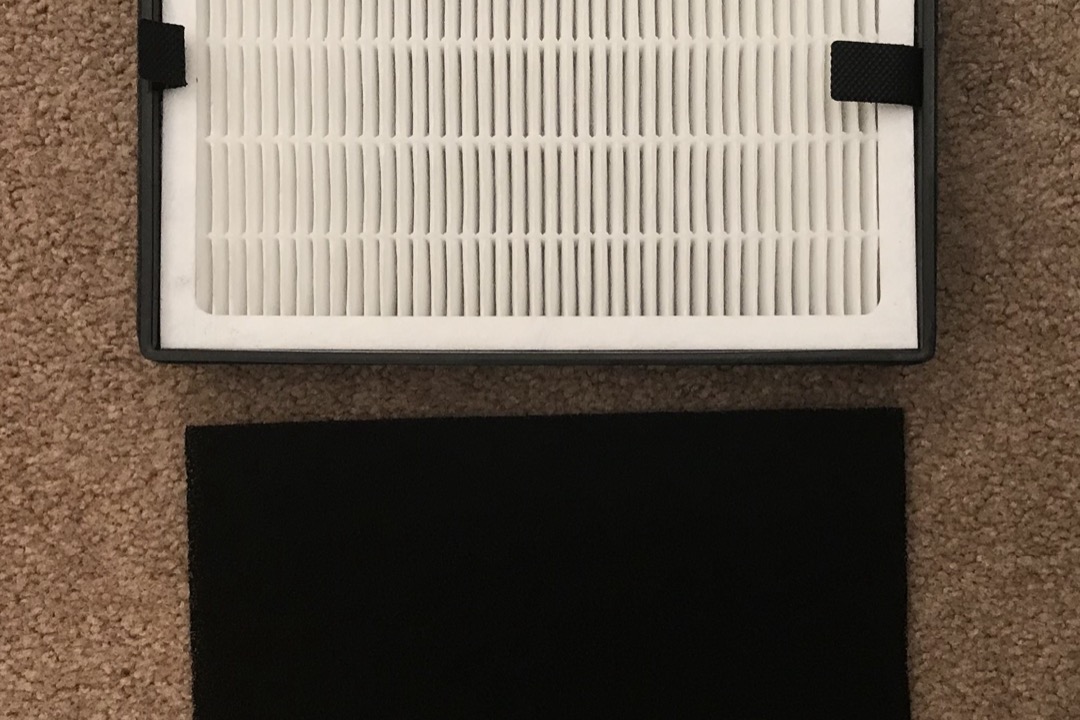
I have been in home improvement and general contracting long enough to see a lot of products promise more than they deliver. Air purifiers are a category where marketing language runs well ahead of the underlying science — and the HEPA vs ionic debate is where that gap is widest.
Most of the content you will find online comparing these two technologies is written by companies that sell one or both types. I do not sell air purifiers. I install HVAC systems, build out home additions, and care about what actually works in real living spaces. This comparison is based on the physics of how these technologies function, the regulations that govern them, and practical experience with indoor air quality across residential projects.
If you are shopping for a purifier right now, our roundup of the best air purifiers for home covers the top-performing HEPA units with verified CADR ratings. But before you buy anything, read through this comparison — because the technology choice matters more than the brand.
Quick Verdict
HEPA filtration is the right choice for occupied living spaces. It captures particles mechanically without producing ozone, delivers measurable performance through standardized CADR testing, and is backed by decades of clinical and industrial use. Ionic purifiers have a narrower legitimate use case — primarily unoccupied spaces where maintenance cost is a priority — but the ozone tradeoff makes them a poor choice for bedrooms, nurseries, or any room where health-sensitive individuals spend significant time.
At a Glance: HEPA vs Ionic Comparison Table
| Feature | HEPA Filter | Ionic Purifier |
|---|---|---|
| Filtration Method | Mechanical (fiber matrix) | Electrostatic charge |
| Particle Size Range | 0.3 microns and larger (99.97%) | Variable; inconsistent at submicron |
| Captures Odors/VOCs | Only with activated carbon layer | No (ions do not neutralize VOCs) |
| Ozone Byproduct | None | Yes — level varies by unit |
| Maintenance | Filter replacement every 6-12 months | Plate cleaning monthly |
| Room Coverage | Sized by published CADR rating | Often unrated or overstated |
| Noise Level | 25-65 dB (fan-dependent) | Near-silent (no fan models) |
| Energy Use | 20-100W depending on speed | 5-20W (lower with no fan) |
| Upfront Cost | Moderate to high | Low to moderate |
| Long-Term Cost | Filter consumables add $20-60/year | Lower ongoing cost if plates cleaned |
How HEPA Filters Actually Work
HEPA stands for High Efficiency Particulate Air. It is not a brand name or a marketing term — it is a performance standard. A true HEPA filter must capture at least 99.97% of airborne particles at 0.3 microns in diameter. That specific size — 0.3 microns — is the most penetrating particle size (MPPS), meaning it is the hardest size for a filter to capture. Particles smaller or larger than 0.3 microns are actually captured at even higher efficiency.
The filtration mechanism is purely mechanical. Air is drawn through a dense mat of randomly arranged fibers — typically borosilicate glass fibers — and particles get trapped through three mechanisms: impaction (particles too large to follow airflow around a fiber and collide with it), interception (particles that follow airflow but come close enough to a fiber to contact it), and diffusion (submicron particles that move unpredictably due to Brownian motion and wander into fiber contact). There is no charge, no chemical reaction, and no byproduct. The filter physically holds the particles it captures.
This mechanical simplicity is what makes HEPA reliable. Performance does not degrade with humidity, temperature swings, or air composition changes. A HEPA filter running at its rated airflow captures 99.97% of 0.3-micron particles whether the air is dry winter air or humid summer air. The only variable that matters is whether the fan is moving enough air through the filter to deliver meaningful room coverage — which is where CADR ratings come in.
How Ionic Purifiers Actually Work
Ionic purifiers use a high-voltage electrode to generate negative ions (and sometimes positive ions in bipolar units). These ions attach to airborne particles, giving them an electrical charge. Charged particles are then attracted to the unit’s oppositely charged collection plate — or, in electrostatic precipitator designs, to metal plates arranged in the airflow path. Some ionic units dispense with collection plates entirely and simply release charged ions into the room, causing particles to deposit onto walls, furniture, and floors rather than on a collection surface.
The technology is real and does reduce airborne particle counts under the right conditions. The limitations are where the marketing diverges from the physics. Ion generation efficiency drops with humidity, with distance from the ionizer, and with air turbulence. Particles with low surface area relative to their mass (dense particles) receive insufficient charge to be effectively precipitated. And the ionization process produces ozone as an unavoidable electrochemical byproduct — a fact that manufacturers frequently minimize or omit entirely from their product descriptions.
Ionic purifiers also do not capture volatile organic compounds (VOCs), smoke odors, or chemical gases. Ions charge particulate matter; they do not neutralize molecular-level airborne contaminants. A separate activated carbon layer is needed for odor and VOC removal regardless of filtration technology.
The Ozone Problem Nobody Advertises
Here is where I need to be direct: ozone is a lung irritant, and many consumer ionic air purifiers produce it at levels that health agencies consider harmful in occupied spaces.
The California Air Resources Board (CARB) limits air cleaning devices sold in California to a maximum ozone emission of 0.050 parts per million (ppm). This is the most stringent state-level standard in the country, and CARB maintains a published list of certified devices that meet this threshold. Products not on that list have not demonstrated compliance.
The EPA goes further. The EPA explicitly states: “Available scientific evidence shows that at concentrations that do not exceed public health standards, ozone has little potential to remove indoor air contaminants.” More directly, the EPA recommends consumers avoid using ozone generators in occupied spaces. Note the term “ozone generators” — that category includes many consumer ionizers that market themselves as “air purifiers” without disclosing their ozone output on the packaging.
The practical consequence is this: if you or anyone in your household has asthma, COPD, chronic bronchitis, or elevated chemical sensitivity, ionic purifiers warrant serious caution. Ozone at low concentrations causes airway inflammation, chest tightness, and reduced lung function — effects that are especially pronounced in children and older adults. HEPA filtration is completely free of ozone output. That is not a marketing claim — it is a physical property of mechanical filtration.
Particle Size: What Each Type Actually Captures
Understanding what you are actually trying to remove from your air matters before choosing a technology.
PM2.5 (fine particulate matter, 2.5 microns and smaller) is the particle category most linked to cardiovascular and respiratory disease. Sources include combustion (cooking, candles, tobacco smoke, fireplace use), vehicle exhaust entering through windows and doors, and secondary formation from chemical reactions in indoor air. HEPA filtration captures PM2.5 at or above its rated 99.97% efficiency. Ionic purifiers vary — units with strong ion output and effective collection plates perform reasonably well on PM2.5, but performance falls off as plates saturate.
Pollen (10-100 microns) is large enough that nearly any filtration method captures it effectively. This is the category where ionic purifiers actually perform well — larger particles are easier to charge and precipitate.
Mold spores (3-40 microns) fall in a range where both HEPA and well-maintained ionic purifiers provide meaningful capture. HEPA has the advantage of physical containment — mold spores trapped in a HEPA filter cannot be released back into the air, whereas a saturated or poorly cleaned ionic collection plate can re-release trapped biological material.
VOCs and smoke odors (molecular level) are captured by neither HEPA nor ionic technology alone. Both require an activated carbon layer for VOC and odor control. Ionic purifiers have no advantage here, and the claim that ions “neutralize” odors is not supported by published performance data.
Pet dander (0.5-100 microns) is where HEPA shines. Fine pet dander particles stay airborne longer and recirculate with air movement — exactly the scenario where continuous high-CADR HEPA filtration outperforms point-source ionic units. If pet allergens are the primary concern in your home, pairing a HEPA purifier with a cordless vacuum for pet hair that traps dander at the surface level is the most complete approach.
Room Size and CADR: Matching Purifier to Space
CADR is the most useful number in air purifier shopping and the one most consumers ignore. Here is how to use it practically.
CADR is expressed in cubic feet per minute (CFM) and reported separately for smoke, dust, and pollen — three different particle size categories. Smoke CADR is the most conservative and the best number to use for sizing, because smoke particles are the smallest and hardest to capture.
The two-thirds rule: your smoke CADR should be at least two-thirds of your room’s square footage in square feet. This math assumes standard 8-foot ceilings and 5 air changes per hour, which is the AHAM recommendation for effective air cleaning.
- Small bedroom (~150 sq ft): Minimum smoke CADR of 100 CFM. A compact HEPA purifier handles this room easily.
- Master bedroom or home office (~250 sq ft): Minimum smoke CADR of 167 CFM. Mid-range single-room HEPA units cover this.
- Living room (~400 sq ft): Minimum smoke CADR of 267 CFM. You need a full-size unit rated for this coverage area — do not trust a small purifier marketed for “rooms up to 500 sq ft” without checking the actual CADR number.
- Open-plan main floor (~800 sq ft): Minimum smoke CADR of 533 CFM. You are looking at two units or one large-format purifier. Running a ceiling fan on low in the same space helps circulate air through the purifier more effectively.
- Workshop or garage (~600 sq ft): Minimum smoke CADR of 400 CFM — and this is where a shop vac with a HEPA filter stage becomes part of the equation, since surface-level dust generated during cutting and sanding needs to be captured at the source before it goes airborne and overwhelms the room purifier.
If a purifier does not publish a CADR rating, you cannot size it properly for your space. Most ionic purifiers skip CADR testing entirely, which tells you something about how the manufacturer expects their products to perform under standardized conditions.
The Forgotten Third Option: MERV 13 HVAC Filters
This is the section nobody else covering this topic includes, and it is the most important angle for homeowners thinking about whole-home air quality.
Your forced-air HVAC system moves thousands of cubic feet per minute of air through a central filter. If that filter is currently rated MERV 8 — which captures dust and pollen but passes a significant fraction of fine particulates — upgrading to MERV 13 can dramatically improve air quality across your entire home simultaneously.
MERV 13 filters are rated to capture particles down to 0.3 microns, the same benchmark as true HEPA. Unlike a single portable purifier covering one room, your HVAC system filters the air in every room it serves — living areas, bedrooms, kitchen — in a continuous loop. If your system runs the blower for even a few hours per day, a MERV 13 filter processes enormous air volumes compared to a single portable unit.
The practical considerations before upgrading:
System compatibility: MERV 13 filters create more airflow resistance (higher static pressure) than standard MERV 8 or 10 filters. Older systems and systems with smaller-diameter ductwork may not handle this well — you can stress the blower motor, reduce airflow to rooms at the end of the duct runs, and shorten equipment life. Check your HVAC manual or have an HVAC technician assess your system before making the switch.
Filter thickness matters: 4-inch and 5-inch media filters in a proper filter cabinet handle MERV 13 ratings with much less pressure drop than 1-inch filters. If you have a 1-inch filter slot and want MERV 13 performance, the right upgrade path is installing a media cabinet — a duct modification that accepts a thick pleated filter and adds minimal static pressure.
Fan runtime: A MERV 13 upgrade only works while the fan is running. In homes where the system only runs during heating/cooling cycles, air filtration is intermittent. An ECM (electronically commutated motor) blower can run continuously at very low speed and low electrical draw, making continuous filtration practical year-round.
For many homes — particularly those without occupants with severe allergies or respiratory conditions — MERV 13 HVAC filtration at minimal ongoing cost ($20 to $40 per filter every 3 months) delivers better whole-home air quality than a collection of portable purifiers. For homes with specific high-pollution rooms (a workshop, a room with a smoker, or a nursery requiring extra protection), a HEPA portable unit in that space supplements the whole-home HVAC filtration effectively.
Maintenance and Long-Term Ownership Cost
Neither technology is maintenance-free, and the ongoing cost comparison is closer than the marketing on ionic purifiers implies.
HEPA filter replacement: Most residential HEPA purifiers need a new filter every 6 to 12 months. A replacement HEPA filter costs $20 to $60 for mainstream units. Multi-stage filter cartridges (pre-filter + HEPA + activated carbon combined) for premium units run $50 to $100. At a moderate usage estimate of one replacement per year at $40 average, five-year HEPA consumable costs total roughly $200. Some units also have a washable pre-filter that extends HEPA filter life — worth checking when buying.
Ionic collection plate cleaning: Ionic purifiers with collection plates require plate cleaning every 2 to 4 weeks in typical indoor environments (more frequently in high-pollution environments). The cleaning process involves removing the plates, rinsing or wiping them, and allowing them to dry fully before reinsertion. It is not difficult, but it requires consistency. A saturated collection plate stops capturing particles at rated efficiency and can release trapped material back into the air when air turbulence disturbs the deposits. In my experience, maintenance discipline on ionic purifiers drops off significantly after the first few months of ownership — and performance degrades correspondingly.
Filter vs plate cost comparison: Over five years, HEPA consumables run approximately $150 to $300 depending on the unit and filter price. Ionic plate cleaning costs nothing but time, assuming you actually do it. The honest tradeoff: HEPA maintenance is simpler and more foolproof; ionic maintenance is free but requires consistent effort and provides no performance feedback when neglected.
Noise, Energy, and Placement in Real Rooms
Air purifiers are not set-and-forget devices. Where you place them and how they operate in your actual room determines whether they deliver on their rated performance.
Placement: A HEPA purifier should be placed where it can draw air from across the room — typically in a corner or against a wall with at least 1 to 2 feet of clearance on all sides, not tucked under furniture or in a closet. The unit should be positioned to circulate air through the sleeping zone or primary occupied area, not just to clean the air immediately around the unit.
Fan noise: HEPA purifiers move real air volume, and that requires a fan. At high speed, residential HEPA units produce 50 to 65 decibels — noticeable but comparable to background ambient noise in most homes. Most units include a sleep mode or low setting that drops to 25 to 35 decibels at significantly reduced airflow. For bedroom use, verify the sleep mode CADR — some units throttle airflow so severely on low that their effective coverage area drops from 400 square feet to 150 square feet. A ceiling fan running on low can help distribute the cleaned air from a purifier operating at reduced speed without adding significant noise.
Energy use: Full-size HEPA purifiers consume 40 to 100 watts at high speed — comparable to a light bulb, running continuously. At low speed, consumption drops to 20 to 40 watts. Annual energy cost at continuous operation is modest. Ionic purifiers without a fan consume 5 to 20 watts — genuinely low — but a fanless ionic unit is not delivering meaningful whole-room air changes regardless of its energy efficiency.
When HEPA is the Right Choice
HEPA filtration is the appropriate technology for occupied living spaces in virtually all residential scenarios. Specifically:
- Any room where someone sleeps, particularly bedrooms and nurseries
- Households with infants, young children, elderly occupants, or anyone with asthma, allergies, or respiratory conditions
- Homes with pets — high dander load requires consistent high-efficiency capture. Pair with a cordless vacuum to address surface-level dander that circulates back into the air
- Urban environments with elevated outdoor PM2.5 from traffic or industrial sources
- Homes with indoor combustion sources: gas stoves, fireplaces, candles, tobacco smoke
- Any application where you need verified, standardized performance — look for units with published AHAM CADR ratings
- Workshop adjacent spaces where fine particulate from cutting, sanding, or finishing operations infiltrates living areas
The case for HEPA comes down to this: it is the only air purification technology with a performance standard (99.97% at 0.3 microns), a standardized measurement protocol (AHAM CADR testing), zero harmful byproducts, and decades of clinical and industrial evidence behind it. It is the technology that hospitals, operating rooms, and clean rooms trust. The residential versions of this technology are the same fundamental mechanism at a smaller scale.
When Ionic (Might) Make Sense
I am skeptical of ionic purifiers for most residential use, but there are scenarios where they are a defensible choice:
- Unoccupied storage spaces, server rooms, or vacation properties where reducing particle accumulation matters but ozone exposure is not a concern because no one is present
- As a supplemental ionizer in a unit that primarily uses HEPA filtration — some hybrid units combine a HEPA filter with a low-level ionizer, with the ion stage helping to charge particles before they reach the filter. In these units, the ionizer is a supplement, not the primary filtration mechanism, and ozone output is typically within CARB limits
- Environments where noise is truly unacceptable and a completely silent unit is a hard requirement — though in most cases, a quiet HEPA unit on low speed is a better solution
- Garages, workshops, or utility spaces when unoccupied, where the reduced operating cost justifies the technology tradeoff
The one scenario I would actively avoid ionic purifiers: anywhere children or people with respiratory conditions are present regularly.
My Recommendation for Most Homeowners
Buy a true HEPA air purifier for any room where you or your family spend significant time — bedroom, living room, home office. Size it using the CADR two-thirds rule. Verify it is on CARB’s approved air cleaner list if ozone concerns are particularly relevant to your household. Check the filter replacement cost before buying, because a cheap unit with expensive proprietary filters can cost more over five years than a mid-range unit with standard replacement filters.
Before buying multiple room units, ask whether your HVAC system can support a MERV 13 filter upgrade. If your system can handle the added static pressure, the MERV 13 upgrade delivers whole-home coverage at a fraction of the total cost of multiple portable purifiers. It is the most overlooked air quality improvement available to most homeowners, and it is well within DIY territory — no tools required beyond measuring the filter slot and ordering the right size.
The best air purifiers for home roundup covers the specific units I recommend with CADR data and real-world performance context for each room size category. Start there after you have confirmed which technology and room sizing approach makes sense for your situation.
Ionic purifiers with their low purchase price and no-filter marketing are appealing. I understand the appeal. But when the EPA warns against using a category of products in occupied spaces, and when the physics of the technology shows inconsistent performance compared to the alternative, the marketing appeal does not hold up. Spend your money on verified HEPA performance. Your lungs — and your family’s lungs — will be better for it.
Frequently Asked Questions
Do ionic air purifiers produce harmful ozone?
What does CADR mean and how do I use it to size a purifier for my room?
Can I substitute a MERV 13 furnace filter for a standalone HEPA air purifier?
Are ionic purifiers completely useless, or do they have any legitimate use cases?
How often do HEPA filters need to be replaced, and what does that cost over time?
Related Articles
About the Reviewer

Jake Morrison, Licensed General Contractor
B.S. Construction Management, Purdue University
Jake Morrison has spent 14 years in residential construction and home renovation before founding DIYRated in 2026. After helping hundreds of homeowners choose the right tools and materials for their projects, he started writing the product guides he wished existed when he was starting out. Jake tests every major product recommendation in his workshop in Indianapolis and focuses on real-world performance over spec-sheet marketing.