How to Paint a Room Like a Pro: What Contractors Know That DIYers Skip
A licensed GC's field-tested method for painting a room — primer chemistry by problem type, the fat-edge fix nobody covers, sheen decision logic, tape scoring, and the dry-vs-cure mistake that causes most callbacks.
Updated
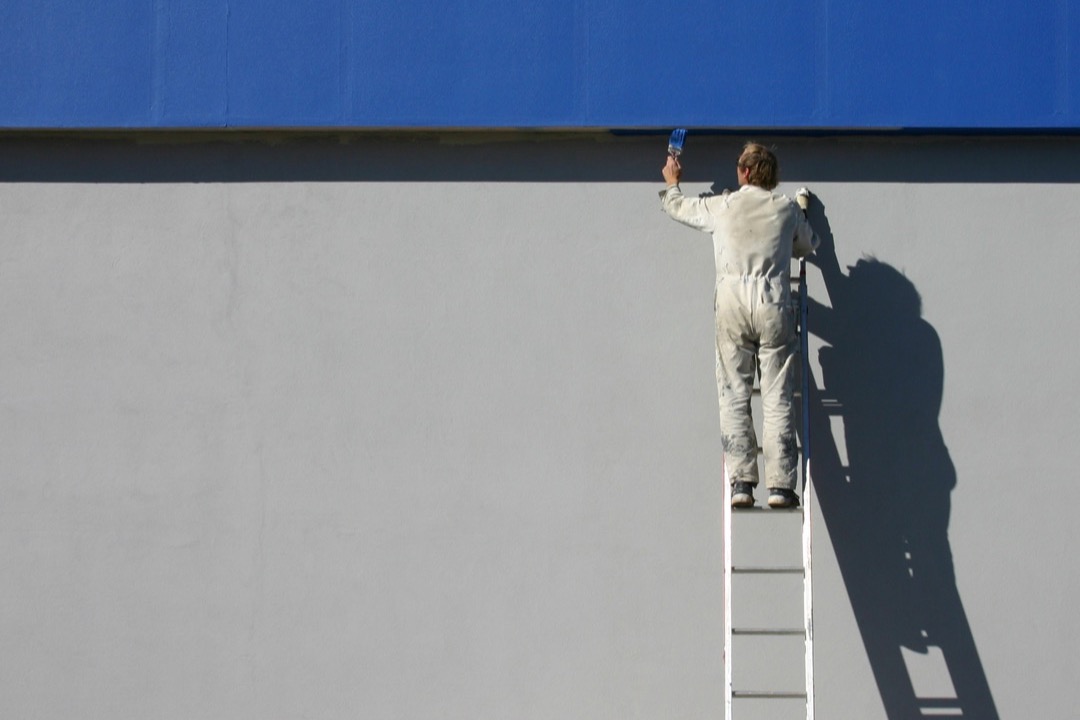
I have repainted hundreds of rooms — my own, clients’, flips, rentals, and the occasional after-hours friend favor. The difference between a paint job that still looks crisp at the five-year mark and one that telegraphs its DIY origins by month six is not the brand of paint on the wall. It is what the painter did before, during, and after the paint touched the surface.
Most painting guides walk through the same ten-step sequence: prep, prime, tape, cut in, roll, recoat, pull tape, cleanup. That sequence is correct. It is also the same sequence that produces the mediocre paint jobs I get called in to fix. The steps the guides leave out are the ones that separate a contractor’s finish from a homeowner’s finish — and almost all of them happen in the gaps between the standard ten steps.
This is the method I actually use on the job, including the techniques no online guide explains: scoring tape before you pull it, why the cut-in line dries into a visible ridge if you do not roll fast enough, how to pick a primer based on the chemistry of the problem you are solving, and the difference between paint being dry and paint being cured (which is the source of most callbacks I get in residential repaints). It is longer than the average guide because the average guide is shorter than the job actually is.
What Separates a Pro Paint Job From a DIY Paint Job
The single biggest difference between professional and amateur paint work is the prep-to-paint ratio. On a repaint, I spend somewhere between two and three hours preparing every hour I spend rolling. Patching, sanding, vacuuming, deglossing, masking, and inspecting under raking light. Homeowners reverse the ratio — thirty minutes of prep for four hours of painting — and the result looks fine on day one, then telegraphs every shortcut by month three when the patches flash, the trim line wanders, and the rolled finish stipples in the late afternoon light.
The second difference is product knowledge. Pros pick the right primer for the specific problem on the wall (drywall paper, water stain, knot bleed, glossy old oil paint), the right sheen for the room and the prep quality, and the right roller nap for the wall texture. Homeowners default to whatever is on the shelf in front of them, which is often the wrong product for the job.
The third difference — and the one I see most often on inherited DIY work — is timing. Pros know that paint has two windows: a dry window when it accepts a recoat, and a cure window of 28 to 30 days when it reaches full hardness. Homeowners hang a mirror four days after painting, the mirror tears the soft film around the anchor, and the wall has a permanent reminder of the rush.
If you fix the prep ratio, pick products by chemistry, and respect the cure window, your paint job will be indistinguishable from a hired job. If you skip those three things, no quality of paint will save you.
Step 1 — Prep the Room (Before You Touch Anything Else)
Move every piece of furniture out of the room or to the center, fully covered with a canvas drop cloth. Plastic drop cloths are a false economy — they slip on hardwood, ball up on carpet, tear under a stepped-on roller handle, and let paint puddle on top instead of soaking in. Canvas drop cloths cost $20 to $40 each, last twenty years, and grip the floor without sliding. Buy two 9-foot by 12-foot canvas drops once and use them on every project for the rest of your homeowner life.
Remove every outlet cover, switch plate, return air grille, ceiling fan blade cover, and HVAC register face. A flat-blade screwdriver from a real driver set handles 95% of the work — see best screwdriver sets for the kits I keep in my truck. Bag the screws with the cover so they do not vanish into the drop cloth. Cover the boxes with painter’s tape if you are not confident in your cut-in skills around outlets.
Take down curtains, curtain rods, picture hangers, and anything mounted to the wall. Patch every nail hole, anchor cavity, and gouge with the appropriate filler. Spackle for nail holes (overfill slightly because it shrinks as it dries). Drywall compound for cracks and gouges wider than a quarter inch (apply in two passes, sand between passes). Bondo or a two-part wood filler for deep damage in trim or for soft drywall corners that have been crushed by furniture moves over the years.
Sand every patch flat, then sand every glossy surface to a uniform dull finish with 220-grit paper. Vacuum the wall with a brush attachment. Tack-cloth the surface to pick up the dust the vacuum missed. Wipe trim and baseboards with a damp microfiber cloth.
Inspect the prepped surface under bright raking light — a portable LED work light placed at a low angle reveals every imperfection. Our best LED shop lights roundup covers the work lights I use for inspection passes. If you can see a flaw under raking light at the prep stage, it will be visible after the topcoat. Fix it before you move on. This is the step that separates pro from amateur, and it is the step homeowners skip.
Step 2 — Pick the Right Primer for the Right Problem
Primer is not one product. It is a family of chemically distinct products that solve different problems, and using the wrong one is a guaranteed paint failure waiting to surface in three to twelve months.
PVA drywall primer (water-based polyvinyl acetate). This is what you use on fresh drywall and on patched repairs. Drywall paper and joint compound absorb paint at radically different rates, which is why an unprimed patch looks like a duller circle on a finished wall — the term is “flashing.” PVA primer seals both surfaces to the same absorption rate so the topcoat builds an even sheen. Cheap, water cleanup, fast dry. Use it on every fresh-drywall and patched-repair job.
Shellac-based primer. Zinsser BIN is the canonical product. This is the answer for water stains, smoke damage, pet odor sealing, tannin bleed from cedar or redwood knots, and rust shadow from old nail bleed. Shellac is the only common primer chemistry that blocks all of these reliably. It dries in under an hour, smells aggressive (ventilate and wear a respirator), and cleans up with denatured alcohol only — water and mineral spirits will not touch it. If you have water stains on a ceiling from an old roof leak, this is the only correct primer.
Oil-based stain-blocker. KILZ Original is the classic product. Use it for severe grease, heavy crayon and marker, and surfaces where shellac is unavailable or where you prefer the thicker film build. Slow drying, mineral spirits cleanup, strong odor — but it bonds to almost anything and seals out the worst contamination.
High-adhesion bonding primer. Zinsser 1-2-3 Plus or KILZ Adhesion. This is the primer you use when topcoat compatibility is the problem rather than stain-blocking — painting latex over old oil-based paint, painting over high-gloss surfaces, painting over vinyl, plastic, laminate, ceramic tile, or any other surface that standard primer would not bond to mechanically. The chemistry of these primers is engineered for adhesion across substrates, not for blocking stains.
For a same-color clean-wall repaint with no surface issues, you can skip primer entirely and use a self-priming topcoat — but read our oil-based vs latex paint guide to confirm the existing paint chemistry first. The rubbing-alcohol test in that guide is the thirty-second check that prevents the most common compatibility failure.
Step 3 — Choose the Right Sheen Before You Buy the Paint
Sheen is the most underthought DIY decision and one of the highest-impact. The decision affects how the room looks, how it cleans, and how forgiving the paint is of underlying prep flaws.
- Flat / matte: Ceilings, low-traffic walls, formal living rooms, and any wall where you want surface defects to disappear. The lowest sheen forgives the worst prep. Trade-off: harder to clean — most flat finishes scuff and burnish under a wet rag.
- Eggshell: Bedrooms, dining rooms, adult living spaces. Soft glow, modest washability, hides minor imperfections. The most common interior wall sheen for a reason.
- Satin: Kids’ rooms, hallways, family rooms. Wipes down without burnishing, holds up to gentle scrubbing, mid-range sheen that telegraphs surface flaws under harsh light.
- Semi-gloss: Trim, doors, baseboards, kitchens, bathrooms, laundry rooms. High durability, full washability, holds up to moisture. Telegraphs every prep flaw — sanding marks, nail pops, mud lines all show.
- Gloss: Accent doors, statement trim, cabinet work. Mirror finish, maximum durability, requires perfect prep because every imperfection is amplified. Reserved for surfaces where the visual statement is the point.
The corollary that DIYers miss: higher sheen demands better prep. A flat ceiling tolerates rough drywall finishing. A gloss accent door demands a substrate sanded to 320 grit and inspected under raking light. If your prep quality cannot keep up with the sheen you picked, downgrade the sheen rather than ship the flaws.
For paint quality at any sheen, see best interior paint — the brands that hold up over five-plus years and the ones that fade, chalk, or burnish within two.
Step 4 — Tape Smart, Not Everywhere
Painter’s tape is not a universal solution. It is the right tool in some places and the wrong tool in others, and the pros decide based on the difficulty of the cut and the consequences of getting it wrong.
Always tape: the ceiling-to-wall line where two different colors meet (the cut is too long and too visible to risk freehand), color-change joints (any place two finished colors abut), and the floor-to-trim line if you are painting baseboards and your floor is hardwood or tile that you cannot afford to splatter.
Cut freehand: trim-to-wall transitions if your hand is steady and the trim is being painted in the same project (any wall paint that touches the trim gets covered when you paint the trim). Window casing edges where the cut is short and the cost of a touch-up is trivial.
The detail nobody tells DIYers — score the tape before you pull. When the topcoat dries, the paint film bridges the tape edge onto the wall paint. If you yank the tape, the film tears unpredictably and lifts ribbons of finish off the wall along the seam. The fix: take a sharp utility knife and score the tape edge at a 45-degree angle along the entire seam before you pull. The cut isolates the tape from the surrounding paint, and the tape comes away with a perfect line behind it. Pull at a 45-degree angle away from the painted surface, slowly, in one continuous motion. Pull tape within 24 hours of painting — adhesive bonds harden over time and become harder to remove cleanly.
Step 5 — Paint the Ceiling, Then the Trim, Then the Walls
Gravity drives the order. Drips, spatter, and overspray fall down from whatever surface you are painting, and you want each subsequent layer to cover the prior layer’s mess.
Ceiling first. Cut in around the ceiling perimeter with a 2.5-inch angled sash brush, then roll the field with an extension pole and a 9-inch roller, working in 4-foot by 4-foot sections from one corner toward the natural light source. Use a flat or matte ceiling-specific paint — the higher hide and lower sheen are what ceiling paint is engineered for. Spatter and overspray from the ceiling roller will fall on walls and trim that have not been painted yet, which is fine because they are next.
Trim second. Caulk every seam between trim and wall with paintable latex caulk before you prime or paint — run a thin bead, tool with a wet finger, let it skin for 30 to 60 minutes before painting. Sand trim to 220 grit, prime where bare wood or stained surfaces are exposed, then paint the trim with a 2-inch angled brush in long strokes parallel to the grain. Use a hybrid alkyd-latex enamel like Benjamin Moore Advance or Sherwin-Williams Emerald Urethane Trim Enamel for self-leveling brush strokes and harder cure than standard latex — see the oil-based vs latex paint guide for the modern hybrid options that have replaced traditional oil-based trim paint.
Walls last. This is the visible payoff. Cut in, then roll the field — and the next section is where most DIYers create the single most visible defect in their finished work.
Step 6 — Cut In and Roll as a Team (Or You Will Get the Fat Edge)
Here is the technique that separates pro work from DIY work most reliably, and the one that almost no online guide names.
When you cut in along a ceiling, trim, or corner with a brush, you are laying down a thicker bead of paint than the roller will lay down on the wall field. If that cut-in line dries before you roll the wall up to it, the dried bead remains as a visible ridge — what painters call a “fat edge” or “picture frame.” The wall ends up with a visible rectangle of slightly thicker, slightly darker paint along its perimeter, and once it has dried this way, the only fix is to lightly sand the ridge flat and recoat the entire wall.
The technique to prevent it: cut in one wall, then roll that wall within 10 to 15 minutes — while the cut-in edge is still wet. The roller’s wet film blends with the wet brush film, and the final dried surface is uniform. Then move to the next wall and repeat. Do not cut in all four walls and then come back to roll, which is the natural DIY order and the cause of most fat-edge defects I see.
Two-person crews split the job: one person cuts in, the other follows immediately behind rolling. Solo, you cut in one wall and immediately roll it before moving on. The wet edge is the single most important concept in interior painting, and the fat-edge defect is the single most common mistake.
Step 7 — Roll Technique: W-Pattern, Sections, Wet Edge
Loading the roller matters more than DIYers realize. Pour paint into a tray with a liner or use a 5-gallon bucket with a roller screen — boxing your paint (combining all gallons into a single bucket and stirring) eliminates the slight color variation between gallons that can show as banding on a long wall. Roll the cover in the paint, then roll it on the screen or tray ramp until it is loaded uniformly without dripping. A properly loaded roller picks up paint until the cover is saturated but not so heavy that it sheds when lifted.
Lay the paint on the wall in a “W” or “M” pattern over a 3-foot by 3-foot section, then fill in the open areas of the W without lifting the roller. Once the section is loaded, smooth it with light vertical strokes from top to bottom in a single continuous pass per stroke. This is the “lay-off” — the final smoothing pass that levels the roller stipple and produces the uniform finish.
Move to the adjacent section before the previous section starts to skin over — typically 1 to 2 minutes in normal conditions, faster in hot or low-humidity rooms. The wet edge between sections is what prevents lap marks. Lap marks are the visible bands you see on a wall where the painter rolled into a section that had already started to dry.
For hot rooms above 80°F, low humidity below 35%, or any condition that accelerates dry time, add Floetrol (for latex) or Penetrol (for oil-based) to the paint at the manufacturer’s specified ratio. Both are paint conditioners that extend open time and prevent lap marks without affecting dry color or sheen. Pros use Floetrol on every spray application and on summer-temperature roller jobs. For spray applications specifically, see best paint sprayers for the homeowner-grade units that work with conditioned paint.
Step 8 — Roller Nap by Surface Texture
Roller nap matters more than DIYers expect, and using the wrong nap is a guaranteed finish defect.
- 3/8-inch nap: smooth drywall, smooth plaster, doors. The standard wall nap.
- 1/2-inch nap: light texture, light orange peel, lightly stippled walls.
- 3/4-inch nap: heavy knockdown, heavy orange peel, popcorn ceilings (use a dedicated stipple roller and remove popcorn first if possible — texture rolling locks paint into the texture instead of bridging it).
- 1-inch and longer nap: masonry, brick, stucco. Specialty applications.
Wrong nap on smooth drywall produces visible roller stipple that no amount of additional coats will smooth out — the texture is locked into the dried film. Wrong nap on textured walls leaves dry spots in the deeper texture valleys that look like paint coverage failure. Match the nap to the surface, and use a quality microfiber cover rather than a $2 woven cover that sheds fibers into the wet paint film.
Step 9 — Second Coat (and When You Can Skip It)
The honest default is two coats. Even when the can says “one coat coverage,” the marketing claim assumes a perfect substrate and a same-color repaint. In real conditions, two coats produce a uniform film thickness, even sheen, full hide, and the durability the paint chemistry was engineered for at full cure.
The cases where a single coat genuinely works:
- Same-color repaint over the same paint type, same sheen, in good condition
- Light color over a similar light color
- Quality self-priming paint applied at the manufacturer’s specified spread rate
- Walls free of stains, repairs, or compatibility issues
Every other scenario — color change, sheen change, fresh drywall, walls with stains or repairs, light over dark, dark over light, going from latex over old oil-based — needs two finish coats over the appropriate primer. Skipping the second coat saves the cost of a gallon and produces a finish that hides flaws under perfect light and reveals them everywhere else.
Wait the manufacturer’s specified recoat window before the second coat. Latex is typically 2 to 4 hours; hybrid alkyd-latex is typically 16 hours; oil-based is typically 24 hours. Recoating before the window cures is a common DIY mistake that produces wrinkling, lifting, and an uneven film build that never fully levels.
Dry Time vs. Cure Time — The Mistake That Causes Most Callbacks
This is the section that prevents the post-job phone call I get most often.
Paint has two windows. Dry time is when the surface is firm enough to handle and accept a recoat. Cure time is when the paint film has fully cross-linked and reached its final hardness, scrub resistance, and adhesion strength.
For latex paint:
- Touch-dry in 1 to 2 hours
- Recoatable in 2 to 4 hours
- Fully cured in 28 to 30 days
For oil-based paint:
- Touch-dry in 6 to 16 hours
- Recoatable in 24 hours
- Fully cured in approximately 7 days
For hybrid alkyd-latex:
- Touch-dry in 2 to 4 hours
- Recoatable in 16 hours
- Fully cured in 14 to 28 days depending on product
During the cure window, the paint feels dry but is not at full hardness. Pushing furniture against the wall in week one leaves an outline that never fully levels. Hanging a heavy mirror in week two and the screw can pull a chunk of finish off when you adjust it. Scrubbing a smudge in week three dulls the area to a different sheen. The paint was dry. It was not cured.
The professional protocol I give clients:
- Do not move heavy furniture against painted walls for at least 14 days
- Do not hang heavy items into the wall for at least 21 days
- Do not scrub, wipe with cleaning agents, or apply tape over the new finish for the full 28-30 day cure window
- Light dusting and gentle dry-cloth touch is fine throughout
The rules exist because the paint chemistry needs the time, regardless of how dry the surface feels.
Pro Tips That Don’t Fit Anywhere Else
Box your paint. If a project takes more than one gallon of the same color, pour all gallons into a single 5-gallon bucket, stir thoroughly, then pour back into the cans for storage or use directly from the bucket with a roller screen. Box mixing eliminates the slight color variation between gallons that can show as a visible band on a long wall.
Wrap brushes overnight. If you are painting over multiple days with the same color, wrap brushes and rollers tightly in plastic wrap or aluminum foil and refrigerate. The cool temperature and sealed environment prevent the paint from drying for up to 48 hours, which means you skip a full cleanup at the end of day one. A two-day project becomes a one-cleanup project.
Use a paint can opener and a real lid sealer. A flathead screwdriver chews up the can lid until it no longer seals, which means leftover paint dries out in storage. A $2 paint can opener and a rubber-mallet-tapped lid go on cleanly and seal for years.
Ventilate properly. Even low-VOC latex paint emits enough volatiles in a closed room to cause headaches over a long workday. Cross-ventilate with a window fan, and run an air purifier with an activated carbon filter during and after the job — see best air purifiers for the home for units with carbon filters that handle paint VOCs.
Inspect under raking light at the end. Same trick as the prep stage — a portable LED work light at a low angle reveals every miss, holiday, and roller stipple. Touch up while the paint is still in the wet recoat window if possible. After the recoat window closes, touch-ups will telegraph as a slightly different sheen.
What Pros Spend the Money On
The hierarchy of paint-tool spending, top to bottom: brush, roller cover, paint, primer, drop cloths, tape, miscellaneous. A $20 angled sash brush from Purdy or Wooster outperforms a $4 bargain brush by every measurable metric and lasts ten years if you clean it. A microfiber roller cover at $8 to $12 outperforms a $2 woven cover. A premium interior paint at $50 to $80 per gallon outperforms a $20 contractor-grade paint in coverage, durability, color stability, and washability.
Where you can save: paint trays (the disposable liner is identical), the paint can opener, the stir sticks (free at the paint counter), and most specialty gimmicks like edging tools and corner brushes. Spend where the tool touches the paint. Skip where it doesn’t.
The DIY pattern I see is the inverse — homeowners spend $80 on premium paint, then ruin the job with a $4 brush that sheds bristles into the wet film and a $2 roller cover that leaves stipple no premium paint can level. Reverse the spending hierarchy, and the same $200 paint budget produces a job that looks like it cost three times as much.
The Job Done Right
A well-executed paint job is mostly invisible. Walk into a room with professional paint work and the wall feels right — uniform sheen, sharp lines, no telegraphed defects under raking light, a finish that reads as expensive without being able to point to why. Walk into a room with DIY paint work and you can see the cuts: the slightly fat edge along the ceiling line, the lap mark in the middle of the wall where the painter ran out of wet edge, the touch-up patch that dried to a different sheen, the sanded patch that flashed dull through the topcoat because no PVA primer was used.
The difference is not paint brand. It is preparation, product selection by chemistry, sequence, technique on the wet edge, and respect for the cure window. Spend the prep time. Pick the right primer for the problem on your wall. Cut in and roll within minutes of each other. Wait 30 days before you scrub or load the wall. Do those four things and your DIY paint job will be indistinguishable from a hired job — and it will still look that way at the five-year mark.
Frequently Asked Questions
How many coats of paint does a room actually need?
When should I remove painter's tape — while the paint is wet or after it dries?
What's the difference between dry time and cure time, and why does it matter?
Do I need to prime, and what kind of primer should I use?
Can I paint over old paint without sanding or priming?
Related Articles
Oil-Based vs Latex Paint: Which One You Should Actually Be Using in 2026
painting-supplies
7 Best Paint Sprayers of 2026
painting-supplies
7 Best Interior Paints for Walls in 2026 (Tested by a Licensed Contractor)
painting-supplies
Essential Tools Every New Homeowner Needs: A Contractor's Tiered Buying Guide
hand-tools
7 Best Air Purifiers for Home in 2026
home-air-filtration
About the Reviewer

Jake Morrison, Licensed General Contractor
B.S. Construction Management, Purdue University
Jake Morrison has spent 14 years in residential construction and home renovation before founding DIYRated in 2026. After helping hundreds of homeowners choose the right tools and materials for their projects, he started writing the product guides he wished existed when he was starting out. Jake tests every major product recommendation in his workshop in Indianapolis and focuses on real-world performance over spec-sheet marketing.