7 Best Circular Saws of 2026
Jake Morrison, a licensed general contractor, reviews the 7 best circular saws of 2026 — from sidewinder workhorses to true worm drives, plus cordless picks for deck work and roofing.
Updated

As a licensed general contractor, the circular saw is the single most-used cutting tool in my truck and on every jobsite I run. A miter saw is precise, a table saw is the shop workhorse, but the circular saw is the tool that goes where the work is — up on the deck, up on the roof, in the crawlspace, in the basement, in the finished living room. If I had to pick one saw to keep on a desert-island remodel, it is the circular saw without hesitation.
I have framed houses, built decks, rebuilt roofs, and torn out countless kitchens and bathrooms with circular saws over the past two decades. The right circular saw varies more than buyers expect — a production framer ripping plates all day reaches for a different tool than a finish carpenter trimming cabinet panels, and a homeowner building one deck a year needs a different saw than either of them. The good news is that the category is mature: the saws on this list have been refined over decades and the price-to-performance ratio is excellent across every tier. Pair your saw with a quality miter saw for crosscuts and a table saw for shop ripping, and you have the three-tool cutting trifecta that handles roughly 95 percent of every project a contractor or serious DIYer encounters.
I evaluated seven circular saws across the corded sidewinder, worm drive, and cordless categories — including a 4-1/2-inch compact specialty saw and the cordless 6-1/2 that put battery-powered framing on every modern jobsite. Each of these saws has been tested on real work by real people across thousands of verified reviews. Here is how they compare and which one is right for the work you do.
| Product | Price | Buy |
|---|---|---|
| DEWALT 7-1/4-Inch Circular Saw with Electric Brake (DWE575SB)Best Overall | $146.47 | View on Amazon |
| SKIL 5280-01 7-1/4-Inch Circular Saw with Laser GuideBudget Pick | $69.00 | View on Amazon |
| SKILSAW SPT77WML-01 7-1/4-Inch Magnesium Worm Drive Circular SawPremium Pick | $190.24 | View on Amazon |
| DEWALT DCS391B 20V MAX 6-1/2-Inch Cordless Circular Saw (Tool Only)Runner-Up | $99.00 | View on Amazon |
| SKILSAW SPT77W-01 7-1/4-Inch Aluminum Worm Drive Circular SawRunner-Up | $194.13 | View on Amazon |
| DEWALT ATOMIC 20V MAX 4-1/2-Inch Compact Circular Saw (DCS571B, Tool Only)Runner-Up | $122.99 | View on Amazon |
| Makita 5007MG 7-1/4-Inch Magnesium Circular SawRunner-Up | $183.00 | View on Amazon |
Find the Right Circular Saw for Your Work
Jump straight to the comparison that matches the work you do:
- Best circular saws overall — every pick reviewed in full
- Best corded circular saw
- Best compact and handheld circular saw
Quick Picks
Best Overall: The DEWALT DWE575SB delivers a 15-amp motor, magnesium shoe, electric brake, and a 57-degree bevel in an 8.8-pound package — the contractor-grade sidewinder that fits more buyers than any other saw on this list.
Best Budget: The SKIL 5280-01 is the best-selling circular saw on Amazon for good reason — full 15-amp performance and a usable laser guide at a price that leaves money in the budget for a quality replacement blade.
Upgrade Pick: The SKILSAW SPT77WML-01 magnesium worm drive is the production framer’s saw — multiplied torque through the gear reduction, magnesium weight savings, and a Diablo blade installed from the factory. Note that Amazon is showing no featured offer on it at the moment, so you buy it through See All Buying Options rather than a normal Add to Cart.
Best Cordless: The DEWALT DCS391B 20V MAX 6-1/2-inch is the cordless saw that put battery-powered framing on deck and roof crews — small, light, and on the largest battery platform in the trades.
How We Chose These Saws
I evaluated each saw against the criteria that determine real-world usefulness — cut depth at 90 and 45 degrees, bevel range, motor power, blade-side ergonomics, shoe material, weight balance, and safety features (electric brake especially). I weighted ergonomics and balance heavily because circular saws are handheld tools — a saw that bites your wrist after 100 cuts is a saw that will fight you on every job, no matter how good its specs look on paper. Real verified review data across thousands of users provides the long-term reliability validation that no single tester can replicate.
I also considered the buyer pool honestly. A first-time homeowner shopping for a saw to build a deck this summer needs a different recommendation than a production framer who runs through 2,000 board feet of pressure-treated lumber a week. Both deserve a clear answer, and this list covers both.
Best Circular Saws Overall
One lineup covers the trades. The DEWALT DWE575SB is the do-everything corded sidewinder for decks, remodels, and trim; the SKIL 5280-01 is the budget pick; the SKILSAW magnesium and aluminum worm drives are the production-framing saws; the DEWALT DCS391B is the cordless deck-and-roof saw; the ATOMIC 4-1/2 is the compact finish saw; and the Makita 5007MG is the LED-lit magnesium sidewinder for dim crawlspaces and attic framing. Below I review all seven in full, then compare them by the work you actually do — corded all-day use and compact one-handed cuts.
DEWALT 7-1/4-Inch Circular Saw with Electric Brake (DWE575SB) — Best Overall
The DWE575SB is the saw I have recommended to more contractors and serious DIYers than any other corded sidewinder on the market, and the field experience absolutely backs that recommendation. The defining feature is the electric brake — when you release the trigger, the blade stops in roughly 2 seconds instead of the 8 to 10 second coast on a non-braked saw. I cannot overstate how much that matters in real use. Most circular saw injuries happen in the moment after the cut, when the operator sets the saw down on a leg or reaches across the blade thinking it has stopped. The brake closes that window dramatically.
The other defining number is weight. At 8.8 pounds, this is one of the lightest 7-1/4-inch corded sidewinders in the category. That difference shows up most on overhead cuts (framing soffits, cutting roof rafters from below) and on shoulder-height work where you are holding the saw extended for sustained cuts. Two pounds matters more than the spec sheet suggests when you are making your hundredth cut of the day. The magnesium shoe is the right material — stiff, light, corrosion-resistant, and it holds reference flat against a straightedge or speed square in a way that a stamped steel shoe simply does not.
The 57-degree bevel range with positive stops at 22.5 and 45 degrees is genuinely useful for compound roof cuts and trim work where 45 degrees is not quite enough. The cord is on the shorter side at roughly 8 feet, so a heavy-duty extension is mandatory for jobsite work — not a deal-breaker, just a packing-list reality. The stock blade is acceptable for framing but, like every saw in this roundup, deserves an immediate Diablo or Freud upgrade for finish work. Pair this saw with a quality cordless drill and you have the two most-used tools on every jobsite.
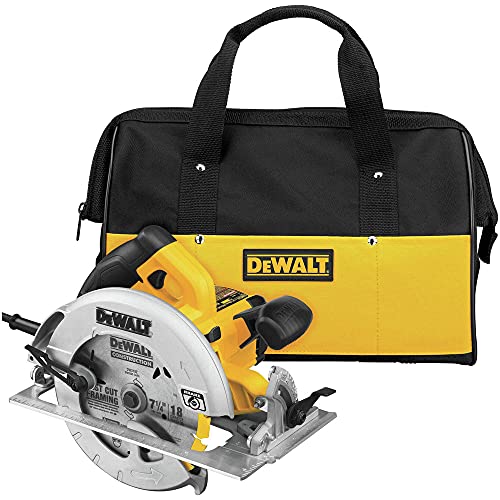
DEWALT 7-1/4-Inch Circular Saw with Electric Brake (DWE575SB)
by DEWALT
The DEWALT DWE575SB is the contractor-grade sidewinder that defines the category — light enough for all-day deck framing, accurate enough for finish work, with the electric brake that should be standard on every circular saw.
Pros
- Electric brake stops the blade in roughly 2 seconds versus the 8 to 10 second coast on saws without one — the single biggest safety upgrade you can have on a circular saw
- At 8.8 pounds it is one of the lightest 7-1/4-inch corded sidewinders in the category, which matters significantly during overhead and shoulder-height cuts on deck and framing work
- 57-degree bevel range with positive stops at 22.5 and 45 degrees handles roof rafter cuts and compound miters without recalibration between cuts
- Tough, well-built magnesium shoe holds reference flat and resists deflection when riding against a straightedge — accuracy holds across hundreds of cuts
Cons
- Stock blade is a generic 24-tooth that delivers acceptable framing cuts but should be swapped for a Diablo or Freud upgrade before any finish work
- Cord is on the shorter side at roughly 8 feet — a heavy-duty extension is mandatory for jobsite work
SKIL 5280-01 7-1/4-Inch Circular Saw with Laser Guide — Best Budget
The SKIL 5280-01 is the best-selling circular saw on Amazon, and once you look at the specs the reason is obvious. SKIL has done what they do best — build a tool with the features that matter and make hard, honest choices about what to leave out to hit the price. At a price most contractors spend on extension cords, this saw delivers a genuine 15-amp motor and a usable laser guide for straight-line freehand cuts. That is real value.
The laser guide gets a bad rap from purist contractors, but I have come around on it for one specific use case — long freehand rip cuts on sheet goods where pulling out a straightedge or chalking a line is overkill. The laser projects a clean line on the workpiece, you ride it, and you get a cut that is straight enough for rough work without the setup time. For finish work, mark a chalk line and ignore the laser. The spindle lock for fast blade changes is a feature that costs twice as much on competitor saws and that meaningfully speeds up the framing-blade-to-finish-blade swap that anyone serious does multiple times a day.
The honest tradeoffs are no electric brake (the blade coasts for 8 to 10 seconds after release — keep the saw clear of your body until it stops) and a stamped steel shoe instead of magnesium or aluminum. The shoe will dent if you drop the saw on concrete, where the magnesium DEWALT shoe shrugs off the same hit. For the buyer who needs a working saw without spending contractor money — a homeowner building a deck, a beginner stocking a garage shop, anyone who needs a backup saw — this is the right choice. Spend the savings on a quality blade and a good LED shop light for your work area, and you are set.
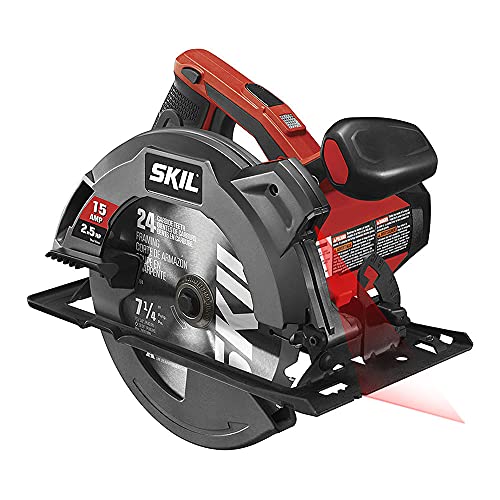
SKIL 5280-01 7-1/4-Inch Circular Saw with Laser Guide
by SKIL
The SKIL 5280-01 is the best-selling circular saw on Amazon for good reason — full 15-amp performance and a usable laser guide at a price that leaves money in the budget for a quality replacement blade.
Pros
- Single-beam laser guide projects a clean line on the workpiece for straight-line freehand cuts where pulling out a straightedge is overkill
- Spindle lock for fast blade changes is a feature that costs twice as much on competitor saws — meaningful for users who swap between framing and finish blades
- 15-amp motor delivers genuine 7-1/4-inch sidewinder performance for a price that is hard to argue with for occasional use or as a backup saw
- Lightweight at 8.7 pounds and well-balanced for one-handed cuts on lighter material — a comfortable saw for new users learning the trade
Cons
- No electric brake means the blade coasts for 8 to 10 seconds after release — keep the saw clear of your body until it stops fully
- Stamped steel shoe is rougher than the magnesium shoe on the DEWALT and can ding or bend if dropped — handle accordingly
SKILSAW SPT77WML-01 7-1/4-Inch Magnesium Worm Drive — Upgrade Pick
The SPT77WML is the saw production framers actually reach for. Worm drive gear reduction multiplies torque through the gear ratio in a way no sidewinder can match — when you push this saw into wet pressure-treated 2x stock or a dense LVL beam, it does not bog down, it does not stall, it just keeps cutting. That is the entire reason worm drives exist, and once you have used one on hard material, sidewinders feel under-gunned by comparison.
The magnesium construction is what makes this saw the upgrade pick rather than just a worm drive. The historical complaint about worm drives has always been weight — the original aluminum SPT77W weighs 14.2 pounds, which is genuinely tiring on shoulder-height work. The magnesium body drops the weight to 11.5 pounds, which is still heavier than a sidewinder but is in the range where it is a real working saw rather than a punishment. The Diablo carbide blade ships installed from the factory, which is a meaningful detail — most worm drives ship with a mediocre stock blade and need an immediate upgrade. The SPT77WML does not.
There are two honest tradeoffs to be aware of. First, true worm drives like this one require periodic gear oil checks and refills — typically once a month if you are running it daily. The sealed-motor sidewinders need none of this. If you skip maintenance, you will eventually ruin the gears. Second, the blade is on the right side (left of the operator looking down), which is the worm drive standard but feels different from a sidewinder. Right-handed users get a clear sightline along the blade. Left-handed users will find the ergonomics awkward — the only honest answer for left-handers is a left-handed sidewinder or one of the Milwaukee left-blade circular saws.
One buying note that has nothing to do with the saw itself. Amazon is currently running this listing without a featured offer, so you will land on the product page and find no Add to Cart button. The saw is not discontinued and it is not out of stock. There are ten New offers behind the See All Buying Options link, several of them shipping from Amazon, and the cheapest is the price quoted above. Open that panel, pick a seller with the shipping speed you want, and buy normally. I flag it because a missing buy box reads like a dead listing, and this one is very much alive.
If you frame for a living, this is the saw to buy. If your work is mostly finish carpentry, deck building, or one-deck-a-year homeowner stuff, the DWE575SB is a better match for what you actually do.
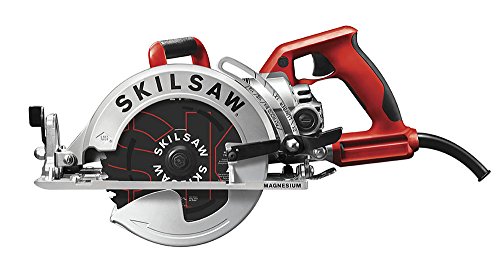
SKILSAW SPT77WML-01 7-1/4-Inch Magnesium Worm Drive Circular Saw
by SKILSAW
The SKILSAW SPT77WML-01 is the production framer's worm drive — magnesium-bodied, torque-loaded, and built for the framer who is ripping plates and cutting rafters from sunup to teardown.
Pros
- True worm drive gear reduction multiplies torque dramatically — rips through wet pressure-treated 2x stock and dense LVL beams without the bog-down that defeats sidewinder saws
- Magnesium construction drops weight to 11.5 pounds versus the 14-plus pound aluminum version, taking the historical worm-drive complaint off the table for production framing
- Diablo carbide blade ships installed and is genuinely good — most worm drives ship with mediocre blades and need an immediate upgrade, but this one does not
- 53-degree bevel and rugged shoe make this the saw production framers actually reach for when ripping plates and cutting rafters all day
Cons
- True worm drive requires periodic gear oil checks and refills — sealed-motor sidewinders need none of this maintenance
- Right-side blade is non-negotiable — left-handed users will find the sightline awkward, and rip cuts feel different than on a sidewinder
- Amazon is currently showing no featured offer on this listing, so there is no Add to Cart button. Stock is there, but you have to open See All Buying Options and pick a seller, with the cheapest New offer at the price shown here
DEWALT DCS391B 20V MAX 6-1/2-Inch Cordless — Best Cordless
The DCS391B is the cordless saw that put battery-powered framing on every deck and roof crew in North America. More than 10,000 verified reviews back up a tool that has been doing the work for a decade. On the deck, dragging a cord around the framing as you build is genuinely dangerous — the cord catches on fasteners, runs across cuts you have not made yet, and creates trip hazards on a surface where falling means a long way down. The cordless saw on a 5Ah pack handles a couple hundred linear feet of cuts before needing a battery swap, which is enough for most deck framing days.
The 6-1/2-inch blade is the right diameter for cordless. The 7-1/4 cordless saws exist (DEWALT FlexVolt, Milwaukee M18 Fuel) and are excellent for buyers who specifically need the larger blade, but they cost more, weigh more, and drain batteries faster. The 6-1/2 makes full-depth cuts on dimensional 2x stock at 90 degrees, which covers virtually every framing cut. The honest limitation: a 6-1/2 cannot cut a 2x at 45 degrees in a single pass — the depth runs out. For deck rim joist miters and rafter angle cuts at 45, plan two passes (flip the board) or pull out a 7-1/4 corded.
Buy this tool-only if you already run DEWALT 20V MAX. If you do not, add the cost of a 5Ah battery and a charger to the sticker before you compare it against a corded saw — that is usually the bigger number of the two, and it is easy to miss when a bare tool looks cheap. The platform decision is the much bigger one — DEWALT 20V MAX vs. Milwaukee M18 vs. Makita 18V is a 5-to-10-year decision about which batteries you will own across drills, impacts, recip saws, lights, and radios. We cover the platform tradeoffs in our DEWALT vs. Milwaukee cordless drills comparison, and the same logic applies to circular saws.

DEWALT DCS391B 20V MAX 6-1/2-Inch Cordless Circular Saw (Tool Only)
by DEWALT
The DEWALT DCS391B is the deck and roof saw that put cordless circular saws on every framing crew — 6-1/2-inch capacity, 7-pound weight, and the largest battery ecosystem in the trades.
Pros
- Slot-tested across more than 10,000 reviews — the most validated cordless circular saw in the DEWALT 20V MAX lineup, with a track record across deck builds, remodels, and roof tear-offs
- 6-1/2-inch blade is the right diameter for cordless — full-depth cuts on framing 2x stock with enough battery headroom for a couple hundred linear feet on a 5Ah pack
- Tool-only price is the right way to buy it if you already run DEWALT 20V MAX drills, impacts, or recip saws — battery sharing across the platform is the entire reason cordless makes sense
- 0-50 degree bevel with detents handles deck rafter and joist hanger cuts without dragging out a corded saw — the right tool for elevated and away-from-power work
Cons
- Tool-only listing — a 5Ah battery and a charger usually cost more than the bare saw itself, so budget for both if this is your first DEWALT 20V tool
- 6-1/2-inch blade cannot make a 2x at 45 degrees in a single pass — for deck rim joist miters at 45 degrees, plan two passes or step up to a 7-1/4-inch saw
SKILSAW SPT77W-01 7-1/4-Inch Aluminum Worm Drive — Runner-Up
The SPT77W is the classic aluminum SKILSAW worm drive that has been the framer’s default for nearly six decades. The gear case, the motor, and the factory-installed Diablo blade are the same as the magnesium SPT77WML. Historically the aluminum body was the cheaper way in, and that is the reason this saw has always been on lists like this one. As I write this it is not: the two are within a few dollars of each other, which makes the heavier saw hard to argue for. Amazon is also running this listing without a featured offer, so you buy it through See All Buying Options rather than a normal Add to Cart. Check both prices before you commit.
The 14.2-pound weight is the obvious complaint. On overhead and shoulder-height cuts, the heavier saw is more fatiguing — there is no way around it. But the weight is also a feature in one specific scenario: shoulder-height rip cuts where you are tracking a long line. The mass keeps the saw planted and tracking through tough material instead of skipping or wandering. On a horizontal rip on a sawhorse, the weight is irrelevant because the saw is supported by the work. On vertical and overhead cuts, it shows up.
The maintenance requirement is identical to the magnesium version — periodic gear oil checks and refills are part of owning a true worm drive. The 57-year SKILSAW worm drive lineage means parts, service, and aftermarket support are excellent. This is the saw your father may have framed with, and parts for it are still on the shelf.
Buy this one if the aluminum body drops below the magnesium version again, or if you want the original and do not mind the extra weight. At today’s pricing the magnesium SPT77WML is the better buy on the same gear case, and the DEWALT DWE575SB sidewinder is the better match for anyone who does not need worm drive torque at all.

SKILSAW SPT77W-01 7-1/4-Inch Aluminum Worm Drive Circular Saw
by SKILSAW
The SKILSAW SPT77W-01 is the classic aluminum worm drive — torque-rich and jobsite-proven, though right now the magnesium SPT77WML is both lighter and no more expensive.
Pros
- Same worm drive gear case, motor, and factory-installed Diablo blade as the magnesium SPT77WML, in the original aluminum body framers have run for decades
- Diablo blade ships installed and is the same Diablo carbide as the magnesium model — cut quality out of the box is identical to the upgrade pick
- The 14.2-pound weight is actually a feature for shoulder-height rip cuts — the mass keeps the saw tracking through tough material instead of skipping
- 57-year worm drive lineage means parts, service, and aftermarket support are excellent — this is the saw your father and grandfather may have run
Cons
- At 14.2 pounds it is the heaviest saw in this roundup — fatigue shows up on overhead and extended cuts compared to magnesium models
- Like all true worm drives, the gear case requires periodic oil checks — a once-a-month maintenance task most contractors quietly skip
- The current buy box is a third-party seller quoting delivery two to four weeks out rather than Prime-speed shipping, so order it ahead of the job rather than the week you need it
DEWALT ATOMIC 20V MAX 4-1/2-Inch Compact (DCS571B) — Compact Specialty Pick
The ATOMIC DCS571B is the saw that lives in the finish carpenter’s bag and the cabinet installer’s truck. It is not a primary framing saw, and buying it as a first circular saw is a mistake. As a secondary saw alongside a 7-1/4 corded or a 6-1/2 cordless, it is genuinely useful in a way that no full-size saw can match.
The use cases that matter: cabinet installs where you need to plunge-cut a sink hole or trim a face frame on installed cabinetry, finished spaces where dragging a 7-1/4 around risks marring trim or flooring, shoulder-height cuts where the smaller and lighter tool is safer to run extended, and any one-handed plunge cut on shelving or vertical surfaces. The brushless ATOMIC motor is a real improvement over the older brushed cordless lineup — it sustains performance better under load and runs cooler.
The honest limitations are real. The 1-1/2-inch maximum cut depth at 90 degrees rules out most rough framing — you cannot cut through a 2x4 in a single pass. The 7/8-inch depth at 45 degrees is even more limiting. This is a finish, cabinet, and remodel saw, not a framing saw. As tool-only, the effective price after a battery and charger climbs the same way it does on the DCS391B. If you already run DEWALT 20V MAX, this is a no-brainer addition to the kit. If you do not, lead with a primary saw and add the ATOMIC later.

DEWALT ATOMIC 20V MAX 4-1/2-Inch Compact Circular Saw (DCS571B, Tool Only)
by DEWALT
The DEWALT ATOMIC DCS571B is the compact specialty saw that lives in the finish carpenter's bag and the cabinet installer's truck — small, brushless, and the right tool for cuts where a 7-1/4-inch saw is too much.
Pros
- 4-1/2-inch blade and 6.6-pound tool weight make this the saw for cabinet work, finished spaces, and shoulder-height cuts where a full-size saw is overkill or unsafe
- Brushless ATOMIC motor delivers stronger sustained performance than the older brushed DCS391 platform on the same battery
- One-handed operation is genuinely usable — handy for plunge cuts on installed cabinetry, shelving, or any situation where you cannot get both hands on the saw
- Hits noticeably above its compact-class weight on cuts up to 2x stock at 90 degrees, which most homeowners and trim carpenters never exceed
Cons
- 1-1/2-inch maximum cut depth at 90 degrees rules out most rough framing work — this is a finish, cabinet, and remodel saw, not a primary framing saw
- Tool-only listing — like the DCS391B, the effective price climbs once you add a battery and charger if you are not already on the DEWALT platform
Makita 5007MG 7-1/4-Inch Magnesium Sidewinder — Runner-Up
The 5007MG is the magnesium sidewinder for buyers who want Japanese engineering and refinement in their corded saw. Full magnesium components — shoe, motor housing, blade guard — drop the weight to 10.6 pounds while delivering the rigidity and corrosion resistance that aluminum components cannot match. The two built-in LED lights are not a gimmick — in dim crawlspaces, attic framing, and basement work where headlamps cannot reach the blade, the LEDs make a real difference in cut accuracy and safety.
The 56-degree bevel exceeds most competitors and matters specifically for compound roof cuts and aggressive pitches. The electric brake is standard. The cutline guides are large and clear, which makes tracking a chalk line genuinely easier than on saws with smaller or less visible guides. Stock blade is fine for framing — like every saw in this roundup, a Diablo or Freud upgrade transforms cut quality on plywood and finish work.
The honest question is positioning. The Makita and the SKILSAW SPT77WML magnesium worm drive now sit within a few dollars of each other, so price has dropped out of the decision entirely: you are choosing sidewinder refinement or worm drive torque, on the merits. The answer depends on your work. If you do production framing on pressure-treated and engineered lumber, take the worm drive. If you do mixed work — framing, finish, deck, remodel — the Makita sidewinder is the more versatile tool and the better all-rounder. The 4.8-star rating across 2,000-plus verified reviews backs up the build quality reputation.

Makita 5007MG 7-1/4-Inch Magnesium Circular Saw
by Makita
The Makita 5007MG is the magnesium sidewinder for buyers who want a bulletproof Japanese-engineered saw with the LED cutline lights and refined feel that DEWALT and SKIL only approximate.
Pros
- Full magnesium components — shoe, motor housing, and blade guard — drop the weight to 10.6 pounds while resisting deflection and corrosion better than aluminum
- Two built-in LED lights illuminate the cutline in dim crawlspaces, attics, and basement framing work where headlamps cannot reach the blade
- Electric brake plus large, clear cutline guides make this one of the easier saws in the category to track accurately along a chalk line or speed square
- 56-degree bevel capacity exceeds most competitors — useful for compound roof cuts and any situation where 45 degrees is not quite enough
Cons
- It sits within a few dollars of the SKILSAW magnesium worm drive, so there is no longer a price argument for choosing it — the saving is in weight and maintenance, not cost, and crews ripping wet pressure-treated and engineered stock all day still want the worm drive
- Stock blade is fine for framing but, like every saw in this roundup, benefits significantly from a Diablo or Freud upgrade
Buyer's Guide
I have run circular saws on residential framing, deck builds, kitchen and bath remodels, and trim and finish work for over 20 years as a licensed general contractor. The right saw for a production framer is genuinely different from the right saw for a finish carpenter, and the right saw for either of them is different from the right saw for a homeowner who builds two decks a decade. Here are the six factors I weigh before recommending any circular saw.
Corded vs. Cordless
Corded saws still win on three jobs: full-day framing where you are making hundreds of cuts and do not want to swap batteries, metal and masonry cutting where the sustained load drains batteries fast, and shop use where you have an outlet anyway. Cordless saws win on three jobs: deck building (where dragging a cord around the deck frame is genuinely dangerous), roofing (no cord on the roof, period), and any jobsite without ready power. The honest answer for most contractors and serious DIYers is one of each — a corded 7-1/4 in the truck and a cordless 6-1/2 on the same battery platform as your drill. Homeowners who buy one saw should usually pick corded for the price-to-performance ratio. See our [corded vs. cordless circular saws head-to-head](/corded-vs-cordless-circular-saws/) for the full breakdown.
Sidewinder vs. Worm Drive (and Hypoid)
Sidewinders sit the motor next to the blade — direct drive, 5,000 to 6,000 RPM, 8 to 11 pounds, blade on the right. Worm drives sit the motor behind the blade with gear reduction — slower RPM but multiplied torque, 11 to 15 pounds, blade on the left. Worm drives rip wet pressure-treated stock and dense engineered lumber that bog down sidewinders. Sidewinders are lighter, spin faster (cleaner cuts on finish work), and feel more familiar to most users. There is also a third category most articles skip: hypoid saws (Makita 5377MG, older Skil hypoids) use a sealed oil bath gear case that needs zero maintenance, while true worm drives like the SKILSAW SPT77 series require periodic gear oil checks and refills. If you skip maintenance, buy a sidewinder or a hypoid. If you frame for a living, buy a worm drive and check the oil monthly.
Blade Size
7-1/4 inch is the default and the right choice for most users. It cuts a full 2x at 45 degrees in a single pass, accepts the widest range of aftermarket blades, and handles framing, sheet goods, and trim work. 6-1/2 inch is the right diameter for cordless saws — saves about 2 pounds of weight and meaningfully extends battery runtime, at the cost of not being able to cut 2x at 45 degrees in a single pass. 4-1/2 inch compact saws (DEWALT ATOMIC, Makita SH02) are specialty tools — too small to frame with, but the right answer for cabinet work, finished spaces, and overhead cuts. Buy a 4-1/2 only as a secondary saw, never as a first.
Safety Features (Electric Brake, Lower Guard, Anti-Kickback)
An electric brake stops the blade in roughly 2 seconds versus the 8 to 10 seconds a non-braked saw coasts after release. That difference matters — most circular saw injuries happen when the blade is still spinning after the cut and the operator sets the saw down on a leg or reaches across the blade path. Buy a saw with an electric brake. The lower blade guard is the spring-loaded cover that retracts as you push into the cut and snaps back when you release — never tape it open or remove it, ever. Anti-kickback technique matters more than any feature: cut at full blade depth (counter-intuitive but correct), support the keeper side of the cut and let the off-cut fall free, and never reach across the blade. A riving knife or splitter on the saw helps prevent binding-induced kickback, which is the most common cause of serious circular saw injuries.
Shoe Material and Bevel
The shoe (or base plate) is the flat reference surface the saw rides on. Stamped steel shoes are cheaper and bend if you drop the saw — most budget saws have these. Aluminum shoes are stiffer, lighter, and corrosion-resistant — most mid-range corded sidewinders use aluminum. Magnesium shoes are the lightest and most rigid — found on contractor-grade saws like the Makita 5007MG and the SKILSAW SPT77WML. For accuracy across years of use, magnesium is worth the premium. Bevel range matters most for roof and rafter work — a 0 to 45 saw covers most cuts, but 50 to 57 degrees opens up compound miters and aggressive roof pitches without a workaround. Positive stops at 22.5 and 45 degrees should be standard on any saw above the budget tier.
Battery Platform & Brushless Motors (Cordless)
Buying a cordless circular saw is buying a battery platform — the same batteries will drive your drills, impact drivers, recip saws, work lights, and shop radios for the next decade. The mainstream choices are DEWALT 20V MAX, Milwaukee M18, Makita 18V/40V XGT, and Ryobi 18V One+ for budget. DEWALT 20V MAX is the safest choice for homeowners and most contractors — biggest tool catalog, widest big-box availability, longest track record. Milwaukee M18 Fuel performs at the top of the brushless class for heavy-use professionals. Avoid mixing platforms unless you have a specific reason — battery and charger duplication adds up fast. Brushless motors deliver 50 percent longer runtime, longer motor life, and stronger sustained performance under load than brushed motors at this point — never buy a brushed cordless saw for serious work. If you already run [DEWALT 20V MAX drills](/best-cordless-drills/), the DCS391B is the obvious choice; if you run Milwaukee M18, the corresponding M18 Fuel circular saw is the equivalent pick.
Best Corded Circular Saw
Corded saws still win for all-day framing, metal and masonry cutting, and any shop with an outlet — no batteries to swap, full power on tap, and the lowest price per cutting hour. These three are the corded picks from the lineup, from an everyday sidewinder to a production worm drive. If you’re deciding between corded and battery, our corded vs. cordless circular saw breakdown walks through the tradeoffs.
| Product | Price | Buy |
|---|---|---|
| DEWALT 7-1/4-Inch Circular Saw with Electric Brake (DWE575SB)Best overall corded Electric brake, 8.8 lb magnesium shoe, and a 57° bevel — the all-around sidewinder for decks, remodels, and trim | $146.47 | View on Amazon |
| SKIL 5280-01 7-1/4-Inch Circular Saw with Laser GuideBest budget corded Full 15-amp power and a laser guide at the lowest price — the best-selling saw for occasional DIY and backup duty | $69.00 | View on Amazon |
| SKILSAW SPT77WML-01 7-1/4-Inch Magnesium Worm Drive Circular SawBest for framing Magnesium worm-drive torque rips wet pressure-treated and LVL all day at 11.5 lb — the production framer's saw. Buy it through See All Buying Options; Amazon is running this listing without a featured offer right now | $190.24 | View on Amazon |
Best Compact and Handheld Circular Saw
When a full-size 7-1/4-inch saw is too much — cabinet work, finished rooms, overhead and one-handed cuts — a smaller saw is the safer, more controllable tool. The ATOMIC 4-1/2 is the true compact for finish work; the 6-1/2 cordless steps up when you still need to cut 2x framing but want less bulk and weight than a full-size saw.
| Product | Price | Buy |
|---|---|---|
| DEWALT ATOMIC 20V MAX 4-1/2-Inch Compact Circular Saw (DCS571B, Tool Only)Best compact / one-handed A 4-1/2 in blade at 6.6 lb for one-handed cabinet, trim, and overhead cuts — a finish saw, not a framer | $122.99 | View on Amazon |
| DEWALT DCS391B 20V MAX 6-1/2-Inch Cordless Circular Saw (Tool Only)Best lightweight cordless A 6-1/2 in cordless at 7 lb cuts 2x framing away from power — the deck and roof saw that stays easy to handle | $99.00 | View on Amazon |
How to Choose the Best Circular Saw
The decision framework for circular saws comes down to three questions: corded or cordless, sidewinder or worm drive, and what blade size do you need.
Corded vs. cordless is determined by where the work happens. Decks, roofs, and any jobsite without ready power push you to cordless regardless of preference. Full-day shop framing and metal cutting push you to corded. Most contractors run both. Homeowners who buy one saw should usually pick corded for the price-to-performance ratio.
Sidewinder vs. worm drive is determined by what you cut. Wet pressure-treated lumber, dense engineered stock, and full-day framing on tough material favor worm drive. Mixed framing, finish work, deck building, and most homeowner projects favor sidewinder. Worm drives weigh more and require gear oil maintenance — those are real costs, not just spec-sheet differences. If you’re sizing a saw to a specific build, run the framing through our free lumber calculator first — it tells you exactly how many studs, plates, headers, and joists the project needs so you can match saw capacity to the actual cut volume.
Blade size is determined by your typical cuts. 7-1/4 inch is the right answer for almost everyone — it cuts a full 2x at 45 in a single pass and accepts the widest blade selection. 6-1/2 inch is the right cordless choice unless you specifically need 45-degree depth in 2x. 4-1/2 inch is a secondary saw, never a primary one.
Invest in blades before you invest in a more expensive saw. Stock blades are mediocre across the category — the only exception is the SKILSAW worm drives that ship with Diablo blades from the factory. A Diablo or Freud 24-tooth thin-kerf framing blade plus a 40 to 60-tooth fine-finish blade do more for cut quality than moving up a tier in saws. The pair costs a fraction of any saw here and transforms every one it touches.
Plan for safety. An electric brake should be a non-negotiable feature. Never tape the lower guard open. Cut at full blade depth (counter-intuitive but correct), support the keeper side and let the off-cut fall free, and never reach across the blade. A riving knife or splitter helps prevent binding-induced kickback, which is the most common cause of serious circular saw injury. Stair stringers are the cut where all of this comes together: you are stopping every notch dead on a marked corner, in 2x12 stock, three boards in a row. Lay them out with our free stair calculator first — it gives you the framing-square settings, the running mark-out, and the bottom-cut drop, and it checks the whole stair against the IRC before you burn a 16-foot board.
Final Verdict
For most contractors, serious DIYers, and homeowners building real projects, the DEWALT DWE575SB is the circular saw to buy. The combination of 15-amp power, magnesium shoe, electric brake, 57-degree bevel, and 8.8-pound weight covers more buyers than any other saw on this list — from deck framing to finish trim. The 4.8-star average across 5,000-plus verified reviews backs up the recommendation across years of real-world work.
For first-time buyers and budget-focused homeowners, the SKIL 5280-01 delivers genuine 15-amp performance at a price that leaves money in the budget for a quality blade upgrade and accessories. For production framers who rip plates and cut rafters all day, the SKILSAW SPT77WML-01 magnesium worm drive is the saw that pays for itself across a season of hard use. And for anyone running DEWALT 20V MAX drills and impacts, the DCS391B cordless 6-1/2 is the obvious add-on that puts battery-powered framing on every deck and roof you build.
Whatever saw you choose, swap the stock blade before your first cut, set the depth to roughly a quarter-inch below the workpiece thickness, and read the safety section of the manual before you pull the trigger. A properly set up circular saw with a sharp Diablo blade is a tool that will serve you across decades — and pairing it with a quality miter saw for crosscuts gives you the two-tool combination that handles roughly 80 percent of every cut a contractor or serious DIYer will ever make.
Frequently Asked Questions
What is the difference between a sidewinder and a worm drive circular saw?
Is a cordless circular saw as powerful as a corded one?
What size circular saw blade do I need?
Should I get a circular saw or a track saw?
What blade should I buy for my circular saw?
Related Articles
8 Best Miter Saws of 2026
power-tools-workshop
7 Best Table Saws of 2026
power-tools-workshop
Corded vs Cordless Circular Saws: Which Type Do You Actually Need?
power-tools-workshop
7 Best Cordless Drills of 2026
power-tools-workshop
DeWalt vs Milwaukee Cordless Drills: Which Brand Should You Choose?
power-tools-workshop
About the Reviewer

Jake Morrison, Licensed General Contractor
B.S. Construction Management, Purdue University
Jake Morrison has spent 14 years in residential construction and home renovation before founding DIYRated in 2026. After helping hundreds of homeowners choose the right tools and materials for their projects, he started writing the product guides he wished existed when he was starting out. Jake tests every major product recommendation in his workshop in Indianapolis and focuses on real-world performance over spec-sheet marketing.