8 Best Smoke and CO Detectors of 2026
Jake Morrison, a licensed general contractor, reviews the 8 best smoke and carbon monoxide detectors of 2026 — hardwired combos, sealed-battery upgrades, and standalone CO units with installer-grade wiring and placement guidance.
Updated
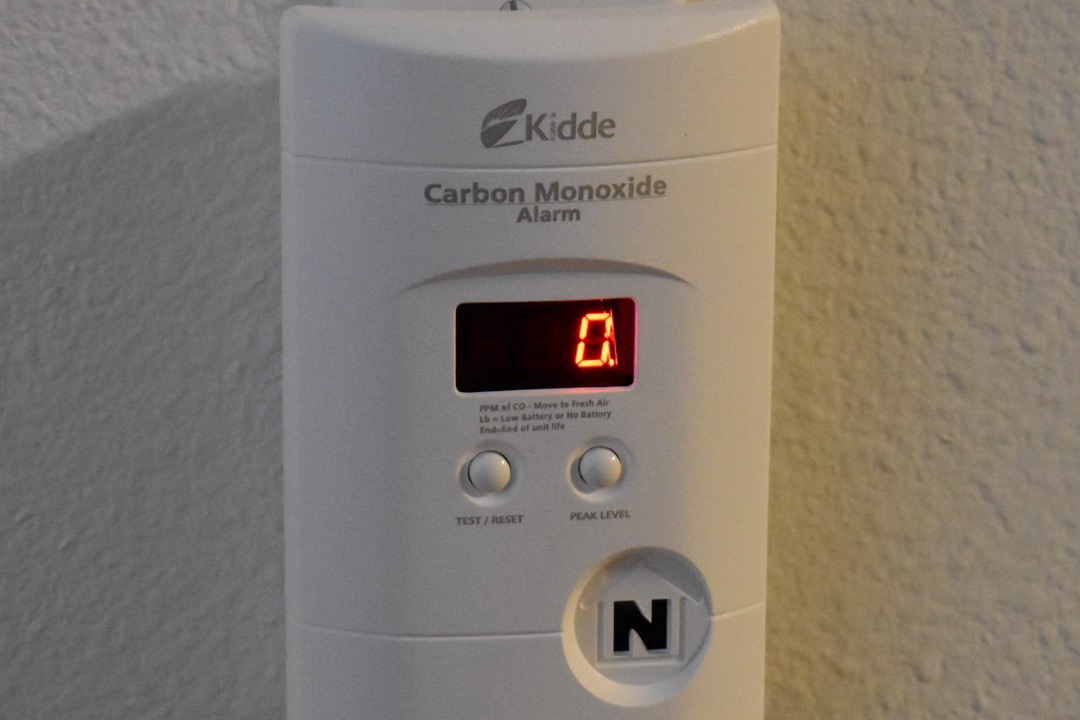
As a licensed general contractor, smoke and carbon monoxide detection is one of the few specifications I never let a homeowner shortcut. It is the cheapest life-safety system in the entire house, and it is the system most often installed wrong, maintained badly, or quietly disabled because the alarm chirped at 3 a.m. one too many times. Over the past two decades I have specified, wired, and tested smoke and CO alarms on residential framing jobs, additions, basement finishes, and kitchen remodels — and I have walked plenty of homes during inspections where the existing alarms had been dead for years without anyone realizing it.
The good news is that the category is mature. The eight detectors on this list have been refined over decades and the price-to-performance ratio is excellent. The harder news is that the consumer market is full of traps — 10-year battery life claims that mean two different things, UL certifications that quietly cycle through editions, brand-incompatibility issues with wired interconnect, and smart features that solve problems most buyers do not have while ignoring the basics that matter. This roundup is structured to make the right choice obvious for your specific install — new construction with hardwired interconnect, retrofit where running wire is impractical, kitchen-adjacent placement that needs photoelectric sensing, or basement-near-furnace standalone CO detection. Pair your alarm install with a quality cordless drill for the mounting screws and a good shop light for ceiling work in dim hallways and you have everything you need to do the job right in an afternoon.
I evaluated eight smoke and CO detectors across hardwired combos, battery-only retrofits, smart-app alarms, standalone smoke (photoelectric), and standalone CO (sealed 10-year). Each unit was checked against UL 217 10th Edition and UL 2034 5th Edition certification, the CPSC recall database, real verified review data, and the practical install considerations that show up on actual jobsites. Here is how they compare and which one is right for the work you are doing.
Find the Right Detector for Your Situation
Jump straight to the comparison that matches your install:
- Best smoke and CO detectors overall — all eight picks reviewed in full
- Best hardwired smoke and CO detector
- Best photoelectric smoke detector
- Best smoke detector for bedrooms
- Best smoke alarm for the deaf and hard of hearing
Quick Picks
Best Overall: The First Alert SC9120B is the hardwired combo I spec into permitted renovations — adapter plugs and the BRK Quick Connect harness for easy whole-house replacement, a sealed 10-year lithium backup that ends battery-chirp maintenance for the life of the alarm, and the most proven platform in the residential interconnect market at 4.5 stars and a sustained top-15 category rank.
Best Budget: The Kidde 30CUDR is the AA-battery combo for renters, retrofits, and supplementary coverage — current UL 10th Edition certification, no wiring required, and AAs that cost less than 9V replacements.
Best Smart / Upgrade: The Kidde Smart with Ring app brings push notifications, voice room alerts, and wireless interconnect for buyers replacing a Nest Protect or covering vacation properties.
Best Standalone Smoke: The Kidde 10SDR photoelectric is the right choice for kitchen-adjacent placement where ionization alarms trigger constantly on cooking steam.
Best Standalone CO: The Kidde COBD10 with sealed 10-year battery and digital CO display is the standalone CO unit for basement-near-furnace placement and for portable use in boats, RVs, hotels, and short-term rentals.
How I Evaluated These Detectors
I checked every unit against three independent validation gates before it earned a spot on this list. First, current UL certification — UL 217 10th Edition for smoke alarms and UL 2034 5th Edition for CO alarms. Both standards are current as of this writing, and big-box shelves still carry plenty of 9th Edition stock that is technically still legal to sell but is meaningfully slower to detect real fires. Second, the CPSC recall database — every brand and model in this roundup was checked for active recalls or open safety notices. Third, real verified-purchase review data across thousands of installs, weighted toward reviews that specifically mention long-term reliability and real-world alarm events (not just first-impression unboxing).
The practical jobsite considerations come from twenty years of permitted renovation experience. I have wired First Alert and Kidde alarms into existing interconnect loops, replaced dead alarms in occupied homes, pulled permits for basement finishes that required bringing the whole detection system up to current code, and worked through inspection sign-offs where the building official wanted to physically test the interconnect. The brand-compatibility warning in the buyer’s guide below is not theoretical — it is a problem I have seen on real jobs where a homeowner replaced a few alarms with a different brand and accidentally broke the wired interconnect chain. Buy one brand and stick with it.
Best Smoke and CO Detectors Overall
One lineup covers the whole house. The First Alert SC9120B is the hardwired combo I spec into permitted remodels; the Kidde 30CUDR is the no-wiring battery pick for renters; the Kidde Smart adds Ring app alerts and voice room callouts; the two First Alert SMICO units are the AA-backup and sealed-10-year hardwired variants; the Kidde 10SDR is the photoelectric kitchen-adjacent alarm; the Kidde COBD10 is the standalone CO alarm for basements and RVs; and the First Alert 7020BSL adds a strobe for deaf and hard-of-hearing sleepers. Below I review all eight in full, then compare them by the install you actually have — hardwired, photoelectric, bedrooms, and hearing-impaired.
First Alert SC9120B Hardwired Smoke and CO Detector — Best Overall
The SC9120B is the alarm I spec into more permitted remodels than any other unit on this list, and the reason is install economics combined with the most proven track record in the residential market. The unit ships with adapter plugs and the BRK Quick Connect harness — a plug-and-play connector that drops into any existing First Alert or BRK hardwired ceiling box without rewiring. Most installers can replace an entire whole-house interconnect — six to ten alarms across multiple floors — in under an hour, with no electrical work beyond locking out the breaker and verifying the line is dead. The alternative on a non-Quick-Connect platform is wire-nutting every alarm individually, which turns a one-hour job into a half-day.
The defining feature is the sealed 10-year lithium battery backup. Older First Alert combos used a 9V backup that needed replacing every six months — the single most common source of the 3 a.m. low-battery chirp that drives homeowners to pull the battery and leave the alarm dead. The SC9120B’s backup is a non-replaceable lithium cell in a tamper-resistant locked drawer that lasts the full service life of the alarm: no swaps, no chirps, no ladder trips, and you replace the whole unit at ten years. When a multi-alarm interconnect does trip, the latching indicator flags exactly which unit detected the smoke or CO and holds that flag even after the condition clears, so you can pinpoint the source after the fact. With 4.5 stars and the #14 best-seller rank in Amazon’s smoke and CO category, it is also simply the most market-validated combo on this list.
The sensor platform is ionization smoke plus electrochemical CO, with intelligent sensing tuned to reduce nuisance alarms and a single test/silence button. Ionization is fast on flaming fires and fully UL-listed, but it is more prone to steam trips than photoelectric — so mount it more than 20 feet from a range, and for kitchen-adjacent coverage pair it with the photoelectric Kidde 10SDR below. Hardwired primary power with battery backup is the most reliable configuration in any home with permanent occupants — NFPA 2024 home fire data shows hardwired alarms function in 94 percent of house fires versus 85 percent for battery-only. Two honest caveats round it out: First Alert and BRK wired interconnect is NOT compatible with Kidde wired interconnect (pick one brand for the loop), and the SC9120B uses a latching LED indicator rather than spoken voice and location alerts — if you want the alarm to announce the affected room out loud, the Kidde Smart below is the unit to choose. For renters and wire-impractical retrofits, the Kidde 30CUDR battery-only unit is the right call. Pair this alarm install with a good cordless drill for the mounting screws and you have a complete hardwired replacement install in an afternoon.

First Alert SC9120B Hardwired Combination Smoke and Carbon Monoxide Alarm with 10-Year Battery Backup
by First Alert
The First Alert SC9120B is the hardwired combo I now spec into permitted remodels — the BRK Quick Connect harness and included adapter plugs make whole-house replacement a screwdriver job, the sealed 10-year lithium backup ends battery-chirp maintenance for the life of the alarm, and a sustained top-15 category rank makes it the most proven platform in the residential interconnect market.
Pros
- Included adapter plugs and the BRK Quick Connect harness drop directly into existing First Alert and BRK hardwired ceiling boxes without rewiring — a whole-house replacement is a screwdriver job, no wire-nutting required
- Sealed 10-year lithium battery backup means zero battery maintenance for the life of the alarm — no 9V swaps, no 3 a.m. low-battery chirps, no ladder trips, and a tamper-resistant locked drawer
- Hardwired primary with battery backup is the configuration the NFPA 2024 home fire data shows functions in 94 percent of house fires versus 85 percent for battery-only — the most reliable platform on the residential market
- The most market-validated combo in its class — 4.5 stars and a long-running top-20 placement in Amazon's smoke and CO category, with a latching indicator that flags exactly which unit tripped even after the condition clears
Cons
- Ionization smoke sensor only — fine more than 20 feet from a kitchen, but pair it with the photoelectric Kidde 10SDR near a range to avoid nuisance steam trips
- Latching LED indicator rather than spoken voice and location alerts — it flags which unit tripped but does not announce the room out loud; if you want voice room callouts, step up to the Kidde Smart below
- First Alert / BRK Quick Connect is NOT compatible with Kidde wired interconnect — pick one brand for the whole interconnect loop and stick with it
Kidde 30CUDR AA-Battery Smoke and CO Detector — Best Budget
The Kidde 30CUDR is what I recommend to renters, to homeowners doing a retrofit where running new wire through finished ceilings is impractical, and to anyone who needs to add supplementary coverage in spaces beyond the code-required locations. Battery-only operation means no electrician, no breaker lockout, no permit, no ceiling box. You mark the mounting plate, drive two drywall screws, snap the alarm onto the plate, and you are done in under 10 minutes per unit.
The AA-battery choice is the right one. Older Kidde and First Alert battery alarms used proprietary 9V batteries that were more expensive, harder to find on a Sunday afternoon, and quietly less reliable in this application than AAs. Standard AA cells last meaningfully longer in modern alarm electronics, cost less per replacement, and are stocked at every gas station, grocery store, and hardware store in the country. UL 217 10th Edition and UL 2034 5th Edition certification matches what new construction is required to install — current standards, not the older 9th Edition stock still on big-box shelves.
The honest tradeoffs are real. AA batteries still need replacement every 6 months — set a calendar reminder, because a dead detector creates a false sense of security worse than no detector at all. The unit has no interconnect, so when one alarm triggers, others stay silent. For a single-bedroom apartment or studio, that is fine. For a multi-story home, a hardwired interconnected system (the SC9120B above or SMICO105-AC below) is genuinely safer because alarms in distant bedrooms will wake occupants from a deep sleep where an isolated alarm in the kitchen will not. As a supplementary alarm in a garage, attic, or workshop where wiring is not feasible, the 30CUDR is the right unit. As the only alarm in a primary residence, it is the right unit for a renter but a compromise for an owner.

Kidde 30CUDR Smoke and Carbon Monoxide Detector, AA Battery Powered
by Kidde
The Kidde 30CUDR is the right choice for renters, retrofits where running new wiring is not practical, and budget-focused homeowners — AA batteries make maintenance easy and the current UL 10th Edition certification matches what new construction is required to install.
Pros
- Battery-only operation means no wiring, no breaker lockout, no electrician — installs anywhere there is drywall and a couple of mounting screws in under 10 minutes per unit
- Standard AA batteries instead of proprietary 9V — AAs are cheaper, easier to find, and last meaningfully longer in this design than 9Vs do in older units
- UL 217 10th Edition and UL 2034 5th Edition certified — the current standards that reduce cooking-steam nuisance alarms and improve real-fire detection speed
- Self-testing electronics confirm operational status without you having to climb a ladder and press a button on every unit every month
Cons
- AA batteries still need replacement every 6 months — set a calendar reminder, because a dead detector is worse than no detector at all
- No interconnect — when one unit alarms, others stay silent. For multi-story homes, a hardwired interconnected system is genuinely safer than a network of standalone battery units
Kidde Smart Smoke and CO Detector with Ring App — Best Smart / Upgrade
The Kidde Smart is the upgrade pick for buyers who have a specific reason to want push notifications when they are away from home. The reasons that actually justify the premium price are narrow but real — a vacation property where nobody is home for weeks at a time, a rental property where you want notification before the tenant calls you, an elderly relative in a separate house, or an existing Nest Protect installation that needs replacement now that Google’s long-term support has gotten murky. For a primary residence that is occupied daily, the smart features are nice but not life-changing, and the SC9120B above covers the hardwired in-home basics at lower cost. Where the Kidde Smart genuinely pulls ahead is voice and location alerts — it announces the affected room out loud, which the ionization SC9120B does not do — on top of the app push notifications for when nobody is home.
When the smart features are useful, they are very useful. The Ring app sends push notifications the moment an alarm triggers, which means a vacation-property fire can get a fire department response in minutes instead of hours of waiting for a neighbor to notice. The voice location alerts announce the affected room (Smoke in the kitchen or Carbon monoxide in the basement) in plain English, which speeds up correct response in a real emergency far better than every alarm in the house just beeping. The wireless RF interconnect across multiple units means you do not have to run new interconnect wiring through finished ceilings — a real practical advantage in retrofits.
The annoyances are honest. Several reviewers report that the alarm chirps audibly during overnight firmware updates — not a malfunction, but a real factor in nursery placement. The full feature set requires a Ring or Amazon account, which privacy-focused buyers should weigh against the safety upside. Multiple owners specifically called this out as a direct Nest Protect replacement — same hardwired connector, same ceiling box footprint, and a software platform that is unlikely to be sunset the way Google’s smart-home products keep getting sunset. If you already run Ring video doorbells and outdoor security cameras, the Kidde Smart fits the same notification ecosystem and shares one app.
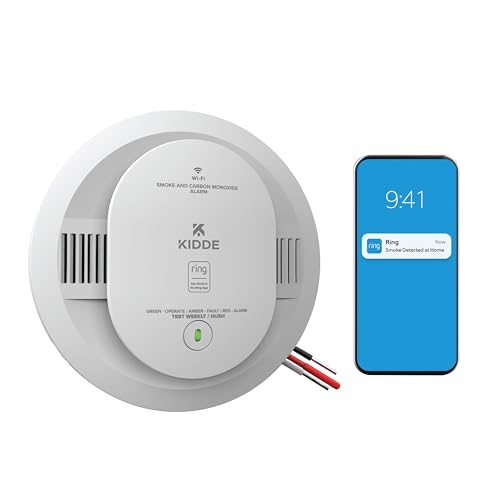
Kidde Smart Smoke and Carbon Monoxide Detector with Ring App, Hardwired
by Kidde
The Kidde Smart with Ring app is the smart-home upgrade for buyers who want away-from-home notifications and voice location alerts — and for anyone replacing a Nest Protect now that Google's long-term support is uncertain.
Pros
- Ring app push notifications when you are away from home — the single feature that makes this the upgrade pick, especially for vacation properties, rentals, and elderly relatives in a separate house
- Voice location alerts announce the affected room (`Smoke in the kitchen` or `Carbon monoxide in the basement`) which speeds up the right response in a real emergency far better than a generic beep
- Wireless RF interconnect across multiple units — when one alarms, all of them alarm, without running new interconnect wiring through finished ceilings
- Direct Nest Protect replacement per multiple owner reviews — same hardwired connector, same ceiling box footprint, with continued software support that Google has not committed to long-term
Cons
- Audible chirp during overnight firmware updates has been reported by several reviewers — annoying but not a malfunction, and a real factor in nursery placement decisions
- Requires a Ring or Amazon account for full smart functionality — privacy-focused buyers should weigh that against the safety upside
First Alert SMICO100-AC Hardwired Smoke and CO Alarm — Best Hardwired Value
The SMICO100-AC is the AA-battery-backup variant of the standard First Alert hardwired combo and is a fixture near the top of Amazon’s Smoke and CO Alarms category. The defining feature versus older 9V-backup First Alert units is the backup battery — AA cells instead of 9V. That single change eliminates the most common pain point in older First Alert installs, where 9V batteries failed faster than expected and required hard-to-find replacements. AAs are cheaper, easier to source, and last longer in this application. For a brand-new hardwired install on a budget, that is a real upgrade.
The Quick Connect harness is identical to the SC9120B, which means the SMICO100-AC drops into any existing First Alert or BRK hardwired system as a clean one-for-one replacement. Mixed installs (some SC9120B units with their sealed 10-year backup in bedrooms and hallways, some SMICO100-AC units in less-critical locations to save budget) on the same interconnect loop work correctly because both use the same plug. That matters for whole-house replacements where you may be replacing dead alarms one at a time over a few months rather than all at once. Multi-pack listings are available, which is the right way to buy for a fresh whole-house install — same manufacture date across every unit means they will reach end-of-service-life at the same time.
The honest limitation is sensor type. The SMICO100-AC uses ionization smoke sensing only — no photoelectric option in this product line. For installs more than 20 feet from a kitchen, ionization is fine and matches the residential code minimum. For installs within 20 feet of a kitchen range, ionization triggers nuisance steam alarms regularly, and the right answer is to supplement with a photoelectric smoke alarm (the Kidde 10SDR below) in the kitchen area. Reviewers consistently report false trips on units mounted within 10 feet of a range — pull the placement back to the NFPA 72 minimum if you have any choice in the mounting location.

First Alert SMICO100-AC Interconnect Hardwire Combination Smoke and Carbon Monoxide Alarm with Battery Backup
by First Alert
The First Alert SMICO100-AC is the AA-battery-backup variant of the standard hardwired combo — same Quick Connect compatibility, same code coverage, with the AA backup that ends 9V battery sourcing once and for all.
Pros
- A consistent top-five best seller in Amazon's Smoke and CO Alarms category — high-volume sales correlate with a wide installer base and parts availability years down the road
- AA battery backup instead of 9V eliminates the single most common low-battery-chirp pain point in older First Alert installs
- Quick Connect plug drops directly into existing BRK and First Alert hardwired systems — same harness as the SC9120B, so mixed installs are clean and code-compliant
- Available in single units and multi-packs, which matters for whole-house replacements where you want every alarm in the loop manufactured in the same batch
Cons
- Ionization smoke sensor only — no photoelectric option in this product line, so installs near kitchens may see more nuisance steam alarms than a photoelectric unit would
- Reviewers report occasional false trips on alarms mounted within 10 feet of a kitchen range — pull placement back to the NFPA 72 minimum if you can
First Alert SMICO105-AC with 10-Year Sealed Backup (3-Pack) — Best Sealed Battery
The SMICO105-AC is the maintenance-free upgrade for hardwired homes and the unit I recommend when a homeowner asks me what the absolute best long-term install looks like. The defining feature is the sealed 10-year backup battery — a non-replaceable lithium cell that lasts the full UL-certified service life of the alarm. No chirps, no ladder trips, no calendar reminders, no rummaging through a junk drawer at 2 a.m. looking for a 9V. At end-of-service-life, you replace the entire unit and start a fresh 10-year clock.
Pair that sealed backup with hardwired primary power and you have the most reliable smoke-and-CO configuration the residential market currently offers. NFPA 2024 home fire data is unambiguous on the value of hardwired alarms — they perform correctly in roughly 94 percent of house fires versus 85 percent for battery-only. That 9-point gap shows up in real fatality outcomes. For homes with permanent occupants and existing hardwired wiring (or a renovation permit that requires bringing the detection system up to current code), this is the right unit. The Quick Connect plug is identical to the SC9120B and SMICO100-AC, so the SMICO105-AC mixes cleanly into any existing First Alert or BRK loop.
The two limitations are install-specific rather than product-specific. The listing at this ASIN is a 3-pack only — single-unit purchases require a separate listing search, which is mildly annoying for one-room replacements. And hardwired install obviously requires connection to a 120V ceiling circuit, which is not suitable for renters or any retrofit where running cable through finished ceilings is impractical. For renters and wire-impractical retrofits, the Kidde 30CUDR battery-only unit is the right choice. For everyone else with hardwired-capable installs, the SMICO105-AC is the long-term right answer.

First Alert SMICO105-AC Interconnect Hardwire Combination Smoke and CO Alarm with 10-Year Battery Backup (3-Pack)
by First Alert
The First Alert SMICO105-AC is the maintenance-free upgrade for hardwired homes — the same proven Quick Connect platform with a sealed 10-year backup that eliminates the single biggest complaint about combination alarms over their service life.
Pros
- Sealed 10-year backup battery means zero battery maintenance for the entire service life of the alarm — no chirps, no ladder trips, no calendar reminders
- Hardwired primary power is the most reliable configuration in any home with permanent occupants — NFPA 2024 data shows hardwired alarms perform in 94 percent of house fires versus 85 percent for battery-only
- Quick Connect plug compatible with every existing BRK and First Alert hardwired install — mixing this 10-year-backup model into an older 9V-backup system is a clean one-for-one swap
- 4.5-star average across hundreds of verified reviews — consistent with the BRK/First Alert reputation for the most reliable hardwired combo platform in the residential market
Cons
- Listed as a 3-pack only at this ASIN — single-unit purchases require a separate listing search, which is mildly annoying for one-room replacements
- Hardwired install requires connection to a 120V ceiling circuit and is not suitable for renters or any retrofit where running cable through finished ceilings is impractical
Kidde 10SDR Photoelectric Smoke Detector — Best Standalone Smoke
The Kidde 10SDR is the standalone smoke alarm I drop into kitchen-adjacent placements where ionization combo units trigger constantly on cooking steam. The sensor difference is real and well-documented — photoelectric sensors detect slow-smoldering fires (couches, mattresses, electrical insulation) significantly faster than ionization sensors, and they trigger far fewer nuisance alarms from steam and cooking smoke. Most house-fire fatalities involve smoldering fires overnight, which is exactly why the NFPA and most fire departments recommend photoelectric or dual-sensor for residential placement.
The compact 4-inch form factor matters more than buyers expect. Standard 5-inch round alarms bump trim, recessed lighting cans, and HVAC registers in spots where ceiling real estate is tight. The smaller footprint fits where the bigger units do not. UL 217 10th Edition certification is the current standard — independent testing shows 10th Edition products are roughly 29 percent faster on real-fire detection than 9th Edition products that are still on plenty of big-box shelves. The package will tell you the edition if you look for it; if the listing does not state UL 217 10th Edition explicitly, the safer assumption is 9th Edition stock.
The honest limitation is detection scope. This is a smoke-only alarm — no CO sensor. For homes with gas appliances, attached garages, fireplaces, or wood stoves, you need separate CO detection (the Kidde COBD10 below is the obvious pairing). For pure smoke-only placement within 20 feet of a kitchen, the 10SDR is the right unit and will eliminate the nuisance-trip problem that ionization units create in that placement. Pair it with a combo unit in the bedrooms and a dedicated CO alarm in the basement and you have a complete current-code residential detection setup.

Kidde 10SDR Smoke Detector, AA Battery Operated, Compact Size
by Kidde
The Kidde 10SDR is the right choice for kitchen-adjacent locations where ionization alarms generate constant nuisance trips — photoelectric sensing, UL 10th Edition certification, and a 4-inch footprint that fits where larger alarms cannot.
Pros
- Photoelectric sensor detects slow-smoldering fires (couches, mattresses, electrical fires) significantly faster than ionization — and triggers fewer cooking-steam nuisance alarms, which is the single best reason to pick photoelectric near a kitchen
- Compact 4-inch form factor fits tight spots where a standard 5-inch round alarm bumps trim or recessed lighting cans
- UL 217 10th Edition certified — the current standard, which independent testing shows is roughly 29 percent faster on real-fire detection than 9th Edition products still on big-box shelves
- AA batteries included with a 10-year product warranty — and AA replacements cost less than a 9V battery does
Cons
- Smoke detection only — pair this with a separate CO alarm (the Kidde COBD10 below) for complete protection in homes with gas appliances, attached garages, or fireplaces
- AA batteries still need replacement every 6 months — sealed-lithium alternatives exist if you want fully maintenance-free, just at a higher unit price
Kidde COBD10 with 10-Year Battery and Digital Display — Best Standalone CO
The Kidde COBD10 is the standalone CO alarm I install in every basement near a gas furnace, every garage-adjacent bedroom, and every short-term rental I have ever managed. The sealed 10-year lithium battery means no battery maintenance for the full service life of the unit — exactly how a CO alarm should work, given that CO is invisible and odorless and a non-functioning detector is functionally equivalent to no detector at all.
The backlit digital display is genuinely useful and uncommon among the alarms in this roundup. The screen shows the current CO reading and retains the peak CO concentration since the last reset. That peak-reading function is meaningful for diagnosing intermittent low-level CO exposure that might trigger headaches and nausea without ever crossing the alarm threshold — common in homes with marginal furnace draft, downdrafting fireplaces, or attached garages where occasional vehicle warm-ups push CO into the living space. A combo alarm cannot tell you what CO has been doing while you were out. The COBD10 can.
Placement flexibility matters in a specific use case set — the COBD10 wall-mounts with the included hardware or sits freestanding on a shelf, nightstand, or basement workbench, which makes it equally at home in a permanent install and a travel kit for boats, RVs, hotel rooms, short-term rentals (AirBnB, VRBO, cabins), and any rental property where you cannot verify the host’s CO detection is current or functional. About the size of a thick paperback, it travels easily and runs on its own sealed battery with no outlet required. Two honest caveats from long-term reviews: a minority of owners report the sealed battery giving out before the full 10 years in hot locations like garages and attics, so mount it in conditioned space where you can; and a few report occasional chirping unrelated to a CO event, usually cured by relocating the unit away from drafts and humidity. Kidde backs the alarm with a 10-year limited warranty.
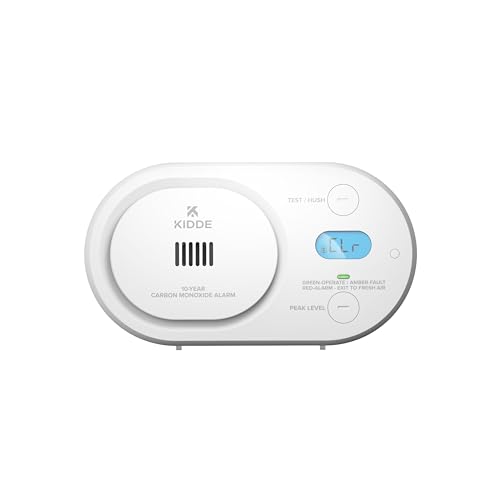
Kidde COBD10 Carbon Monoxide Detector with 10-Year Sealed Battery and Digital Display
by Kidde
The Kidde COBD10 is the standalone CO alarm I drop into every basement near a gas furnace, every garage-adjacent bedroom, and every short-term rental — sealed 10-year battery, electrochemical sensor, and a backlit peak-reading display that no combination alarm provides.
Pros
- 10-year sealed lithium battery — no battery replacement for the entire UL-certified service life of the unit, which is exactly how a CO alarm should work
- Backlit digital display shows the current CO reading and retains peak CO concentration since the last reset — useful for diagnosing intermittent low-level exposure a combo alarm cannot track
- Wall-mountable or freestanding on a shelf or nightstand with mounting hardware included — flexible placement for basements, garage-adjacent bedrooms, boats, RVs, and short-term rentals
- Electrochemical sensor is the most accurate CO detection technology on the market — the same sensor type used in commercial and industrial CO monitors — paired with a loud 85 dB alarm
Cons
- Sealed batteries in this class routinely fall short of the full 10 years in hot installations like garages and attics — mount it in conditioned space where you can
- Newly relisted as the replacement for the discontinued C3010D, so its review pool is still the shallowest on this page — the platform is proven but this listing's track record is not yet deep
First Alert 7020BSL Hearing-Impaired Smoke Alarm with Strobe — Best for the Deaf and Hard of Hearing
A standard 85 dB horn does nothing for a deaf sleeper and often fails to wake someone who removes hearing aids at night — which is exactly why “smoke detector for the deaf” is one of the most-searched variants in this category. The First Alert 7020BSL answers it with a 177-candela LED strobe bright enough to flood a dark bedroom with light. Because it hardwires onto the standard First Alert/BRK interconnect loop, a smoke event anywhere in the house triggers this unit’s strobe in the bedroom of the person who needs the visual alert — not just the alarm nearest the fire.
The honest way to deploy it: put the 7020BSL on the interconnect in the hearing-impaired sleeper’s room, and add a plug-in bed-shaker accessory under the mattress for deep sleep — strobe for the eyes, vibration for the body, both driven off the same alarm network. Two limitations to plan around. First, it senses smoke only, so pair it with a CO alarm (the Kidde COBD10 above) for carbon-monoxide coverage. Second, it is a hardwired unit that draws real current for the strobe, so it needs a 120V ceiling circuit and the interconnect — this is not a renter’s plug-in solution. For a household with a deaf or hard-of-hearing member, it is the single most important alarm in the house.

First Alert BRK 7020BSL Hardwired Hearing Impaired Smoke Detector with LED Strobe Light
by First Alert
The First Alert 7020BSL is the smoke alarm I point deaf and hard-of-hearing households to — a 177-candela strobe on a hardwired First Alert interconnect loop so a smoke event anywhere in the house flashes the bedroom awake, best paired with a bed-shaker accessory and a standalone CO alarm.
Pros
- 177-candela LED strobe light is the feature that wakes a deaf or hard-of-hearing sleeper a standard 85 dB horn cannot — the direct answer to the 'smoke detector for the deaf' problem, from the brand fire departments already trust
- Hardwired with battery backup and BRK/First Alert wired interconnect, so it triggers alongside every other First Alert alarm in the house — when any alarm senses smoke, this unit's strobe fires in the bedroom of the person who needs it
- Pairs with a plug-in bed-shaker accessory for a belt-and-suspenders wake system: strobe for the eyes, bed shaker for deep sleep, both driven off the same alarm
- Photoelectric-compatible interconnect loop and a proven First Alert platform with a multi-year review history behind it, not a one-season import
Cons
- Smoke detection with strobe only — for full coverage pair it with a CO alarm (the Kidde COBD10 in this roundup) since it does not sense carbon monoxide
- Hardwired install into a 120V ceiling circuit is required — not a renter-friendly plug-in, and the strobe draws enough current that it must be on the interconnect, not standalone battery
Best Hardwired Smoke and CO Detector
For any home with existing ceiling wiring or a renovation permit that requires bringing detection up to code, hardwired-with-battery-backup is the configuration NFPA data shows performs in 94 percent of house fires versus 85 percent for battery-only. The SC9120B is the proven BRK Quick Connect combo I spec most often; the Kidde Smart adds Ring app alerts and voice room callouts on a wireless interconnect; and the SMICO100-AC is the AA-backup value variant that ends 9V sourcing.
| Product | Price | Buy |
|---|---|---|
| First Alert SC9120B Hardwired Combination Smoke and Carbon Monoxide Alarm with 10-Year Battery BackupBest hardwired overall BRK Quick Connect harness drops into existing First Alert boxes with a sealed 10-year backup — the most proven residential interconnect platform | $69.85 | View on Amazon |
| Kidde Smart Smoke and Carbon Monoxide Detector with Ring App, HardwiredBest smart hardwired Ring push alerts and spoken room callouts on wireless RF interconnect — the Nest Protect replacement that still gets software support | $59.80 | View on Amazon |
| First Alert SMICO100-AC Interconnect Hardwire Combination Smoke and Carbon Monoxide Alarm with Battery BackupBest AA-backup value Same Quick Connect compatibility with AA backup instead of 9V — the code-compliant hardwired combo at the lowest price | $51.99 | View on Amazon |
Best Photoelectric Smoke Detector
Photoelectric sensing detects slow-smoldering fires — couches, mattresses, overheating wiring — significantly faster than ionization, and triggers far fewer cooking-steam nuisance alarms. That makes it the sensor the NFPA and most fire departments recommend for bedrooms, living rooms, and anywhere within about 20 feet of a kitchen. The Kidde 10SDR is the clean standalone photoelectric pick; the Kidde Smart is the photoelectric option when you also want app alerts and interconnect.
| Product | Price | Buy |
|---|---|---|
| Kidde 10SDR Smoke Detector, AA Battery Operated, Compact SizeBest photoelectric overall UL 217 10th Edition photoelectric in a compact 4 in body — the kitchen-adjacent alarm that stops steam-trip false alarms | $18.97 | View on Amazon |
| Kidde Smart Smoke and Carbon Monoxide Detector with Ring App, HardwiredBest photoelectric + smart Photoelectric sensing plus Ring app alerts, voice room callouts, and wireless interconnect for a whole-house smart install | $59.80 | View on Amazon |
Best Smoke Detector for Bedrooms
Bedrooms are where code requires an alarm inside every sleeping room, and where two things matter most: interconnect (so an alarm on the far side of the house wakes a deep sleeper) and, for many buyers, no bright status LED blinking all night. The SC9120B is the best wired bedroom pick; the Kidde 30CUDR is the battery option with a minimal footprint for rooms you cannot easily wire; and the Kidde Smart sends alerts to your phone so you know which bedroom tripped even when you are away.
| Product | Price | Buy |
|---|---|---|
| First Alert SC9120B Hardwired Combination Smoke and Carbon Monoxide Alarm with 10-Year Battery BackupBest wired for bedrooms Hardwired interconnect so any alarm in the house sounds in the bedroom, with a sealed 10-year backup and a latching indicator that flags the tripped unit | $69.85 | View on Amazon |
| Kidde 30CUDR Smoke and Carbon Monoxide Detector, AA Battery PoweredBest no-wiring battery AA-battery combo that installs in any bedroom in ten minutes with no electrician — the retrofit and rental pick | $44.97 | View on Amazon |
| Kidde Smart Smoke and Carbon Monoxide Detector with Ring App, HardwiredBest smart bedroom Ring app alerts and spoken room callouts tell you exactly which bedroom tripped, at home or away | $59.80 | View on Amazon |
Best Smoke Alarm for the Deaf and Hard of Hearing
Standard alarms rely on an audible horn that a deaf sleeper cannot hear and a hard-of-hearing sleeper often misses with hearing aids out. The fix layers visual and tactile alerts on top of the horn. The 7020BSL is the strobe-equipped smoke alarm that fires house-wide on the First Alert interconnect; the Kidde Smart adds phone push notifications that reach a paired smartwatch or vibrating phone; and the COBD10 covers carbon monoxide with a loud standalone alarm and a peak-reading display. Together they cover smoke (visually), remote alerting, and CO.
| Product | Price | Buy |
|---|---|---|
| First Alert BRK 7020BSL Hardwired Hearing Impaired Smoke Detector with LED Strobe LightBest strobe for the deaf 177-candela LED strobe on a hardwired interconnect loop — a smoke event anywhere flashes the bedroom awake; pair with a bed-shaker accessory | $122.99 | View on Amazon |
| Kidde Smart Smoke and Carbon Monoxide Detector with Ring App, HardwiredBest phone-alert (HoH) Ring app push notifications reach a phone or smartwatch even away from home — the alerting layer for hard-of-hearing users | $59.80 | View on Amazon |
| Kidde COBD10 Carbon Monoxide Detector with 10-Year Sealed Battery and Digital DisplayBest standalone CO Standalone CO alarm with a loud 85 dB horn and peak-reading display for the carbon-monoxide coverage the strobe smoke unit does not provide | $51.97 | View on Amazon |
Buyer's Guide
I have specified smoke and CO detection on residential framing, additions, basement finishes, kitchen remodels, and dozens of permitted renovations over 20 years as a licensed general contractor. The right detector for new permitted construction is genuinely different from the right detector for a renter's bedroom, and the right detector for either of them is different from the right one for a basement near a gas furnace. Here are the six factors I weigh before recommending any smoke or CO alarm — and where the consumer market has set traps that buyers fall into every day.
Power Source — Hardwired vs. Battery
Hardwired alarms with battery backup are the gold standard and are required by code in new construction and major renovation in nearly every U.S. jurisdiction. NFPA 2024 home fire data shows hardwired alarms function in roughly 94 percent of house fires versus 85 percent for battery-only — that 9-point gap is a meaningful difference in real fatality outcomes. The First Alert SC9120B and SMICO105-AC are the right choices when you have existing hardwired wiring or are pulling a renovation permit that requires bringing the system up to current code. Battery-only alarms (Kidde 30CUDR, Kidde 10SDR) are the right choice for retrofits where running new wiring is impractical, for rentals where you cannot modify the structure, and for additional supplementary coverage in spaces beyond the code-required locations. Always pair battery alarms with a calendar reminder to replace cells every 6 months — a dead detector is worse than no detector, because it creates a false sense of security.
Sensor Type — Photoelectric, Ionization, or Dual
Ionization sensors detect fast-flaming fires faster but respond slowly to slow-smoldering fires (and trigger more nuisance cooking alarms). Photoelectric sensors detect slow-smoldering fires (couches, mattresses, electrical) significantly faster and trigger far fewer kitchen nuisance alarms. Most house-fire fatalities involve smoldering fires overnight, which is why the NFPA and most fire departments recommend photoelectric or dual-sensor for residential use. Practical guidance — install photoelectric alarms (like the Kidde 10SDR in this roundup) within 20 feet of a kitchen to eliminate steam-trip false alarms. Install dual-sensor combination units in bedrooms and hallways for complete coverage. The current best-practice install for a typical 3-bedroom home is photoelectric near the kitchen, dual-sensor combination smoke-plus-CO in every bedroom and hallway, and a dedicated CO alarm in the basement near the furnace.
Interconnectivity — Wired, Wireless, and Brand Compatibility
Interconnected alarms (where one alarm triggers all of them) are required by code in new construction and dramatically improve real-fire survival outcomes in multi-story homes — NFPA data shows interconnected alarms wake deep sleepers in distant bedrooms reliably where isolated alarms often do not. The two interconnect types are wired (a third wire between alarms, almost always orange in residential wiring) and wireless RF (radio-link between alarms, no extra wire). Wired Quick Connect (the BRK and First Alert standard) is reliable, cheap, and what most existing hardwired systems use. Wireless interconnect (Kidde Smart, Nest Protect successors) avoids running new cable through finished ceilings, which is a significant advantage in retrofits. The trap buyers fall into — First Alert and BRK wired interconnect is NOT compatible with Kidde wired interconnect. Mixing brands on the same wired interconnect loop can prevent alarms from triggering each other or, worse, cause unexpected behavior. Pick a brand and stick with it across the whole interconnected system.
CO Detection Coverage — Combo vs. Standalone
Carbon monoxide is required by code in any home with fuel-burning appliances (gas furnace, water heater, range, fireplace, wood stove) or an attached garage — even if no gas appliances exist inside, an attached garage with running vehicles is enough to require CO alarms in adjacent rooms. The minimum install is one CO alarm outside the sleeping area on every level with sleeping rooms. Best practice adds a dedicated CO alarm in the basement near the furnace and water heater (where leaks originate before they migrate up to the living level) and another in any room with a gas fireplace. Combination smoke-plus-CO units like the SC9120B and SMICO100-AC cover the code minimum in bedrooms. Standalone CO units like the Kidde COBD10 are the right choice for basement-near-furnace placement (where you want the digital CO display) and for portable use (boats, RVs, hotels, short-term rentals).
UL Certification — UL 217 10th Edition and UL 2034 5th Edition
The current UL standards for residential alarms are UL 217 10th Edition (smoke) and UL 2034 5th Edition (CO). The 10th Edition standard was a significant upgrade — it requires faster real-fire detection (roughly 29 percent faster than 9th Edition in independent testing) and dramatically reduces nuisance alarms from cooking steam. Big-box shelves still carry 9th Edition stock alongside 10th Edition stock, and the difference is not always obvious on the package. Look explicitly for `UL 217 10th Edition` and `UL 2034` on the product page or housing — if the listing does not state the edition, the safer assumption is that it is 9th Edition. Every product in this roundup is current-edition certified. Avoid anything that does not clearly state current UL certification, regardless of price.
Battery Type — True Sealed 10-Year vs. Replaceable Alkaline
Here is the consumer market trap I see buyers fall into constantly. A `10-year battery life` claim on the box can mean two very different things. True sealed lithium 10-year batteries (the Kidde COBD10, SMICO105-AC 10-year backup) are non-replaceable lithium cells that last the full service life of the alarm — no maintenance, no chirps, no ladder trips. The entire unit is replaced at 10 years. A `10-year-rated` alarm with a replaceable alkaline battery (some Kidde and First Alert models) means the alarm housing is rated for 10 years of service, but the alkaline battery itself needs replacement every 6 to 12 months. The two are not the same product. If you specifically want maintenance-free, read the listing for `sealed lithium battery` or `tamper-resistant battery compartment` — not just `10-year life`. The Kidde COBD10 and the SMICO105-AC are the clearest sealed-lithium picks in this roundup.
Photoelectric vs. Ionization — Which Sensor Do You Actually Need?
This is the single most-asked question in this category and the place where the consumer market is most confused by marketing. Here is the practical contractor answer.
Ionization sensors use a small radioactive source to ionize air in a chamber — when smoke particles disrupt the ionization, the alarm triggers. They respond fastest to fast-flaming fires (paper, wood, accelerants, kitchen grease) and slower to slow-smoldering fires. They also trigger more nuisance alarms from cooking steam, shower humidity, and burnt toast.
Photoelectric sensors shine a light beam across a chamber — when smoke particles scatter the beam, the alarm triggers. They respond fastest to slow-smoldering fires (couch fabric, mattresses, electrical insulation, overheating wiring) and slower to fast-flaming fires. They trigger far fewer nuisance alarms in kitchen-adjacent placement.
Most U.S. house-fire fatalities involve overnight smoldering fires, which is why the NFPA and most fire departments recommend installing photoelectric or dual-sensor alarms in residential occupancies. If you can only pick one technology and you have any choice in the matter, pick photoelectric. The best-practice install is photoelectric within 20 feet of the kitchen (Kidde 10SDR), and dual-sensor combination smoke-plus-CO units (which include both technologies) in bedrooms and hallways for complete coverage. Avoid placing pure ionization alarms within 20 feet of a kitchen range — the nuisance-trip problem is real and will eventually train occupants to ignore alarms, which is the worst possible long-term outcome.
Hardwired vs. Battery — What Code Actually Requires
For new construction and major renovation in nearly every U.S. jurisdiction, the International Residential Code (IRC) and NFPA 72 require hardwired interconnected smoke alarms with battery backup in every bedroom, outside every sleeping area, and on every level of the home including basements. Carbon monoxide alarms are required outside sleeping areas in any home with fuel-burning appliances or an attached garage.
The phrase major renovation is where homeowners get confused. Pulling a permit for a basement finish, an addition, a kitchen remodel, or any project that requires opening ceilings often triggers a requirement to bring the smoke and CO detection in the affected area (sometimes the whole house) up to current code. That can mean adding hardwired interconnected alarms where battery-only alarms previously satisfied the older code. Always talk to your local building inspector before assuming your existing battery alarms are grandfathered through the permit.
For retrofits in older homes with no existing wiring, code generally accepts UL-listed battery alarms (preferably sealed 10-year lithium) as long as one is in every required location. The NFPA 2024 data is unambiguous on the performance difference — hardwired alarms function correctly in roughly 94 percent of house fires versus 85 percent for battery-only. That 9-point gap is meaningful, but battery-only alarms maintained properly are dramatically better than no alarms at all. When in doubt about what your jurisdiction requires, check with your Authority Having Jurisdiction — your local building inspector is the only opinion that matters at final sign-off.
How Interconnect Actually Works — and How to Wire It
Interconnect is the feature that turns a network of isolated alarms into a coordinated detection system. When any single alarm detects smoke or CO, every alarm on the interconnect loop triggers simultaneously, which is what wakes occupants in distant bedrooms during an overnight fire. NFPA research is clear that interconnected alarms perform dramatically better than isolated alarms in real-fire fatality outcomes.
The two interconnect technologies are wired and wireless. Wired interconnect uses a third conductor between alarms — almost always orange in residential 3-wire cable (black hot, white neutral, orange interconnect, plus a ground). The interconnect wire carries a low-voltage signal between alarms. When the first alarm trips, it pulls the interconnect line high, and every other alarm on the line sees the signal and triggers its own siren. The First Alert and BRK Quick Connect plug carries the interconnect signal automatically — no wire-nutting required, just snap the harness into the back of the alarm.
Most homes built since the 1990s have 3-wire interconnect already installed. If you are not sure, kill the breaker for the smoke alarm circuit, pull one alarm off the ceiling, and look at the wiring — three conductors plus a ground means you have wired interconnect available. Two conductors plus a ground means you have hardwired power but no interconnect, which means you need to either add wireless RF interconnect alarms (the Kidde Smart, Nest Protect successors) or run new 3-wire cable.
Critical compatibility warning — First Alert and BRK use one wired interconnect protocol, and Kidde uses a different protocol. They are NOT compatible on the same wired interconnect loop. Mixing First Alert and Kidde alarms on a wired interconnect can cause one set to fail to trigger from the other set, which silently breaks the whole system. Pick one brand for your wired interconnect and stick with it across every alarm in the loop. Wireless RF interconnect is generally brand-locked the same way — Kidde wireless alarms talk to Kidde wireless alarms, not to other brands.
Before working on any hardwired alarm, lock out the breaker, verify the line is dead with a non-contact tester, and double-check at the unit itself before disconnecting anything. The 120V line in a hardwired alarm box is the same 120V as any other branch circuit in the house — treat it that way.
Where to Place Smoke and CO Detectors — by Code, Room by Room
NFPA 72 specifies placement room by room. Here is the practical install guide.
Bedrooms — One alarm in every bedroom, mounted on the ceiling near the center of the room. Avoid mounting within 4 inches of the corner where the wall meets the ceiling, because air does not circulate well in that corner and smoke may not reach the alarm reliably. If the ceiling is sloped (cathedral or vaulted), mount the alarm at the high end of the slope, not the low end.
Hallways outside sleeping areas — One alarm in every hallway that leads to bedrooms, mounted on the ceiling. For long hallways or open-plan layouts, the rule of thumb is one alarm per 30 feet of hallway.
Every level of the home — At minimum one alarm on every floor including unfinished basements and finished attics. Basement alarms should be mounted on the ceiling at the bottom of the stairs leading to the basement (not deep in the basement where the alarm cannot wake upstairs occupants).
Attached garage — CO alarm in the room directly adjacent to the garage entry, not in the garage itself (the garage is too cold in winter and too hot in summer for reliable alarm operation, and vehicle exhaust would trigger constant nuisance alarms). The point of the garage-adjacent CO alarm is to detect CO that migrates from a running vehicle into the living space.
Near fuel-burning appliances — CO alarm within 10 feet of any gas furnace, gas water heater, gas range, gas dryer, fireplace, or wood stove. A dedicated standalone CO unit (the Kidde COBD10) is the right choice here because the digital CO display lets you diagnose intermittent low-level exposure that a combo alarm cannot show you.
Where NOT to mount — Within 10 feet of a cooking appliance (nuisance steam trips), within 3 feet of a bathroom door that opens to a shower (steam), within 3 feet of an HVAC vent (airflow blows smoke past the sensor before it can trigger), and in the dead-air corner where two walls meet the ceiling (smoke does not circulate there).
When to Replace Before 10 Years
The hard date is 10 years from manufacture for smoke alarms and 7 to 10 years for CO alarms, regardless of how the unit looks or whether it still tests OK on the manual button. The manufacture date is printed on the back of every unit — not the install date. If you cannot read the manufacture date or you cannot remember when the alarm went up, replace it.
The earlier-than-10-years replacement triggers I look for as a contractor:
Recent renovation with heavy drywall dust — drywall dust contaminates the sensor chamber permanently and can cause both false alarms and reduced real-fire sensitivity. If a unit was in place during a basement finish, kitchen remodel, or any drywall-heavy project, replace it after the work is done, regardless of age.
Survived a house fire or kitchen grease fire — combustion residue degrades sensor accuracy permanently. Even if the unit looks fine and tests fine, replace it after any significant smoke event.
Repeated false alarms with no identifiable cause — if a unit is triggering nuisance alarms with no kitchen steam, shower steam, or other identifiable trigger, the sensor itself is failing. Replace it.
Chirps on a fresh battery — if a hardwired or battery alarm chirps after a fresh battery and after a thorough cleaning, the unit (not the battery) is the problem. Replace it.
Unknown manufacture date — when you move into a home, check every alarm. Any unit without a readable manufacture date gets replaced.
The manual test button only confirms the speaker and circuit are working — it does not test the sensor chamber itself. A unit can pass the button test and be functionally blind to actual smoke or CO. The 10-year service-life limit is not arbitrary; it is the point at which the sensor chamber can no longer be trusted to detect real fire reliably.
Final Verdict
For most homeowners doing a hardwired install or a permitted renovation, the First Alert SC9120B is the smoke and CO detector to buy. The included adapter plugs and BRK Quick Connect harness make whole-house replacement a screwdriver job, the sealed 10-year lithium backup ends the battery-chirp maintenance that drives people to disable alarms, and the latching indicator flags exactly which unit tripped — all on the BRK interconnect platform that has been the residential default for decades. If you want the alarm to call out the affected room by voice, step up to the Kidde Smart instead.
For renters and retrofits where running new wire is impractical, the Kidde 30CUDR AA-battery combo delivers current UL 10th Edition certification at a price that leaves room in the budget for whole-house coverage with AA batteries that are easier and cheaper to maintain than 9Vs. For buyers who specifically want app-based push notifications and voice room alerts — vacation properties, rentals, elderly relatives, Nest Protect replacements — the Kidde Smart with Ring app is the right upgrade. For kitchen-adjacent placement that needs photoelectric sensing, add the Kidde 10SDR. For basement-near-furnace standalone CO and for portable use in boats, RVs, and short-term rentals, add the Kidde COBD10 with its sealed 10-year battery and digital CO display.
Whatever combination you pick, verify UL 217 10th Edition (smoke) and UL 2034 5th Edition (CO) certification on every unit, do not mix brands on a single wired interconnect loop, write the install date on each alarm in permanent marker, and set a calendar reminder for the 10-year replacement. A properly specified and installed smoke and CO detection system is the cheapest life-safety upgrade in the entire house — and pairing it with an outdoor security camera setup and a smart video doorbell gives you the complete home-safety stack that every first-time homeowner should have in place before the first night they sleep in the house.
Frequently Asked Questions
What's the difference between photoelectric and ionization smoke detectors?
Do I need separate smoke and CO detectors or is a combination unit enough?
What smoke detectors do fire departments actually recommend?
Are hardwired smoke detectors required by code?
How do I know when to replace my smoke and CO detector?
Why does my smoke detector keep chirping or beeping?
What size battery does a smoke detector use?
Related Articles
About the Reviewer

Jake Morrison, Licensed General Contractor
B.S. Construction Management, Purdue University
Jake Morrison has spent 14 years in residential construction and home renovation before founding DIYRated in 2026. After helping hundreds of homeowners choose the right tools and materials for their projects, he started writing the product guides he wished existed when he was starting out. Jake tests every major product recommendation in his workshop in Indianapolis and focuses on real-world performance over spec-sheet marketing.