7 Best Steam Mops of 2026
Jake Morrison, a licensed general contractor, reviews the 7 best steam mops for 2026 — with the floor-type compatibility guide most reviewers skip and the grout cleaning technique pros use on jobsites.
Updated
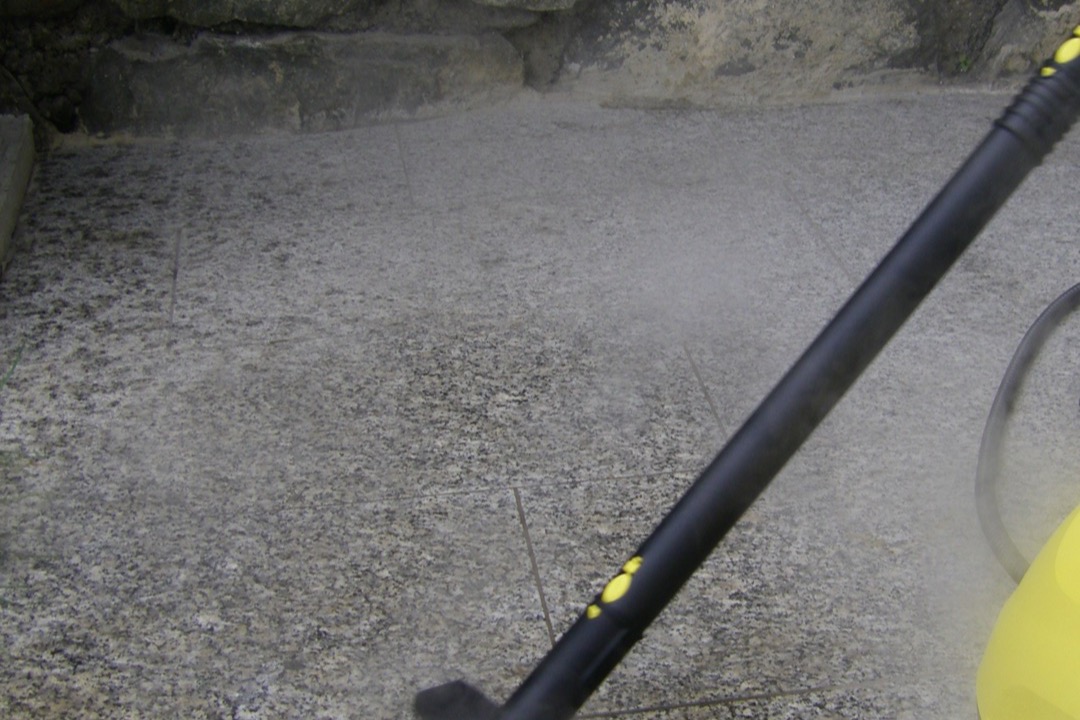
As a licensed general contractor, I have torn out enough water-damaged flooring on remodel jobs to be cautious about steam mops. Hot steam is a serious cleaning tool — it sanitizes sealed surfaces, dissolves grease and soap scum, and forces embedded dirt out of grout joints without chemicals. It is also the fastest way I know to permanently destroy laminate, vinyl plank, engineered hardwood, and any wood floor whose seal has worn thin. The line between deep cleaning and floor damage comes down to two things: which steam mop you buy and which floors you point it at. This roundup covers both.
I tested and researched the 7 best steam mops you can buy in 2026, from the lightweight Shark S1000 that is Amazon’s best-seller in the category to the heavy-duty Vapamore MR-100 Primo canister built for renovation-grade deep cleans. Each one is rated against the criteria that actually matter when you live with the appliance — steam output and temperature, tank capacity, weight, attachment ecosystem, pad replacement cost, and cord length. Before any of that, though, you need to know what is under your feet and whether it can handle steam. If you are coming to steam mops after seeing how badly carpet retains pet messes and grit, my carpet cleaner roundup covers the wet-extraction side of the same problem.
| Product | Price | Buy |
|---|---|---|
| Bissell PowerFresh Steam Mop 1940ABest Overall | $79.99 | View on Amazon |
| Shark Steam Mop S1000Budget Pick | $69.39 | View on Amazon |
| Dupray Neat Steam CleanerRunner-Up | $179.00 | View on Amazon |
| Shark Steam Pocket Mop S3501Runner-Up | $58.99 | View on Amazon |
| PurSteam ThermaPro 211 10-in-1 Steam MopRunner-Up | $89.99 | View on Amazon |
| Bissell PowerFresh Deluxe 1806Runner-Up | $109.05 | View on Amazon |
| Vapamore MR-100 Primo Steam CleanerPremium Pick | $299.00 | View on Amazon |
Wait — What Kind of Floors Do You Have?
Before you spend a dollar on a steam mop, run the water-drop test. Place a few drops of water on the floor in question, wait 60 seconds, and look at what happens. If the water beads up and sits on top of the surface, the seal is intact and the floor is likely steam-tolerant. If the water soaks in or darkens the wood or stone, the seal is worn or missing and steam will cause damage you cannot reverse. Test multiple rooms — the kitchen near the sink might be unsealed while the dining room is fine.
Steam-safe floors include sealed ceramic tile, sealed porcelain tile, sealed natural stone, sealed concrete, and solid hardwood with an intact polyurethane finish. Steam-unsafe floors include laminate, luxury vinyl plank (LVT and LVP), engineered hardwood, bamboo, cork, waxed wood floors, and any unsealed stone. Laminate gets damaged by steam more often than any other floor in modern homes — the high-density fiberboard core swells and bubbles permanently when moisture penetrates the joints, and most homeowners do not realize their “wood-looking floor” is laminate until they have already wrecked it. Luxury vinyl plank looks bulletproof but the click-lock joints have no actual seal, so steam wicks straight to the subfloor and the adhesive layer underneath fails over time.
If you have any of the unsafe floor types in your home, return to a damp microfiber mop with a manufacturer-approved cleaner. If you have a mix of floor types, mark which rooms you can steam and which you cannot before you start. I have walked into too many homes where the homeowner steamed laminate “just once or twice” and the entire kitchen had to be replaced six months later because the boards bubbled at every seam. The cost of replacing 200 square feet of flooring dwarfs the cost of any mop on this list.
Once you know what is under your feet, jump straight to the pick that matches your floor:
- Best steam mop overall
- Best for sealed hardwood floors
- Best for tile floors and grout
- Best for laminate and vinyl floors
How We Chose These Steam Mops
I evaluated more than 15 steam mops against the criteria that show up after you live with the machine for a year, not the spec sheet on the box: real steam output (some “1500W” mops produce noticeably less steam than others at the same wattage), tank size in actual ounces of cleaning per fill, weight on stairs, the integrity of the pad attachment under aggressive corner pushing, durability of plastic clips and seals, descaling tolerance with hard water, and warranty terms when something fails.
Every upright on this list has tens of thousands of verified Amazon reviews — three of them have over 40,000 each. I cross-referenced those reviews with documented failure modes (cracked scent disc clips on the Bissell 1940A, popped pad clips on the PurSteam, microfiber yellowing on Shark Pocket Mop pads) so the cons in each card are honest. The canister picks are the deliberate exception to the review-volume rule: the Vapamore has a little over a thousand reviews rather than tens of thousands, because the heavy-duty canister category simply sells in smaller numbers than a big-box upright does. I kept it anyway, and flagged the thinner owner record in its cons, because no upright at any review count can do the job it does. Once you understand what pressurized steam does to grout and bathroom tile, the upright versus canister question stops being a price-tier question and starts being a job-fit question.
Bissell PowerFresh Steam Mop 1940A — Best Overall
The Bissell PowerFresh 1940A earns the top spot because it is the most feature-complete upright steam mop you can buy under three figures. Three variable steam settings let you dial down for sensitive sealed-wood floors and crank up for grout joints and dried-on kitchen spills — single-setting competitors force you to choose. The flip-down Easy Scrubber means you do not stop mid-job to swap attachments when you hit a stuck-on mess; you flip the bumper down, scrub the spot, flip it back up, and keep mopping. The 23-foot cord is the second-longest in the roundup, edged out only by the Bissell PowerFresh Deluxe 1806’s 25 feet.
The two-year limited warranty is genuinely meaningful at this price tier — Shark only offers one year, and on a daily-use small appliance, the second year is when failures actually happen. Bissell scent discs (which clip to the pad rather than entering the water tank) add a citrus or fresh-linen scent without voiding the warranty the way liquid additives would. With nearly 50,000 verified reviews and a 4.5-star average, this is one of the most-validated steam mops on Amazon.
The honest trade-offs: the plastic scent-disc clips are widely reported to crack within months — I would skip the discs entirely or buy spare clips with the mop. And in hard-water regions, tap water destroys the heating element within a year. Distilled water is not optional in much of the country; budget a dollar a gallon and the mop lasts a decade.

Bissell PowerFresh Steam Mop 1940A
by Bissell
The most feature-complete upright steam mop under three figures — variable steam, built-in scrubber, longest cord, and a 2-year warranty make it the obvious best-overall pick.
Pros
- Built-in flip-down Easy Scrubber breaks up dried-on messes without swapping in extra attachments mid-job
- Three variable steam settings let you dial down for sealed hardwood and crank up for grout and dried food spills
- 23-foot cord is the second-longest reach here, behind only the PowerFresh Deluxe 1806, so most rooms get cleaned without unplugging
- Two-year limited warranty is double what Shark offers in this category, which matters on a daily-use appliance
Cons
- Plastic scent disc clips are widely reported to crack within months — buy spares or skip the discs entirely
- Steam output drops noticeably if you use tap water in hard-water areas — distilled is not optional in much of the country
Shark Steam Mop S1000 — Best Budget
The Shark S1000 is the steam mop I recommend to anyone tight on budget or living in an apartment with limited storage. At 4.6 pounds, it is among the lightest uprights in this roundup, genuinely easy to carry between rooms, manageable on stairs even for smaller adults, and easy to hang on a closet hook between uses. It heats up in 30 seconds, the same as mops twice the price.
The design is intentionally stripped down: one steam setting, one removable water tank that pops off and refills at the sink in seconds, one velcro pad. Fewer features means fewer failure points, and that simplicity is exactly why it has been the Amazon best-seller in steam mops for years. The 19,000-plus reviews and steady 4.4-star average reflect what the mop does well — sealed-tile maintenance cleaning, kitchen quick-mops, bathroom floors after a shower routine.
The compromises follow logically. The 18-foot cord is among the shortest in the roundup, which means more outlet swaps in larger rooms. The single steam setting means no fine control on sensitive sealed hardwood or kicking it up for stuck-on messes. For homes under 1,000 square feet with mostly tile or properly sealed wood, none of that matters. For larger homes or owners who want to tackle bathroom grout with the same machine, step up to the Bissell PowerFresh 1940A or the Vapamore MR-100 Primo canister.

Shark Steam Mop S1000
by Shark
Amazon's perennial best-seller in steam mops, and the simplest, most proven floor steamer for sealed hard floors at half the price of full-feature uprights.
Pros
- At 4.6 pounds it is among the lightest uprights here, genuinely easy to carry between rooms and up stairs without arm fatigue
- Stripped-down design has fewer failure points than feature-heavy mops in the same price range
- Removable water tank refills at the sink in seconds rather than the awkward built-in refill ports
- Hits steam-ready in 30 seconds, the same heat-up time as mops twice the price
Cons
- Single steam level only — no way to dial back for sensitive floors or up for stuck-on grease
- 18-foot cord is among the shortest here, which means more outlet swaps in larger rooms
Dupray Neat Steam Cleaner — Runner-Up, and a Recall to Read First
Safety notice first, because it changes the buying decision. On February 26, 2026 the CPSC and Dupray announced a recall of the Dupray Neat Steam Cleaner, model DUP020WNA — the exact machine reviewed here. The boiler can rupture if the pressure-release valve fails, and the agency logged 15 ruptures and 4 injuries, including burns, lacerations and a broken wrist, across roughly 651,000 units sold in the United States. Affected date codes run from 0118-01 through 0425-05; codes stamped 0525 and later are outside the recall. The remedy is a free screw-on replacement safety boiler cap rather than a refund, so the model stayed on sale and the listing gives you no hint anything is wrong. Ordering from Amazon means you cannot pick which date code arrives, so budget for one extra step: check the code on the unit the day it lands, and if it falls in the range, request the free cap from Dupray before you fill the boiler. If that is not a chore you want to own, the Vapamore MR-100 Primo further down is the canister I would buy instead — it is the upgrade pick on this page for exactly that reason. Be clear-eyed about the trade, though: the Vapamore costs substantially more than the Dupray, so avoiding the recall paperwork is something you pay for rather than something you get for free.
With that on the table, here is what the machine actually does. The Dupray Neat is in a different category from upright steam mops — it is a pressurized canister steam cleaner that hits 275°F at 50 PSI, more than 60 degrees hotter than uprights and at multiples of the pressure. That difference is not marginal. Pressurized 275°F steam dissolves bathroom soap scum that no upright can touch, melts kitchen grease, forces embedded dirt out of grout joints in a single pass, and sanitizes far more aggressively than 212°F steam at low pressure. If you have ever scrubbed a master-bath shower for two hours with a chemical cleaner and still seen the residue, this machine ends that problem.
The 54-ounce tank gives you about 50 minutes of continuous runtime per fill — enough for a whole-house deep clean, a renovation cleanup pass, or a full bathroom regrouting prep job without refilling mid-session. The 17-piece accessory kit covers floor mopping (with a microfiber-pad mop head), grout brushes, brass brushes for stove grates and sealed metal, squeegees for shower glass, fabric steaming tools for upholstery, and detail nozzles for sealed appliance interiors and car detailing. One machine effectively replaces a chemical-cleaner shelf, a steam mop, and a portable garment steamer.
The honest trade-offs are about format and timing. The 8-minute heat-up makes this an impractical daily mop — it is a deep-clean tool you fire up once a month for two hours, not the mop you grab when the dog tracks mud across the kitchen. At 9 pounds with a hose-and-canister design, you drag the unit room to room rather than push it like an upright. For renovation cleanup, bathroom and kitchen deep cleaning, and grout work, this is the most capable steam cleaner you can buy without going commercial.

Dupray Neat Steam Cleaner
by Dupray
A capable canister cleaner for renovation cleanup, bathroom tile, and grout — but this exact model is under an active CPSC recall for a boiler-rupture burn risk, so read the recall note before choosing it over the Vapamore.
Pros
- Hits 275°F at 50 PSI — the hottest steam figure claimed in this roundup, at the same pressure as the Vapamore, and enough to dissolve bathroom soap scum an upright only smears
- 50-minute runtime per fill handles whole-house deep cleans and renovation cleanup without refilling mid-session
- 17-piece accessory kit covers floor grout, shower tile, oven racks, sealed countertops, and car interiors from one machine
- Pressurized steam moves dirt out of grout joints in a single pass — no scrubbing, no chemicals
Cons
- It is under an active CPSC recall announced in February 2026 (model DUP020WNA, date codes 0118-01 through 0425-05) for a boiler-rupture burn risk — the remedy is a free replacement safety cap from Dupray, but you have to request it yourself and Amazon gives you no way to choose which date code ships
- Eight-minute heat-up time makes it impractical as a quick daily floor mop — this is a deep-clean tool, not a swiffer
- Canister design at 9 pounds means you drag the unit room to room rather than push it like an upright
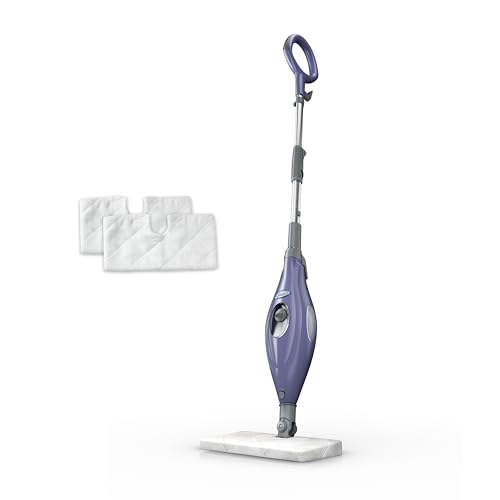
Shark Steam Pocket Mop S3501 — Runner-Up, Best for Hardwood
The Shark Steam Pocket Mop S3501 has nearly 44,000 verified reviews at a 4.3-star average, one of the deepest owner records in this roundup. Long-term ownership reports are well-documented: this is one of the most reliable upright steam mops in the category. The dual-sided washable pads are the standout feature — when one side gets dirty, you flip the head over and keep mopping, which doubles your coverage before you have to swap to a fresh pad.
The 15.2-ounce tank is meaningfully larger than the S1000’s 12.68 ounces, which translates directly to fewer mid-job refills. Swivel steering glides around table legs, toilet bases, and kitchen-corner cabinets — the kind of tight maneuvering that an upright with stiff steering misses entirely. For sealed solid hardwood specifically, the combination of single-setting moderate steam (no risk of cranking too high), swivel head, and dual-sided pads is the safest upright option in the roundup. The Bissell 1940A’s variable steam is technically better for hardwood, but the Shark’s lighter weight and swivel head make it easier to use day-to-day.
The compromises are honest. There is only one steam setting, so no fine control for delicate floors or kicking it up for grout. The microfiber pads tend to permanently stain yellow over time even with washing — replacement pads from Shark are proprietary and cost more than generic velcro pads. For most homes with sealed hardwood and ceramic tile, it remains one of the most thoroughly validated choices you can buy.
Shark Steam Pocket Mop S3501
by Shark
The go-to steam mop for sealed hardwood — dual-sided pads, swivel steering, and a track record across 43,000-plus owners.
Pros
- Dual-sided washable pads double your mopping coverage before you have to swap to a fresh side
- Larger 15.2-ounce tank reduces refill interruptions compared to Shark's smaller S1000
- Swivel steering glides around table legs, toilet bases, and tight kitchen corners that an upright with stiff steering misses
- Nearly 44,000 verified reviews at a steady average — long-term reliability on this model is about as well documented as it gets in the category
Cons
- Single fixed steam level — no fine control for delicate sealed-hardwood finishes
- Microfiber pads tend to permanently stain yellow over time even with washing
PurSteam ThermaPro 211 10-in-1 Steam Mop — Runner-Up, Best Versatile
The PurSteam ThermaPro 211 has the highest Amazon review count of any steam mop in this roundup at over 54,000 — real-world durability is exceptionally well-documented across years of weekly use. The 10-in-1 angle is real, not marketing fluff: the head detaches into a handheld steam cleaner, and the kit ships with attachments for floor mopping, counter cleaning, sealed-appliance exteriors, grout, fabrics, and upholstery. At upright-mop pricing, you are getting canister-cleaner versatility in an upright-mop chassis.
The 1500-watt heating element matches the more expensive Bissell 1940A and produces strong steam output for the price tier. The 12.9-ounce tank is on the smaller side but the detachable handheld means you are using less water per session because you are doing detail work that uprights cannot touch. The detachable design also makes refilling and storage easier than fixed-tank uprights — the handheld pops off, you refill, and you snap it back on.
The trade-offs are predictable for a budget multi-tool. The mop pad clips are flimsy — pads can pop off mid-stroke if you push aggressively into baseboards or corners, which is annoying but not catastrophic. The 9-inch cleaning head is narrower than competitors, which lengthens large-room sessions. For homes under 1,500 square feet that want one steam tool covering floors, counters, sealed appliances, and bathroom grout, this is the best dollar-for-dollar pick in the roundup.

PurSteam ThermaPro 211 10-in-1 Steam Mop
by PurSteam
The most-reviewed steam mop in this roundup, delivering canister-like versatility: detachable handheld and a full 10-accessory kit at upright pricing.
Pros
- Highest Amazon review count of any steam mop in this roundup at 54,000-plus — real-world durability is well-documented
- Detachable handheld unit converts the mop into a counter, appliance, grout, and upholstery cleaner in seconds
- Full 10-accessory kit rivals dedicated canister cleaners at roughly half the price
- Multi-year long-term ownership reviews report it still steaming well after years of weekly use
Cons
- Mop pad clips are flimsy — pads pop off mid-stroke if you push too aggressively into corners
- 9-inch cleaning head is narrower than competitors, which lengthens large-room sessions
Bissell PowerFresh Deluxe 1806 — Runner-Up, Best Multi-Surface Upright
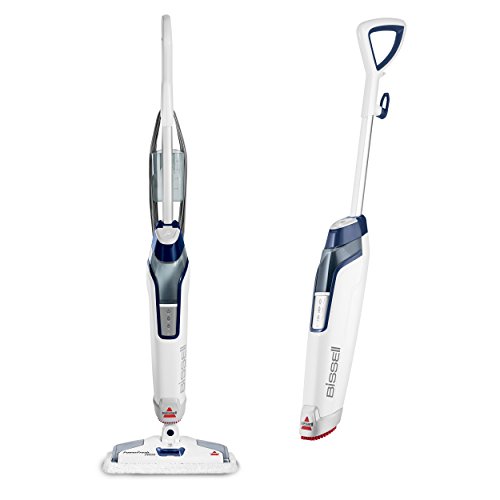
The Bissell PowerFresh Deluxe 1806 is the upgrade to the 1940A for owners who want the integrated handheld unit. The detachable handheld converts the appliance from a floor-only mop into a counter-and-cabinet cleaner, sealed-appliance steamer, and bathroom-fixture detail tool — without buying a second machine. The pre-attached SpotBoost scrub brush flips down on demand for dried-on messes, no swapping required mid-job.
The 25-foot cord is the longest in this entire roundup — even better than the 1940A’s 23 feet — which means a typical living room or kitchen gets cleaned without unplugging once. The two-year limited warranty extends to both the mop body and the detached handheld, which is genuinely valuable on a more complex tool with more potential failure points. With nearly 20,000 reviews and a 4.4-star average, the durability story is solid.
The honest downsides: the 10-ounce water tank is the smallest among Bissell uprights, which means more refills on whole-house sessions. The integrated handheld justifies a price premium over the 1940A — if you do not actually need above-floor steaming, you are paying for a feature you will not use. For homes where one tool needs to handle floors, sealed counters, sealed appliance exteriors, and bathroom fixtures, this is the right pick. For floor-only households, save the money and buy the 1940A. If your kitchen-cleaning workflow includes hitting the sink area regularly, pair this with one of the best kitchen faucets — pull-down models with sprayers handle the post-mop rinse step better than fixed-spout designs.
Bissell PowerFresh Deluxe 1806
by Bissell
A 2-in-1 upright with a detachable handheld and pre-attached SpotBoost scrub brush — for homeowners who want one tool covering floors, counters, and sealed surfaces.
Pros
- Built-in SpotBoost scrub brush flips down on demand — no swapping attachments to handle dried-on messes
- 25-foot cord is the longest in the lineup, beating even the Bissell 1940A by two feet
- Detachable handheld unit handles counters, cabinets, sealed appliances, and bathroom fixtures from the same machine
- Two-year limited warranty covers both the mop body and the detached handheld
Cons
- 10-ounce tank is the smallest among Bissell uprights — frequent refills on whole-house sessions
- Premium price among uprights — you are paying for the integrated handheld more than for raw mopping power
Vapamore MR-100 Primo Steam Cleaner — Upgrade Pick, Best for Grout and Heavy-Duty Work
A note on why this pick changed. The McCulloch MC1275 held this slot for most of the year and it was the right call at the time. McCulloch has since pulled its canister line off Amazon entirely — the listing is gone, not out of stock, and the only McCulloch items left are replacement pads and nozzles for machines people already own. The Vapamore MR-100 Primo replaces it, and it is a straight upgrade on every spec that mattered.
The Primo is the workhorse heavy-duty canister in this roundup. It ships with a 20-piece accessory kit — nylon grout brush, brass metal brush, squeegee, jet nozzle, detail scraper, carpet slider, fabric tool, two extension tubes, and a dedicated floor head — which is the most complete bundle on this page. The 1.6-liter stainless steel boiler delivers 50 to 60 minutes of continuous steam per fill, comfortably the longest runtime here, so a full-house deep clean or an extended detail session finishes without a refill stop.
The number that actually matters for grout is the pressure, not the temperature. The Primo runs 210°F to 220°F steam, only marginally hotter than a good upright, but it delivers it at up to 50 PSI through a solenoid-controlled adjustable trigger. That pressure is what drives dirt up and out of a grout joint instead of pushing it around the tile face. The brass brush and jet nozzle are also why this machine has a following among DIY auto detailers for car interiors, dashboards, and wheel wells — one appliance covers floor mopping, bathroom regrouting, kitchen degreasing, and a Saturday afternoon in the driveway.
Vapamore backs the Primo with a lifetime warranty, US-based phone support, and a fully stocked parts catalogue, which is unusual in this category and is not marketing decoration. It matters because the honest weak spot here is quality control: a consistent minority of owner reviews report plastic components deforming or steam output tailing off earlier than it should. The machines that fail tend to fail early, and the warranty is what makes that a repair rather than a write-off. Weigh that alongside the thinner review record — roughly 1,200 reviews against the 40,000-plus behind the uprights on this page — and go in knowing you are buying into a smaller, more specialised owner base.
The rest of the trade-offs are the ones every canister carries. At 10.5 pounds with an 11-minute heat-up, this is not a daily mop; it is a planned deep-clean tool. The brushes lift dirt and discoloration out of grout, but genuinely stained grout still needs an oxygen brightener pre-treatment before steaming, because steam alone lifts dirt without bleaching old set-in discoloration. For renovation cleanup, deep bathroom work, and dual-purpose home-and-auto detailing, this is one of the most capable steam tools at any price. For routine sealed-tile mopping, an upright is still the right format.

Vapamore MR-100 Primo Steam Cleaner
by Vapamore
The recall-free heavy-duty canister for grout, soap scum, and renovation cleanup — 20 accessories, a full hour of runtime per fill, 50 PSI of adjustable pressure, and a lifetime warranty standing behind it.
Pros
- 20-piece accessory kit is the most comprehensive here — nylon grout brush, brass brush, squeegee, jet nozzle, detail scraper, and a dedicated floor head all in the box
- 1.6-liter stainless steel boiler runs 50 to 60 minutes per fill, the longest continuous runtime in this roundup and enough for a whole-house deep clean without stopping
- 50 PSI of adjustable steam pressure forces dirt up out of grout joints — the thing an upright's low-pressure steam fundamentally cannot do
- Lifetime warranty with US-based phone support and stocked replacement parts, backed by a family-owned American company — nothing else here is covered past two years
Cons
- Quality control is the real risk — a recurring minority of owners report plastic parts deforming or steam output falling off early, which is exactly why the lifetime warranty carries so much of the value here
- Eleven-minute heat-up and 10.5 pounds make this a planned deep-clean tool, not something you grab when a glass breaks in the kitchen
- Roughly 1,200 reviews is a far thinner owner record than the 40,000-plus-review uprights on this page — less long-term data to lean on
Best Steam Mop for Hardwood Floors
Steam only belongs on sealed solid hardwood with a fully intact finish — and only on the lowest steam setting, with a single low-moisture pass. Before you steam any wood floor, run the 60-second water-drop test from the FAQ above: if the drops soak in or darken the wood, the seal is worn and steam will lift the seams and warp the boards. Engineered hardwood, bamboo, and any unsealed or worn-finish wood should get a damp microfiber mop instead, never steam. For sealed wood that passes the test, these three uprights give you the gentlest, most controlled clean in the roundup.
| Product | Price | Buy |
|---|---|---|
| Shark Steam Pocket Mop S3501Best for Hardwood Dual-sided pads + swivel steering; a single low-moisture pass is safest on sealed wood. | $58.99 | View on Amazon |
| Bissell PowerFresh Steam Mop 1940AMost Control Three steam levels — dial to the lowest so moisture never lingers in board seams. | $79.99 | View on Amazon |
| Shark Steam Mop S1000Lightest 4.6 lb and fast; grab-and-go for quick sealed-wood touch-ups. | $69.39 | View on Amazon |
Best Steam Mop for Tile Floors and Grout
Sealed ceramic, sealed porcelain, and grout are where steam genuinely outperforms every chemical-and-water combo — the heat sanitizes the surface and the pressure drives embedded dirt up out of the grout joints. For badly discolored grout and shower soap scum, a pressurized high-temperature canister clears the joint in a single pass that an upright can only smear over. These three cover everything from a full tile floor to a stubborn master-bath regrouting prep.
| Product | Price | Buy |
|---|---|---|
| Vapamore MR-100 Primo Steam CleanerBest for Tile & Grout 20-piece kit with nylon grout and brass brushes plus a full hour of runtime — 50 PSI clears a joint in one pass. | $299.00 | View on Amazon |
| Bissell PowerFresh Steam Mop 1940ABest Value Upright Flip-down scrubber + high steam setting handle sealed ceramic and porcelain at upright convenience. | $79.99 | View on Amazon |
| PurSteam ThermaPro 211 10-in-1 Steam MopBest Handheld for Detail The detachable handheld reaches shower corners and fixture bases a floor head cannot. | $89.99 | View on Amazon |
Best Steam Mop for Laminate and Vinyl Floors
Read this before you buy: most laminate and luxury vinyl plank should not be steamed at all. Steam voids the flooring warranty, swells the high-density-fiberboard core of laminate, and wicks under the click-lock seams of LVP into the adhesive and subfloor — damage that shows up weeks later as bubbling and lifting. Only steam these floors if they are explicitly rated waterproof by the manufacturer, and even then use the lowest moisture setting, keep the mop moving, and never let it dwell on a seam. If your laminate or vinyl is not waterproof-rated, stop here and use a barely-damp microfiber mop instead. For the waterproof-rated exceptions, these three minimize moisture and dwell time.
| Product | Price | Buy |
|---|---|---|
| Shark Steam Mop S1000Lowest Moisture Single low-output pass = least moisture; still only for waterproof-rated laminate/LVP. | $69.39 | View on Amazon |
| PurSteam ThermaPro 211 10-in-1 Steam MopAdjustable / Handheld Detachable handheld steams sealed surfaces without soaking plank seams. | $89.99 | View on Amazon |
| Shark Steam Pocket Mop S3501Fast Single Pass Dual pads dry as you go; keep moving — never dwell on a seam. | $58.99 | View on Amazon |
Buyer's Guide
I have torn out enough water-damaged floors during remodels to know that steam mops are not floor-agnostic appliances. The wrong steam mop on the wrong floor causes hundreds to thousands of dollars in damage that does not show up for weeks. The right steam mop on the right floor cleans deeper than any chemical-and-water combo you can buy. Here are the six factors I evaluate before recommending one to a client — starting with the floor compatibility check most reviewers skip entirely.
Floor Type Compatibility (Run the Water-Drop Test First)
Before you buy any steam mop, identify exactly what is under your feet and whether it can handle steam. Sealed ceramic tile, sealed porcelain tile, sealed natural stone, sealed concrete, and properly sealed solid hardwood are steam-safe. Laminate, luxury vinyl plank (LVT/LVP), engineered hardwood, bamboo, cork, waxed wood, and unsealed stone are not — steam soaks into the seams and either swells the core, lifts the wear layer, or releases the adhesive holding the boards down. The water-drop test takes 60 seconds: place a few drops of water on your floor and wait one minute. If the water beads up on the surface, the floor is sealed and likely steam-tolerant. If the water soaks in or darkens the floor, the seal is worn or absent and steam will cause damage. Run this test in multiple rooms — the master bath might be sealed while the kitchen edges are not. Skip this step and you may damage flooring that costs more to replace than ten steam mops.
Steam Output and Temperature
Upright steam mops produce steam between 200°F and 212°F at low pressure — enough to sanitize sealed hard floors and lift everyday spills. Canister cleaners like the Vapamore MR-100 Primo and the Dupray Neat run under real pressure, 50 PSI in both cases, which is what dissolves soap scum, melts grease, and forces dirt up out of grout joints in one pass. Pressure matters more than raw temperature here: the Vapamore's 210°F to 220°F steam is barely hotter than an upright's, and it still clears grout an upright only smears, because the steam arrives with force behind it. The Dupray runs hotter still at a claimed 275°F. Variable steam controls (Bissell 1940A, Bissell 1806) matter more than people realize: low setting for sensitive sealed wood, medium for daily kitchen mopping, high for grout and dried-on food spills. Single-setting mops like the Shark S1000 and S3501 work fine for routine sealed-tile maintenance, but you give up the ability to dial back when the floor is delicate.
Tank Size vs Weight Trade-Off
Tank capacity dictates how often you stop to refill, and weight dictates whether you actually finish the job. Upright mops carry 12 to 16 ounces of water and weigh 4 to 7 pounds — light and maneuverable but requiring multiple refills on whole-house sessions. Canister cleaners hold 48 to 54 ounces and weigh 9 to 12 pounds — long runtime per fill but you drag the unit room to room rather than push it. For a 600 to 1,500 square foot home with mostly sealed tile, an upright in the 14 to 16 ounce range is the sweet spot. For homes over 2,000 square feet, multi-bathroom homes with significant grout, or anyone tackling renovation cleanup, the canister format with 48-plus ounces saves more time on refills than the weight costs in maneuverability.
Attachment Ecosystem
A floor-only steam mop limits you to flat sealed surfaces, which leaves out grout joints, shower tile, sealed countertops, oven interiors, sealed appliance exteriors, upholstery, and car interiors — all of which steam handles brilliantly when you have the right attachment. A detachable handheld unit (Bissell 1806, PurSteam ThermaPro 211) doubles the appliance's usefulness without doubling the price. Full canister kits like the Vapamore MR-100 Primo and the Dupray Neat ship with 17 to 20 accessories: grout brushes, brass brushes, squeegees, mop heads, fabric tools, and detail nozzles. If your only goal is mopping sealed tile floors, a basic upright is enough. If you want one machine that also handles bathroom grout, kitchen range hoods, sealed countertops, and car interiors, pay for the canister.
Pad System and Replacement Cost
Steam mop pads are consumables. Most uprights use velcro-attached microfiber pads that machine-wash and last 30 to 50 cycles before they no longer come clean — replacements run a few dollars each. Shark's Steam Pocket Mop uses an elastic-cap design that slips over the head — slightly more secure but limited to Shark-brand replacements, which adds lock-in cost over the life of the mop. Look for machine-washable, dual-sided, or scrubber-textured pads — single-use disposable pads are an ongoing expense and a waste stream. Wash pads in hot water with no fabric softener (softener clogs microfiber permanently) and air-dry rather than tumble-dry to extend their useful life. Plan on $15 to $30 per year in pad replacement for a mop you use weekly.
Cord Length and Heat-Up Time
Cord length determines how often you swap outlets across a session. The Bissell PowerFresh Deluxe 1806 leads the lineup at 25 feet, the Bissell 1940A at 23 feet, the Shark S3501 at 20 feet, the Shark S1000 at 18 feet, and the PurSteam ThermaPro 211 at the shortest 16 feet. For typical homes with outlets every 8 to 12 feet, anything 20 feet or longer covers a room without unplugging. Heat-up time matters more than spec sheets suggest: 30 seconds (every upright in this roundup) is fast enough that you do not abandon the cleaning task while you wait. The 11-minute heat-up on the Vapamore MR-100 Primo and the 8-minute wait on the Dupray Neat are fine for planned weekend deep-clean sessions but kill the appliance for spontaneous spot-cleaning. If you want to grab the mop the moment a glass shatters in the kitchen, an upright is the right format. If you want a serious deep-clean tool you fire up once a month for two hours, the canister format is the right call.
How to Choose the Best Steam Mop for Your Home
The decision starts with two things — what floors you actually have, and what jobs you want one tool to cover. Here is the framework I use with clients.
Identify your floors first. Run the water-drop test in every room you plan to steam. Sealed tile, sealed stone, and sealed solid hardwood are safe. Laminate, LVT/LVP, engineered hardwood, bamboo, cork, and waxed wood are not — no steam mop on this list, regardless of setting, is safe on those floors. If most of your home is steam-unsafe, return a damp microfiber mop and a manufacturer-approved cleaner.
Match the format to the job. For routine sealed-floor maintenance and quick spot-cleaning, an upright in the 4 to 7 pound range with a 30-second heat-up is the right tool. For grout joints, bathroom soap scum, kitchen grease, sealed appliance exteriors, car interiors, and renovation cleanup, a canister steam cleaner like the Vapamore MR-100 Primo is genuinely worth the format trade-off. The most common mistake is buying an upright and then realizing six months later you needed a canister.
Default to variable steam settings. If you have multiple floor types (sealed hardwood in one room, sealed tile in another), variable steam control is worth the small price premium. The Bissell PowerFresh 1940A is the right default upright for most multi-floor homes.
Pre-vacuum, every time. Steam mops do not pick up debris — pre-sweeping or pre-vacuuming is mandatory or you will smear dirt around with hot water. For pet households, a pet-rated cordless vacuum before mopping is non-negotiable. Households comparing major brands for pre-mop vacuuming should read my Dyson vs Shark cordless comparison before committing.
Grout Cleaning Technique — How Pros Actually Do It
Grout is where steam mops earn or lose their place in your cleaning toolkit. Most homeowners try to clean grout by running an upright steam mop back and forth over the floor, then wonder why the grout still looks gray. The technique is wrong. Steam needs concentration and dwell time on the grout joint specifically, not a flat pass over the whole tile.
Here is the pro technique. Pre-treat heavily stained grout with an oxygen brightener (OxiClean dissolved in water works) — apply, let it sit 10 minutes, and rinse. This is the step most homeowners skip and wonder why the grout still looks gray after steaming. Then, use a canister steam cleaner with a small grout-brush attachment. Hold the brush directly against the grout joint, work in 12 to 18 inch sections, and let the steam dwell for 5 to 10 seconds before scrubbing in short circular motions. The pressurized steam from a canister cleaner like the Vapamore MR-100 Primo lifts the dirt that the upright mop only smears around. After scrubbing, run a microfiber pad over the area to absorb the loosened dirt rather than letting it dry back into the joint.
For light-duty grout maintenance on bathroom floors that are not visibly stained, the Bissell PowerFresh 1940A on the highest steam setting paired with the included scrubber bumper handles routine cleaning. The bumper concentrates pressure on the joint without needing a separate canister tool. For grout in showers and around tub surrounds — the combination of soap scum, body oils, and mildew — only a true pressurized canister cleaner has the temperature to dissolve the buildup. Pair the post-cleaning indoor air recovery with one of my recommended home dehumidifiers — bathrooms hold humidity for hours after deep cleaning, and pulling moisture out of the air prevents mildew from re-establishing in the joints you just cleaned.
Maintenance and Descaling — How to Make Your Mop Last a Decade
The single biggest reason steam mops fail within a year is hard water. Tap water in much of the country contains enough calcium and magnesium that it deposits scale inside the heating element with every cycle. Eventually steam output drops by half, the mop runs cold, and the heating element burns out. Distilled water from the grocery store costs roughly a dollar a gallon and prevents the entire problem. Use it from day one and your mop lasts a decade.
Beyond water choice, three habits keep a steam mop alive. After every use, empty the water tank fully — water sitting in the tank between cleans grows bacteria and contributes to scale buildup. Wash microfiber pads in hot water with no fabric softener (softener clogs microfiber permanently, killing absorbency) and air-dry rather than tumble-dry to extend pad life. Replace pads when they no longer come clean — typically every 30 to 50 cycles, longer if you use distilled water and avoid softener.
Descale every two to three months even with distilled water — small amounts of mineral content still build up over time. Fill the tank with a 50/50 mix of distilled water and white vinegar, run the mop into a sink or bucket until you have used about a third of the tank, let it sit for 15 minutes, then run the rest through. Follow with two full tanks of plain distilled water to flush out the vinegar — never use the mop on flooring with vinegar still in the system, as the residual acid can etch sealed stone. This 20-minute routine four times a year extends mop lifespan by years.
If your mop already has reduced steam output and you suspect scale, run two consecutive descale cycles back-to-back — heavy buildup needs a longer dwell time. If steam output does not recover after two descales, the heating element is likely already damaged and the mop is at the end of its useful life.
Final Verdict
For most homes in 2026, the Bissell PowerFresh Steam Mop 1940A is the best steam mop you can buy. The combination of three variable steam settings, the built-in flip-down Easy Scrubber, the 23-foot cord, and the two-year limited warranty makes it the most feature-complete upright under three figures. It handles sealed tile, sealed hardwood, kitchen spills, and bathroom floors without compromise — and the variable steam control means it adapts to multiple floor types in the same home.
If budget is the primary concern or you live in an apartment, the Shark Steam Mop S1000 is the smart pick — Amazon’s best-seller in the category, one of the lightest units in the roundup, and stripped-down enough to have minimal failure points. For grout, bathroom soap scum, kitchen grease, and renovation cleanup, the Vapamore MR-100 Primo is the upgrade that delivers 50 PSI of pressurized steam in a homeowner package, with a lifetime warranty behind it — it is genuinely a different category of cleaning tool. The Dupray Neat is the other machine in that class and reviewed above, but only buy it with the February 2026 CPSC recall and its free replacement-cap remedy clearly in mind.
Whichever mop you pick, the rules are the same: run the water-drop test on every floor before you steam it, pre-vacuum every time, use distilled water in hard-water regions, and descale every two to three months. Skip those steps and even the best mop on this list will fail within a year or damage flooring that costs ten times more to replace. For the next layer of indoor cleanliness — sealed-floor sanitizing pairs perfectly with a pre-mop vacuum routine — see my picks for the best cordless vacuums, and tie the workflow together with one of the best handheld cordless vacuums for kick-toes and corners that uprights miss.
Frequently Asked Questions
Can I use a steam mop on hardwood floors?
What floors should you never steam mop?
Do I need to sweep before steam mopping?
Can I add cleaning solution or vinegar to my steam mop?
How do I descale and maintain my steam mop?
What is the best cordless steam mop?
Do I need a steam mop and vacuum combo?
Related Articles
7 Best Cordless Vacuums of 2026
vacuums-floor-care
7 Best Cordless Vacuums for Pet Hair of 2026
vacuums-floor-care
7 Best Handheld Cordless Vacuums of 2026
vacuums-floor-care
7 Best Carpet Cleaners of 2026
vacuums-floor-care
Dyson vs Shark Cordless Vacuums: Which Brand Is Right for Your Home?
vacuums-floor-care
About the Reviewer

Jake Morrison, Licensed General Contractor
B.S. Construction Management, Purdue University
Jake Morrison has spent 14 years in residential construction and home renovation before founding DIYRated in 2026. After helping hundreds of homeowners choose the right tools and materials for their projects, he started writing the product guides he wished existed when he was starting out. Jake tests every major product recommendation in his workshop in Indianapolis and focuses on real-world performance over spec-sheet marketing.