A Licensed Contractor's Guide to Power Tools for Beginners: What to Buy, In What Order, and Why
A licensed GC's staged power-tool plan for beginners — what to buy first, corded vs cordless by tool type, battery Ah and brushless explained, rent-vs-buy, and job-site safety.
Updated
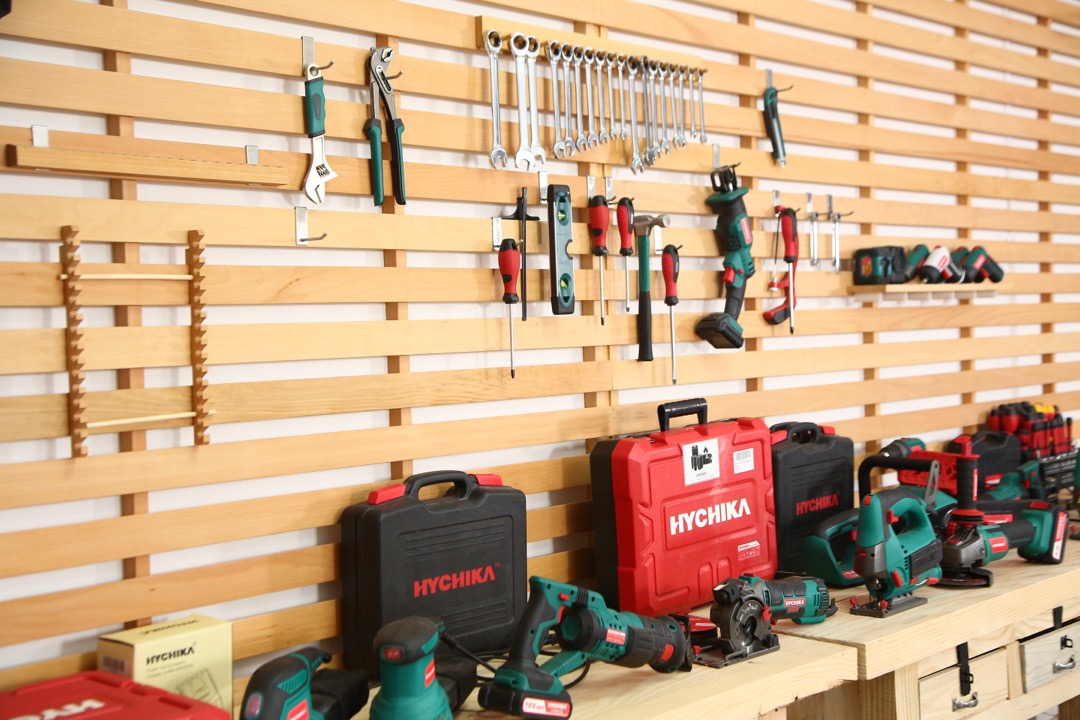
Every apprentice I have ever trained started the same way: with a borrowed drill, a cheap circular saw, and a whole lot of confidence they had not yet earned. The tools you buy in your first year of doing your own work shape how you work for the next decade — which is exactly why beginners get the order so wrong. They walk into a home center, get dazzled by a wall of orange and red and yellow, and walk out with a cart full of tools they cannot yet use well, half of which end up gathering sawdust on a shelf.
I am a licensed general contractor, and over fifteen years of residential work I have outfitted a lot of garages — my own crews’ and plenty of homeowners’ who wanted to start doing things themselves. This guide is the staged plan I actually give people. It is not a list of twenty tools to buy this weekend. It is a sequence: what to buy first, what to add next, and — just as important — why each tool comes when it does. Get the order right and you will spend less, learn faster, and own better tools than the person who bought everything at once. If you are setting up a whole home from scratch, pair this with our essential tools every new homeowner needs guide, which covers the hand tools that come before any of this.
Before You Buy: Match Tools to Projects, Not the Other Way Around
The single best filter for any tool purchase is a real project. Do not buy a tool because a video told you it was essential — buy it because you have a specific job that needs it. A drill is your first power tool because hanging shelves, assembling furniture, and mounting a TV are everyone’s first projects. A circular saw comes next because the moment you want to build anything, you need to cut lumber to length. A miter saw shows up when you decide to replace your baseboards, not before.
This project-first mindset also keeps you honest about the rent-versus-buy decision, which I will come back to in detail later. The short version: some tools you will use constantly and should own, and some you will touch once a year and should rent. Letting your real projects drive the buying keeps you out of the trap of owning a four-hundred-dollar tile saw you used for exactly one backsplash. If you are still weighing whether a project is even yours to tackle, our DIY vs. hiring a contractor breakdown helps you draw that line before you spend a dime on tools.
With that framing in place, here is the staged buying order.
Stage 1: Cordless Drill/Driver and Impact Driver
If you buy one power tool in your life, make it a cordless drill/driver. Nothing else is this versatile. It drills pilot holes, drives screws, bores large holes with a spade or hole-saw bit, mixes small batches of thinset or paint with a paddle, and does it all with an adjustable clutch that protects you from your own inexperience. That numbered ring behind the chuck slips and stops the bit at a set torque, which is exactly what keeps a beginner from stripping screw heads, snapping fasteners, or punching through drywall. Our best cordless drills roundup covers the models I trust across every platform and price tier.
The very next tool — and often the same purchase — is the impact driver. Where a drill spins at a controlled speed, an impact driver adds rapid rotational hammer blows when it meets resistance, delivering far more torque to sink long deck screws and lag bolts without wrecking your wrist. It has no clutch and only takes 1/4-inch hex bits, so it is a grunt tool, not a precision tool. Used on a small screw it will strip the head before you blink. The right move is to own both and use the drill for delicate, controlled work and the impact for repetitive, high-torque driving. Our best impact drivers guide breaks down the standouts.
Here is the money-saving part: nearly every brand sells these two together as a combo kit for only slightly more than the drill alone, with two batteries and a charger in the box. That combo kit is the smartest first purchase a beginner can make, because it gets you onto a battery platform with the two tools you will reach for most. Just make sure you have chosen your platform deliberately — more on that below.
Stage 2: Circular Saw
The moment you want to build, repair, or cut anything larger than a piece of trim, you need a circular saw. It is the most versatile cutting tool a beginner can own — it crosscuts 2x lumber, rips plywood and sheet goods, and with a clamped straightedge as a guide it makes cuts straight enough that you can put off buying a table saw for a long time. A 6.5-inch or 7.25-inch blade covers nearly everything a homeowner cuts. Our best circular saws roundup walks through the homeowner-to-prosumer options. One thing that trips up every beginner at the lumber rack: the sizes lie. A “2×4” is actually 1½ × 3½ inches once it’s dried and planed — our 2x4 actual size chart shows the real, dressed dimensions of every common board so your cut list and layout math are right the first time. And before you frame anything that carries weight (a floor, a landing, a deck), the joist spacing chart tells you how far each size can actually span at 12, 16, 19.2 or 24 inches on center, which is the number that decides what you buy.
This is the tool where the corded-versus-cordless question gets genuinely interesting, so let me address it head-on. A cordless circular saw on your existing battery platform is the convenient choice — no cord to manage, and you can take it anywhere. But sustained ripping through thick stock draws heavy continuous current, which is hard on batteries; a cordless saw paired with a small 2.0Ah pack will bog down and die fast. If you go cordless, run it on a 4.0Ah battery at minimum. A corded saw, by contrast, never runs out of power and costs less for the same cutting capacity, which makes it a strong pick if most of your cutting happens at a workbench near an outlet. We laid out the full trade-off in our corded vs cordless circular saws comparison — it is worth a read before you commit, because this is the one tool where the right answer really does depend on how you work. When you get to the project that made you buy the saw in the first place — a set of deck steps, usually — our free stair calculator hands you the riser height, the cut layout, and a code check, which is the part that intimidates beginners far more than the cutting does.
Stage 3: Random Orbital Sander
Once you start building and repairing things, you start needing to finish them — and that means a random orbital sander. The “random orbital” part matters: the pad spins and oscillates at the same time in an irregular pattern, which prevents the swirl marks that a fixed-orbit sander leaves behind. A 5-inch hook-and-loop model is the standard, and the consumable sandpaper discs are cheap and universal.
The thing beginners get wrong with sanding is skipping grits. You cannot jump straight to a fine grit and expect a smooth finish — you have to walk the surface up through a progression. For most furniture and trim work, start at 80-grit to remove material and knock down imperfections, step to 120-grit to erase the scratches the 80 left behind, and finish at 220-grit for a surface ready to stain or paint. Skip a step and the scratches from the coarse grit telegraph right through your finish. A sander is also the tool that makes a fresh coat of paint actually look professional, because the prep is where paint jobs are won or lost — the painting itself is the easy part.
Stage 4: Miter Saw
When you decide to replace your baseboards, install crown molding, build a bookcase, or trim out a doorway, the miter saw earns its place in your shop. Nothing else cuts clean, repeatable angles as fast or as accurately. You can fake a miter with a hand saw and a miter box, but the first time you cut forty feet of baseboard with a power miter saw you will wonder how you ever lived without one.
For a beginner, a 10-inch sliding compound miter saw covers about 95 percent of what you will ever cut. The 10-inch blade handles standard trim and most framing lumber, the slide lets you crosscut wider boards, and the compound action tilts for the bevel cuts you need on crown molding and angled work. A 12-inch saw cuts thicker stock but costs more and weighs more than most beginners need. Our best miter saws roundup covers the homeowner-grade models worth owning. This is a stationary tool that lives on a bench or stand, so it is a natural fit for a corded model — it never moves, and it draws steady power through long trim sessions.
Stage 5: Brad Nailer
A brad nailer is the tool that takes your trim and small-assembly work from “decent” to “looks like a pro did it.” Instead of fighting with a hammer and finish nails — denting the wood, bending nails, splitting trim — a brad nailer drives a thin nail flush and clean in a fraction of a second, leaving a hole so small a dab of filler hides it completely. For attaching baseboards, casing, shoe molding, and light cabinet trim, it is transformative.
There are two decisions here. First, gauge: an 18-gauge brad nailer is the right first nailer for a beginner, handling delicate trim and small moldings without splitting them. A 16-gauge finish nailer drives a thicker, stronger nail for heavier baseboard and structural trim, but it leaves a larger hole and is overkill for most starter projects — add it later if your work demands it. Second, power source: a cordless battery-powered nailer is the simple, grab-and-go choice with no compressor or hose to drag around, while a pneumatic nailer is lighter and cheaper but tethers you to an air compressor. For a beginner doing occasional trim work, a cordless 18-gauge brad nailer is the path of least friction.
Add-Ons: Jigsaw and Oscillating Multi-Tool
Beyond the core five, two specialty tools round out a serious beginner kit when projects call for them. A jigsaw is your curve cutter — it is the only saw that easily cuts circles, scrollwork, sink cutouts in a countertop, and any non-straight line. It is not a precision tool for fine joinery, but for plunge cuts and curves nothing else in a beginner’s kit substitutes for it. Buy one when a project needs a shape a circular saw cannot make.
An oscillating multi-tool is the remodeler’s secret weapon. It vibrates a blade back and forth in a tiny arc, which lets it make plunge cuts in the middle of a wall, undercut a door jamb for new flooring, cut a pipe flush in a tight space, scrape old caulk, and trim out a damaged section of drywall — all jobs that are awkward or impossible with any other tool. If you do any remodeling or repair work, it pays for itself the first time you need to cut something in a spot nothing else can reach.
Choosing a Battery Platform
Before you buy any cordless tool, you have to pick a platform — and this is the decision beginners underestimate most. Every brand runs a proprietary battery system, and the batteries do not cross brands. Once you own two batteries and a charger, you are locked into that ecosystem for the next decade, because every future cordless tool will run on packs you already own. Switching later means rebuying batteries, which runs into hundreds of dollars in sunk cost.
Two numbers define the batteries. Voltage — 18V, or 20V MAX, which is the same thing measured two different ways — is the horsepower, how much power the tool delivers at peak. Amp-hours (Ah) is the fuel tank, how long it runs before recharging. Picture it this way: a 1.5Ah battery is a travel mug and a 5.0Ah is a full thermos. A 2.0Ah pack is fine for a drill or impact driver that works in short bursts, but a current-hungry circular saw or sander needs at least a 4.0Ah pack to avoid bogging down. Most beginners are best served owning one small light battery for the drill and one larger pack for the saws.
As for which brand: Ryobi 18V One+ is the budget champion, with a surprisingly broad tool catalog, cheaper batteries, and quality that holds up fine for homeowner-frequency use — it is my honest recommendation for anyone unsure how much they will use their tools. DeWalt 20V MAX and Milwaukee M18 are the professional-tier leaders, with the widest specialty tool selection, the best build quality, and the longest battery life — worth it if you expect to do serious, regular work. If you are deciding between those two, our DeWalt vs. Milwaukee cordless drills head-to-head digs into the real differences.
Brushless vs. Brushed Motors
You will see “brushless” on the pricier version of almost every cordless tool, so it is worth knowing what you are paying for. A brushed motor uses carbon brushes that physically rub against a spinning commutator — that contact creates friction, generates heat, wears out over time, and wastes battery. A brushless motor swaps that contact for electronic switching: it runs cooler, lasts longer, wastes less energy, and intelligently adjusts power to the load. In real-world terms, a brushless tool gives you noticeably more runtime per charge and a longer service life.
The practical rule: pay the roughly twenty-to-thirty-dollar brushless premium on the tools you will use every weekend — your drill, impact driver, and circular saw — because the extra runtime and longevity pay for themselves quickly. For a tool you will use a couple of times a year, a brushed motor is perfectly fine and saves you money.
Rent Before You Buy: The Rule of Two
Not every tool belongs in your garage. The rule I give every client is dead simple: if you will use a tool more than twice a year, buy it; if you will use it twice or less, rent it. Your core kit — drill, impact driver, circular saw, sander, and a miter saw if you do trim — earns its keep through constant use. But specialty tools you touch once a project cycle do not. A wet tile saw, a floor drum sander, a concrete mixer, a stump grinder, a heavy-duty pressure washer beyond occasional use — rent these.
A day’s rental usually runs under a hundred dollars, and rental companies stock professional-grade models, so for a single day you get a better tool than you would own for a lifetime — with nothing to store, maintain, or eventually haul to the dump. The classic beginner mistake is buying a four-hundred-dollar tile saw for one backsplash. Every major home center rents now, not just the dedicated rental yards, so there is no reason to own a tool you will use once.
Safety Gear and Job-Site Habits
The gear is the easy part. Wear ANSI Z87.1-rated safety glasses for every cut, drill, and demolition task — not sunglasses, not your regular prescription glasses, the rated ones. Use hearing protection for any session longer than about fifteen minutes, because power-tool hearing damage is cumulative and permanent. Keep an N95 dust mask handy for cutting and sanding, and wear leather-palm gloves for saw and material handling — not thin nitrile gloves, which offer zero protection and can actually catch in a moving blade or bit.
The habits matter just as much, and they are the ones the manual never quite spells out. Unplug a corded tool or pull the battery before you change a blade or bit — do not trust the switch or the trigger lock, because a bumped trigger during a blade change is exactly how people lose fingers. When you set a saw down, wait for the blade to come to a complete stop first; a coasting blade will walk the tool right off the bench or into your leg. Never carry a running tool, not even for a step or two. Keep your body out of the line of a cut so a kickback throws the tool past you rather than into you. And keep both hands on a circular saw until the cut is done and the blade has stopped spinning. These are not paranoia — they are the difference between a long career with all ten fingers and a trip to the emergency room.
Maintenance: Five Minutes That Doubles a Tool’s Life
A little upkeep keeps your tools cutting clean and cutting safe. Spend five minutes after a dusty job clearing the motor vents of sawdust with a blast of compressed air — clogged vents trap heat, and heat is what kills motors and batteries early. Store lithium-ion batteries at roughly a 50 percent charge if you are setting them aside for weeks; storing them fully charged or fully drained shortens their lifespan. Keep batteries out of a hot garage in summer and a freezing one in winter, both of which degrade the cells.
The most important maintenance item is also the most overlooked: keep your blades and bits sharp. A dull saw blade does not just cut slowly — it forces you to push harder, which is the leading cause of kickback, the most common and most dangerous power-tool accident there is. A sharp blade cuts with light pressure and stays where you guide it; a dull one grabs, binds, and throws the tool. Replace or sharpen blades the moment they start to struggle, and never force a tool through a cut.
Final Verdict: Buy in Order, Learn as You Go
The instinct to walk out of the home center with a full cart is the single biggest mistake a beginner makes with power tools. It leads to overspending, mediocre tools, and a garage full of gear you never learned to use. Instead, buy in stages tied to real projects. Start with a cordless drill/driver — see our best cordless drills roundup — paired with an impact driver in a combo kit, on a battery platform you have chosen deliberately. Add a circular saw when you start cutting lumber, a random orbital sander when you start finishing, a miter saw when you start trim, and a brad nailer to make that trim look professional.
Pay the brushless premium on the tools you use weekly, match your battery amp-hours to the tool’s appetite, and rent anything you will touch twice a year or less. Wear your safety glasses every single time, respect the unplug-before-blade-change habit, and keep your blades sharp. Do this, and a year from now you will own a real, functional power-tool kit you actually know how to use — not a shelf of orphan tools bought in a panic. When you are ready to expand into precision work, our best table saws roundup covers the next big upgrade, and the essential tools for new homeowners guide rounds out the hand tools that belong alongside everything here.
Frequently Asked Questions
What power tool should a complete beginner buy first?
Should a beginner buy corded or cordless tools?
Do I have to stick to one brand for cordless tools?
What is the difference between a drill and an impact driver?
How does a beginner stay safe with power tools?
Related Articles
About the Reviewer

Jake Morrison, Licensed General Contractor
B.S. Construction Management, Purdue University
Jake Morrison has spent 14 years in residential construction and home renovation before founding DIYRated in 2026. After helping hundreds of homeowners choose the right tools and materials for their projects, he started writing the product guides he wished existed when he was starting out. Jake tests every major product recommendation in his workshop in Indianapolis and focuses on real-world performance over spec-sheet marketing.