How to Reduce Humidity in Your Home: A Contractor's Diagnose-First Guide
By Jake Morrison, Licensed General Contractor Updated
Every summer I get the same call. The basement smells musty, the closet in the back bedroom has a gray bloom on the drywall, and the homeowner already bought a dehumidifier that fills its bucket twice a day and still cannot keep up. Nine times out of ten, the machine is fine. The problem is that nobody went looking for where the water was coming from. A gutter dumps at the corner of the foundation, or the dryer vent was pulled loose and is blowing into the crawlspace, or the AC is so oversized it never runs long enough to dry the air.
This guide is the order I work through on a damp house. Measure first, find the source, fix the water at its origin, and only then size equipment for what is left. If you follow it in that order you will spend less, and the humidity will stay down instead of creeping back the first wet week.
The short answer: keep indoor relative humidity between 30 and 50 percent and never let it sit above 60 percent. Get there by stopping liquid water outside, venting bathrooms, kitchens and dryers to the outdoors, fixing how your AC runs, and drying the basement or crawlspace with a properly sized dehumidifier that drains on its own.
What Humidity Level Your House Should Be
Relative humidity (RH) is how much water vapor the air holds compared with the most it could hold at that temperature. Warm air holds more than cold air, which is why the same house can be fine in August and drip down the windows in January.
Targets by season
The EPA recommends keeping indoor humidity between 30 and 50 percent, and below 60 percent at all times. Mold, mildew and dust mites all do well above 60, and a house that lives there for weeks starts to smell like it.
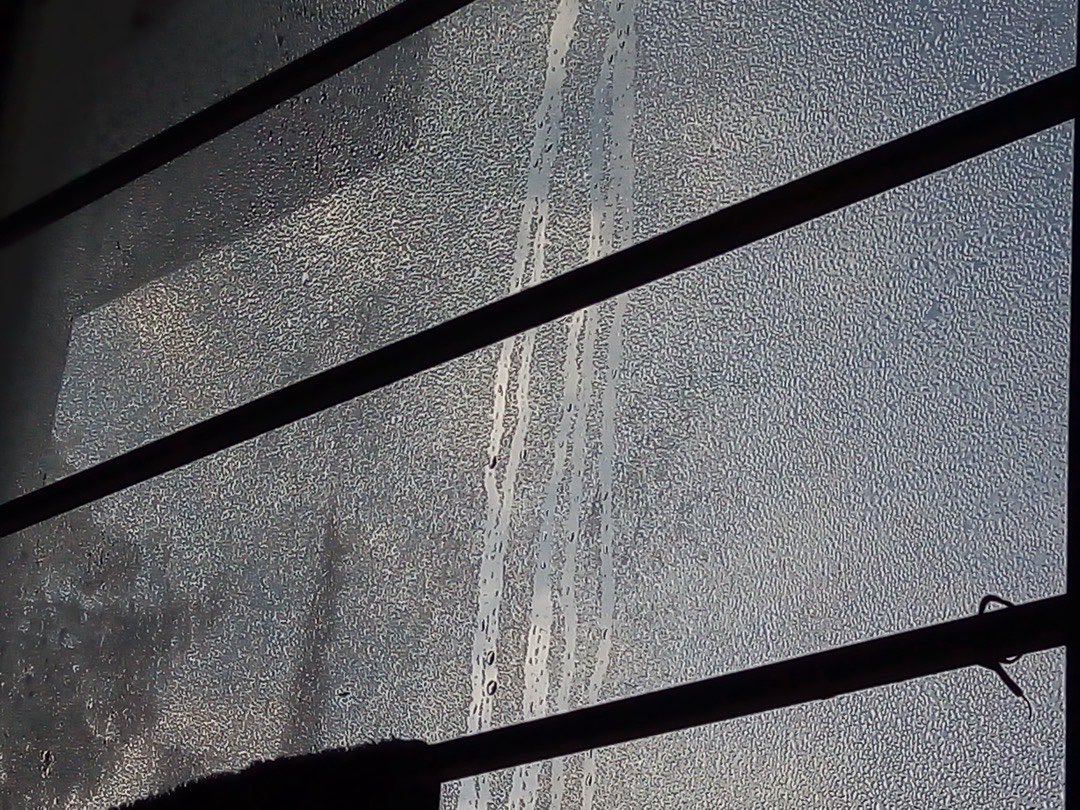
Summer is simple: 40 to 50 percent feels comfortable and stays safe. Winter is where cold-climate homes get into trouble, because warm, moist indoor air condenses on anything cold, starting with window glass and ending inside exterior walls and attics where you cannot see it. The colder it is outside, the lower your indoor humidity needs to be. These are the limits EPA moisture guidance gives for winter:
| Outdoor temperature | Maximum indoor RH |
|---|---|
| 20°F | 35% |
| 10°F | 30% |
| 0°F | 25% |
| -10°F | 20% |
| -20°F | 15% |
If your windows fog or frost on the inside every cold morning, you are above the line for that temperature. That is your house telling you, and it is worth listening to before the same thing happens behind the drywall.
RH versus dew point
RH changes every time the temperature changes, so it can mislead you. Dew point does not. It is the temperature at which the air’s moisture starts condensing, and it tells you what the air will do when it hits a cold surface. If the indoor dew point is 60°F and your basement walls are 58°F, those walls will be damp no matter what the RH reads upstairs. Indoors, a dew point in the 40s feels dry and comfortable, the 50s are fine, and once it climbs past about 60°F the house feels sticky and cool surfaces start to sweat. Many digital hygrometers and smart thermostats show dew point if you dig into the settings.
Measure before you fix anything
Buy two inexpensive digital hygrometers. Put one in the main living area and one in the basement or the dampest room. Watch them for a week, including a rainy stretch. That week of numbers tells you whether you have a whole-house problem or one wet zone, and it keeps you from buying the wrong fix. If you already own a smart thermostat with a humidity readout, that covers the main floor. It does not cover the basement, which is usually where the problem starts.
Find the Source Before You Buy Anything
A typical family of four puts several gallons of water into the air every day just by breathing, showering, cooking and doing laundry. A house is designed to vent that. When humidity stays high, either something is adding far more water than normal, or the venting is broken. This is the table I use to narrow it down:
| What you notice | Most likely source | Where to start |
|---|---|---|
| Only the basement or lower level is damp | Ground water through the slab and walls, poor grading, gutters | Exterior drainage, then a basement dehumidifier |
| Musty smell from the floor, cupping floors above a crawlspace | Open dirt floor, vented crawlspace in a humid climate | Vapor barrier and crawlspace drying |
| Windows fog inside on cold mornings | Too much indoor moisture for the outdoor temperature | Exhaust fans, dryer vent, stop drying laundry indoors |
| House feels cold and clammy while the AC runs | Oversized AC, fan set to On, dirty coil or filter | Thermostat settings, then an HVAC check |
| Bathroom ceiling mildews, paint peels | Undersized fan, fan not run long enough, fan venting into the attic | Bath fan size, run time and ducting |
| Laundry room is humid after every load | Disconnected, crushed or overlong dryer duct | Dryer vent from the machine to the outside hood |
| Problem started right after a remodel or new windows | House is tighter, so moisture no longer leaks out | Better spot ventilation, possibly an ERV or HRV |
| Damp only after heavy rain | Liquid water entering: gutters, grading, window wells, roof | Walk the exterior during a storm |
Walking the outside of the house in a heavy rain is the best free diagnostic there is. You will see which downspouts overflow, where water pools against the foundation, and which window wells fill up. I learn more in ten minutes in a rain jacket than in an hour in the basement.
Fixes That Work, in Order of Impact
1. Stop liquid water outside the house
Water that soaks into the soil against your foundation wicks through concrete and evaporates into the basement. No dehumidifier keeps up with that for long, so this comes first.
- Grade the soil away from the house. The residential building code calls for the ground to fall at least 6 inches within the first 10 feet from the foundation. Settled backfill, mulch piled against the siding, and flower beds edged with a lip all reverse that slope over the years.
- Clean the gutters and extend the downspouts. A downspout that dumps right at the foundation puts the whole roof’s runoff into your basement wall. Run the water several feet out, onto ground that slopes away, or into a buried line to daylight.
- Cover window wells in climates with heavy rain, and make sure each one has gravel and a drain at the bottom.
- Fix plumbing leaks. A weeping supply line under a sink or a slow toilet seal adds moisture around the clock. Check under every sink and around the water heater.
- If the basement takes on water, a sump pump with battery backup is the backstop. It handles water that gets past the exterior fixes. It does not replace them.
2. Vent moisture at the source with exhaust fans
Bathrooms, kitchens and the dryer are the three biggest indoor moisture sources, and each one has a fan or duct that is supposed to send that moisture outside. In older houses, at least one of them usually does not.
The ventilation standard most building codes follow (ASHRAE 62.2) sets these minimums:
| Space | Run on demand | Run continuously |
|---|---|---|
| Bathroom | 50 cfm | 20 cfm |
| Kitchen | 100 cfm, ducted hood | 5 air changes per hour |
Those are floors, not targets. A large bathroom, a long duct or several elbows all cut real airflow, so size up. A few rules I hold every job to:
- The duct must end outside. Not in the attic, not in the soffit pointing at an attic vent, not loose in a joist bay. I find bath fans that end in the attic on a large share of older homes, and the result is a moldy roof deck instead of a dry bathroom.
- Run the fan through the shower and 20 minutes after. A timer or humidity-sensing switch does this without anyone remembering.
- Use a range hood that vents outside. A recirculating hood catches some grease and puts all the steam back in the kitchen. If you have one, at least lid your pots.
- Check the dryer vent end to end. It should be smooth rigid or semi-rigid metal duct, no plastic foil hose, as short as possible, and ending at an outside hood whose flap opens when the dryer runs. The code limits a standard 4-inch dryer duct to 35 feet, minus length for each elbow. A crushed or disconnected duct sends a full load’s worth of water into the laundry room or crawlspace.
If you are replacing a vented dryer anyway, a heat pump unit condenses its moisture and sends it down the drain, which is one reason a ventless heat pump washer dryer combo suits a laundry closet with no outside wall.
3. Cut the everyday moisture sources
These are small one at a time and add up across a week:
- Dry laundry in the dryer, not on racks indoors. One wet load releases a surprising amount of water into the room.
- Turn off a whole-house or room humidifier you forgot was running. It happens more than you would think, especially when a furnace humidifier was left on into spring.
- Do not store firewood indoors. Green wood gives off a lot of water as it seasons.
- Unvented gas heaters and gas ovens used for heat put water vapor into the house along with combustion gases. Use them as designed, if at all.
- Keep showers shorter and a little cooler during humid stretches.
- Re-caulk tubs and showers so water does not soak into the wall behind them. My guide to caulking a bathtub walks through it.
4. Make your air conditioner dehumidify
Central air removes moisture as warm air passes over its cold coil and water condenses out. But that only starts after the coil has been cold for several minutes, and how much water it removes depends on how long it runs. That leads to the three most common AC humidity problems I see:
- The thermostat fan is set to On. After each cycle, the blower keeps moving air over a dripping coil and evaporates that water back into the house. Set the fan to Auto. This is the single cheapest humidity fix in the house.
- The system is oversized. A unit too big for the house drops the temperature fast, satisfies the thermostat in a few minutes, and shuts off before it dries the air. The house feels cold and clammy. If your system runs in short bursts of under ten minutes on a hot, humid afternoon, have an HVAC contractor check the load calculation and airflow. Many variable-speed systems and thermostats have a dehumidify mode that slows the blower so the coil gets colder and pulls more water.
- The filter or coil is dirty. Restricted airflow ices the coil or lets air bypass it. Change the filter on schedule, and read my guide to HVAC air filters before you jump to a high-MERV filter your blower cannot push air through.
A smart thermostat that shows indoor humidity, and on many systems can run a dehumidify cycle, makes all of this easier to see and control.
5. Dry the basement or crawlspace
Most whole-house humidity problems start below the floor. Air rises through a house, so a damp crawlspace or basement supplies a share of the air you breathe upstairs.
Crawlspaces. An open dirt floor gives off a lot of water every day. At minimum, cover it with a heavy polyethylene vapor barrier, lapped at the seams and run up the walls. The bigger question is vents. The old advice was to vent crawlspaces to the outside. In humid climates that brings in warm, wet summer air that condenses on the cooler ducts and floor framing, which is how you end up with dripping ductwork and moldy joists. Building science research, including the DOE’s Building America program, favors sealing the crawlspace: close the vents, lay a sealed liner, and dry the space with a small amount of conditioned air or a dedicated crawlspace dehumidifier. Check your local code before sealing, since some jurisdictions have specific requirements.
Basements. Concrete wicks ground moisture constantly, and below-grade walls run cool all summer, so they sweat when humid air hits them. After the exterior drainage work above, a dehumidifier is usually the right tool here. Seal gaps where the rim joist meets the foundation, insulate cold water lines that sweat, and keep stored boxes off the floor and away from exterior walls.
6. Size and set up a dehumidifier properly
Once the sources are handled, a dehumidifier deals with what is left. Getting the size right means knowing about a rating change. In 2019 the Department of Energy changed the test condition from 80°F to 65°F, closer to a real basement. The same machine now carries a smaller pint rating than it did before, so older sizing advice will push you to oversize.
| Space and condition | Capacity (2019+ rating) |
|---|---|
| Single damp room or bedroom, up to about 500 sq ft | 20 to 22 pints |
| Damp room or small basement, up to about 1,000 sq ft | 22 to 35 pints |
| Damp to wet basement, 1,000 to 2,000 sq ft | 35 to 50 pints |
| Wet basement with water stains, or large open lower level | 50 pints, or a dedicated basement unit with pump |
| Whole house, ducted | Whole-home unit tied into the HVAC |
Setup matters as much as size:
- Drain it continuously. Run a hose to a floor drain or use a model with a built-in pump. A bucket model fills, shuts off, and the basement goes right back up.
- Set it to 50 percent, not the lowest number. Below about 45 percent you spend extra energy for no benefit.
- Give it room to breathe and keep it away from walls and stored boxes.
- Clean the filter every few weeks during the season.
For specific picks by space, see my roundup of the best dehumidifiers, including the sections on the best dehumidifier for basements and the best whole-house dehumidifiers.
Humidity Myths That Waste Your Time
You will find these on plenty of other lists. Here is what I tell clients.
- Houseplants lower humidity. They do not. Plants release water through their leaves, so a room full of plants adds moisture.
- Bowls of baking soda, rock salt or charcoal dry a room. They absorb a tiny amount compared with what a household puts into the air each day. Moisture absorber tubs are fine for a closet, a gun safe or a boat cabin. They will not touch a room.
- Opening the windows always helps. Only when the outdoor air is drier than the indoor air, meaning a lower dew point. On a humid summer day, open windows bring in more moisture. Use it on cool, dry days and in winter.
- An air purifier removes humidity. An air purifier captures particles and does a good job of it, but it removes no water. They are a good pairing in a damp house, not a substitute for each other.
- Fans dry out the air. A ceiling fan or tower fan makes 55 percent feel noticeably more comfortable, and moving air helps a damp corner dry, but no fan takes water out of a house. Only ventilation to outside, the AC or a dehumidifier does that.
Room-by-Room Quick Fixes
Bathroom: Correctly sized fan, ducted outside, on a timer. Squeegee the shower walls and hang towels to dry outside the shower. A small bathroom dehumidifier only makes sense when there is no way to add a fan.
Kitchen: Vented range hood, run every time you boil or simmer. Lids on pots. Check under the sink for a slow leak.
Laundry: Dryer vent checked end to end, lint cleaned, no indoor drying racks. Leave the washer door open after a load so the drum dries.
Basement: Exterior drainage first, then a draining dehumidifier set to 50 percent. Insulate sweating cold water lines.
Bedrooms: A closed bedroom with two people sleeping in it gains moisture overnight. If windows fog in winter, crack the door, run the bath fan longer, and check the overall house level. My guide to improving indoor air quality covers the ventilation side of this in more depth.
Attic: Look up there in winter with a flashlight. Frost on nail tips or dark staining on the roof sheathing means moist house air is leaking into the attic. Air seal the attic floor and make sure every fan ends outside. The winterization checklist covers attic air sealing.
When to Call a Pro
Most of this is homeowner work. These are the signs that you need a contractor, a waterproofing company or an HVAC technician:
- White, chalky deposits (efflorescence) on basement walls, or water on the floor after rain
- Bowed, cracked or leaning foundation walls
- Mold covering more than about 10 square feet, which is the size above which the EPA suggests professional cleanup
- Soft, sagging or springy floors over a crawlspace, which can mean rot in the framing
- An AC that short-cycles or leaves the house clammy even with the fan on Auto and a clean filter
- Dripping or sweating ductwork in the crawlspace or attic
- Humidity that stays above 60 percent after you have handled the sources and run a properly sized dehumidifier
The Bottom Line
Measure first. Then stop water outside, vent the bathroom, kitchen and dryer to the outdoors, and set the AC fan to Auto. Seal and dry the crawlspace or basement, and size a draining dehumidifier for whatever moisture is left. Done in that order, most houses land in the 40s and stay there, and you stop paying to dry the same water over and over.
Frequently Asked Questions
What is a good humidity level for a house?
How can I lower humidity without a dehumidifier?
Why is my house humid even though the AC is running?
What size dehumidifier do I need?
How long should I run the bathroom exhaust fan?
Related Articles
How to Improve Indoor Air Quality at Home
home-air-filtration
How to Winterize Your Home: A Contractor's Complete Checklist
home-improvement
8 Best Smart Thermostats of 2026: A Contractor's Honest Picks
home-air-filtration
Best Dehumidifiers of 2026: Jake's Picks After 20+ Years in Basements
home-air-filtration
11 Best Sump Pumps of 2026: A Licensed GC's Picks by HP, Basement, and Backup
plumbing
About the Reviewer

Jake Morrison, Licensed General Contractor
B.S. Construction Management, Purdue University
Jake Morrison has spent 14 years in residential construction and home renovation before founding DIYRated in 2026. After helping hundreds of homeowners choose the right tools and materials for their projects, he started writing the product guides he wished existed when he was starting out. Jake builds each pick from spec sheets, manuals and verified buyer reviews, and weighs how tools hold up for real owners over marketing claims.